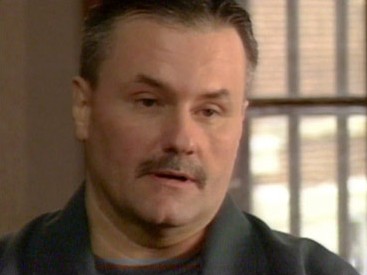
John Maloney
Murderer Russell Ellwood
Murderer · USA · 1991
Russell Ellwood was a former taxi driver. Authorities suspected him of killing…
20 victims
Russell Ellwood
Murderer · USA · 1991
Russell Ellwood was a former taxi driver. Authorities suspected him of killing…
20 victims
 Robert Martines Perez
Murderer · USA · 1994
Name: Robert Martines Perez · Other name used in proceedings: Robert Martinez P…
15 victims
Robert Martines Perez
Murderer · USA · 1994
Name: Robert Martines Perez · Other name used in proceedings: Robert Martinez P…
15 victims
 Billy Frank Vickers
Murderer · USA · 1993
Billy Frank Vickers Vickers was executed by lethal injection in Texas on Januar…
14 victims
Billy Frank Vickers
Murderer · USA · 1993
Billy Frank Vickers Vickers was executed by lethal injection in Texas on Januar…
14 victims
 David Renz
Murderer · USA · 2013
March 14, 2013 — David Renz carjacked Liverpool librarian Lori Ann Bresnahan an…
1 victim
David Renz
Murderer · USA · 2013
March 14, 2013 — David Renz carjacked Liverpool librarian Lori Ann Bresnahan an…
1 victim
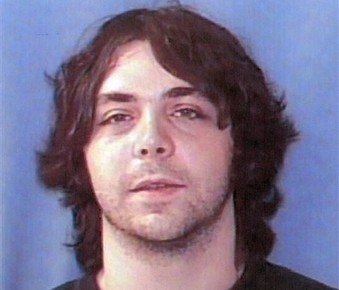 Wesley Higdon
Mass murderer · USA · 2008
Wesley Neal Higdon was a 25-year-old press operator from Henderson. He was desc…
5 victims
Wesley Higdon
Mass murderer · USA · 2008
Wesley Neal Higdon was a 25-year-old press operator from Henderson. He was desc…
5 victims
 Jerry Walter McFadden
Murderer · USA · 1986
Jerry Walter McFadden nicknamed himself "Animal". He was a former telephone cab…
3 victims
Jerry Walter McFadden
Murderer · USA · 1986
Jerry Walter McFadden nicknamed himself "Animal". He was a former telephone cab…
3 victims
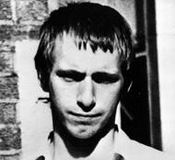 Bruce Lee
Serial killer · United Kingdom · 1973
Bruce Lee was born Peter George Dinsdale in 1960. He later changed his name to…
26 victims
Bruce Lee
Serial killer · United Kingdom · 1973
Bruce Lee was born Peter George Dinsdale in 1960. He later changed his name to…
26 victims
- Gender
- male
- Country
- USA
- Location
- Green Bay, Wisconsin, USA
- Date of birth
- 1957
- Age at first offence
- 41
- Characteristics
- arson, domestic violence, drugs, police officer, rape
- Victim profile
- His estranged wife, Sandra J. Maloney
- Method of murder
- Strangulation
- Date(s) of murder
- February 10, 1998
- Years active
- 1998
- Date of arrest
- —
- Status
-
Life imprisonment
Sentenced to life in prison with no chance of parole for 25 years on April 22, 1999
Case record: John Maloney
Parties
- John Maloney — former police arson detective; Green Bay Police Department officer and arson investigator; estranged husband of Sandra Maloney and father of their three sons.
- Sandra Maloney — wife of John Maloney; victim; found deceased in her Green Bay, Wisconsin home after a fire.
- Lola Cator — Sandra Maloney’s mother; discovered Sandra’s deceased and burned body on the morning of February 11, 1998.
- Tracy Hellenbrand — John Maloney’s girlfriend; described as an investigator for the Internal Revenue Service; key prosecution witness; also involved in videotaped recordings with John.
- Jody Pawlak — Sandra Maloney’s best friend; fingerprint found on the basement shower door.
- Ginny — John Maloney’s sister; raised the boys after the verdict.
- Wendy Conard — involved in petitions for guardianship of the couple’s three young sons.
- Virginia Maloney — involved in petitions for guardianship of the couple’s three young sons.
- Gerald Boyle — Milwaukee defense attorney; attorney for John Maloney.
- Bridget Boyle — Gerald Boyle’s daughter and co-counsel.
- Peter Naze — Brown County Circuit Judge.
- Joseph Paulus — special prosecutor.
- Gregory J. Eggum — Special Agent, Wisconsin Department of Justice, Division of Criminal Investigation.
- Capt. Cecil Bailey — Green Bay Fire Department.
- Sheriff Thomas J. Hinz — Brown County Arson Task Force.
- Gregory Schmunk — Brown County Medical Examiner.
- John Teggatz — Milwaukee County Deputy Chief Medical Examiner; performed autopsy.
- Randy Winkler — former Green Bay police arson investigator; defense expert witness at trial.
- Lew Wasserman — Milwaukee attorney who took over after the defense attorneys were fired in early 2001.
- Sheila Berry — leader of Truth in Justice; former victim-witness coordinator for Winnebago County and a cousin of Paulus’ ex-wife.
- Matt, Aaron and Sean — names given for John and Sandra Maloney’s children; ages stated in different places in the record as 12, 9, and 8; later referenced as 14, 10 and 9.
Timeline
- February 10, 1998 — investigators believed the murder occurred.
- February 11, 1998 — Sandra Maloney’s body was discovered in her Green Bay home; a hearing had been scheduled on the couple’s divorce; Sandra Maloney was found face down on a couch in the upstairs living room; Lola Cator discovered the deceased and burned body.
- June 8 (year not specified) — Tracy Hellenbrand became a police informant after meeting with investigators; she gave an interview statement about needing immunity.
- July 1998 — investigators secretly recorded Tracy and John at Lady Luck Hotel Casino in Las Vegas.
- September 2000 — the Boyles took the case before the state Court of Appeals and lost.
- February 8, 1999 — Court TV withdrew its application to broadcast the murder trial of John Maloney.
- February 9, 1999 — Gerald Boyle made opening statements that Tracy Hellenbrand committed the crime.
- February 10, 1999 — investigators believed the murder occurred; Tracy told her boyfriend she would be home late, according to defense counsel.
- February 13, 1999 — Tracy Hellenbrand testified in court about the videotape recordings made in Las Vegas.
- February 16, 1999 — Boyle claimed Tracy Hellenbrand failed a polygraph test; Judge ruled results could not be used as evidence.
- February 17, 1999 — the trial ended after an eight-day trial; jurors were scheduled to begin deliberating.
- February 18, 1999 — a jury found John Maloney guilty of first-degree intentional homicide, arson, and mutilating a corpse.
- February 23, 1999 — guardianship petitions involving the children were discussed in court documents released Monday.
- April 22, 1999 — John Maloney was sentenced to life in prison with no chance of parole for 25 years.
- Early 2001 — the Boyles were fired and Lew Wasserman took over.
- This spring (year not specified) — Maloney filed grievances with the Office of Lawyer Regulation alleging misconduct by Gerald Boyle.
Background
John Maloney was described as a Detective in the Green Bay Police Department and as a former Green Bay police detective and arson investigator.
John Maloney married Sandra Maloney in 1978. The relationship deteriorated over time, and the couple separated during May or June of 1997. They were not yet divorced at the time of her death, and they were in a bitter divorce involving a custody battle for three sons.
The record described Sandra Maloney as experiencing mental illness and as becoming addicted to prescription drugs mixed with vodka. The record stated she began treatment with a local psychiatrist in 1992, was diagnosed with generalized anxiety disorder and panic disorder, and was prescribed Klonopin (Benzodiazepine). The record stated that within a year she abused her medication, including taking all tablets prescribed and seeking refills by claiming to have lost the medication, left it in her pants pocket and washed it, etc. The record also stated she took Fioricet prescribed for migraine headaches for her children, and that she filled and consumed multiple Fioricet prescriptions in 1994 on May 3, May 10, May 16, May 23, May 31, June 8, June 14, June 16, June 21 and June 28, and that another son had Fioricet prescribed on May 16, May 23, June 5 and June 11. The record stated that by the next year children could receive Fioricet only by reporting to the local pharmacy and taking the medication in the presence of the pharmacist, and that Sandra instructed them to not swallow and made them spit the pills out outside so she could take them herself.
The record described confrontations with neighbors, including a fist fight at a youth athletic event. It stated that as her husband and mother pressured her to stop drug use, Sandra began drinking, and that her best friend helped her obtain drugs and alcohol. The record stated she received in-patient psychiatric and alcohol/drug abuse treatment in 1996 and again in 1997 following an auto accident caused by her drunk driving, and that she refused out-patient treatment.
When John left in May of 1997 and filed for divorce, the record stated Sandra took up smoking and sank further into addiction and depression. The record stated that at the end of that year the children were living with John and his girlfriend Tracy Hellenbrand, and Sandra could only have supervised visitation. The record stated she was in another traffic accident, did not show up in court, and a warrant was issued. It also stated her weight fell to 97 lbs. It stated that by the second week of February 1998, Sandra’s mother expected Sandra to drink herself to death before the week was out.
The offence
Sandra Maloney was found deceased in her Green Bay, Wisconsin home, which had been involved in a fire.
The record described findings that supported strangulation and arson. It stated:
- John Maloney was developed as a suspect given their impending divorce, ongoing child custody battle, and history of domestic disputes.
- A prosecution theory described John Maloney bashing his wife over the head, strangling her with his bare hands, setting her house on fire, and leaving her to burn.
- Investigators believed the death occurred between 6 and 8 p.m. and later evidence placed the murder between 7 p.m. and 7:45 p.m., though the specific narrative varied between sections.
- The record described prosecutors saying John Maloney did not ventilate the house before leaving, and that the fire burned itself out, leaving a woman medical examiners said had been strangled to death before the fire was set.
The record described physical and forensic facts including:
- Sandra Maloney’s body was found face down on a couch in the upstairs living room.
- The origin of the fire was described as being in the vicinity of her lap involving the couch, with extensive soot damage and minimal structural damage.
- All windows were closed except a storm window open only a few inches.
- The fire was described in some places as self-extinguishing and in other places as deliberately set, depending on the investigating authority.
The record also discussed a contested alternative theory advanced after conviction, describing a basement suicide attempt scenario and an alcohol-induced coma and carbon monoxide poisoning, but those theories are presented as arguments in the record rather than undisputed facts.
Investigation
The record described two initial fire investigators who determined the fire was accidental and believed it started with careless cigarette smoking:
- Capt. Cecil Bailey of the Green Bay Fire Department.
- Sheriff Thomas J. Hinz of the Brown County Arson Task Force.
A search yielded several potential clues described in the record:
- A kitchen garbage can contained five crumpled suicide notes.
- An extension cord was tied around a basement ceiling pipe, with one end hanging down.
- Two VCRs were stacked on a coffee table beneath the dangling cord.
- Investigators used Luminol in the basement, which showed blood on the coffee table, floor, laundry room, and bathroom.
- Bloody rags and tissues were found in the trash nearby, and a bloody women’s shirt was found in the laundry hamper.
- Blood in the basement shower area included a fingerprint belonging to Sandra’s best friend, Jody Pawlak.
When Sandra’s body was examined, the record stated there was evidence she took a few breaths of smoke, but her lungs did not have a fatal level of carbon monoxide, puzzling investigators. The record stated at the time of autopsy her blood-alcohol level was 0.25, and a more sophisticated blood-alcohol test showed that a few hours before death her blood-alcohol content was at least 0.36. The record stated Milwaukee County Deputy Chief Medical Examiner John Teggatz listed Sandra’s cause of death as “probable manual strangulation,” based on bruising around her neck. Brown County Medical Examiner Gregory Schmunk agreed.
Because Sandra was the wife of a Green Bay police officer, the record stated local officials were worried about a perceived conflict of interest and that the Wisconsin Department of Justice took over. Special Agent Gregory J. Eggum determined the fire was deliberate, a decision two local investigators later accepted. The record stated Winnebago County District Attorney Joseph Paulus was named special prosecutor.
Arrest
The record stated police arrested John Maloney after he told his girlfriend that he was in his wife’s house the night she died, opposite what he had told investigators. The record described that the conversation took place in a Las Vegas hotel, that John checked for bugging devices while his girlfriend was away, and that the search was recorded by police stationed in an adjoining room.
The record also stated Tracy Hellenbrand was employed by investigators to elicit a confession from him, and that investigators recorded the couple at an Ashwaubenon hotel and at Tracy’s mother’s Madison condominium.
The record stated Tracy Hellenbrand offered an alibi at first by stating John was with her the whole night except when he went to pick up Matt from an indoor baseball practice. Later, the record described she began to believe he might be guilty, and that she later said she may have taken a nap and John could have left while she was asleep.
The record described secret videotaping at Lady Luck Hotel and Casino in Las Vegas, with equipment set up for police recording.
Evidence and recordings
The record included verbatim dialogue from the Lady Luck videotape. The record described the time at 4:49 a.m. and the content as filmed.
The following quotes appeared in the record from the videotape:
- Tracy: “Why didn't you push 911 and run?”
- John: “Oh, why would I?”
- Tracy: “You didn't want to?”
- John: “What would be on the phone then, huh?”
- Tracy: “Your fingerprints.”
- John: “Right. And where would the call have come from?”
- Tracy: “Did you go there to do it?”
- John: “No.”
- Tracy: “Why did you go there then? . . .”
- John: “To get done with the divorce. To get it over with.” The record also included a statement attributed to Joseph Paulus explaining the videotape’s role:
- Joseph Paulus: “This guy admitted on videotape that he was in the house that night, and that means he did it,” and “This whole case was the videotape. . . . If the videotape hadn't gotten in, we may not have charged the case.”
The record also included testimony quotes made in court later by Tracy Hellenbrand in relation to the videotapes.
Tracy Hellenbrand court statements and testimony quoted
- Tracy Hellenbrand said: “You think I'm going to . . . smell that smell and not know (a person has) just killed someone?”
- Tracy Hellenbrand said: “I will never forget that smell on your body,” “That's a distinct smell.”
- Tracy Hellenbrand testified about smell: “like someone who had been working out in a musty basement. It just came right off his chest.”
- Tracy Hellenbrand said about the night and Maloney’s behavior: “His hands trembled so badly, he struggled trying to put a cigarette between his lips, said Hellenbrand, who became a police informant after meeting with investigators June 8. He appeared distracted and seemed to move "in slow motion" later that same night, she said.”
- Tracy Hellenbrand testified about Maloney’s alleged confession: “He said, 'Yes,' and he looked away,” and she also said: “He said, 'Yes,' and he looked away,”.
Trial
John Maloney was tried for murder involving the death of Sandra Maloney.
The record stated:
- John Maloney was charged with first-degree intentional homicide, mutilating a corpse, and arson.
- John Maloney pleaded not guilty to all charges.
- The trial was described as eight days and ended on February 17, 1999.
- The jury deliberated about 12 hours and returned a guilty verdict on February 18, 1999.
Prosecution opening and closing themes
The record described prosecutor Joseph Paulus’ opening and closing arguments.
The record included direct quotes attributed to Paulus:
- Joseph Paulus said: “This was a homicide,” and that “She received a blow to the head, she was strangled and set on fire.”
- Joseph Paulus: “This whole case was the videotape. . . .
- Closing argument quote: “snuffed out his wife as if she were a rag doll and burned her body to hide his crime,”
- Joseph Paulus also said: “There was no turning back after he "cut her head open" with a blow from a blunt object,” and that “John Maloney never intended to kill his estranged wife, Sandra Maloney, but there was no turning back after he "cut her head open" with a blow from a blunt object,” and that “cut her head open” quote appeared in the record.
- Joseph Paulus: “snapped” and “snapped and killed Sandra Maloney”
- Joseph Paulus: “before he left the house, he forgot to ventilate the house,”
The record also stated Paulus told jurors:
- that John Maloney killed his wife using knowledge acquired during 20 years working in the Green Bay Police Department.
- that the killer left the house by a side door locked with a dead bolt when the mother arrived.
- that the killer needed a key to lock the side door from the outside.
- that the house had a front door and sliding back door, but the sliding door was blocked from the inside with a stick and the front door was tied with a shoelace to a storm door.
Defense position
Gerald Boyle argued during opening statements that Tracy Hellenbrand, not John Maloney, committed the crime.
The record included direct quotes from Gerald Boyle in opening statements:
- Boyle said: “So, Tracy Hellenbrand decided she was going to rid John Maloney of the problem,”
- Boyle said: “Tracy Hellenbrand phoned John Maloney to say she would be home late from work, then went to Sandra Maloney's house to kill her,” and he said: “Defense attorney Gerald Boyle made the accusation during opening statements Monday,” with the cited theory.
The record also stated Boyle challenged the videotape’s admissibility, argued civil rights violations, and argued that because Tracy was a law enforcement officer she should not have continued having sex with John while assisting the prosecution undercover. Brown County Circuit Judge Peter Naze ruled against the defense; the jury would watch the tape.
The record attributed to Boyle in a later section:
- Boyle said: “If I would have tried to call this an accident, it would have been malpractice,”
- Boyle said: “I didn't have anybody who said it was an accident, and I didn't have any basis for it being an accident.”
Expert testimony
The record stated defense brought in former Green Bay police arson investigator Randy Winkler as the defense expert witness.
The record described the defense argument through Winkler’s testimony, including that the arsonist was an amateur and that Winkler said the person making the fire lacked knowledge to set a fire to destroy the house. The record also stated that on cross-examination Winkler said he had been forced to retire due to psychological problems and that he held a grudge, and the prosecution implied he would lie because of it.
The record stated that buried in police reports was a statement from Winkler saying he thought John was guilty and that Winkler compared John to Charles Manson and Ted Bundy.
The record included direct quotes attributed to Lew Wasserman criticizing the choice of Winkler:
- Lew Wasserman: “Why would the defense use this man as an expert?” and “It makes no sense.” And the record included a quote attributed to Gerald Boyle:
- Gerald Boyle: “Everybody thought John Maloney did it,”
- Gerald Boyle: “I convinced him John Maloney was not guilty.”
- Gerald Boyle: “I wanted one thing out of Winkler: that the fire was not properly vented and a sophisticated arsonist would have made sure it was.”
Polygraph evidence dispute
The record stated that Tracy Hellenbrand failed a polygraph test taken in connection with the crime, according to Boyle’s claim in court.
The record included a quotation attributed to Boyle regarding what Hellenbrand allegedly said:
- Boyle said: “That's because I'm a compulsive liar,” The record stated Brown County Circuit Judge Peter Naze ruled results could not be used as evidence because the state Supreme Court said the results can be unreliable.
Jury verdict
The record stated the jury found John Maloney guilty of:
- first-degree intentional homicide,
- arson,
- mutilating a corpse.
The record stated jurors deliberated almost 12 hours and returned the verdict on February 18, 1999. The record stated John Maloney faced a mandatory sentence of life imprisonment.
The record included court reactions:
- The Maloneys’ three sons sobbed as the verdict was read, and Judge Peter Naze ordered them to leave the court.
- One of the jurors was crying and others on the jury solemn-faced.
- John Maloney was escorted from court by sheriff’s deputies and mouthed “goodbye” to relatives.
Sentencing
On April 22, 1999, John Maloney was sentenced to life in prison with no chance of parole for 25 years.
The record stated:
- Brown County Judge Peter J. Naze handed down the mandatory life sentence.
- Naze set a parole eligibility date of Feb. 10, 2024, when Maloney would be 67.
- Naze said: “one of the ironies of this case is that first the (Maloney's three) sons lost their mother, and now they will lose their father.”
- Naze sentenced Maloney additionally to 40 years for arson and 10 years for mutilating a corpse.
The record included Maloney’s statement immediately before sentence:
- John Maloney: “I did not commit this crime. I did not kill Sandy,”
- John Maloney: “I believe I was set up -- manipulated -- to make it appear that I did commit this crime.”
The record included reactions and statements by others:
- Lola Cator said: “Something inside me still loves,” and “I hate what he did. But how do you get love out of your heart that fast?”
- Gerald Boyle said: “There is no doubt in my mind that he did not commit this crime,” and “I will go to my grave believing I am correct in my appraisal.”
- Joseph Paulus said the sentence was too lenient because it makes him eligible for parole in 25 years. Paulus said: “There is no place in society for John Maloney,” and “He is a brutal killer, a cold-blooded killer.”
Appeals and legal proceedings after conviction
The record stated:
- The Boyles planned to take the appeal to federal court but they were fired in early 2001, and Milwaukee attorney Lew Wasserman took over.
- Two Winnebago County judges asked the state Office of Lawyer Regulation to look into accusations.
- Maloney filed grievances with the Office of Lawyer Regulation alleging misconduct by Gerald Boyle; the grievances were pending at the time of reporting.
- Wasserman planned to go back to court to argue John Maloney did not get a fair trial because of the quality of his defense.
- The Boyles took the case before the state Court of Appeals but lost in September 2000, and the state Supreme Court declined to hear their argument.
The record included:
- “The grievances are pending.”
- Wasserman said: “This is the most bizarre case I've ever seen in 23 years of practice,” and “I plan to go back to court to argue that John didn't get a fair trial because of the quality of his defense.”
Gerald Boyle also maintained innocence, and the record stated he still professed Maloney’s former client’s innocence.
Outcome
- John Maloney was convicted in February 1999 of first-degree intentional homicide, arson, and mutilating a corpse in the death of Sandra Maloney.
- He was sentenced on April 22, 1999 to life in prison with no chance of parole for 25 years.
Aftermath and incarceration details
The record stated John Maloney was incarcerated at the Dodge Correctional Institution in Waupun, making 18 cents an hour as a “swamper,” mopping floors, cleaning toilets, doing laundry, and handing out clean sheets to other prisoners.
The record stated:
- Gerald Boyle wished he could go back to the trial and explain videotape meaning to the jury, and that he believed John and Tracy “had talked almost non-stop about Sandy.”
- The record said Ginny was raising the boys and visiting John in prison; Ginny also visited a mausoleum to see their mother.
- The record described Sandy’s urn as a gold box with a raised rose on the front, and included a quote attributed to Ginny: “She knows what happened,” and “All I can say is, help us out, Sandy.”
Other details
Victim details and discovery circumstances
The record described the circumstances of discovery:
- Lola Cator discovered Sandra’s body on the morning of February 11, 1998.
- The phone was off the hook.
- The outer storm door was tied from the inside to the front door with a shoelace; Cator cut through the shoelace with scissors to gain entry.
- The fire was found as self-extinguishing in an early investigation account.
- The record stated the living room sofa was a burned-out mess, and partially smoked cigarettes were all around.
- A single window was open, just a crack.
Additional scenario evidence described in the record
The record included further details about suicide notes and basement setup:
- Five suicide notes were found in the kitchen wastebasket.
- An electrical extension cord was found tied to a basement ceiling pipe.
- Two VCRs were stacked beneath the cord.
The record stated that Brown County Arson Task Force findings described:
- Heat patterns on the West wall behind the sofa as most intense behind the north end of the south sofa section.
- Ceiling directly above as exhibiting most intense heat exposure, with a section of drywall burned through and fallen.
- Fire initiated in the cushions of the South section of the two piece sectional sofa and smoldering in cushions creating dense and toxic smoke and intense localized heat until oxygen in the structure was depleted below combustion sustenance levels.
- Evidence indicating a careless pattern of cigarette smoking by the occupant, including ashtrays with cigarette butts and burned paper matches beside the coffee table, and self-extinguished cigarettes.
- The record stated the declaration of homicide meant the fire could not have been accidental.
The record included Special Agent Gregory J. Eggum’s report description, including:
- Accelerants located on the couch, stuffed into the couch, and in front of the couch, described as matchbooks, paper, and cloth.
- Eggum could not eliminate the possibility the body was also set on fire.
- An irregular burn pattern appeared to be an accelerant pattern.
- When water was poured on the floor near the charred hole, it ran away from the hole towards the davenport.
- The fire was determined to be deliberately set.
- The record stated no evidence of liquid accelerants was found.
- The record stated: “The items described by S/A Eggum as "accelerants" are "fuel," i.e., they can be burned.”
- The record stated Eggum suggested twisted tissue might have been used as a trailer, but tissue wasn’t burned.
Domestic and relationship dispute details
The record described the domestic and relationship dispute context:
- It stated John was sick of dealing with his estranged wife and thought she neglected their three sons.
- It stated the custody battle had dragged on for nine months.
- It stated John wanted his 20-year marriage ended and referenced a new girlfriend, Tracy Hellenbrand, with the claim that she would break up with him unless Sandra was out of their lives.
- The record stated the marriage turned bad after Sandra began showing symptoms of mental illness in 1990 and started abusing prescription drugs and alcohol.
- The record stated prosecutors alleged Maloney torched the house to conceal his crime.
- The record included statements about investigating conflicts of interest because Sandra was the wife of a Green Bay police officer.
Names, ages, and family ages as stated
- Sandra Maloney was described with ages: 40 and 40 in multiple places.
- John Maloney was described with ages: 42, 45, and 42; the record also stated he was now 45 at one point.
- The record stated the boys’ ages varied between mentions (10, 11, 14 and also 12, 9, 8), while still identifying the children as three sons of John and Sandra Maloney.
Court TV withdrawal
The record stated that Court TV withdrew its application to broadcast the murder trial of John Maloney because courtroom rules set by the judge were unacceptable. It stated Circuit Judge Peter Naze told Court TV it could use the same setup available to the rest of the media, but Court TV officials said the setup was not acceptable.
Grievances about counsel
The record stated:
- Truth in Justice supported Maloney’s case.
- Sheila Berry was fired by Joseph Paulus after the two locked horns over a rape case in the early 1990s.
- Paulus was the subject of an FBI investigation described as centering on drunken-driving defendants who said they paid to get plea bargains and shorter sentences.
- Two Winnebago County judges asked the state Office of Lawyer Regulation to look into the accusations.
- Paulus denied wrongdoing and dismissed questions about prosecution, with the record including his statement that it was a homicide and that she was struck, strangled, and set on fire.
Additional quoted material
The record included additional quotes from defense and prosecution commentary:
- Boyle: “A horrible, horrible injustice has been done to John Maloney,”
- Boyle: “Wishes he could go back,” was included as narrative, and another quote: “If I would have tried to call this an accident, it would have been malpractice,”
The record also included a quote from Brad Cator:
- Brad Cator said: “a lose-lose situation for both families,”
- Brad Cator said: “I hope the Maloney family knows we have no hard feelings for them, and we hope they feel the same for us,” and “We have to pull together as a family for the sake of” the Maloneys’ sons.
The record included a quote from Joseph Paulus:
- Joseph Paulus said the case was: “an ugly, ugly case, an ugly situation, and the reading of the verdict was ugly.”
- Joseph Paulus said: “Their father, I don't understand for the life of me why he had those boys in court.”
Spotted an error, or have more information about this case?