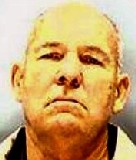
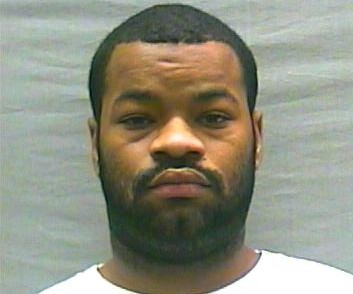
Gerald Mason
Murderer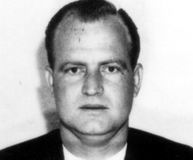 Gary Gene Tison
Murderer · USA · 1967
Gary Gene Tison was serving life sentences at the Arizona state prison. He had…
7 victims
Gary Gene Tison
Murderer · USA · 1967
Gary Gene Tison was serving life sentences at the Arizona state prison. He had…
7 victims
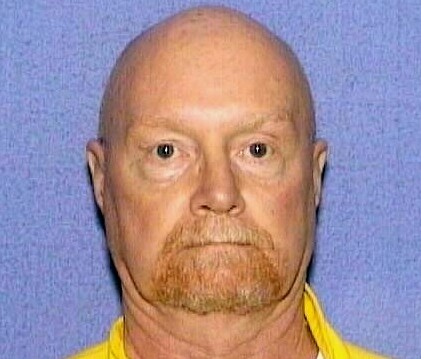 Gary Duane Rardon
Murderer · USA · 1962
Gary Duane Rardon killed a man in 1962 and later served 4 years for manslaughte…
4 victims
Gary Duane Rardon
Murderer · USA · 1962
Gary Duane Rardon killed a man in 1962 and later served 4 years for manslaughte…
4 victims
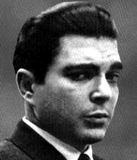 Charles Howard Schmid
Murderer · USA · 1964
Charles Howard Schmid was born on 8 July 1942 and was adopted by Charles and Ka…
3 victims
Charles Howard Schmid
Murderer · USA · 1964
Charles Howard Schmid was born on 8 July 1942 and was adopted by Charles and Ka…
3 victims
 Miguel Rios
Murderer · USA · 1992
Miguel Rios was sentenced to death on April 2, 1996 for the shooting death of M…
2 victims
Miguel Rios
Murderer · USA · 1992
Miguel Rios was sentenced to death on April 2, 1996 for the shooting death of M…
2 victims
 Myron Lance
Spree killer · USA · 1966
Myron Lance was 25 years old on Dec. 17, 1966, when he teamed up with fellow pa…
6 victims
Myron Lance
Spree killer · USA · 1966
Myron Lance was 25 years old on Dec. 17, 1966, when he teamed up with fellow pa…
6 victims
 Laurie Tackett
Homicide · USA · 1992
Mary Laurine “Laurie” Tackett was born in Madison, Indiana on October 5, 1974.…
1 victim
Laurie Tackett
Homicide · USA · 1992
Mary Laurine “Laurie” Tackett was born in Madison, Indiana on October 5, 1974.…
1 victim
 Antoinette Pelzer
Murderer · USA · 2012
Antoinette Pelzer was homeless and had been diagnosed with schizophrenia. Her f…
2 victims
Antoinette Pelzer
Murderer · USA · 2012
Antoinette Pelzer was homeless and had been diagnosed with schizophrenia. Her f…
2 victims
 David Cooper
Murderer · USA · 1993
July 18, 1993 — After church, Latasha Goodman and her family had Sunday dinner…
1 victim
David Cooper
Murderer · USA · 1993
July 18, 1993 — After church, Latasha Goodman and her family had Sunday dinner…
1 victim
- Gender
- male
- Country
- USA
- Location
- Los Angeles County, California, USA
- Date of birth
- January 26, 1934
- Age at first offence
- 23
- Characteristics
- rape, alcohol, burglary
- Victim profile
- Richard Phillips and Milton Curtis ( police officers )
- Method of murder
- Shooting
- Date(s) of murder
- July 22, 1957
- Years active
- 1957
- Date of arrest
- January 29, 2003 (45 years later)
- Status
-
Life imprisonment
Pleaded guilty and was sentenced to life in prison in 2003
Case overview
Gerald Fit Mason (born c. 1934) was a criminal from the United States.
In 1957 in El Segundo, Mason bound, blindfolded, and stripped four teenagers before raping one of the girls and robbing all of them at gunpoint. After leaving the scene in their car, he stopped at a red light but then went through it anyway, and was stopped by police officers Richard Phillips and Milton Curtis. He fled after killing them both.
For the next forty-five years, Mason was a law-abiding citizen and was not arrested until 2003. He bought a chain of service stations and became wealthy, married, and raised a family, and he was described by friends and neighbors as friendly and helpful.
The case against him relied on matching a fingerprint and handwriting. He was also identified by a bullet wound scar on his back. Mason used an alias while going on vacation in the south.
Timeline
- 1957 — In El Segundo, Mason bound, blindfolded, and stripped four teenagers, raped one girl, and robbed all of them at gunpoint; he later shot and killed police officers Richard Phillips and Milton Curtis.
- 1956 — Mason was arrested for burglary in South Carolina.
- 1960 — The actual murder weapon was recovered in Manhattan Beach in a back yard; the serial number was traced by investigators back then to Shreveport, Louisiana.
- September 2002 — A phone call to the El Segundo Police Department from a woman who said her uncle had bragged about being responsible for murdering two El Segundo police officers led investigators to re-examine evidence; Mason was linked by fingerprint identification.
- Jan. 29, 2003 — Mason answered a knock on his front door; El Segundo Police Lt. Craig Cleary took Mason into custody.
- 2003 — Mason pleaded guilty and was sentenced to life in prison.
- 2017 — Mason was described as being eligible for parole.
- 46 years after the 1957 killings — Mason returned to Los Angeles to answer for his crimes following a judicial hearing in South Carolina.
The offence
Mason bound, blindfolded, and stripped four teenagers before raping one of the girls and robbing all of them at gunpoint.
After leaving the scene in their car, he stopped at a red light but then went through it anyway. He was stopped by police officers Richard Phillips and Milton Curtis.
Mason fled after killing both officers.
Victims
Teenagers
One girl was raped. Three other teenagers, including Dewar, were robbed and terrorized.
Police officers
- Officer Richard Phillips
- Officer Milton Curtis
Investigation
Investigators had matching a fingerprint and handwriting.
A fingerprint taken in 1957 matched Mason after investigators used modern digital processing of original fingerprint photographs and a nation-wide FBI database of criminal fingerprints that included a copy of every criminal fingerprint in every state.
Investigators also relied on handwriting. Paul Edholme matched the handwriting of the George F. Wilson who checked into the YMCA to a South Carolina eye examination report in the name of Gerald F. Mason. Edholme stated:
"The handwriting jumped off the page at me, and it was something that I'm going, you know, 'I gotcha.'"
"If you put one [handwriting] over the other, I mean, it's almost identical,"
"I indicated to the sheriff's department that I was 99.9 percent sure that this was done by the same person."
Investigators also used a bullet-shaped scar on Mason’s back as part of identification.
Howard Speaks lifted latent fingerprint lifts from the steering wheel and found two latent lifts of the left thumb print, which were dusted from the steering wheel and moved around to find ridges.
Deputy District Attorney Darren Levine described the case as involving the cold-blooded killing of two officers in 1957, and he connected the case to a unit set up to prosecute anyone who wounds or kills a law enforcement officer.
Lt. Craig Cleary described the stop at the corner of Sepulveda Boulevard and Rosecrantz and the suspect proceeding through a red light.
Arrest and custody
On the morning of Jan. 29, 2003, Gerald Mason answered a knock on his front door. He never expected that his past would catch up with him. El Segundo Police Lt. Craig Cleary said:
"He never denied it. He never reacted,"
"He just stared off and just shook his head."
Officer Richard Phillips and Rookie Officer Milton Curtis had been killed during the 1957 events. In 2003, officers considered Mason potentially dangerous due to his age and other factors.
A search of his house turned up a collection of loaded firearms.
Trial and plea
Mason pleaded guilty.
At his sentencing hearing, he tearfully apologized to the victim's families and said he had committed his crimes while under the influence of alcohol. He stated:
"It's impossible to express to so many people how sorry I am. I do not understand why I did this. It does not fit in my life. It is not the person I know. I detest these crimes."
Levine said:
"He was remorseful,"
"But I think he was more sad and more sorry for having been caught."
Sentencing
Mason was sentenced to life in prison in 2003.
He was described as being eligible for parole in 2017.
Appeals
No appeals were described.
Outcome
Mason pleaded guilty and was sentenced to life in prison in 2003.
He returned to Los Angeles to answer for his crimes following a judicial hearing in South Carolina.
Aftermath
Investigators carried pocket watches from the families of the slain officers, with messages on the watches.
Darren Levine was described as hoping the investigators brought the families some measure of comfort, stating:
"I hope we brought them some measure of comfort, knowing that we got the guy."
Howard Speaks said:
"I've been waiting for this date a long time, but the wait was well worth it,"
and later:
"I didn't think I'd ever live to see it,"
"It'll live with me the rest of my days,"
Porter was also quoted:
Curtis’ wife Jean Curtis stated:
"We had a little argument, and I've always felt bad about that,"
"We didn’t get to say goodbye."
Jean Curtis later said:
"I'm not his victim anymore. My son is not his victim anymore,"
"I'm so grateful, and I had to wait this long. It's worth the wait."
The State of California was described as vowing that Mason would never be released.
Other details
Prior arrest
Mason was arrested for burglary in 1956 in South Carolina. It was described as the only time he had ever been arrested.
Firearms and evidence chain
In 1960, the actual murder weapon was recovered in Manhattan Beach in a back yard, uncovered by Doug Tuley while he did yard work. Macelderry stated:
"The finding of that gun was huge to this case also."
The serial number was traced by investigators back to Shreveport, Louisiana. Investigators found out the gun was sold in 1957 and sold by Billy Gene Clark. Clark stated:
"I pointed out that this was the least expensive one, at $29.95, then that's he decided that's what he wanted,"
Investigators found one name, G.D. Wilson, in a record of firearms sold at the store, tracked George D. Wilson to a nearby YMCA, and then located the register from the actual piece of paper where he signed in to the YMCA as George D. Wilson. Lowe stated that the register allowed them to close the case.
Fingerprint processing and matching
The 1957 fingerprint was lifted by Speaks. Investigators reprocessed original photographs and loaded a digital copy of the killer’s print into a nation-wide FBI database created after 9/11.
Witness descriptions and remarks
Bob Dewar recalled:
"I rolled the window down. … And that's when the gun came through the window,"
"'This is a robbery.' I said, gotta be somebody pulling a prank. But the gun was real."
Dewar also said:
"He came around from the driver's side to the passenger side, opened the car and raped the girl,"
Dewar described being told to march into the field and stated:
"He asked us to get out of the car. He said, 'I think I'm gonna kill you. I want you to march out into the field,'"
Dewar said:
"He was my first love. I never got over the first love. I don’t think anybody does, really,"
Jean Curtis said:
Officer Levine said the gunman came prepared with surgical tape and a flashlight and covered the teenagers’ eyes with tape and ordered them to take their clothes off.
Dewar said:
"I figured that it's just takes four bullets and we're all gone,"
Dewar continued:
"And then we heard the car door close and he drove away."
Lt. Craig Cleary recalled the stop at the corner of Sepulveda Boulevard and Rosecrantz and said:
"At the corner of Sepulveda Boulevard and Rosecrantz, the suspect stopped for the red light. And then, for an unknown reason, proceeded through the red light,"
Gilbert stated:
"Officer Philips appeared to be getting ready to start a citation, and as we stopped and looked the situation over,"
"He waved a paper at us, like everything was all right. So, we went ahead."
Porter recalled the radio call:
"Officer Philips said on the radio that they'd been shot, and needed an ambulance,"
Porter also stated:
"We never gave up,"
"We've always kept looking and looking and looking. The case was never closed."
Speaks described the vehicle and bullet holes:
"Bullet holes in the trunk, two in the rear windshield that shattered the windshield. So we know that the car was hit three times."
Speaks also said:
"I was very hopeful knowing that he must have been highly nervous and perspiring. He had to leave fingerprints on the steering wheel,"
and:
"I just dusted the steering wheel and moved it around and found the ridges that were showing. I found two latent lifts of the left thumb print."
Mason’s explanations
Mason said:
"I didn’t have a family life. I didn’t have any place to go, and things were not going well for me, so I took off to California,"
"I bought a gun at Shreveport with the intention of using it simply as a deterrent in so far as I was hitchhiking."
When asked why he attacked the teenagers and raped a 15-year-old girl, Mason said:
"When asked why he attacked the teenagers and raped a 15-year-old girl, Mason said he really didn't remember."
Mason explained why he killed the two officers:
"I thought, 'If I don't get them, they're gonna get me.' So when the officer turned away from me, I shot both officers, got back in the car and drove away."
Police and prosecutor commentary
Deputy District Attorney Darren Levine stated:
"It’s a violent world, especially in Los Angeles County, for peace officers,"
"Back then, it wasn’t like that."
Levine also said:
"We have to have a unit like this because in any given week, we could have five, six, seven, eight, 10 police officers shot at,"
Levine described the case’s lingering impact:
"But a cold-blooded cop killing in 1957 would haunt the police force in El Segundo for nearly half a century."
Levine stated:
"You can imagine the scrutiny and all the resources that were put forth to try and solve this case back in 1957,"
"There has been no report of the '49 Ford having been stolen,"
"There's no report out on the airwaves of this rape and robbery that had just occurred."
Macelderry said:
"We were digging up the weeds when I found the gun,"
"The serial number was traced by investigators back then to Shreveport, Louisiana."
Macelderry also said:
"The last thing that officer did before he died was mark the man that killed him for life,"
Lowe stated:
"Ice cold,"
"It was colder than cold."
Lowe also said:
"We gave the information to the crime lab,"
"They worked it. They cleaned up the print."
Lowe said the print tied investigators to Mason and said:
"We thought we were gonna be looking at a guy with a serious criminal history,"
Lowe described what they did next:
"Lowe says the first thing they did was look through boxes and boxes of evidence, collected over the years, which now had to be re-examined to see if any other clue could be connected to Gerald Mason."
Parole and release stance
Mason was described as being eligible for parole in 2017, and the State of California was described as having vowed that he would never be released.
Spotted an error, or have more information about this case?