Arthur James Julius
Murderer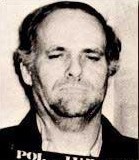 Ervil LeBaron
Murderer · USA · 1972
Ervil Morrell LeBaron (1925 to August 16, 1981) was the leader of a polygamous…
35 victims
Ervil LeBaron
Murderer · USA · 1972
Ervil Morrell LeBaron (1925 to August 16, 1981) was the leader of a polygamous…
35 victims
 Marvin Gray
Murderer · USA · 1975
Marvin Gray was convicted killer who claimed responsibility for 23 slayings and…
23 victims
Marvin Gray
Murderer · USA · 1975
Marvin Gray was convicted killer who claimed responsibility for 23 slayings and…
23 victims
 Yahweh ben Yahweh
Murderer · USA · 1980
Yahweh ben Yahweh was born and legally named Hulon Mitchell Jr. (October 27, 19…
23 victims
Yahweh ben Yahweh
Murderer · USA · 1980
Yahweh ben Yahweh was born and legally named Hulon Mitchell Jr. (October 27, 19…
23 victims
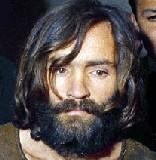 Charles Manson
Murderer · USA · 1969
Charles Milles Manson (born November 12, 1934) was an American criminal and mus…
9 victims
Charles Manson
Murderer · USA · 1969
Charles Milles Manson (born November 12, 1934) was an American criminal and mus…
9 victims
 Igor Suprunyuck
Serial killer · Ukraine · 2007
Name: Igor Suprunyuck · Also known as (Ukr): Ігор Супрунюк · Also known as (Rus…
21 victims
Igor Suprunyuck
Serial killer · Ukraine · 2007
Name: Igor Suprunyuck · Also known as (Ukr): Ігор Супрунюк · Also known as (Rus…
21 victims
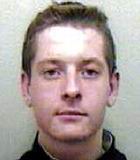 Matthew Hardman
Homicide · United Kingdom · 2001
1998 — Matthew Hardman moved to Llanfairpwll, Anglesey, when he was 13; his fat…
1 victim
Matthew Hardman
Homicide · United Kingdom · 2001
1998 — Matthew Hardman moved to Llanfairpwll, Anglesey, when he was 13; his fat…
1 victim
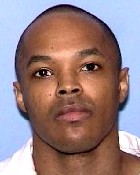 Terry Darnell Edwards
Murderer · USA · 2002
Name: Terry Darnell Edwards TDCJ Number: 999463 Date of birth: 08/10/1973 Gende…
2 victims
Terry Darnell Edwards
Murderer · USA · 2002
Name: Terry Darnell Edwards TDCJ Number: 999463 Date of birth: 08/10/1973 Gende…
2 victims
 Lesley Lee Gosch
Murderer · USA · 1985
Lesley Lee Gosch was convicted of killing the wife of a San Antonio bank presid…
1 victim
Lesley Lee Gosch
Murderer · USA · 1985
Lesley Lee Gosch was convicted of killing the wife of a San Antonio bank presid…
1 victim
 Abby Grason
Homicide · USA · 2004
Abby Grason was a 25-year-old woman of Chicago. Her history included mental ill…
2 victims
Abby Grason
Homicide · USA · 2004
Abby Grason was a 25-year-old woman of Chicago. Her history included mental ill…
2 victims
- Gender
- male
- Country
- USA
- Location
- Montgomery County, Alabama, USA
- Date of birth
- September 18, 1946
- Age at first offence
- 26
- Characteristics
- rape
- Victim profile
- ??? / Susie Bell Sanders, 29 ( his cousin )
- Method of murder
- Strangulation
- Date(s) of murder
- 1972 / January 29, 1978
- Years active
- 1972–1978
- Date of arrest
- —
- Status
-
Executed
Executed by electrocution in Alabama on November 17, 1989
Case information
Arthur James Julius was executed by electrocution in Alabama on November 17, 1989.
Background
Julius was serving a life term for a 1972 murder when he was released on a pass from a prison work-release center near Montgomery. While on a one-day release from prison, Julius allegedly raped and murdered his cousin Susie Sanders.
The offence
On January 29, 1978, Susie Sanders was found dead, nude, physically abused and apparently strangled in her home. Her body was discovered in her home by her father, E.O. Sanders.
Her father testified that when he and the victim's daughter entered the house, they saw Susie's nude body on a couch with her head on the floor and her legs in the air. Furniture had been knocked over and the telephone cord had been pulled from the wall.
Forensic examinations indicated traces of semen in the victim's vagina, anus, and mouth. Seminal fluid covered the length of a plastic banana found near the body. Her body was covered with bruises, abrasions, and "rub burns" indicating that she had been dragged across the carpet. Handfuls of her head hair were found near the body. An autopsy revealed that the cause of death was manual strangulation, probably inflicted from behind.
The state presented circumstantial evidence that the crime was committed by Susie Sanders' first cousin Arthur Julius. Evidence presented at trial indicated that Susie Sanders was brutally raped and murdered on January 29, 1978.
Julius had pinned a purple ribbon on the shirt of his white sweatsuit. Prison officials said the ribbon is worn by death row inmates to protest the death penalty.
Investigation
A toxicologist testified that hair found in Julius' underwear on January 29 had the same characteristics as the victim's head hair and that the hair could not have come from Julius. The same witness testified that various fibers found on Julius' body and clothing were the same as fibers found in the victim's house.
The state detailed inconsistencies in Julius' prior explanations of his activities on January 29. When Julius returned to Draper on January 29, he told Draper counselor Everett Rich that he had been at his cousin's house earlier that day. In a statement made shortly after his arrest, however, Julius denied that he saw Susie Sanders on January 29. Julius said that after he borrowed Clayton's car at 3:00 p.m., he met a girl near his uncle's house; after he had sex with the girl, he said he brought her back to where they had met; then he got gas for the car and went to the governor's mansion to see a friend who worked there; he went back to his uncle's house and then went to pick up Clayton for the ride back to Draper.
This statement differed from Julius' testimony at his first trial. At his first trial, the transcript of which was read into the record at the second trial, Julius testified that he drove to his uncle's house at 3:30 p.m. and stayed there for approximately 30 minutes, then left his uncle's house and headed for a nearby restaurant. On the way, he said he stopped to call his aunt (the victim's mother), Fanny Sanders, to ask for money. She supposedly suggested that they meet to have sex, as they allegedly had done several times in the past, in a nearby motel. She did not have time to go to the motel, so they had sex in Clayton's car. Julius testified that Fanny Sanders scratched his eye during their sexual encounter while attempting to remove his glasses. Julius testified that Fanny Sanders gave him a carton of cigarettes and $50 in cash, some of which he spent on gasoline.
Arrest / custody / leave
Willie Clayton, another cousin of Julius, checked Julius out of the Draper Work Release Center at 11:40 a.m. on January 29, 1978. As they drove to Montgomery, Julius asked Clayton when he had last seen Susie Sanders. Clayton loaned Julius his car at 3:30 p.m. and did not see Julius again until 6:30 p.m.
William Gray, the victim's neighbor, testified that he saw Clayton's car parked outside the victim's house at approximately 5:15 p.m.
At approximately 4:00 p.m. on January 29, Ruth Wheeler, the victim's second cousin, testified that she called Susie on the telephone. Susie said she would have to call Wheeler back because she was talking to her cousin "Bobo."
Fanny Sanders testified that Susie referred to her cousin Arthur Julius as Bobo.
At 6:30 p.m., Julius returned the car to Clayton, who had been visiting his brother-in-law, Orin Henderson. Henderson testified that Julius had a "fresh" cut under his eye. Clayton and Julius then drove back to the Draper Work Release Center. After Julius was checked in, he told Draper counselor Everett Rich that he was expecting an emergency telephone call. Later, Julius told Rich he had received a call and learned that his cousin had been robbed and killed. Julius said he had been at his cousin's house that day, but that she was all right when he left.
According to court records, Julius left on an eight-hour pass at 11 A.M. on Jan. 29, 1978, and borrowed a relative's car from 3:30 P.M. to 6:25 P.M. During that time, Julius beat Ms. Sanders and subjected her to ''grotesque sexual abuse'' before strangling her.
Trial
Julius pled guilty to a murder charge in 1972 and was sentenced to life imprisonment.
In 1978, while on a one-day release from prison, Julius allegedly raped and murdered his cousin Susie Sanders. He was tried, found guilty, and sentenced to death.
Julius testified that he met Fanny Sanders' suggested motel plan did not happen because she did not have time to go to the motel, so they had sex in Clayton's car. Julius claims Fanny Sanders scratched his eye during their sexual encounter while attempting to remove his glasses.
Julius' only defense witness was Joanne Minnefield, who testified that she had never heard Julius referred to as Bobo. On cross-examination, Minnefield conceded that she had only seen Julius and Susie Sanders together twice.
After Minnefield testified, the state was permitted to call one more witness, Jessie Bullard, who testified that he met Julius at the victim's home. Bullard could not recall the exact nickname Susie used to describe Julius, but he said "it was Jabbo, Bobo, Lobo or something."
The jury found Julius guilty of:
- murder committed by a defendant while under a sentence of life imprisonment, Ala.Code Sec. 13-11-2(6);
- murder by a defendant who has been convicted of any other murder in the twenty years preceding the crime, Ala.Code Sec. 13-11-2(13).
The trial court, accepting the jury's recommendation for the death sentence and after reviewing a presentencing report, found aggravating factors:
- The capital felony was committed by the defendant while under a sentence of imprisonment, Ala.Code Sec. 13-11-6(1);
- The defendant was previously convicted of another felony involving the use or threat of violence to the person, Ala.Code Sec. 13-11-6(2);
- The capital felony was especially heinous, atrocious, and cruel, Ala.Code Sec. 13-11-6(8).
The only mitigating circumstance was that Julius was 32 years old at the time of the crime, See Ala.Code Sec. 13-11-7(7).
Alabama Court of Criminal Appeals affirmed, 455 So.2d 975 (1983). Alabama Supreme Court affirmed, 455 So.2d 984 (1984).
Jury instruction issue (lesser included offense)
During its guilt phase deliberations, the jury requested the court to re-define the elements of the crimes charged. The court explained that, under Alabama law, a murder is a capital murder if the state proves one of the "aggravating factors" contained in the death penalty statute. The court listed the elements of first degree murder, second degree murder (which is first degree murder minus deliberateness and premeditation), and manslaughter (which is second degree murder minus malice).
When jurors expressed confusion as to their verdict options, the court attempted to explain the role of the aggravating factors in their deliberative process. The court told the jury to decide initially whether the aggravating factors were present and then to decide whether Julius was guilty of first or second degree murder, manslaughter, or not guilty.
The court told the jury: "It's only if you don't find any aggravating circumstances that you then have to determine whether it's murder in the first degree, murder in the second degree, manslaughter, or again, not guilty." Trial Transcript Vol. II at 291.
On direct appeal, both Alabama appellate courts held this instruction was erroneous in that it placed a condition precedent on the jury's ability to find the lesser included offense of manslaughter. Both courts said the error was harmless because there was no evidence to support giving an instruction on manslaughter. The court of criminal appeals pointed out evidence showing the maliciousness of the killing and the absence of justification, 455 So.2d at 981. The Alabama Supreme Court relied on the fact that Julius' sole defense was alibi, 455 So.2d at 986.
Julius argued that the circumstances of the crime, without any supporting testimony, could have warranted a manslaughter verdict, noting that the victim's house was found in disarray and that he received a cut below his eye. The Alabama courts disagreed and held that Julius' failure to produce any evidence in support of a manslaughter verdict rendered the trial court's misstatement harmless.
Sentencing phase instruction (sympathy / bias)
Julius argued that instructions at the sentencing phase violated the Eighth Amendment requirement that a capital sentencer be free to consider evidence offered as a reason for a sentence less than death. The trial court had instructed at the guilt phase that: "no sympathy, bias or prejudice for any person or individual should enter in your deliberations in rendering a verdict in this case ..." and then later at sentencing referenced: "I want to again remind you of the charge I gave you earlier concerning the basic law, as far as reasonable doubt and moral certainty are concerned, as well as your functions as jurors ..." Record at 303-304.
The trial court also instructed: "You can consider the evidence you heard in the guilt phase in considering any aggravating or mitigating circumstances at the present stage of the case. And that is what this hearing is all about, for you to consider and weigh aggravating circumstances and mitigating circumstances against each other in determining what the punishment for the Defendant will be in this case. You are to consider all relevant evidence, not only as to why the death sentence should be imposed, but to weigh and consider all of the evidence as to why it should not be imposed ..." Record at 303-304.
The trial court further instructed: "Now, the fact that I list these mitigating circumstances to you does not mean that those are the only mitigating circumstances that you can consider in this case. That is not meant to be an all inclusive of mitigating circumstances. You may find that there are other mitigating circumstances in this case from the evidence you heard and from anything that you may have heard in the evidence about Defendant's character or his life ..." Record at 308.
Appeals / habeas corpus litigation
After Julius' first death sentence, his conviction was reversed pursuant to the United States Supreme Court's ruling that Alabama's death penalty statute was unconstitutional. See 407 So.2d 152 (Ala.1981), and Beck v. Alabama, 447 U.S. 625 (1980). After Beck, the Alabama Supreme Court severed the unconstitutional portion. Beck v. State, 396 So.2d 645 (Ala.1980).
Julius was retried under the modified statute in 1982 and was again found guilty and sentenced to death.
Federal habeas corpus appeal (Eleventh Circuit)
Julius appealed from the district court order denying his petition for a writ of habeas corpus.
The Eleventh Circuit case included: Arthur James Julius, Petitioner-Appellant, v. W.J. Johnson, Warden, Holman Unit, Respondent-Appellee. No. 86-7589. United States Court of Appeals, Eleventh Circuit. March 9, 1988. Appeal from the United States District Court for the Middle District of Alabama. Before VANCE, HATCHETT and CLARK, Circuit Judges. PER CURIAM: Julius appeals from the district court order denying his petition for a writ of habeas corpus. We affirm.
The Eleventh Circuit discussed ten claims:
- ineffective assistance of trial counsel;
- ineffective assistance of appellate counsel;
- erroneous jury instructions regarding the lesser included offense of manslaughter;
- double counting of aggravating circumstances in the guilt and penalty phases of the trial;
- prosecutorial misconduct during closing arguments;
- the use of the 1972 murder conviction, with a cautionary instruction, during the guilt phase;
- the absence of a transcript of the jury qualification proceeding in the Alabama appellate court record;
- the use of Julius' testimony from his prior trial during the guilt phase without a proper explanatory instruction;
- the use, as an aggravating circumstance, of the 1972 murder conviction obtained pursuant to an unconstitutional death penalty statute;
- retrial under a judicially rewritten death penalty statute.
The Eleventh Circuit stated that it reached the merits of the first four issues and held issues five through ten were barred because Julius failed to timely raise them in state courts and failed to show cause for procedural default. The Eleventh Circuit affirmed denial of the writ.
Second federal habeas corpus petition (Eleventh Circuit)
There was also a later appeal: Charlie Jones, Warden, Holman Unit, Respondent-Appellee. No. 89-7089. Federal Circuits, 11th Cir. May 31 1989. Appeal from the United States District Court for the Middle District of Alabama, Truman Hobbs, Judge. PER CURIAM: Finding that the district court made no error, the court AFFIRMED the district court's order and amendment, attached as an Appendix.
Sentencing
Julius was sentenced to death after a second trial in 1982 following Alabama's severance of the unconstitutional death penalty statute provision.
At sentencing, the trial court found aggravating factors:
- 13-11-6(1).
- 13-11-6(2).
- 13-11-6(8). The trial court found only one mitigating circumstance: Julius was 32 years old at the time of the crime, See Ala.Code Sec. 13-11-7(7).
Other details
Prison chaplain and family gesture at execution
Julius gave two thumbs up and waved both hands, nodding in the direction of his brother, Clarence Byrd, and the prison chaplain, Robert Simmons, before being executed at 12:09 A.M.
Prior legal status
Julius was the 119th person put to death in the United States since the 1976 ruling by the United States Supreme Court allowing states to resume use of the death penalty. He was the fourth inmate to die in Alabama's electric chair that year.
Brady / exculpatory evidence claims (post-conviction)
In a later post-conviction proceeding, Julius argued claims including newly discovered exculpatory evidence suppressed by the prosecution, knowing use of false or misleading testimony, lesser included offense instruction error, ineffective assistance of counsel error, and sentencing phase jury instruction error.
Newly discovered evidence: Wheeler
The evidence from Ms. Wheeler was that around 4:00 p.m. on the afternoon of January 29, she called the victim on the telephone. After a brief conversation, Susie Sanders told Ms. Wheeler that she was going to talk with her cousin Bobo and she would call Ms. Wheeler right back.
The court addressed whether a police report used "Bozo" rather than "Bobo." The court found that the transcribed notes reported the name as Bobo and Ms. Wheeler testified at trial and before the grand jury that the name was Bobo. The court stated it found nothing in Ms. Wheeler's testimony exculpatory or different than at trial.
Newly discovered evidence: Gray
William Gray, Jr. testified at trial that he saw a car matching the description of a car driven by Julius at the victim's house about 5:10 or 5:15 p.m. The post-conviction proceeding addressed police reports about Gray initially giving a false name and address and not mentioning seeing the car in one report.
The proceeding described police reporting and a January 31 interview note in which Gray provided details including that he saw the victim's house area at about 5:00 or 5:10 p.m., the color and model description of a Ford sedan, and that on the previous Sunday he had observed the car drive past his house. The proceeding quoted the January 31 interview note beginning: "On this date we went to Carver High School and contacted Det. Davis School Relations Officer at that location..." The court determined that producing all reported interviews might be required under Brady but found no reasonable probability that disclosure would have changed the outcome.
Other alleged exculpatory evidence
The proceeding discussed other alleged exculpatory materials, including reports of harassing phone calls and other boy friends, a statement about the father of the victim's daughter's unhappiness about the victim's proposed marriage, and a contention about broken eyeglasses and evidence that E.O. Sanders did not know anyone named Bobo.
The court found the glasses issue lacked materiality and described the nickname evidence as cumulative, based on trial testimony from friends of the victim, Susie's mother, and Jessie Bullard.
Inventory list / money inventory
The post-conviction proceeding also addressed an inventory list regarding a property inventory reflecting that a twenty-dollar and a ten-dollar bill were recovered by the police from the victim's residence. Later in proceedings, the court vacated Part I.E of its opinion because petitioner did not present the issue contained in Part I.E to the court in his petition and because testimony showed the money included on the inventory list had been taken from petitioner.
Landrum forensic testimony claim
Julius filed a claim that the State's expert serologist William Landrum knowingly created a false impression about a semen stain on a nightgown found at the victim's house. After a hearing before Judge Gordon, Julius withdrew the charge of knowingly creating a false impression. The proceeding described Landrum's testimony that the stain was a pure semen stain and that the person leaving the semen stain had AB type blood.
The proceeding described petitioner’s expert testimony about semen stain interpretation, including that it is important to know whether the stain is pure semen or mixed with physiological fluids, and that the petitioner was admitted to be a secretor and it was impossible to determine after her death whether the victim was a secretor. The court found no basis for granting the writ on the Landrum claim, stating the withdrawn claim conceded no basis for contention that Landrum's testimony was a knowing use to create a false impression.
Ineffective assistance and appellate record transcript
The Eleventh Circuit addressed a claim of ineffective assistance of appellate counsel that the record before Alabama courts did not contain a transcript of the juror selection proceedings and that appellate counsel failed to ensure it was presented. The Eleventh Circuit found the claim lacked prejudice because Julius did not offer any facts suggesting the transcript might support a constitutional violation.
Outcome
Julius lost an appeal when the Supreme Court refused by a 7-to-2 vote to spare his life. Shortly before execution, prison officials said he was serving a life term for a 1972 murder and had been sentenced to death for the 1978 rape and killing of his cousin Susie Bell Sanders.
He was executed by electrocution in Alabama on November 17, 1989.
Spotted an error, or have more information about this case?