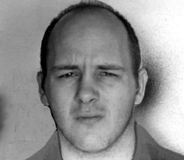
Myron Lance
Spree killer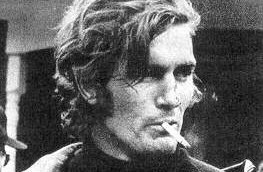 Paul John Knowles
Spree killer · USA · 1974
Paul John Knowles (April 17, 1946 – November 18, 1974) was an American spree ki…
35 victims
Paul John Knowles
Spree killer · USA · 1974
Paul John Knowles (April 17, 1946 – November 18, 1974) was an American spree ki…
35 victims
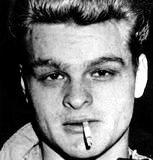 Charles Starkweather
Spree killer · USA · 1957
Charles Raymond Starkweather was born in Lincoln, Nebraska, on November 24, 193…
11 victims
Charles Starkweather
Spree killer · USA · 1957
Charles Raymond Starkweather was born in Lincoln, Nebraska, on November 24, 193…
11 victims
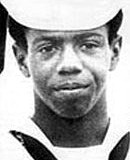 Mark Essex
Spree killer · USA · 1973
Mark James Robert Essex was a Navy veteran who engaged in a shooting and arson…
9 victims
Mark Essex
Spree killer · USA · 1973
Mark James Robert Essex was a Navy veteran who engaged in a shooting and arson…
9 victims
 Allen Leroy Anderson
Spree killer · USA · 1976
Allen Leroy Anderson was a 34-year-old vagrant with a long record of felony arr…
8 victims
Allen Leroy Anderson
Spree killer · USA · 1976
Allen Leroy Anderson was a 34-year-old vagrant with a long record of felony arr…
8 victims
 Dennis Whitney
Spree killer · USA · 1960
Dennis Whitney was convicted and sentenced in Florida after a course of killing…
7 victims
Dennis Whitney
Spree killer · USA · 1960
Dennis Whitney was convicted and sentenced in Florida after a course of killing…
7 victims
 Keydrick Jordan
Murderer · USA · 1991
Sentence vacated death; remanded for a new penalty-phase proceeding after the c…
2 victims
Keydrick Jordan
Murderer · USA · 1991
Sentence vacated death; remanded for a new penalty-phase proceeding after the c…
2 victims
 David Clayton Hill
Murderer · USA · 1994
June 9, 1964 — David Clayton Hill was born. · March 7, 1994 — Spencer Guerry wa…
1 victim
David Clayton Hill
Murderer · USA · 1994
June 9, 1964 — David Clayton Hill was born. · March 7, 1994 — Spencer Guerry wa…
1 victim
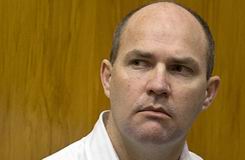 Jeremy McLaughlin
Homicide - Murderer · New Zealand · 1995
Jeremy George Edward McLaughlin (35) — defendant · Jade Bayliss (13) — victim;…
2 victims
Jeremy McLaughlin
Homicide - Murderer · New Zealand · 1995
Jeremy George Edward McLaughlin (35) — defendant · Jade Bayliss (13) — victim;…
2 victims
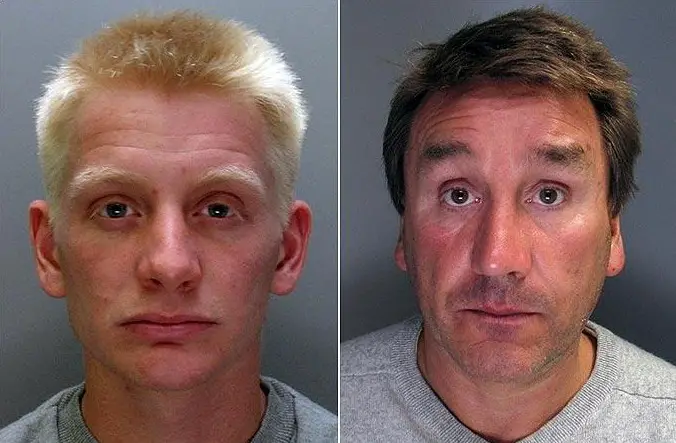 Norman & Joseph Jones
Murderers · United Kingdom · 2008
Norman Jones and Joseph Jones were convicted and jailed for life for the abduct…
1 victim
Norman & Joseph Jones
Murderers · United Kingdom · 2008
Norman Jones and Joseph Jones were convicted and jailed for life for the abduct…
1 victim
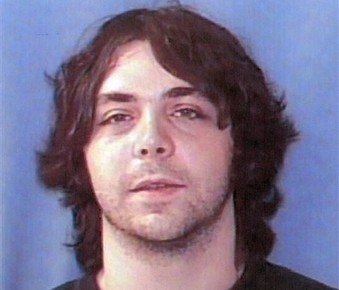 Wesley Higdon
Mass murderer · USA · 2008
Wesley Neal Higdon was a 25-year-old press operator from Henderson. He was desc…
5 victims
Wesley Higdon
Mass murderer · USA · 2008
Wesley Neal Higdon was a 25-year-old press operator from Henderson. He was desc…
5 victims
- Gender
- male
- Country
- USA
- Location
- Salt Lake County, Utah, USA
- Date of birth
- 1941
- Age at first offence
- 25
- Characteristics
- rape, serial rapist, drugs, alcohol, abuse
- Victim profile
- Stephen Shea, 18 / Michael Holtz / Grant Strong / James Sizemore, 47; Beverly Mace, 34, and Fred William Lillie, 20
- Method of murder
- St abbing with knife - Shooting
- Date(s) of murder
- December 17-21, 1966
- Years active
- 1966
- Date of arrest
- December 21, 1966
- Status
-
Died in custody
Sentenced to death; commuted to life imprisonment after the U.S. Supreme Court ruled the death penalty unconstitutional on February 25, 1977; died in prison on August 29, 2010
Case record: Myron Lance
Background
Myron Lance was 25 years old on Dec. 17, 1966, when he teamed up with fellow parolee Walter Kelbach, 28, to begin a five-day spate of killing that began with the abduction of a Kearns service station attendant. Lance and Kelbach were ex-convicts and were described as veterans of prison and aggressive homosexuals, each given to abuse of drugs and alcohol. Lance and Kelbach shared a fondness for inflicting pain.
The offence
Lance and Kelbach committed an abduction of a Kearns service station attendant. The nude body of Steven Shea, 18, was found the next day on a dirt road in Tooele County. Steven Shea had been stabbed five times.
Michael Holtz, 18, was abducted from a Salt Lake City service station. Holtz was stabbed five times and his nude body was dumped near a highway in Summit County.
The killers took less than $300 from the two service stations.
On Dec. 21, cab driver Grant Creed Strong was found shot in the back of the head at the Salt Lake City Municipal Airport.
About 30 minutes later, Lance and Kelbach entered Lally’s Tavern in Salt Lake and began shooting. Bar patrons Fred W. Lillie, 20, James Sizemore, 47, and Beverly Mace, 34, were shot dead. A third patron, Verl Leon Medas, was wounded but recovered.
Lance and Kelbach were apprehended about three hours later at a police roadblock in Parleys Canyon.
A separate description of the events stated that, on the night of December 17th, 1966, Lance and Kelbach robbed Stephen Shea of $147.00 at gunpoint, forced him into the back seat of their station wagon, drove him into the desert, ordered him to strip, and Shea was raped by both Kelbach and Lance. The description stated that a coin was tossed to decide who would eliminate Shea, and that Kelbach won, plunged a knife into Shea’s chest five times, and left the body lying on a lonely desert road.
The separate description also stated that, on the eighteenth of December, Lance and Kelbach kidnapped Michael Holtz, the night attendant at another Salt Lake City filling station. It stated that Holtz was raped by both abductors and forced to watch while coins were tossed to choose his executioner, and that Lance won and stabbed Holtz once in the heart with the same stiletto used on Stephen Shea.
The separate description stated that on December 21, Lance and Kelbach flagged down a taxi driver named Grant Strong, directed him to Salt Lake City’s airport, and that Strong radioed the dispatcher. It stated that Kelbach drew a gun and pressed it to Strong’s skull, demanding money, and that Strong surrendered all his cash on hand—nine dollars—but the captors were not seriously interested in robbery and shot Strong through the head. It stated that by that time Lance and Kelbach had arrived at Lolly’s Tavern near the city’s airport.
The separate description stated that the gunmen produced their weapons and shouted to patrons that it was a stickup, and that Lance shot James Sizemore through the head, apparently choosing him at random. It stated that the gunmen snatched $300 from the cash register and fired a stream of bullets into the bar as they left, and that Beverly Mace and Fred William Lillie were killed.
Investigation and arrest
Lance and Kelbach were apprehended about three hours later at a police roadblock in Parleys Canyon, after the shootings at Lally’s Tavern.
Trial
Lance and Kelbach were convicted by a jury of first-degree murder for the deaths of Sizemore and Lillie, and they were sentenced to die.
A separate description stated that they were charged with first-degree murder, and that a judge and jury needed little time to arrive at a guilty verdict and sentence them to death, and that they were convicted on five counts of murder and sentenced to death.
Sentencing
Lance and Kelbach were sentenced to die.
Their death sentences were commuted to life terms in 1972 when the U.S. Supreme Court ruled the death penalty unconstitutional.
On February 25, 1977, the district court sentenced Kelbach to two consecutive sentences of life imprisonment; Kelbach did not appeal the reduction of his sentence from death to life imprisonment.
In 1977 habeas corpus proceedings, the court noted that the United States Supreme Court vacated Kelbach’s death sentence and remanded the case after declaring a death penalty provision unconstitutional. It referenced Furman v. Georgia, 408 U.S. 238, 33 L. Ed. 2d 346, 92 S. Ct. 2726 (1972), and Kelbach v. Utah, 408 U.S. 935, 33 L. Ed. 2d 751, 92 S. Ct. 2858 (1972).
Appeals
In an appeal captioned “WALTER B. KELBACH, PLAINTIFF AND APPELLANT, v. O. LANE MCCOTTER, DIRECTOR, UTAH DEPARTMENT OF CORRECTIONS, DEFENDANT AND APPELLEE,” the appellate court affirmed the district court’s dismissal of Kelbach’s petition for a writ of habeas corpus.
Kelbach claimed entitlement to the writ on three grounds: (i) he was denied the right to be tried before a representative jury; (ii) the trial court “lost jurisdiction” over him because it did not immediately resentence him to life imprisonment after the United States Supreme Court vacated his death sentence; and (iii) he was improperly sentenced to life imprisonment under a penalty provision not in effect at the time he committed the murders.
The appellate decision held:
- The court concluded that Kelbach waived the right to challenge the jury selection procedure by failing to object at trial, and it discussed the Salt Lake County jury selection procedure limited to real property holders and its subsequent invalidation.
- The court concluded the time limits for pronouncing judgment were not jurisdictional and were “merely directory.”
- The court concluded Kelbach’s challenge to the life sentence through an extraordinary writ was procedurally barred because it could have been raised on direct appeal and no unusual circumstances or special reason had been demonstrated.
Verbatim quotations included in the appellate material were:
"'In considering an appeal from a dismissal of a petition for a writ of habeas corpus, no deference is accorded the lower court's Conclusions of law that underlie the dismissal of the petition. We review those for correctness.'"
"'Our decision is so limited in scope . . . that its effects will be minimal. It applies only to those persons convicted in Salt Lake County during the period of time the improper jury selection system was used, and is further limited to persons who timely objected to their jury panel, because a defendant, by accepting a jury, waives his right to object to the panel.'"
"'In such a situation, the petitioner must present some special reason why the rule should not apply: he or she must demonstrate that it would be 'wholly unconscionable not to reexamine the conviction.'"
Outcome
Lance served a life prison sentence.
In 1972, the death sentences were commuted to life terms after the U.S.
A parole-related statement quoted a response attributed to Lance during a parole board inquiry: when parole board member Michael Sibbett asked what Lance would do in his shoes, Lance responded, “I don’t see how you could ever let me out.”
The board decided that the pair should “spend their natural life in prison.”
The board said the “extremely aggravating factors of intentional, premeditated criminal activity that caused the death of multiple vulnerable victims during a five-day period cannot be mitigated on the scale of justice to support parole for either Mr. Lance or Mr. Kelbach.”
A Department of Corrections spokesman, Steve Gehrke, said Lance was taken from the prison to the hospital on Aug. 15.
A separate description stated that Lance coldly stated: “I haven't any feelings towards the victims,” and it stated Kelbach added: “I don’t mind people getting hurt because I just like to watch it.”
Aftermath
Lance died Monday morning of natural causes at University Hospital. He was 69. Lance died in prison on August 29, 2010.
Walter Kelbach, 72, remained incarcerated at the state prison in Gunnison at the time described.
Spotted an error, or have more information about this case?