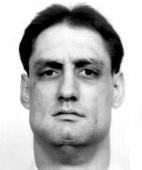
Jamie Bruce McCoskey
Murderer Brian Kevin Rosenfeld
Murderer · USA · 1985
Brian Kevin Rosenfeld Brian Kevin Rosenfeld was sentenced to three concurrent l…
23 victims
Brian Kevin Rosenfeld
Murderer · USA · 1985
Brian Kevin Rosenfeld Brian Kevin Rosenfeld was sentenced to three concurrent l…
23 victims
 Russell Ellwood
Murderer · USA · 1991
Russell Ellwood was a former taxi driver. Authorities suspected him of killing…
20 victims
Russell Ellwood
Murderer · USA · 1991
Russell Ellwood was a former taxi driver. Authorities suspected him of killing…
20 victims
 Robert Martines Perez
Murderer · USA · 1994
Name: Robert Martines Perez · Other name used in proceedings: Robert Martinez P…
15 victims
Robert Martines Perez
Murderer · USA · 1994
Name: Robert Martines Perez · Other name used in proceedings: Robert Martinez P…
15 victims
 Billy Frank Vickers
Murderer · USA · 1993
Billy Frank Vickers Vickers was executed by lethal injection in Texas on Januar…
14 victims
Billy Frank Vickers
Murderer · USA · 1993
Billy Frank Vickers Vickers was executed by lethal injection in Texas on Januar…
14 victims
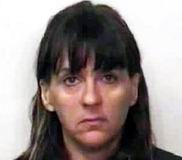 Camellia Brown
Murderer · USA · 2006
Camellia Boyd Norton Brown was a Knightdale woman whose case involved the shoot…
1 victim
Camellia Brown
Murderer · USA · 2006
Camellia Boyd Norton Brown was a Knightdale woman whose case involved the shoot…
1 victim
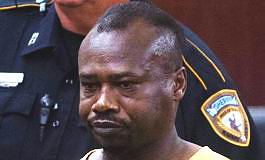 David Conley
Mass murderer · USA · 2015
David Ray Conley III was the main suspect in a mass shooting in northern Harris…
8 victims
David Conley
Mass murderer · USA · 2015
David Ray Conley III was the main suspect in a mass shooting in northern Harris…
8 victims
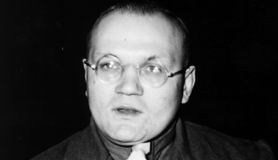 Rudolf Pleil
Serial killer · Germany · 1946
Rudolf Pleil was convicted in connection with manslaughter in the axe killing o…
25 victims
Rudolf Pleil
Serial killer · Germany · 1946
Rudolf Pleil was convicted in connection with manslaughter in the axe killing o…
25 victims
 Louise Peete
Murderer · USA · 1912
Louise Peete (born Lofie Louise Preslar; September 20, 1880; Bienville, Louisia…
3 victims
Louise Peete
Murderer · USA · 1912
Louise Peete (born Lofie Louise Preslar; September 20, 1880; Bienville, Louisia…
3 victims
 Michael Angelo Coleman
Murderer · USA · 1979
Michael Angelo Coleman appealed his conviction of murder in the first degree in…
1 victim
Michael Angelo Coleman
Murderer · USA · 1979
Michael Angelo Coleman appealed his conviction of murder in the first degree in…
1 victim
- Gender
- male
- Country
- USA
- Location
- Harris County, Texas, USA
- Date of birth
- October 5, 1964
- Age at first offence
- 27
- Characteristics
- kidnapping, rape, robbery
- Victim profile
- Michael Keith Dwyer, 20
- Method of murder
- St abbing with knife
- Date(s) of murder
- November 13, 1991
- Years active
- 1991
- Date of arrest
- 2 days after
- Status
-
Executed
Executed by lethal injection on November 12, 2013
Overview
Jamie Bruce McCoskey was sentenced to death on March 5, 1993 and was later executed by lethal injection on November 12, 2013. He was convicted of capital murder for killing Michael Keith Dwyer during the course of kidnaping. The conviction also involved the rape of Dwyer's pregnant fiance, Laurie Collins.
Timeline
- November 13, 1991 — An engaged couple, Michael Keith Dwyer and Laurie Collins, returned to their apartment complex from a shopping trip and went upstairs to their apartment; Dwyer encountered McCoskey standing in the doorway.
- January 24, 1992 — A Harris County grand jury indicted McCoskey for capital murder for the killing of Dwyer.
- November 12, 1992 — A jury convicted McCoskey of capital murder.
- November 16, 1992 — The trial court sentenced McCoskey to death by lethal injection.
- May 22, 1996 — The Texas Court of Criminal Appeals affirmed McCoskey’s sentence.
- January 6, 1997 — The U.S. Supreme Court denied review of McCoskey’s petition for certiorari.
- May 17, 1997 — McCoskey filed an application for a state writ of habeas corpus.
- June 17, 2003 — McCoskey filed a subsequent application on June 17, 2003.
- June 6, 2007 — The Court of Criminal Appeals denied McCoskey’s second application.
- March 11, 2009 — The Court of Criminal Appeals denied the first application.
- May 31, 2011 — The Southern District of Texas, Houston Division denied McCoskey’s petition for a federal writ of habeas corpus.
- May 29, 2012 — The U.S. Court of Appeals for the Fifth Circuit affirmed the denial of federal habeas relief.
- January 7, 2013 — The U.S.
- June 27, 2013 — The 185th Judicial District Court of Harris County scheduled McCoskey’s execution for November 12, 2013.
- July 18, 2013 — The execution order was amended.
- November 12, 2013 — McCoskey was executed by lethal injection; he was pronounced dead at 6:44 p.m. CST, 19 minutes after the lethal drug began taking effect.
The offence
Between approximately 6:00 and 6:30 p.m. on November 13, 1991, an engaged couple returned to their apartment complex from a brief shopping trip. They went to their apartment, and the decedent unlocked the door, leaving the keys in the lock until groceries were brought inside. As Dwyer turned to remove the keys, he encountered McCoskey standing in the doorway. McCoskey unzipped his jacket to reveal a hunting knife in a scabbard in the waist of his pants.
When asked what he wanted, McCoskey responded that he wanted a ride and that they were going to take him where he needed to go. Dwyer said he did not have gas or any money to put gas in the car. McCoskey told him that did not matter. Dwyer agreed to take McCoskey where he wanted on the condition that Collins stay behind, but McCoskey insisted that she come along. The three got into the car with the couple in the front seat and McCoskey in the back. McCoskey instructed the man to go to a gas station and put gas in the car, which he did.
Two or three blocks away from the station, McCoskey decided he wanted to ride up front in the passenger seat so he could get out quickly in case a police officer pulled them over. After the positions were changed, McCoskey instructed the driver to get onto the highway I-10 eastbound. While they were on the highway, McCoskey made several contradictory statements, including that he was going to kill the couple; that he just needed a ride and he knew no one would volunteer; that he knew how to kill people using martial arts techniques; and that he was doing this for someone else who wanted him to steal the car.
Eventually, McCoskey instructed Dwyer to exit I-10 and directed him to an embankment in the middle of an empty field, looking for an isolated place. After the car was stopped, McCoskey took the keys and walked over to a Suburban parked nearby to tell its occupants that the land was private property and they needed to leave. After a brief conversation, the occupants of the Suburban left. McCoskey returned “kind of . . . jumpy,” grabbed Dwyer around the neck, pulled him down, and put the knife to his throat. McCoskey ordered Collins to handcuff the decedent’s hands behind him.
McCoskey moved the coats from the trunk to the back seat, placed Dwyer in the trunk, returned to the car, and got into the driver’s seat to figure out how to drive. He ordered Collins to take off her shorts because he did not want her to “jump out of the car and run.” McCoskey left the embankment but could not find his way out of the surrounding neighborhood, asked some construction workers for directions, and then got back onto the highway.
During the ensuing period, McCoskey began fondling Collins’s genitals. When she started crying, he turned up the radio so “she would not get embarrassed and so her boyfriend could not hear.” McCoskey then unzipped his pants and tried to force Collins to engage in oral sex by pushing her head down, but when she started gagging, he discontinued the assault.
As McCoskey drove in the direction of the couple’s apartment, Dwyer attempted to tell him that Collins was pregnant and asked him not to hurt her. McCoskey responded that Dwyer better shut up and not make him mad. McCoskey told them he was going to leave Dwyer with some friends, drop Collins at the apartment, and then call his friends to release the man so that the two would be too scared to call the police. However, as they neared the apartments, McCoskey turned away and drove to an empty house close to the freeway.
McCoskey took Collins into the house at knifepoint and proceeded to sexually assault her. He then returned Collins to the car and took Dwyer into the house. Collins next heard something like “if somebody hit you in the stomach and you get the breath knocked out of you,” recognized the sound was coming from Dwyer, then jumped from the car and fled across a gravel road and through a field to a nearby home. The occupant would not allow her to enter until McCoskey appeared with a knife in hand; the occupant then let her in and locked the door. Collins called 911.
McCoskey fled in the couple’s vehicle. When police arrived, they found Dwyer’s body inside the empty house; Dwyer had been stabbed approximately two dozen times.
Investigation and arrest
Police eventually located McCoskey. Upon his arrest, police noticed knife scabbards strapped to both his belt and his right leg. The knife used in the stabbing was located a few feet away from him on the floor.
Based on this evidence, the jury found McCoskey guilty of capital murder for murdering Dwyer during the course of kidnaping.
Victims
- Michael Keith Dwyer, 21 years old. He was stabbed nearly two dozen times and was found dead in an empty house.
- Laurie Collins, Dwyer’s pregnant fiance. She was abducted with Dwyer, was raped, and fled to a nearby home where she called 911.
Prior criminal history and behavior before sentencing
During the punishment phase, the State presented evidence of McCoskey’s prior bad acts and convictions, summarized by the Texas Court of Criminal Appeals as:
- A 1981 juvenile commitment to the custody of the Texas Youth Council for an unnamed, but apparently serious, offense.
- A 1983 conviction for kidnapping for which McCoskey received shock probation. The probation was revoked later that year after McCoskey committed an assault. While in the penitentiary, McCoskey committed several rules violations, including five fights and four incidents of striking or threatening an officer.
- 1987 convictions for misdemeanor assault and possession of marijuana.
- A 1992 incident of striking another inmate in the Harris County jail with a chisel, cracking his skull.
Evidence was also presented that after McCoskey was found guilty, but before the punishment stage and while the jury was out of the courtroom, he picked up a chair and threw it at the prosecutors, accusing them of lying at trial.
Trial
Indictment and conviction
- On January 24, 1992, a Harris County grand jury indicted McCoskey for capital murder for the killing of Dwyer.
- On November 12, 1992, a jury convicted McCoskey of capital murder.
Mental health evidence at trial
The State presented testimony by mental health professionals diagnosing McCoskey with antisocial personality disorder.
Jury findings on statutory special issues
The jury answered in the affirmative the statutory special issue asking whether McCoskey posed a future danger to society, and answered in the negative the special issue asking whether mitigating evidence was sufficient to warrant a life sentence. The trial court accordingly sentenced McCoskey to death.
Instruction quoted during federal habeas proceedings
During the penalty phase, the trial court instructed the jury:
You are instructed that when you deliberate on the questions posed in the special issues, you are to consider all relevant mitigating circumstances, if any, supported by the evidence presented in both phases of the trial, whether presented by the State or the defendant.
A mitigating circumstance may include, but is not limited to, any aspect of the defendant's character, background, record, emotional instability, intelligence or circumstances of the crime which you believe could make a death sentence inappropriate in this case. If you find that there are any mitigating circumstances in this case, you must decide how much weight they deserve, if any, and thereafter, give effect and consideration to them in assessing the defendant's personal moral culpability at the time you answer the special issue. If you determine, when giving effect to the mitigating evidence, if any, that a life sentence, as reflected by a [sic] affirmative finding to the issue under consideration, rather than a death sentence, is an appropriate response to the personal moral culpability of the defendant, a [sic] affirmative finding should be given to that special issue under consideration.
The court identified the case as McCoskey v. State, No. 71,629 (Tex. Crim. App. June 25, 1993) at 29.
Courtroom incident
The narrative included that McCoskey walked into the Houston courtroom the day after his capital murder conviction in 1992, grabbed a heavy oak chair, and heaved it about 10 feet, hitting one prosecutor’s arm and grazing another before crashing into the jury box rail. McCoskey shouted:
"That's for lying in court!"
Jurors were not present yet and did not see the incident.
Defense and prosecution statements quoted
Jim Peacock, described as McCoskey’s lead defense lawyer, said:
"My only wish for Jamie is godspeed," Jim Peacock, his lead defense lawyer, said. "And I hope whatever there is for him after this point is kinder to him than his past has been."
Sentencing
After the jury recommended capital punishment, the trial court sentenced McCoskey on November 16, 1992, to death by lethal injection.
Appeals
State appeal
- On May 22, 1996, the Texas Court of Criminal Appeals affirmed McCoskey’s sentence.
U.S. Supreme Court (certiorari denials)
- On January 6, 1997, the U.S.
- On January 7, 2013, the U.S.
State habeas corpus proceedings
- McCoskey filed an application for a state writ of habeas corpus on May 17, 1997.
- While it was pending, he filed a subsequent application on June 17, 2003.
- The Court of Criminal Appeals denied the second application on June 6, 2007.
- The Court of Criminal Appeals denied the first application on March 11, 2009.
Federal habeas corpus proceedings
McCoskey appealed his conviction and sentence in federal district court. The Southern District of Texas, Houston Division denied his petition for a federal writ of habeas corpus on May 31, 2011.
An opinion and order was delivered by United States District Judge Sim Lake.
The memorandum opinion and order addressed McCoskey’s amended petition for a writ of habeas corpus under 28 U.S.C. § 2254 challenging his state court conviction and death sentence for capital murder, and it denied the amended petition. The order identified the case caption as:
Jamie Bruce McCoskey, petitioner, v. Rick Thaler, Director, Texas Department of Criminal Justice-Correctional Institutions Division, respondent.
On May 29, 2012, the U.S. Court of Appeals for the Fifth Circuit affirmed the federal district court’s denial of relief.
Execution scheduling
- On June 27, 2013, the 185th Judicial District Court of Harris County scheduled McCoskey’s execution to take place on Nov. 12, 2013.
- The order was amended on July 18, 2013.
Outcome
On November 12, 2013, McCoskey was put to death by lethal injection. He was pronounced dead at 6:44 p.m. CST, 19 minutes after the lethal drug began to be administered.
Prior to the lethal dose taking effect, McCoskey made final statements, including:
"The best time in my life is during this period. ... I have been touched by an angel's wings."
He stated that if he could, he would change Dwyer’s parents’ suffering because he knew they were suffering, and during brief comments he said:
"to say some things so bad."
He then told Dwyer’s mother and stepfather:
"And if this takes the pain away, so be it."
He told the warden he was “ready to go,” and then, in the seconds before the lethal dose began taking effect, he said loudly:
"Better not be no mix-up here. I don't want no stay."
He then let out a loud laugh, began taking deep breaths that became several snores, and he was pronounced dead at 6:44 p.m. CST.
Dwyer’s mother and stepfather declined to speak with reporters afterward. The narrative described McCoskey as the 15th convicted killer executed in Texas that year.
Aftermath and related notes included in the record
The narrative included that the U.S. Supreme Court earlier that year refused to review McCoskey’s case, and his attorneys filed no last-day appeals in the courts. Evidence and courtroom testimony were described as including that the couple had left the door of their apartment open while bringing home groceries and that residents identified McCoskey based on a description of the attacker, including his height and square facial features, earning him the nickname “Lurch.”
The record included that at least seven other Texas prisoners were set to die in the coming months, including one next month.
Spotted an error, or have more information about this case?