Nathaniel White
Serial killer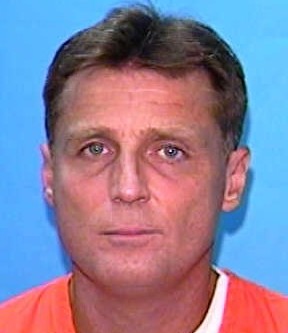 Glen Edward Rogers
Serial killer · USA · 1993
Glen Edward Rogers was a spree killer whose cross-country rampage in 1994-95 le…
70 victims
Glen Edward Rogers
Serial killer · USA · 1993
Glen Edward Rogers was a spree killer whose cross-country rampage in 1994-95 le…
70 victims
 Michael Swango
Serial killer · USA · 1981
Michael Swango (Joseph Michael Swango) was a physician and American serial kill…
60 victims
Michael Swango
Serial killer · USA · 1981
Michael Swango (Joseph Michael Swango) was a physician and American serial kill…
60 victims
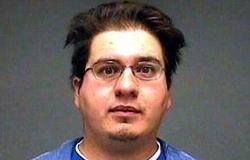 Efren Saldivar
Serial killer · USA · 1989
Efren Saldivar (born 30 September 1969) was an American serial killer who murde…
50 victims
Efren Saldivar
Serial killer · USA · 1989
Efren Saldivar (born 30 September 1969) was an American serial killer who murde…
50 victims
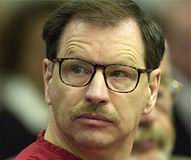 Gary Ridgway
Serial killer · USA · 1982
Gary Leon Ridgway Ridgway was born 18-February-1949 in Salt Lake City, UT. He w…
49 victims
Gary Ridgway
Serial killer · USA · 1982
Gary Leon Ridgway Ridgway was born 18-February-1949 in Salt Lake City, UT. He w…
49 victims
 Charles Cullen
Serial killer · USA · 1984
Charles Cullen (born February 22, 1960) was a former nurse and the most prolifi…
45 victims
Charles Cullen
Serial killer · USA · 1984
Charles Cullen (born February 22, 1960) was a former nurse and the most prolifi…
45 victims
 Demarco McCullum
Murderer · USA · 1994
Demarco Markeith McCullum was executed by lethal injection in Texas on November…
1 victim
Demarco McCullum
Murderer · USA · 1994
Demarco Markeith McCullum was executed by lethal injection in Texas on November…
1 victim
 Dale Shackelford
Murderer · USA · 1999
Dale Carter Shackelford was convicted for the 1999 slayings of Donna Fontaine a…
2 victims
Dale Shackelford
Murderer · USA · 1999
Dale Carter Shackelford was convicted for the 1999 slayings of Donna Fontaine a…
2 victims
 Jeffrey Mailhot
Serial killer · USA · 2003
Jeffrey Mailhot lived in Woonsocket and was described by neighbours as a “nice…
3 victims
Jeffrey Mailhot
Serial killer · USA · 2003
Jeffrey Mailhot lived in Woonsocket and was described by neighbours as a “nice…
3 victims
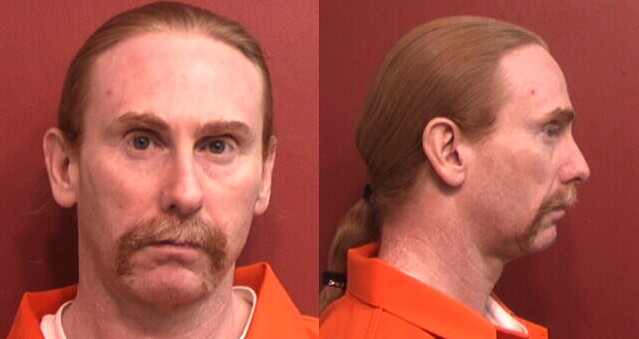 David Thomas Dawson
Murderer · USA · 1986
David Thomas Dawson · April 18, 1986 — Dawson checked into the room next to the…
3 victims
David Thomas Dawson
Murderer · USA · 1986
David Thomas Dawson · April 18, 1986 — Dawson checked into the room next to the…
3 victims
 Harold Amos Barnard
Murderer · USA · 1980
June 6, 1980 — Harold Amos Barnard, Jr., killed sixteen-year-old Tuan Nguyen du…
1 victim
Harold Amos Barnard
Murderer · USA · 1980
June 6, 1980 — Harold Amos Barnard, Jr., killed sixteen-year-old Tuan Nguyen du…
1 victim
- Gender
- male
- Country
- USA
- Location
- Orange County, New York, USA
- Date of birth
- J uly 28, 1960
- Age at first offence
- 31
- Characteristics
- rape, convicted rapist, child abuse, abuse
- Victim profile
- Juliana R. Frank , 28 / Christine M. Klebbe, 14 / Laurette Huggins Reviere, 34 / Angelina Hopkins, 23, and Brenda L. Whiteside, 20 / Adriane M. Hunter, 27
- Method of murder
- St abbing with knife / Beating
- Date(s) of murder
- 1991 - 1992
- Years active
- 1991–1992
- Date of arrest
- August 2, 1992
- Status
-
Life imprisonment
Sentenced to 150 years to life in prison on May 27, 1993
Case overview
Nathaniel White (born July 28, 1960) was an African American serial killer who was active in the Hudson Valley region of New York during the early 1990s. White confessed to beating and stabbing six women to death while on parole.
White’s case involved a prior conviction for abducting a 16-year-old girl at knifepoint and a later series of killings after his release on parole. White pleaded not guilty by reason of insanity for the murder charges. A jury convicted him on all counts.
Timeline
- March 25, 1991 — White carried out his first murder.
- April 1992 — White was paroled and returned to Orange County, New York.
- June 29, 1992 — White’s first victim in the parole period, the niece of White’s girlfriend Jill Garrison, disappeared.
- July 1, 1992 — The missing person report was filed for the June 29 disappearance.
- July 10, 1992 — Laurette Reviere Huggins was killed in her Middletown home.
- July 20, 1992 — Angelina Hopkins and Brenda L. Whiteside were last seen leaving the Blue Note Tavern with White in his pickup truck.
- July 30, 1992 — Adriane Hunter was stabbed to death in the early morning.
- August 2, 1992 — White returned to the Blue Note, where Angelina Hopkins identified him.
- August 4, 1992 — White led police to the dumping ground in Goshen and police found bodies, including the bodies of Angelina Hopkins and Brenda L. Whiteside and the body of Christine Klebbe.
- August 7, 1992 — White was arraigned by a grand jury for the murder of Christine Klebbe.
- September 9, 1992 — The other five murders were added to the indictment.
- January 15, 2007 — A later publication described the case in narrative form.
- April 14, 1993 — White was convicted on all counts.
- May 27, 1993 — White’s sentence began at Great Meadow Correctional Facility.
- May 27, 1993 — White was sentenced to 150 years to life in prison.
- April 23 — White was released from the Franklin Correctional Facility in Malone (noted in relation to parole notification).
- May 5 — White’s parole officer visited the case worker responsible for his family court case, and the caseworker did not volunteer information about the child abuse allegation (as described).
- May — An order of protection was issued in Orange County Family Court ordering White to stay at least 1,000 feet away from two children and ordering that the children be removed from their home to another parent’s house.
- January — The charge of child abuse was first reported to the state child abuse hotline while White was still in jail.
- Aug. 26 — A Family Court hearing for White was scheduled.
Background
White (born July 28, 1960) was described as a serial killer active in the Hudson Valley region of New York during the early 1990s.
White claimed inspiration for his first murder while watching Robocop 2. He said:
“The first girl I killed was from a 'Robocop' movie... I seen him cut somebody’s throat then take the knife and slit down the chest to the stomach and left the body in a certain position. With the first person I killed I did exactly what I saw in the movie.”
White’s first killing took place on March 25, 1991.
In a discussion of parole and prior criminal history, White was described as having pleaded guilty to robbery in 1986 and having received a sentence of three to nine years. It was stated that he behaved well in prison and qualified for parole when first eligible in 1989. The discussion also described an incident involving White being arrested about the same time for a lesser crime in which he brandished a razor while accosting a teen-age girl, after which court and parole officials agreed to let him plead guilty to a misdemeanor charge and serve nine months in jail. He was released on parole again in April.
A child abuse allegation also arose while White was on parole. Family Court officials said that about a month before the last five slayings, White was accused of child abuse by the Orange County Department of Social Services. A parole official said White’s parole officer was never told of the charge, stating:
“This allegation is news to us,”
David Ernst, a spokesman for the New York State Division of Parole, also said:
It was stated that if a parolee molested children, it would be considered a parole violation and the parolee would be returned to jail until the matter was adjudicated.
The offence (murder convictions)
White was convicted of six counts of second degree murder after an indictment was expanded to include all six killings. He pleaded not guilty by reason of insanity.
White’s sentencing included a sentence of 150 years to life in prison, with sentencing beginning at Great Meadow Correctional Facility on May 27, 1993.
Victims and circumstances
The case involved six victims.
- Juliana Frank (29) — She was of Middletown and was pregnant with her third child when she was killed in 1991. Her naked body was left on a set of abandoned railroad tracks in Middletown. One account stated her body was found March 22, 1991, at the end of Stanton Street in Middletown, and that she was unemployed at the time of her death.
- Christine M. Klebbe (14) — She was of Goshen and had completed eighth grade at Circleville Middle School in June 1992. She was the niece of White’s girlfriend, Jill Garrison. One account stated Christine Klebbe disappeared on June 29, her family reported her missing on July 1, 1992, and her body was discovered in Goshen, New York on August 4. Another account stated her body was found Aug. 4, 1992, off of Echo Lake Road in the Town of Goshen.
- Laurette Reviere Huggins (34) — She was of Middletown and was killed in her Middletown home on July 10, 1992. One account stated she was the mother of three children and worked at Empire Blue Cross/Blue Shield in Middletown. One account stated her body was found stabbed and strangled in her home on July 10, 1992.
- Angelina Hopkins (23) — She was of Poughkeepsie and was the mother of two children. She was last seen leaving the Blue Note Tavern with White in his pickup truck on July 20, 1992. One account stated her body was found Aug. 4, 1992, off of Harriman Road in Goshen, and that she had been bludgeoned to death.
- Brenda L. Whiteside (20) — She was of Elmsford and was a nursing student about to enter her profession. She was last seen leaving the Blue Note Tavern with White on July 20, 1992. 4, 1992, off of Harriman Drive in Goshen, and that she had been bludgeoned to death. Her body was found along with the body of Christine Klebbe.
- Adriane M. Hunter (27) — She was of Middletown and was stabbed to death in the early morning July 30, 1992. Her body was discovered in Goshen later that day. One account stated she had two children, the youngest 4 months old, and that she worked with troubled adolescents at Blueberry Treatment Center. One account stated her body was found stabbed to death July 30, 1992, off of Harriman Drive in Goshen.
Cause of death in the Blue Note case
It was stated that the cause of death in the Hopkins and Whiteside case was determined to be severe blunt trauma to the face and head.
Investigation
Angelina Hopkins’s sister, Cecilia, witnessed Hopkins and Whiteside leaving the Blue Note Tavern with four men on the night of their disappearance.
Poughkeepsie police did not act on the missing person report because they did not have enough information about the men. Cecilia and her mother continued investigating on their own.
The New York State Police began investigating on July 30 after the body of Adriane Hunter was found and authorities began to suspect it was related to the earlier disappearances and murders.
One account stated that on August 2, White returned to the Blue Note where Hopkins identified him and he was arrested. Another account stated that within 48 hours of the Hopkins family’s encounter with White, he was telling police where to find the bodies of the two women.
White confessed and led police to his dumping ground in Goshen on August 4.
Capt. Donald Briggs of the Poughkeepsie police commented:
“They did good police work,”
“If it wasn't for them, this wouldn't be solved.”
Capt. Michael Cahill of the State Police commented:
“We didn't have any direct connections with the Hunter case.”
“But there was a lot of suspicion that there was a connection with three other missing girls.”
Detective T. R. Alston of the Poughkeepsie Police commented:
“We told them to find out who they left with and we would do the rest,”
Arrest and pretrial
White was arrested after being identified at the Blue Note.
White’s lawyer, Bernard Brady, stated he intended to plead not guilty by reason of insanity.
White was arraigned by a grand jury on August 7 for the murder of Christine Klebbe. On September 9, the other five murders were added to the indictment.
White was charged with six counts of second degree murder.
Trial
White pleaded not guilty by reason of insanity.
The jury returned guilty verdicts on all six counts. The court clerk asked how the jury found White on each charge, and the jury foreman responded “Guilty” to each.
The court clerk’s questions and jury responses included:
- “Guilty.”
- “Guilty.”
- “Guilty.”
- “Guilty.”
- “Guilty.”
- “Guilty.”
A later narrative description included courtroom observations and media coverage. It also included a statement attributed to White about “voices” making him kill and his attempt to imitate Robocop.
Sentencing
White was convicted on April 14, 1993, and was sentenced to 150 years to life.
His sentence began at Great Meadow Correctional Facility on May 27, 1993.
Appeals
No appeal information appeared in the provided case summary.
Outcome
White remained incarcerated after sentencing.
In a later narrative discussion, it was stated that New York governor George Pataki cited the case in defense of his push to reinstate the death penalty.
Aftermath
In the narrative discussion of parole and public criticism, it was stated that the case revived criticism that the parole system returned violent criminals to society. It also stated that parole officials apparently made reasonable judgments in releasing White and that it was doubtful any feasible alternative system would prevent such killings.
A statement by White about why he killed was included in the narrative: he told news reporters that he had killed because “voices” told him to, and that he was imitating Robocop.
The parole and child abuse allegation discussion also included:
- the order of protection issued in May ordering White to stay at least 1,000 feet away from two children,
- the children being removed from their home to another parent’s house,
- a Family Court hearing scheduled for Aug. 26,
- and statements about notification failures to the parole officer.
Dan Bloomer, Orange County’s Acting Commissioner of Social Services, commented:
“It did not set off any red flags,”
Francis D. Phillips, the Orange County District Attorney, commented:
“a fairly mundane report.”
John Cameron, a clerk for Judge Elaine Slobod of Orange County Family Court, stated that a Family Court hearing for White was scheduled for Aug. 26.
The narrative also included statements about the Hopkins family’s attempts to find information and their interactions with police. Cecilia Hopkins (21) recalled the night of July 20.
The narrative described the Blue Note Tavern as being in a rough part of the city amid vacant lots and streets where drug dealing took place.
Captain Briggs quoted that White told an officer:
“I don't talk to cops,”
The narrative also described a statement attributed to Cecilia Hopkins that White admitted that he had left with the two women on July 20 and dropped them off at a train station. The narrative included White-related comments attributed to Cecilia Hopkins:
“He'd been scared to talk to police,”
“But he seemed to be willing to give us whatever information he could.”
“He didn't seem out of the ordinary.”
Spotted an error, or have more information about this case?