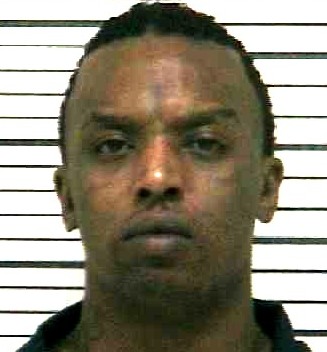
James Ringo McDaniel
Murderer Brian Kevin Rosenfeld
Murderer · USA · 1985
Brian Kevin Rosenfeld Brian Kevin Rosenfeld was sentenced to three concurrent l…
23 victims
Brian Kevin Rosenfeld
Murderer · USA · 1985
Brian Kevin Rosenfeld Brian Kevin Rosenfeld was sentenced to three concurrent l…
23 victims
 Russell Ellwood
Murderer · USA · 1991
Russell Ellwood was a former taxi driver. Authorities suspected him of killing…
20 victims
Russell Ellwood
Murderer · USA · 1991
Russell Ellwood was a former taxi driver. Authorities suspected him of killing…
20 victims
 Robert Martines Perez
Murderer · USA · 1994
Name: Robert Martines Perez · Other name used in proceedings: Robert Martinez P…
15 victims
Robert Martines Perez
Murderer · USA · 1994
Name: Robert Martines Perez · Other name used in proceedings: Robert Martinez P…
15 victims
 Billy Frank Vickers
Murderer · USA · 1993
Billy Frank Vickers Vickers was executed by lethal injection in Texas on Januar…
14 victims
Billy Frank Vickers
Murderer · USA · 1993
Billy Frank Vickers Vickers was executed by lethal injection in Texas on Januar…
14 victims
 Jesse Wise
Mass murderer · USA · 2006
Jesse Dee Wise, also known as “Jay,” lived with his grandparents at the home wh…
6 victims
Jesse Wise
Mass murderer · USA · 2006
Jesse Dee Wise, also known as “Jay,” lived with his grandparents at the home wh…
6 victims
 Claude Lastennet
Serial killer · France · 1993
Claude Lastennet (born January 19, 1971 at Brest, France) was a French serial k…
5 victims
Claude Lastennet
Serial killer · France · 1993
Claude Lastennet (born January 19, 1971 at Brest, France) was a French serial k…
5 victims
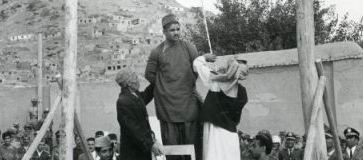 Abul Djabar
Serial killer · Afghanistan · 1960
Abul Djabar died on October 21, 1970. He was an Afghan serial killer who had ki…
65 victims
Abul Djabar
Serial killer · Afghanistan · 1960
Abul Djabar died on October 21, 1970. He was an Afghan serial killer who had ki…
65 victims
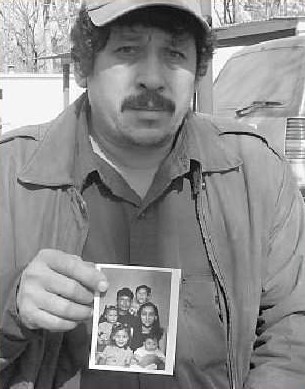 Lucio Franco
Mass murderer · USA · 2001
Lucio Franco was 24 years old. His wife was 21-year-old Maria Franco. Lucio Fra…
5 victims
Lucio Franco
Mass murderer · USA · 2001
Lucio Franco was 24 years old. His wife was 21-year-old Maria Franco. Lucio Fra…
5 victims
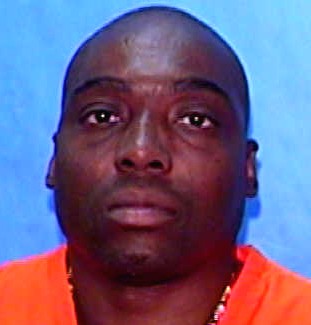 Johnny Hoskins
Murderer · USA · 1992
Johnny Hoskins (AKA Jamil Alle, DOB: 10/31/1963) was convicted in the Eighth Ju…
1 victim
Johnny Hoskins
Murderer · USA · 1992
Johnny Hoskins (AKA Jamil Alle, DOB: 10/31/1963) was convicted in the Eighth Ju…
1 victim
- Gender
- male
- Country
- USA
- Location
- Butts County, Georgia, USA
- Date of birth
- 1974
- Age at first offence
- 20
- Characteristics
- alcohol, armed robbery, abuse, crack addict, history of mental illness
- Victim profile
- His grandparents, Erner and Eugene Barkley, ages 70 and 75, and his 10-year-old stepbrother, Justin Davis
- Method of murder
- Shooting
- Date(s) of murder
- October 8, 1994
- Years active
- 1994
- Date of arrest
- Same day
- Status
-
Sentenced to death
Sentenced to death on June 12, 1997; convictions reversed because guilty pleas were involuntary (MCDANIEL v. THE STATE 858#271 Ga. 552, 858#522 SE2d 648, Supreme Court of Georgia, October 18, 1999).
Case details
Defendant: James Ringo McDaniel, 23 Legal action (trial): Butts County Superior Court jury sentenced McDaniel to death in June Legal action (plea and sentencing): McDaniel pled guilty to three counts of malice murder, three counts of felony murder, and armed robbery; after a bench sentencing trial, the trial court sentenced him to death for one of the malice murders. Legal action (appellate): The Supreme Court of Georgia reversed McDaniel’s convictions because the guilty pleas were involuntary.
Background
McDaniel was 23 years old. He had a history of commitments to mental hospitals and crack addition. Family members of the victims, who were also McDaniel’s family, opposed the death penalty for the young man.
Police said McDaniel robbed his grandfather to buy crack.
The offence
The crimes occurred on October 8, 1994. McDaniel lived with his grandparents and a ten-year-old brother, the victims in this case.
After using crack cocaine, McDaniel took a gun from his grandfather’s bedroom and shot each victim once in the head. He then took his grandfather’s wallet and left to buy more crack. McDaniel returned home and smoked the crack on the front porch before calling 911 and reporting the crime.
Victims:
- Erner Barkley, age 70
- Eugene Barkley, age 75
- Justin Davis, age 10 (McDaniel’s stepbrother)
Investigation
McDaniel initially claimed he had returned home and found his family murdered. In a later audiotaped statement, he admitted killing the victims. He also gave a videotaped statement. Police recovered his grandfather’s wallet and ammunition for the gun based on the information he provided.
Trial
After the preliminary voir dire of the jurors, the trial court called for an in-chambers conference for the purpose of further discussion of the possibility of McDaniel entering a guilty plea and allowing the trial court to pass sentence.
McDaniel expressed willingness to enter a plea of guilty in exchange for a sentence of life without parole. The State agreed only if McDaniel pleaded guilty, waived his right to withdraw the plea, and had the judge decide the sentence according to evidence presented in a sentencing trial. The trial court said, "That would be the only procedure the Court would entertain."
A brief private conference with counsel occurred, after which McDaniel agreed to waive his right to a jury and to have the trial court make the sentencing determination after a sentencing trial. The prosecutor remained reluctant to accept a plea agreement because he considered it "very unlikely" that the trial court would impose a death sentence. The prosecutor agreed to a deal only when McDaniel agreed, after further negotiations involving the trial court and the parties, to waive additional rights, including his right to appeal all issues previously raised in motions and his objection to the admission of his statements.
The proceedings reconvened in the courtroom, and McDaniel formally withdrew his plea of not guilty and entered a plea of guilty.
Judicial participation in plea negotiations
Judicial participation in the plea negotiation process was prohibited by court rule in this state and in the federal system. USCR 33.5 (A); F.R.Crim.P. Rule 11 (e) (1). USCR 33.5 (A) provided that "[t]he trial judge should not participate in plea discussions." If the parties negotiated a tentative plea agreement, the trial court could indicate whether it would concur with the agreement, but that review was separate from the plea negotiation process itself. USCR 33.5 (B).
In addition to the restrictions imposed by procedural rules, " '[j]udicial participation in plea negotiations is prohibited as a constitutional matter when it is so great as to render a guilty plea involuntary.' [Cits.]"
A guilty plea was required to be knowingly and voluntarily entered. Boykin v. Alabama, 395 U. S. 238 (89 SC 1709, 23 LE2d 274) (1969); Goodman v. Davis, 249 Ga. 11, 13 (287 SE2d 26) (1982); USCR 33.7. Making a knowing and voluntary plea required an understanding of the nature of the charge, the rights being waived, and the consequences of the plea. Boykin, supra at 244; Goodman, supra. See also USCR 33.8.
Due to the force and majesty of the judiciary, a trial court’s participation in the plea negotiation could skew the defendant’s decision-making and render the plea involuntary because a defendant may disregard proper considerations and waive rights based solely on the trial court's stated inclination as to sentence. See Skomer, 183 Ga. App. at 310.
The court concluded that McDaniel heard the trial court repeatedly state its reluctance to impose a death sentence and give 90 percent odds on a sentence of life without parole if permitted to impose sentence. It held that this participation rendered the resulting guilty plea involuntary. The Supreme Court reversed and stated that it must reverse McDaniel’s convictions.
The trial court’s discussion was summarized for the record as follows:
I have indicated to [all counsel] that the court would be reluctant as an individual or as a judge to impose a death sentence. My personal philosophy is that if that is done it ought to be done by a jury and not by a judge. Now that's completely my opinion. I'm not saying I'm not committing to that. There was some indication that if the court reversed that decision based on the facts and circumstances the counsel would request an immediate withdrawal but I am not -- I am not in a mind to impose a death sentence as an individual. I just think that is something that should be relegated and the duties that a jury should -- that's their sworn duty. Of course, I would be the jury and the judge all at the same time. That's the court's feeling and I will listen to both sides, I'll listen about life, I'll listen to life without parole and I'll listen to the recommendation for death but I'm 90 percent certain that I would impose a life without parole sentence.
Sentencing
McDaniel pled guilty to three counts of malice murder, three counts of felony murder, and armed robbery.
After a bench sentencing trial, the trial court sentenced McDaniel to death for one of the malice murders.
Notes on the sentencing and related convictions
After the initial indictment was quashed, McDaniel was re-indicted in Butts County on November 4, 1996, for malice murder (three counts), felony murder (three counts) and armed robbery.
McDaniel pled guilty to all counts on June 9, 1997. The trial judge imposed the death penalty for one of the malice murders on June 12, 1997.
In addition to the death sentence for one malice murder, the judge imposed life without parole for each remaining malice murder conviction and life imprisonment for armed robbery. The felony murder convictions were vacated by operation of law. Malcolm v. State, 263 Ga. 369 (4) (434 SE2d 479) (1993).
Appeals
McDaniel filed a motion for new trial on July 11, 1997. He filed an amended motion for new trial and a motion to withdraw the guilty plea on February 5, 1998. The trial court denied the motions on February 4, 1999, and a notice of appeal was filed on March 3, 1999. The case was docketed on March 17, 1999, and orally argued on June 21, 1999.
The Supreme Court of Georgia reversed McDaniel’s convictions because it concluded that the guilty pleas were involuntary. It stated that because the convictions were reversed, it did not address the remaining enumerations of error. The court reminded judges in death penalty cases to adequately complete the report required by OCGA 17-10-35 (a), and to transmit it to this Court as part of the record for review. See Unified Appeal Procedure Rule IV (A) (8).
Counsel
W. Franklin Freeman, Jr., Michael A. Dillon, Palmer C. Singleton III appeared for appellant.
Outcome
Other details
Family members of the victims opposed the death penalty for McDaniel.
During plea negotiations, the prosecutor considered it "very unlikely" that the trial court would impose a death sentence.
McDaniel returned home, smoked crack on the front porch, and called 911 to report the crime.
The Supreme Court case reference was: MCDANIEL v. THE STATE 858#271 Ga. 552, 858#522 SE2d 648 (Supreme Court of Georgia, October 18, 1999). Docket number: S99P0874.
Spotted an error, or have more information about this case?