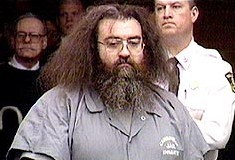
Michael McDermott
Mass murderer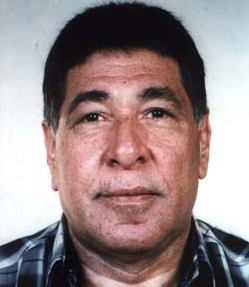 Gameel Al-Batouti
Mass murderer · USA · 1999
Gameel Al-Batouti (also rendered “Gamil ElBatouty” or “El Batouty” in U.S. offi…
216 victims
Gameel Al-Batouti
Mass murderer · USA · 1999
Gameel Al-Batouti (also rendered “Gamil ElBatouty” or “El Batouty” in U.S. offi…
216 victims
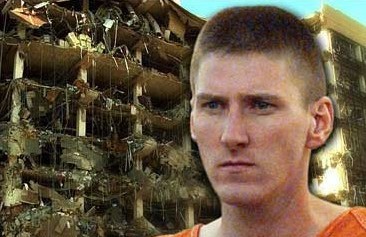 Timothy McVeigh
Mass murderer · USA · 1995
Timothy James McVeigh (April 23, 1968 – June 11, 2001) was a United States Army…
168 victims
Timothy McVeigh
Mass murderer · USA · 1995
Timothy James McVeigh (April 23, 1968 – June 11, 2001) was a United States Army…
168 victims
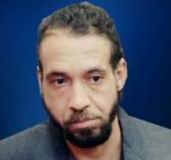 Julio Gonzalez
Mass murderer · USA · 1990
Julio Gonzalez was sentenced to 174 twenty-five-year sentences (a total of 4,35…
87 victims
Julio Gonzalez
Mass murderer · USA · 1990
Julio Gonzalez was sentenced to 174 twenty-five-year sentences (a total of 4,35…
87 victims
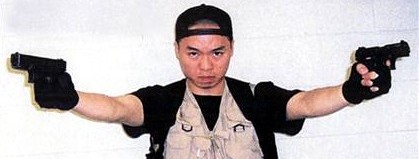 Seung-Hui Cho
Mass murderer · USA · 2007
Seung-Hui Cho was a mass murderer who shot and killed 32 people and wounded man…
32 victims
Seung-Hui Cho
Mass murderer · USA · 2007
Seung-Hui Cho was a mass murderer who shot and killed 32 people and wounded man…
32 victims
 George Jo Hennard
Mass murderer · USA · 1991
George Jo Hennard carried out a mass killing at a Luby’s Cafeteria in Killeen,…
23 victims
George Jo Hennard
Mass murderer · USA · 1991
George Jo Hennard carried out a mass killing at a Luby’s Cafeteria in Killeen,…
23 victims
 Eric Harris
Mass murderer · USA · 1999
Eric Harris committed suicide by gunshot to the roof of the mouth on April 20,…
13 victims
Eric Harris
Mass murderer · USA · 1999
Eric Harris committed suicide by gunshot to the roof of the mouth on April 20,…
13 victims
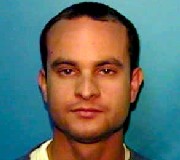 Jonathan Arce
Homicide · USA · 1998
Jonathan Arce was 14 when he fatally stabbed a neighbor, retired University of…
1 victim
Jonathan Arce
Homicide · USA · 1998
Jonathan Arce was 14 when he fatally stabbed a neighbor, retired University of…
1 victim
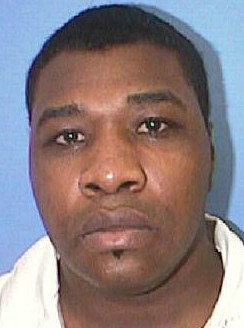 Elkie Lee Taylor
Murderer · USA · 1993
Elkie Lee Taylor (also known as Ronnie Lee Watkins). Elkie Lee Taylor was a par…
2 victims
Elkie Lee Taylor
Murderer · USA · 1993
Elkie Lee Taylor (also known as Ronnie Lee Watkins). Elkie Lee Taylor was a par…
2 victims
 Jeyavani Vageswaran
Murderer · United Kingdom · 2014
Jeyavani Vageswaran committed suicide by hanging herself the same day. Jeyavani…
2 victims
Jeyavani Vageswaran
Murderer · United Kingdom · 2014
Jeyavani Vageswaran committed suicide by hanging herself the same day. Jeyavani…
2 victims
 Ramiro Rubi Ibarra
Murderer · USA · 1987
Ramiro Rubi Ibarra was a Hispanic male. His hair color was black, and he weighe…
1 victim
Ramiro Rubi Ibarra
Murderer · USA · 1987
Ramiro Rubi Ibarra was a Hispanic male. His hair color was black, and he weighe…
1 victim
- Gender
- male
- Country
- USA
- Location
- Wakefield, Massachusetts, USA
- Date of birth
- September 4, 1958
- Age at first offence
- 42
- Characteristics
- drugs, alcohol, history of mental illness, motive unknown, revenge
- Victim profile
- Janice Haggerty, 46 / Jennifer Bragg Capobianco, 29 / Cheryl Troy, 50 / Rose Manfredi, 48 / Louis Javelle, 58 / Paul Marceau, 36 / Craig Wood, 29 (co-workers)
- Method of murder
- Shooting (AK-47 variant, 12-gauge shotgun, and .32 caliber pistol)
- Date(s) of murder
- December 26, 2000
- Years active
- 2000
- Date of arrest
- Same day
- Status
-
Life imprisonment
Sentenced to seven consecutive life sentences without the possibility of parole in 2002
Background
Michael McDermott was an application support employee at Edgewater Technology in Wakefield, Massachusetts. He was also described as a former U.S. Navy submarine electrician and as an electrician. Co-workers described him as quiet, surly, quirky and very private. Co-workers also described him as strange and quirky.
McDermott was born Michael McDermod Martinez in Plymouth to Raymond and Rosemary Martinez. He changed his name because he wanted to sound Irish, not Hispanic, and later exchanged his Hispanic surname for a slight variation on his middle one (McDermod). He joined the Navy in 1978 and served six years aboard the nuclear submarine USS Narwhal, later being an electrician and being honorably discharged as a petty officer second class. He worked as an auxiliary power plant operator at Maine Yankee nuclear power plant starting in 1982 and was fired in 1988. During that time he showed signs of mental illness, and in 1987 he tried to commit suicide and filed a workers' compensation claim after his was fired, citing his "stress-induced suicide attempt." He settled for $85,000. He later worked in research and development for nearly 10 years at Duracell, leaving voluntarily in February.
McDermott donated blood platelets and received no payment in return. He donated voluntarily at the Red Cross in Dedham, Massachusetts, and gave blood taking about two hours, about twice as long as ordinary blood donation.
McDermott was described in relation to an answering machine message played after the killing, saying: "Here I am, brain the size of a planet, and what does it have me doing? Reduced to answering the phones. Phones. Oh, how I hate the phones. They're so depressing."
McDermott also quoted an android from "The Hitchhiker Guide to the Galaxy" on his answering machine: "Here I am, brain the size of a planet, and what does it have me doing? Phones. Oh, how I hate the phones. They're so depressing."
McDermott married Monica Sheehan, his childhood sweetheart. He later described the experience: "Well, I came back to the land of my youth and married a childhood friend. Lasted three and a half years before she split." His wife moved away to a Chicago suburb. In the meantime, he ballooned to 350 lbs.
The offence
The Wakefield massacre occurred on Tuesday, December 26, 2000, at the Edgewater Technology in Wakefield, Massachusetts, United States. During the incident, the gunman, Michael "Mucko" McDermott, shot and killed seven co-workers.
At trial and after the crimes, McDermott stated he was born without a soul and that God had allowed him to earn a soul by traveling back in time to kill Nazis. In the court session following the crimes, McDermott claimed he had "Travelled back in time and killed Hitler and the last 6 Nazis." He also took the stand to testify he was commissioned by St. Michael the Archangel to stop the Holocaust, an act that would allow him to earn a soul. He said he believed he was arrested by German police and that he died shortly after in a German police station. He said he was in purgatory, a place where Roman Catholics believe one goes temporarily when they are not yet worthy to go to heaven, and that he believed that his lawyer, Kevin Reddington, was his guardian angel.
At the incident, McDermott shot and killed seven co-workers. The weapons he used were an AK-47 variant, a 12-gauge shotgun, and a .32 caliber pistol. He fired off a total of 37 rounds. Investigators said: "Everything appears to be targeted at the individuals, rather than indiscriminate spraying of gunfire," and: "The victims were at their work stations... The whole thing took between five and 10 minutes."
During the rampage:
- Two people were killed in the reception area.
- Three others were killed in the hallway.
- The last two were killed in the accounting office. To get to the last two victims, McDermott blew open the door of the accounting office by shooting the lock out with a shotgun blast.
Police found McDermott sitting silently in the reception area with his weapons within reach and a tote bag filled with ammo. He was found by police sitting calmly and stated that he didn't speak German.
McDermott fired at individuals repeatedly in back-of-head shootings. Prosecutors asserted that the killings were motivated by his employer's garnishing of his wages to the IRS, to pay back taxes, and prosecutors later contended that he was angry because of $5,500 in back taxes he owed to the Internal Revenue Service that his employer was about to garnish from his wages.
One co-worker asked: "Where are you going with that?" and McDermott responded, "Human resources."
A Chrysler representative informed him that his 1994 Plymouth was going to be repossessed. He responded, "I won't be needing it. Come pick it up."
Authorities learned that a man driving a sedan with the license plate MUCKO had been spotted in a wooded area where investigators later found a handful of shotgun shells.
Victims and injuries
The victims were identified as:
- Janice Hagerty, 46; Janice Hagerty was described as an office manager earlier and as a receptionist elsewhere.
- Jennifer Bragg Capobianco, 29; marketing and a mother.
- Cheryl Troy, 50; vice president of human resources and human resources director.
- Rose Manfredi, 48.
- Louis Javelle, 58; director of consulting and a father of four.
- Paul Marceau, 36.
- Craig Wood, 29; human resources.
Autopsies detailed wounds attributed to specific weapons:
- Troy was shot five times with the AK47, sustaining gunshot wounds to the head, right arm and torso.
- Hagerty was shot twice with the AK47, receiving wounds to her head and torso.
- Javelle was shot three times with the AK47 and the shotgun, receiving wounds to his head and torso.
- Wood was shot five times with the AK47 and was wounded in the head, legs and right arm.
- Capobianco was shot four times in the torso with the AK47.
- Marceau was shot six times with the AK47 and the shotgun to his leg, right arm and torso.
- Manfredi was shot five times with the AK47 and the shotgun in he legs and head.
At the end of the rampage, 49 spent AK47 shell casings and six spent shotgun casings were left behind.
Investigation
A grand jury indicted McDermott with seven counts of murder and a variety of weapons charges. Prosecutors asserted that McDermott went to Edgewater on Christmas Day and left behind a stash of weapons: an AK-47 semiautomatic rifle with an attached 60-round, large capacity feeding device; a 12-gauge pump-action shotgun; a .32-caliber semiautomatic pistol; a bolt action rifle and a bag filled with ammunition boxes. The next day, at about 11:10 a.m., he took out the shotgun and the AK47 and began a rampage that claimed the lives of seven co-workers.
Prosecutors said he did not have a license to carry any of the firearms. Coakley said McDermott did not have a permit for any of the weapons he was carrying nor did he have a prior criminal record.
The Middlesex District Attorney's Office released autopsy reports detailing which weapons were used and where the victims were shot.
Investigators searched McDermott's home and office space. At his Haverhill apartment, they found bomb-making chemicals, blasting caps and magazines on explosives. In his home, police found fuses, blasting caps and three gallons of nitric acid in a cardboard box labeled DANGEROUS: DO NOT MOVE. While searching his home police found computer equipment, a will, gun cases and ammunition, several "Dungeon and Dragons" books, a passport, blasting caps, bomb-making literature and three gallons of liquid nitric acid, a substance used in the manufacture nitroglycerin.
In his work locker, authorities found a semiautomatic rifle with a sniper scope, computer equipment, and more live ammunition.
In his car, they found an envelope containing a letter from the IRS with the levy information.
On the day of the shooting, the last straw may have been a call he received at 11:07 a.m. that a Chrysler representative said informed him his 1994 Plymouth was going to be repossessed.
Haverhill police received a call at 11:40 p.m. on Christmas Eve reporting gunshots. Investigators learned that a man driving a sedan with the license plate MUCKO had been spotted in a wooded area where investigators later found a handful of shotgun shells.
Police officers wrestled the 6-foot-2, 300-pound suspect to the ground and arrested him without gunfire.
Sergeant Stephen Brighi said: "We didn't encounter McDermott," and: "If luck had been on our side, history could have possibly been changed."
Middlesex County District Attorney Martha Coakley said: "Everything appears to be targeted at the individuals, rather than indiscriminate spraying of gunfire," and: "The victims were at their work stations...
In a statement, Edgewater said McDermott's actions "apparently stem from occurrences in his personal life."
Weapons and ammunition details
Prosecutors said McDermott used an AK-47 semiautomatic rifle with an attached 60-round, large capacity feeding device, a 12-gauge pump-action shotgun, and a .32-caliber semiautomatic pistol, along with a bolt action rifle and a bag filled with ammunition boxes left behind after he went to Edgewater on Christmas Day.
McDermott's firearms-identification card for rifles and shotguns expired in 1999.
McDermott was described as having weapons within reach and a tote bag filled with ammo when he was found by police.
Arrest and charges
During his arraignment, McDermott pleaded not guilty to seven counts of murder.
A Malden District Court judge ordered McDermott to Bridgewater State Hospital for a psychological evaluation.
McDermott was indicted by a Middlesex grand jury on seven counts of murder, three counts unlawful possession of a firearm, unlawful possession of a large capacity firearm, and unlawful possession of a large capacity feeding device.
McDermott was tentatively scheduled to be arraigned in Middlesex Superior Court on Feb. 22.
McDermott's defense attorney was Kevin Reddington. At arraignment, a move suggesting he might pursue an insanity defense, Reddington asked that McDermott be allowed to continue taking his psychotropic medication. Reddington also noted that McDermott had been under psychiatric care and needed to take medication.
Trial
McDermott sat through much of the trial reading the Bible.
During the trial, prosecutors argued that McDermott was angry because of $5,500 in back taxes he owed to the Internal Revenue Service that his employer was about to garnish from his wages.
McDermott took the stand to testify he was commissioned by St. Michael the Archangel to stop the Holocaust, to earn a soul, and he said he believed he was arrested by German police and that he died shortly after in a German police station. He said he was in purgatory and that his lawyer, Kevin Reddington, was his guardian angel.
During the trial, prosecutors confronted him with evidence seized from his own computer that he had researched "how to fake mental illness." Prosecutor Thomas O'Reilly argued that the evidence also showed that he purchased a book on how to malinger or feign illness. McDermott admitted he did such research, but said he did so only to learn how to appear sane and stay out of a mental hospital.
On April 24, 2002, a jury rejected insanity claims and found Michael "Mucko" McDermott guilty on all counts in the shooting deaths of his seven co-workers. After almost 16 hours of deliberations over three days, the jury convicted him of seven counts of first-degree murder for the Dec. 26, 2000, shooting at his former workplace in Wakefield, Mass.
Calling McDermott a "weak, cowardly, pathetic loser," Dan Hagerty, husband of victim Janice Hagerty, spoke in court after the verdict was announced. Dan Hagerty said: "I feel such anger and sorrow when I think of the events that will be coming up for my daughter that Janice won't be there for," and he also spoke about how his late wife was now buried in the cemetery where the couple taught their daughter to ride her bike.
Some relatives asked the judge to give him the maximum penalty allowable under the law.
David Marceau, brother of victim Paul Marceau, said: "Michael McDermott has victimized the family and friends of seven victims twice — first on Dec. 26, 2000, and now he has dragged us through this long trial," and: "He trivializes the death of seven precious people by fabricating this story to mask his guilt."
Reddington requested concurrent terms for McDermott. Prosecutor Thomas O'Reilly asked that each victim be remembered in their own way and requested consecutive sentences, stating: "Michael McDermott is owed no mercy by the court, by the families, by anyone," and: "He deserves the ultimate punishment which is not allowed in Massachusetts." O'Reilly also stated that there was no death penalty in Massachusetts.
Prosecutor Thomas O'Reilly also said at arraignment that McDermott "specifically targeted the individuals we believe he shot." Reddington said: "I just think the indictments speak volumes."
McDermott's parents attended the court hearing and commented through their lawyer that they were "devastated" by the massacre.
Sentencing
Judge R. Malcolm Graham sentenced McDermott to seven consecutive life terms—one for each victim—without the possibility of parole.
Appeals
In 2008, the case was studied on the psychology programme Most Evil.
Outcome
McDermott was found guilty of seven counts of first-degree murder. He was sentenced to seven consecutive life sentences without the possibility of parole in 2002.
Aftermath
During the sentencing, courtroom observers cheered and applauded as court officers led McDermott away in handcuffs. McDermott showed no emotion as the verdict was read in a Cambridge courtroom, and he had his face buried in a book.
Co-workers and neighbors described him as quiet, surly, quirky and very private. The company said McDermott's actions "apparently stem from occurrences in his personal life."
John Cooley, director of investor relations, said Edgewater employed approximately 240 people in Massachusetts, and that the company was moving its headquarters from Fayetteville, Arkansas, to Wakefield, about 10 miles north of downtown Boston. The company also had offices in Alabama, Arkansas, Minnesota and New Hampshire.
In an Internet discussion about explosives, a man named Michael McDermott using the handle "Mucko" preached peace and reprimanded someone looking to buy land mines, saying: "It would seem that some 'Christians' have forgotten the Sixth Commandment. It is hard to imagine Jesus resorting to land mines." The commandment is Thou Shalt Not Kill.
The answering machine message at his one-bedroom apartment the day after the killing was: "Hello, this is Michael's computer. Here I am...brain the size of a planet, and what does he have me doing?...answering the phone."
Co-workers described McDermott as having complained to colleagues about garnishment and asked for a cash advance a week before Christmas; the request was denied by one of the victims. They also said the rampage occurred after a third employee survived by concealing herself beneath a desk.
Spotted an error, or have more information about this case?