Alvin McCurdy
Murderer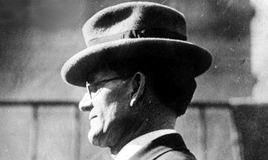 William Hale
Murderer · USA · 1921
Name: William Hale · Known as: the so-called "King of the Osage Hills" · Occupa…
24 victims
William Hale
Murderer · USA · 1921
Name: William Hale · Known as: the so-called "King of the Osage Hills" · Occupa…
24 victims
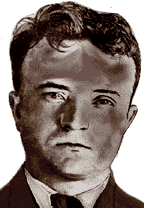 Paul Jaworski
Murderer · USA · 1926
Paul Jaworski was born in Poland as Paul Poluszynski in 1900. He later immigrat…
20 victims
Paul Jaworski
Murderer · USA · 1926
Paul Jaworski was born in Poland as Paul Poluszynski in 1900. He later immigrat…
20 victims
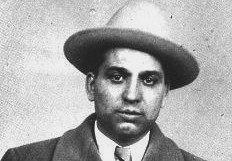 Harry Maione
Murderer · USA · 1937
Harry “Happy” Maione (1908 – February 19, 1942) was a New York mobster who serv…
12 victims
Harry Maione
Murderer · USA · 1937
Harry “Happy” Maione (1908 – February 19, 1942) was a New York mobster who serv…
12 victims
 Edward Adams
Murderer · USA · 1920
Edward J. "Eddie" Adams was born in 1887 on a farm in Hutchinson, Kansas as W.J…
7 victims
Edward Adams
Murderer · USA · 1920
Edward J. "Eddie" Adams was born in 1887 on a farm in Hutchinson, Kansas as W.J…
7 victims
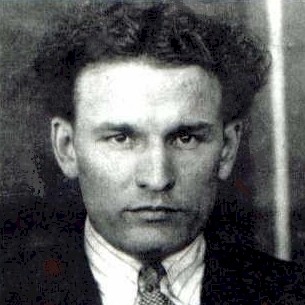 William Kenneth Wagner
Murderer · USA · 1924
William Kenneth (Kinnie) Wagner (born February 18, 1903 in Scott County, VA) wa…
6 victims
William Kenneth Wagner
Murderer · USA · 1924
William Kenneth (Kinnie) Wagner (born February 18, 1903 in Scott County, VA) wa…
6 victims
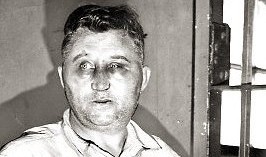 Harry Powers
Murderer · USA · 1931
Harry Powers was executed by hanging on March 18, 1932, at the West Virginia Pe…
5 victims
Harry Powers
Murderer · USA · 1931
Harry Powers was executed by hanging on March 18, 1932, at the West Virginia Pe…
5 victims
 Levi Jaimes Jackson
Homicide · USA · 1992
Levi Jaimes Jackson was a defendant in a carjacking case involving the 40-year-…
1 victim
Levi Jaimes Jackson
Homicide · USA · 1992
Levi Jaimes Jackson was a defendant in a carjacking case involving the 40-year-…
1 victim
 Richard Glassel
Murderer · USA · 2000
January 13, 2003 — Richard J. Glassel was sentenced to death for the murder of…
2 victims
Richard Glassel
Murderer · USA · 2000
January 13, 2003 — Richard J. Glassel was sentenced to death for the murder of…
2 victims
 Anthony Bartee
Murderer · USA · 1996
Anthony Bartee (TDCJ Number: 999282) Bartee was born on 08/57. He was received…
1 victim
Anthony Bartee
Murderer · USA · 1996
Anthony Bartee (TDCJ Number: 999282) Bartee was born on 08/57. He was received…
1 victim
 William Kitchens
Murderer · USA · 1986
William Joseph Kitchens was convicted of the capital murder of Patricia Webb an…
1 victim
William Kitchens
Murderer · USA · 1986
William Joseph Kitchens was convicted of the capital murder of Patricia Webb an…
1 victim
 Sandra Bridewell
Murderer? · USA · 1982
Sandra Bridewell used multiple names and aliases, including Sandra Camille (Pow…
2 victims
Sandra Bridewell
Murderer? · USA · 1982
Sandra Bridewell used multiple names and aliases, including Sandra Camille (Pow…
2 victims
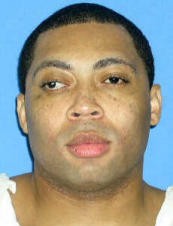 Daroyce Mosley
Mass murderer · USA · 1994
DaRoyce Lamont Mosley was convicted of capital murder for the death of Patricia…
4 victims
Daroyce Mosley
Mass murderer · USA · 1994
DaRoyce Lamont Mosley was convicted of capital murder for the death of Patricia…
4 victims
- Gender
- male
- Country
- USA
- Location
- Oregon City, Clackamas County, Oregon, USA
- Date of birth
- 1872
- Age at first offence
- 55
- Characteristics
- parricide, arson
- Victim profile
- His wife, Ethel McCurdy
- Method of murder
- Hitting with a hammer
- Date(s) of murder
- July 8, 1927
- Years active
- 1927
- Date of arrest
- —
- Status
-
Released
Sentenced to life in prison on July 25, 1927; released on parole in 1939 after the Governor commuted his sentence from life to 35 years
Case record: Alvin McCurdy
Background
Alvin McCurdy was convicted in connection with the death of his wife, Ethel McCurdy.
Ethel McCurdy died in a devastating house fire on July 8, 1927. She shared a tiny bungalow with her husband Alvin in the Canemah community, just south of Oregon city.
The offence
Authorities treated Ethel McCurdy’s death as a homicide and later determined that her death was caused by blunt force blows to the back of her head, possibly caused by a hammer.
Alvin McCurdy pleaded guilty of second-degree murder.
Investigation
At first, Ethel McCurdy’s death in the fire appeared accidental.
Investigators recovered Ethel McCurdy’s badly burned body. Her charred body was laying on her back in bed when authorities found her badly burned body.
Alvin McCurdy was found laying motionless on the lawn outside the burning house with his arms and legs severely burned, and he had managed to escape.
An autopsy revealed that Ethel McCurdy died of blunt force blows to the back of her head, possibly caused by a hammer.
Sheriff E.T. Mass believed it would not be an easy case to solve and worked with his men to question neighbors.
Neighbors said Ethel McCurdy was a wonderful lady, that everyone liked her, and that she had no enemies. Mass and his men kept searching.
Investigators found a lead involving a neighbor’s boy who had been caught by Ethel McCurdy coming out of the bungalow one day. The boy was said to have received a verbal tongue lashing, and he went off muttering something about getting even with her. A neighbor also recalled that the youth had done carpentry work for the McCurdys and that he had a hammer.
Mass and his deputies went to the boy’s house, but did not find him there. The boy’s mother said he had left early that morning to go to a friend’s house about the time when the fire was first discovered. At Mass’ request, she went down in the basement to get the boy’s hammer, but found it missing.
Mass’ theory was that the murder weapon had been buried. Authorities obtained the name and address of the friend’s house, where they found the suspect youth working on a jalopy with his friend. The youth immediately produced his hammer and said he brought it with him from home to work on the car. The hammer did not appear to have any bloodstains on it. A lab test later confirmed that the hammer contained no particles of blood.
Authorities later learned Alvin McCurdy had regained enough strength to talk to deputies. Alvin McCurdy told them that he and his wife had gone to bed about the same time, 10 p.m. the previous night. He said they had separate bedrooms because he had suffered a heart attack some time ago and his doctor prescribed maximum, uninterrupted bed rest. He said the last time he saw his wife was when she left his medicine on the nightstand next to his bed. He said he was awakened by a cloud of smoke pouring into his bedroom. He said he tried to make it to his wife’s bedroom but was overcome by smoke and heat and was forced to flee. He said his heart gave out when he reached the front lawn and he fainted. He said he had not noticed anyone poking around their Canemah residence in recent days. He also said he doubted anyone wanted to burglarize their home or rob them because they did not have much money or many material possessions.
Mass and Oregon City Police Officer Clinton A. Blodgett returned to the fire-murder scene to sift through burned debris. Mass was convinced the killer had made one mistake and left one incriminating piece of evidence behind.
While sifting through the debris, investigators found a man’s wrist watch engraved with the name Alvin McCurdy on the back.
Mass and Blodgett were perplexed because Alvin McCurdy said he could not make his way into his wife’s bedroom because of intense smoke and heat, but he had apparently dropped the watch. Investigators considered that Alvin McCurdy said he had been confined to his bed for several days because of his heart condition.
Investigators decided to hone in on Alvin McCurdy’s shaky alibi. They contacted several local stores to see if McCurdy had purchased a hammer recently, and found one storekeeper who recalled selling one to McCurdy two weeks earlier.
Mass ordered a more thorough search of the property surrounding the McCurdy fire-gutted bungalow. One officer uncovered a blood-stained claw hammer buried in the ground less than 100 yards from the McCurdy house.
Confronted with this new information, McCurdy broke down and confessed to killing his wife.
In his confession, Alvin McCurdy said there had been an argument and that his wife threatened to leave him. He said he killed his wife with the hammer, set the house after, singed his arms and legs in the process, and faked the fainting spell to throw suspicion off of himself.
Trial
On July 25, 1927, less than three weeks after the fatal fire, Alvin McCurdy’s murder trial began.
Alvin McCurdy asked if he could change his plea to guilty of second-degree murder rather than face the possibility of a first-degree murder conviction and certain death in the gas chamber.
Circuit Court Judge James U. Campbell granted his wish and sentenced McCurdy to life imprisonment.
Sentencing
Circuit Court Judge James U. Campbell sentenced McCurdy to life imprisonment.
Appeals
No appeal information was provided in the case summary.
Outcome
McCurdy was released on parole in 1939 after the Governor commuted his sentence from life to 35 years.
McCurdy died four years later of natural causes.
Other details
Ethel McCurdy’s death occurred on July 8, 1927, in the Canemah community, just south of Oregon city.

Spotted an error, or have more information about this case?