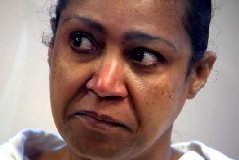
Linda Carty
Murderer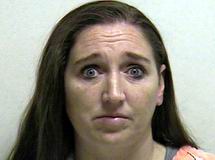 Megan Huntsman
Murderer · USA · 1996
Megan Huntsman was 40 at sentencing. She was a mother of three children who wer…
6 victims
Megan Huntsman
Murderer · USA · 1996
Megan Huntsman was 40 at sentencing. She was a mother of three children who wer…
6 victims
 Angela Johnson
Murderer · USA · 1993
Angela Jane Johnson was convicted in federal court of aiding and abetting the m…
5 victims
Angela Johnson
Murderer · USA · 1993
Angela Jane Johnson was convicted in federal court of aiding and abetting the m…
5 victims
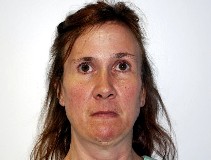 Michele Kalina
Murderer · USA · 1996
Michele Kalina pleaded guilty to murder for one of five infants she initially w…
5 victims
Michele Kalina
Murderer · USA · 1996
Michele Kalina pleaded guilty to murder for one of five infants she initially w…
5 victims
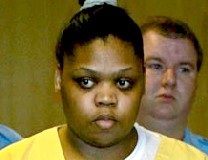 Tiffany Hall
Murderer · USA · 2006
Tiffany Hall was 24 when she was charged in September 2006. She later entered a…
5 victims
Tiffany Hall
Murderer · USA · 2006
Tiffany Hall was 24 when she was charged in September 2006. She later entered a…
5 victims
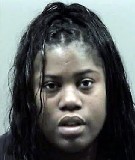 Banita Jacks
Murderer · USA · 2007
Banita Jacks was a Washington, DC resident convicted of murdering her four daug…
4 victims
Banita Jacks
Murderer · USA · 2007
Banita Jacks was a Washington, DC resident convicted of murdering her four daug…
4 victims
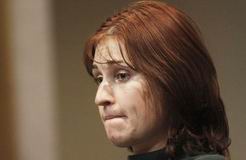 Holly Grigsby
Murderer · USA · 2011
Holly Grigsby was sentenced to life in prison without parole on July 15, 2014.…
4 victims
Holly Grigsby
Murderer · USA · 2011
Holly Grigsby was sentenced to life in prison without parole on July 15, 2014.…
4 victims
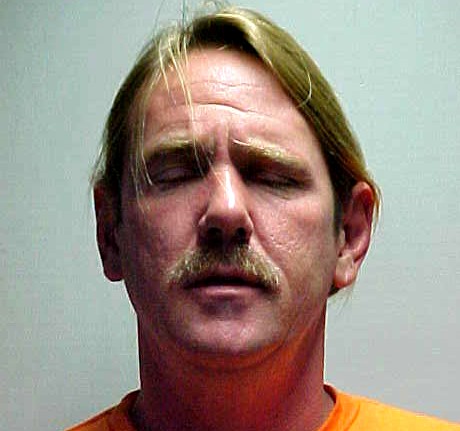 Frank Dale McCray
Murderer · USA · 1987
Frank Dale McCray was convicted in Maricopa County Superior Court and sentenced…
1 victim
Frank Dale McCray
Murderer · USA · 1987
Frank Dale McCray was convicted in Maricopa County Superior Court and sentenced…
1 victim
 Ahmad Musa Dakamseh
Mass murderer · Jordan · 1997
Ahmad Musa Dakamseh Ahmad Dakamseh served as a Jordanian soldier. His family sa…
7 victims
Ahmad Musa Dakamseh
Mass murderer · Jordan · 1997
Ahmad Musa Dakamseh Ahmad Dakamseh served as a Jordanian soldier. His family sa…
7 victims
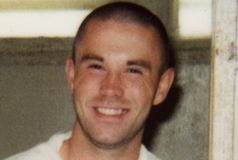 Mark Anthony Duke
Mass murderer · USA · 1997
Mark Anthony Duke was 16 years old when he committed a capital offense. He resi…
4 victims
Mark Anthony Duke
Mass murderer · USA · 1997
Mark Anthony Duke was 16 years old when he committed a capital offense. He resi…
4 victims
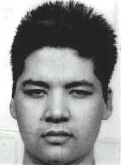 Jessy San Miguel
Mass murderer · USA · 1991
Name: Jessy San Miguel (also referred to as Jessy Carlos San Miguel) Status: Ex…
4 victims
Jessy San Miguel
Mass murderer · USA · 1991
Name: Jessy San Miguel (also referred to as Jessy Carlos San Miguel) Status: Ex…
4 victims
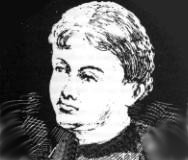 Louisa Jane Taylor
Murderer · United Kingdom · 1882
Louisa Jane Taylor was widowed in 1882 and had a small pension to survive on. S…
1 victim
Louisa Jane Taylor
Murderer · United Kingdom · 1882
Louisa Jane Taylor was widowed in 1882 and had a small pension to survive on. S…
1 victim
- Gender
- female
- Country
- USA
- Location
- Houston, Texas, USA
- Date of birth
- October 5, 1958
- Age at first offence
- 43
- Characteristics
- kidnapping
- Victim profile
- Joana Rodriguez, 20
- Method of murder
- Suffocation
- Date(s) of murder
- May 16, 2001
- Years active
- 2001
- Date of arrest
- Same day
- Status
-
Sentenced to death
Sentenced to death on February 21, 2002
Case record: Linda Anita Carty
Individuals
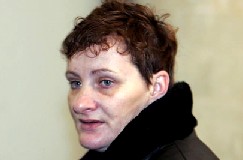
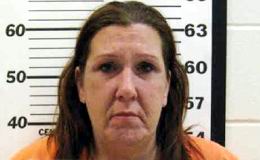
- Linda Anita Carty (age 42 at crime; DOB: 10-5-1958), defendant; woman possessing both United States and British citizenship; sentenced to death in February 2002 for the abduction and murder of 20-year-old Joana Rodriguez, allegedly in order to steal her newborn son; held at the Mountain View Unit of the Texas Department of Criminal Justice.
- Joana Rodriguez (age 20), victim; her infant son was kidnapped.
- Joana Rodriguez’s husband: Raymundo Cabrera.
- Rigoberto Cardenas, Cabrera’s cousin.
- Chris Robinson, co-defendant.
- Gerald Anderson (also identified as Gerald “Baby G” Anderson), co-defendant.
- Carlos Williams, co-defendant (listed as part of the home invasion and kidnapping and later as an alleged accomplice-witness in appellate discussion).
- Florence Meyers, neighbor; testified about an encounter with Carty involving Carty’s claimed pregnancy and a car seat.
- Sherry Bancroft, employee at Public Storage; testified about storage units and Carty’s statements about having a baby.
- Sarah Hernandez, testified that she met Carty when both were serving time in jail; described a letter-writing request.
- Enid Carty, Carty’s mother; testified about Carty not mentioning pregnancy to her and not appearing pregnant.
- Jovelle Carty, Carty’s daughter; testified about renting a Pontiac Sunfire and permission for Carty to drive a black Chevrolet Cavalier.
- Jose Corona, Carty’s husband in testimony; testified about separation, Carty’s claimed pregnancies and miscarriages, and being told “not yet.”
- Oscar (name referenced in the jail letter), referenced as the supposed sender of the letter.
- Enid Carty also testified about an arrival by taxi cab and taking keys to Jovelle’s Cavalier.
- Michael Goldberg, partner at Baker Botts, cited in statements about defense counsel issues.
- Jerry Guerinot, trial attorney cited in defense claims about ineffective assistance.
- Pat Lykos, Harris County District Attorney; declined to comment on the bias issue because of pending cases.
- Bob Gill, assistant chief of the criminal division of the Tarrant County District Attorney’s Office.
- Gregory Davis, Collin County’s first assistant district attorney; previously tried two death penalty cases against women.
- Victor Streib, law professor; quoted in discussion about women and the death penalty.
- Roe Wilson, handled post-conviction writs for the Harris County District Attorney’s Office; described facts as “heinous.”
- Price, J., delivered the opinion for a unanimous Court (Court of Criminal Appeals of Texas).
- The State of Texas, appellee on direct appeal.
Timeline
- May 12, 2001 — Ray (Joana Rodriguez’s and Cabrera’s son) was born; the victim and the baby came home from the hospital the following day.
- May 15, 2001 — Carty told Florence Meyers and others that she was pregnant and that the baby would be born next day; she also made statements to Sherry Bancroft at Public Storage that she had delivered the baby and that it was at home with his father later on May 15.
- May 16, 2001 — Carty and three co-defendants invaded the home; the victim and her three-day-old baby were kidnapped; the victim was hog-tied with duct tape, a bag taped over her head, placed in the trunk of a car; the victim died from homicidal suffocation; police were dispatched around 1:15 a.m.; police found the live baby in a black Chevrolet Cavalier and the victim’s body in the trunk of a Pontiac Sunfire at a house at 6042 Van Zandt Street; Carty told her husband at the police station “not yet.”
- February 19, 2002 — Carty was convicted of murder.
- February 21, 2002 — Carty was sentenced to death by lethal injection.
- April 7, 2004 — Direct appeal to the Texas Court of Criminal Appeals was rejected; opinion delivered April 7, 2004.
- September 19, 2009 — Fifth Circuit Court of Appeals appeal was rejected.
- February 26, 2010 — Carty appealed to the U.S. Supreme Court.
- May 3, 2010 — The Court refused to review the case, denying certiorari.
- 28 November 2011 — A Channel 4 documentary, “The British Woman on Death Row,” first aired in the UK.
- September 2009 — Carty’s image was placed on the fourth plinth in Trafalgar Square by her British supporters.
- 2012 — Carty appeared on a segment of Werner Herzog’s series On Death Row, broadcast on Discovery Channel’s Investigation Discovery.
Background
Carty was on death row in Texas and possessed both United States and British citizenship. She was sentenced to death in February 2002 for the abduction and murder of 20-year-old Joana Rodriguez, allegedly in order to steal the victim’s newborn son. She claimed she was framed by drug dealers in response to her work as an informant and that her appeals were unsuccessful and the appeal procedure had been exhausted.
Carty emigrated to the United States in 1982 and was a citizen of the United States.
Drug informant background
In 1992, Carty was convicted of auto theft and impersonation of an FBI agent. She was sentenced to 10 years probation on the condition that she would work as a drug informant. While working as an informant, she provided information leading to two arrests. Her services came to an end when she was arrested on drug charges. Carty claimed in media interviews that she was recruited by a friend from the Houston Police Department and that her work for the DEA helped land seizures of thousands of dollars’ worth of narcotics and led to the imprisonment of scores of dealers.
The offence
Carty and three co-defendants invaded the home of a 25-year-old female in Houston on May 16, 2001. The victim and her three-day-old baby were kidnapped. Two other victims were beaten, duct taped, and left in the residence.
Home invasion and kidnapping (non-accomplice and trial-evidence description)
The victim, Joana Rodriguez, and her husband, Raymundo Cabrera, and Cabrera’s cousin, Rigoberto Cardenas, lived in apartment 36 at Sandy Glen Apartments in Houston. At about 1:00 a.m. on May 16, 2001, four men kicked in the front door, demanded marijuana and money, ransacked their apartment, and tied up Cabrera and Cardenas. The intruders took about $800 in cash and left with the victim and the baby.
One of the men answered his cell phone and said: "We are inside here. Do you want it?" Then he yelled that "she" was outside and that they had to go. After the intruders left, Cardenas freed himself and untied Cabrera. They called 911. Police dispatched to the scene at about 1:15 a.m.
The victim was hog-tied with duct tape. A bag was taped over her head. She was placed in the trunk of a car. Her arms and legs were bound with duct tape; her mouth and nose were also taped; there was a plastic bag over her head which appeared to be taped around the bottom. The cause of death was determined to be homicidal suffocation.
Investigation
Investigators initially suspected Carty after they discovered that she had told people she was going to have a baby despite not appearing pregnant. While interviewing neighbors in the apartment complex, police heard from neighbor Florence Meyers that Meyers had sat with Carty in a car, saw a child’s car seat in the car, and was told by Carty that she was pregnant. Police telephoned Carty and asked her to meet with them. Carty told them that a car she had rented and her daughter’s car might have been used in the crime.
Carty was placed under arrest and directed officers to a location where both cars were found at 6042 Van Zandt Street: the live baby was in one car and the suffocated victim was in the back of the other. Carty’s fingerprints were found in both cars.
Inside the cars, officers found duct tape, nylon rope, Lysol spray, baby clothes, baby blankets, a diaper bag containing infant formula, and other baby paraphernalia. The diaper bag also contained a live round of ammunition of the type and size that could be fired from a .38 caliber gun. A .38 caliber gun was found by police in a drawer inside the house at 6042 Van Zandt Street.
Arrest
After investigators contacted Carty by telephone and asked her to meet them, she met with them. She was placed under arrest.
Trial
Carty and three co-defendants invaded the home of Joana Rodriguez, who was 25 at the time of the invasion in the provided narrative. The evidence described Carty’s statements about being pregnant and the presence of baby paraphernalia and weapons.
Events and statements presented at trial
- In early May 2001, Carty and her husband separated.
- Carty told her husband that she was pregnant with his child.
- On May 15, 2001, Carty told Florence Meyers that she was pregnant and that the baby was going to be born the next day; Meyers testified Carty did not appear pregnant.
- Carty told her husband on May 15 that she was going to have a baby boy the next day.
- When her husband met her at the police station on May 16 after her arrest, he asked whether the baby had been born; she told him "not yet."
- On May 15, Carty told Sherry Bancroft at Public Storage that she had indeed had the baby and that he was at home with his father.
- The victim’s husband testified that while intruders were in his home, one answered his cell phone and said: **"We are inside here. The intruders left, taking the baby with them.
Cell phone records and calls
Carty’s cell phone records were introduced and showed eleven calls logged between 12:50 a.m. and 2:50 a.m. on May 16, 2001, between Carty’s phone and the cell phone number that led police to Gerald Anderson. Seven calls were placed between 1:09 a.m. and 1:14 a.m.
Letter from jail testimony
Sarah Hernandez testified that she met Carty when both were serving time in jail. Carty asked Hernandez to write a letter for her because Carty did not want the letter to be in her own handwriting. Hernandez copied what Carty wrote. Hernandez stated the letter was supposed to be from someone named Oscar. The letter said Carty was being set up by "Chris and Zeb," who borrowed Carty’s car and put the baby in it. The letter stated they had a grudge against Carty. The letter also asserted she was being set up and mentioned that she was black and that her brother, who was a DEA agent, had busted them.
Testimony from family and other witnesses
- Enid Carty testified Carty did not mention to her that she was pregnant when they talked on May 13 or on following days, and Carty did not appear pregnant around that time. Enid also testified that Carty arrived at her house in a taxi cab between 8:00 and 9:00 a.m. on May 16, 2001, took the keys to Jovelle Carty’s black Chevrolet Cavalier, and drove off in the Cavalier.
- Jose Corona testified that in the two-and-a-half to three years he and Carty lived together, she told him three times she was expecting a baby; in the first two instances she eventually told him she had miscarried. Corona testified Carty did not allow him to go with her to prenatal doctor visits and he believed she had lied. At the beginning of May 2001, he decided to leave. When he told her he was leaving, Carty told him she was pregnant again. Corona did not believe her and moved out; he believed she continued to call him throughout May. Corona testified he found out later Carty had never been pregnant.
- Sherry Bancroft testified about Public Storage storage units rented by Carty. Bancroft stated Carty had known her for several months and rented a second unit on May 10. On May 12, Carty rented a third unit and told Bancroft she was expecting a baby boy born that day and stated she was already in labor. Bancroft testified Carty returned on May 15 around 6:30 p.m. until at least 7:30 p.m. Bancroft testified Carty told her she had indeed had the baby and that the baby was at home with his father. Bancroft identified the Pontiac Sunfire car Carty was driving on the evening of May 15.
- Jovelle Carty testified she rented the Pontiac Sunfire at Carty’s request to assist in moving Carty’s things to the storage unit. Jovelle testified that in the last three years Carty miscarried three times and that baby items were purchased in anticipation of these babies. Jovelle testified she was in Florida at the time of the offense and that Carty had permission to drive Jovelle’s black Cavalier while she was gone.
Evidence of cars and discovery at 6042 Van Zandt Street
Carty directed officers to 6042 Van Zandt Street after her arrest. A black Chevrolet Cavalier belonging to her daughter (Jovelle Carty) and a tan or gold Pontiac Sunfire rented in Jovelle’s name were parked at the house. The baby was found alive in the Cavalier. The victim’s body was found in the trunk of the Sunfire. The victim had duct tape binding on arms and legs and had tape over her mouth and nose, with a plastic bag taped over her head. Officers found ammunition in the diaper bag located in the Cavalier.
Trial court jury findings and punishment
The jury’s answers to the special issues under Texas Code of Criminal Procedure Article 37.071, §§ 2(b) and 2(e) resulted in the trial judge sentencing Carty to death. The appellant was convicted in February 2002 of capital murder.
Sentencing
Carty was sentenced to death by lethal injection on February 21, 2002.
Appeals
Texas Court of Criminal Appeals (direct appeal)
In the Court of Criminal Appeals of Texas, No. 74,295, Linda Carty, Appellant v. The State of Texas (Direct Appeal of Harris County), Price, J. delivered an opinion for a unanimous Court. The Court stated it would affirm and rejected eleven points of error.
Key rulings included:
- The Court reviewed evidence under the accomplice corroboration rule in Article 38.14 and found non-accomplice evidence tended to connect Carty to the kidnapping and murder.
- The Court overruled points of error one and two concerning legal and factual sufficiency based on accomplice testimony.
- The Court overruled points of error three and four regarding whether certain witnesses were accomplices, stating the issues were moot because the evidence tended to connect Carty without relying on testimony of any alleged accomplices.
- The Court overruled points of error five and seven concerning confrontation rights and limitations on playing prior inconsistent videotaped statements, stating the appellant was permitted to impeach Robinson and Combs with statements made to police and could call officers who took the statements; it found the appellant did not make edits or identify portions and did not show impeachment value.
- The Court overruled point of error nine because the appellant did not offer Caston’s videotaped statement for record purposes and failed to preserve the issue.
- The Court overruled points of error six, eight, and ten because separate argument and authority under the Texas Constitution were not provided.
- The Court overruled point of error eleven, rejecting ineffective assistance claims based on failure to make an offer of proof for Caston’s videotaped statement.
The Court stated: "The judgment of the trial court is affirmed. Delivered: April 7, 2004 Do Not Publish".
Fifth Circuit Court of Appeals
Carty then appealed to the Fifth Circuit Court of Appeals. This appeal was rejected on September 19, 2009.
U.S. Supreme Court
On February 26, 2010, Carty appealed to the U.S. Supreme Court. The British government filed an amicus curiae brief as a friend of the Court. On May 3, 2010, the Court refused to review the case, denying certiorari.
Outcome
Carty’s direct appeal was rejected, the Fifth Circuit appeal was rejected, and the U.S. Supreme Court denied certiorari. She remained on death row in Texas and, barring clemency, was scheduled within Texas’ death penalty process following the Supreme Court’s denial of certiorari.
Defense and claims discussed during appeals and commentary
Carty’s lawyers and supporters contended she was unjustly sentenced to death for a murder that she did not commit. Reprieve asserted her defense attorney did not present mitigating evidence and that no forensic evidence placed her at the scene of the crime, while also noting that her fingerprints were found in the car containing the victim’s body. Carty claimed she was framed by three men for her work as an informant with the Drug Enforcement Administration and stated: "...it was too difficult just to kill me, so they hatched this plot."
The appellate and media discussion also included claims that co-defendants were given prison terms but none received the death penalty after testifying against Carty, and that Baker Botts argued trial counsel, Jerry Guerinot, handled the defense incompetently, including claims of failure to call mitigating witnesses and limited time spent meeting with Carty.
The opinion language included quoted legal reasoning such as the accomplice corroboration rule: "A conviction cannot be had upon the testimony of an accomplice unless corroborated by other evidence tending to connect the defendant with the offense committed; and the corroboration is not sufficient if it merely shows the commission of the offense." It also included: "unlike extrajudicial confessions, testimony of an accomplice need be corroborated only as to facts 'tending to connect the defendant with the offense committed[,]' and not as to the corpus delicti itself." and "The non-accomplice evidence does not have to directly link the appellant to the crime, nor does it alone have to establish his guilt beyond a reasonable doubt . . . . [T]here must simply be some non-accomplice evidence which tends to connect appellant to the commission of the offense alleged in the indictment."
The opinion also contained quoted legal standards about cross-examination limitations and confrontation and referenced rules about impeachment predicate and when extrinsic evidence is not allowed if the witness unequivocally admits a prior inconsistent statement.
Aftermath
Carty continued to be held at the Mountain View Unit of the Texas Department of Criminal Justice. Her case received media attention, including placement of her image on the fourth plinth in Trafalgar Square by British supporters in September 2009. She appeared in documentary and television segments including Channel 4’s “The British Woman on Death Row” first airing on 28 November 2011, and in 2012 on Werner Herzog’s On Death Row segment broadcast on Discovery Channel’s Investigation Discovery.
Spotted an error, or have more information about this case?