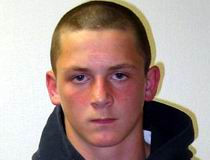
Brandon McInerney
Homicide David Attias
Homicide · USA · 2001
David Attias was described as an 18-year-old student at the University of Calif…
4 victims
David Attias
Homicide · USA · 2001
David Attias was described as an 18-year-old student at the University of Calif…
4 victims
 Kipland Kinkel
Homicide · USA · 1998
Name: Kipland Kinkel Kipland Kinkel killed his parents at home and then opened…
4 victims
Kipland Kinkel
Homicide · USA · 1998
Name: Kipland Kinkel Kipland Kinkel killed his parents at home and then opened…
4 victims
 Nicholas Browning
Homicide · USA · 2008
Nicholas W. Browning — 15-year-old boy charged as an adult with four counts of…
4 victims
Nicholas Browning
Homicide · USA · 2008
Nicholas W. Browning — 15-year-old boy charged as an adult with four counts of…
4 victims
 Alec Kreider
Homicide · USA · 2007
Alec Devon Kreider (born February 4, 1991) was a Lancaster County, Pennsylvania…
3 victims
Alec Kreider
Homicide · USA · 2007
Alec Devon Kreider (born February 4, 1991) was a Lancaster County, Pennsylvania…
3 victims
 Cody Posey
Homicide · USA · 2004
Cody Posey was a New Mexico teenager who was born October 9, 1989. In 1992, whe…
3 victims
Cody Posey
Homicide · USA · 2004
Cody Posey was a New Mexico teenager who was born October 9, 1989. In 1992, whe…
3 victims
 Marlene Smith
Murderer · USA · 1997
Marlene Smith was convicted of the 1997 murder of Anthony Proviano, a Universit…
1 victim
Marlene Smith
Murderer · USA · 1997
Marlene Smith was convicted of the 1997 murder of Anthony Proviano, a Universit…
1 victim
 Timea Faludi
Homicide · Hungary · 2000
Timea Faludi was a Hungarian nurse dubbed the “Black Angel”. She was sentenced…
30 victims
Timea Faludi
Homicide · Hungary · 2000
Timea Faludi was a Hungarian nurse dubbed the “Black Angel”. She was sentenced…
30 victims
 Susan Barber
Murderer · United Kingdom · 1981
Susan Barber married Michael Barber in 1970. Susan was 17 years old and had a d…
1 victim
Susan Barber
Murderer · United Kingdom · 1981
Susan Barber married Michael Barber in 1970. Susan was 17 years old and had a d…
1 victim
 Thomas Dudley
Homicide · On the high seas · 1884
Thomas Dudley was sentenced to the statutory death penalty with a recommendatio…
1 victim
Thomas Dudley
Homicide · On the high seas · 1884
Thomas Dudley was sentenced to the statutory death penalty with a recommendatio…
1 victim
 Vincent Prowell
Homicide · USA · 1993
Vincent Prowell had a paranoid personality disorder. Prowell grew up in a dysfu…
2 victims
Vincent Prowell
Homicide · USA · 1993
Vincent Prowell had a paranoid personality disorder. Prowell grew up in a dysfu…
2 victims
- Gender
- male
- Country
- USA
- Location
- Oxnard, Ventura County, California , USA
- Date of birth
- January 24, 1994
- Age at first offence
- 14
- Characteristics
- juvenile (14), rape, rapist, history of mental illness, hate crime, alcohol
- Victim profile
- Lawrence "Larry" Fobes King, 15
- Method of murder
- Shooting (.22-caliber revolver)
- Date(s) of murder
- February 12, 2008
- Years active
- 2008
- Date of arrest
- Same day
- Status
-
Imprisoned
Pleaded guilty; sentenced to 21 years in prison on November 21, 2011
Case record: Brandon McInerney
Background
Lawrence “Larry” Fobes King was born on January 13, 1993 at the Ventura County Medical Center in Ventura, California, United States. King was adopted at age two by Gregory and Dawn King. King’s biological father had abandoned his wife, and King’s mother was a drug addict who failed to care for her son properly. King was prescribed medication for attention deficit hyperactivity disorder, and Gregory King said Larry had been diagnosed with reactive attachment disorder. Gregory King said Larry was forced to repeat the first grade of schooling.
By the third grade, King was bullied by fellow students due to his effeminacy and openness about being gay, having come out at ten years old.
At the age of twelve, King was placed on probation for theft and vandalism.
In November 2007, King was removed from his adoptive home and placed in a group home and treatment center named Casa Pacifica after he alleged that his adoptive father was physically abusing him; Gregory King denied the charge.
Bullying continued when King transferred to E.O. Green Junior High School in the seventh grade and intensified when he began attending school wearing women’s accessories and clothing, high heels and makeup in January 2008. King’s younger brother Rocky also suffered bullying because of Larry’s appearance.
The school could not legally stop King from dressing as such because of a California anti-discrimination law that prevented gender discrimination. Teachers at the school thought that his clothing clearly violated school code, which prevented students from wearing clothing considered distracting.
The school issued a formal notice to every teacher on January 29, 2008 via email. Written by eighth-grade assistant principal Sue Parsons, it stated, in part: “We have a student on campus who has chosen to express his sexuality by wearing make-up. It is his right to do so. Some kids are finding it amusing, others are bothered by it. As long as it does not cause classroom disruptions he is within his rights. We are asking that you talk to your students about being civil and non-judgmental. They don't have to like it but they need to give him his space. We are also asking you to watch for possible problems. If you wish to talk further about it please see me or Joy Epstein.”
Joy Epstein was one of the school’s assistant principals and was openly lesbian.
Several teachers and King’s father accused Epstein of encouraging Larry’s flamboyance as part of her “political agenda.”
King taunted boys in the halls, saying “I know you want me,” and was known to make inappropriate comments to boys while they were changing for P.E. class.
Prosecuting attorneys filed court documents that stated King was not sexually harassing other students in the weeks before the shooting.
Brandon McInerney Brandon David McInerney was born on January 24, 1994 in Ventura, California. His mother Kendra had a criminal history and was addicted to methamphetamine.
In 1993, Kendra accused her husband William of shooting her in the arm with a .45-caliber pistol. In another incident, William McInerney choked his wife almost to unconsciousness after she accused him of stealing ADHD medication from her older son. William McInerney pleaded no contest and served ten days in jail and 36 months probation on a charge of domestic violence.
Between August 2000 and February 2001, William McInerney contacted Child Protective Services at least five times about concerns of his son living with his mother. In 2001, William filed a restraining order against Kendra. In 2004, Brandon was placed in the custody of his father because his mother had entered a drug rehabilitation program.
The offence
On February 11, 2008, Newsweek reported that King walked onto the basketball court in the middle of a game and asked McInerney to be his Valentine in front of the team, after which the team made fun of McInerney.
Just after lunchtime on February 11, 2008, King passed McInerney in a corridor and called out, “Love you baby”.
Later on February 11, King was seen “parading” back and forth in high-heeled boots and makeup in front of McInerney.
According to a teacher, a group of boys were laughing at McInerney while he was getting visibly upset, and assistant principal Joy Epstein noticed McInerney’s reaction and “wagged her finger” at him.
When McInerney endured teasing because of the incident, he attempted to recruit other students to assault King, but no one expressed interest. McInerney then told one of King’s friends to say goodbye to him “because she would never see him [King] again”.
On the morning of February 12, 2008, McInerney was witnessed repeatedly looking at King during a class in a computer laboratory.
At approximately 8:15 a.m. local time on February 12, 2008, McInerney drew from his backpack a .22-caliber revolver belonging to relatives and shot King twice in the back of the head.
Following the shooting, McInerney tossed the handgun on the floor and walked from the classroom. He was apprehended by police about seven minutes later and five blocks away from the school campus.
Investigation
King was transported to St. John’s Regional Medical Center where he was listed in serious condition. He was declared brain dead on February 13, 2008 but was kept on life support for two days so that his organs could be donated.
Since McInerney refused to speak to investigators, the motive for the shooting remained unclear.
Police Chief John Crombach said: “It’s pretty clear our suspect was focused on his victim and what he planned to do”.
Arrest
McInerney was apprehended by police about seven minutes after the shooting and five blocks away from the school campus.
Trial
In February 2008, McInerney’s lawyer William Quest was considering a change of venue.
On July 24, 2008, Judge Douglas Daily of the Ventura County Superior Court ruled that McInerney would stand trial as an adult, and the decision was appealed.
On August 7, 2008, in the same court, McInerney pleaded not guilty to premeditated murder and a hate crime.
A preliminary hearing was set for September 23, 2008, and rescheduled for October 14, 2008. On September 23, 2008, the court appointed Willard Wiksell, a lawyer from Ventura, as guardian ad litem for McInerney.
Previously, McInerney’s family took steps to fire his lawyer William Quest of the Public Defenders Office and hire the United Defense Group, a criminal defense law firm from Los Angeles. The Public Defenders Office filed a petition stating that the United Defense Group might not have McInerney’s best interests in mind.
On October 14, 2008, after the court received a report from the appointed guardian ad litem and the court determined the defendant had not been coerced into changing representation and knew what he was doing, the Ventura County Superior Court allowed McInerney to fire his Public Defender William Quest and the Public Defenders Office and hire the United Defense Group with attorney Robyn Bramson as his attorneys.
The court denied a motion to gag the defendant’s former representatives from speaking about the case, especially to the media.
On December 8, 2008, the Ventura County Superior Court ruled that McInerney, after being evaluated by a psychiatrist and a psychologist, was competent to stand trial. On December 8, 2008, Scott S. Wippert of the United Defense Group filed a legal motion for discovery, asking the court to order the district attorney to provide documents to uncover whether prosecutors exercised discretion in sending McInerney’s case to adult court.
On December 29, 2008, Judge Rebecca Riley denied the motion, stating there was no evidence of abuse of discretion in transferring McInerney from juvenile to adult court.
On January 26, 2009, the preliminary hearing was postponed until March 17 to give McInerney’s lawyers time to appeal Judge Riley’s rejection of the December motion for discovery.
On March 18, 2009, the hearing was once again postponed when William McInerney, Brandon’s father, was found dead in his living room in the Silver Strand area near Oxnard after sustaining an accidental head injury from a fall.
Brandon McInerney was granted Judge Riley’s permission to leave the juvenile detention facility and attend his father’s funeral.
On August 27, 2009, at his arraignment in Ventura County Superior Court, McInerney pleaded not guilty to all charges. Judge Bruce Young set a pretrial hearing date of October 23, 2009, and a trial start date of December 1, 2009.
On September 1, 2009, Ventura County Superior Court Judge Kevin DeNoce ruled that addition of a lying-in-wait allegation to the list of charges was acceptable. The addition meant the case had to be heard in adult court.
In November, the Ventura 2nd District Appellate Court denied a request to overturn the earlier ruling, finding that the District Attorney’s Office did not act vindictively in adding the lying-in-wait allegation to the murder charge.
On January 21, 2010, the State Supreme Court rejected the petition to overturn the earlier ruling by the Ventura County Superior Court judge.
After postponements, McInerney’s trial was set to commence on July 14, 2010 in Ventura County Superior Court, but was again postponed. A hearing was slated for April 4, 2011, to determine whether McInerney’s attorneys would be ready for a trial beginning on May 2. Earlier postponements involved motions from defense attorneys requesting recusal of the district attorney, a change of venue, and more time for fact-finding.
In August 2010, Ventura County Superior Court Judge Charles Campbell ruled the trial would proceed in Ventura County with jurors selected from Santa Barbara County. On December 6, 2010, Campbell denied a motion for recusal.
A California appeals court affirmed on May 5, 2011 that the juvenile records of the victim, Lawrence King, would remain sealed after a lower court refused the McInerney defense team’s request for the records.
After multiple delays, the trial began on July 5, 2011 with a change of venue to Chatsworth, Los Angeles, California. Multiple previously scheduled dates were bypassed for various reasons, and plans or requests to move the venue or use jurors from other locations in California were not realized.
On the first day of trial, Judge Charles Campbell admonished the half brother of McInerney, James Bing, because it was overheard that Bing went to the jury outside the courtroom and addressed them. Judge Campbell said: “The fate of my brother is in your hands.” Judge Campbell then banned Bing from the courtroom unless summoned to testify.
During the trial, the prosecutor depicted McInerney as a popular teenager skilled in martial arts and firing guns and described him as a white supremacist. The prosecutor described King as a small guy who had often been picked on, saying King wore high-heeled boots, makeup and jewelry along with his school uniform to school.
Scott Wippert, McInerney’s attorney, described King as the aggressor, saying King was sexually aggressive and made inappropriate remarks that provoked McInerney.
Witnesses who were students and classmates of McInerney testified on July 7, 2011. One witness said King told her he had changed his name to Leticia. Another witness said many students made fun of King and called him offensive names behind his back when he came to school wearing makeup and jewelry. Some witnesses said they never noticed King making sexual advances toward other students, but that sexual comments he made was “just messing” with McInerney.
Joy Epstein testified on July 11, 2011. She said she discussed King’s behavior with other school officials and they decided it was according to constitutional rights for King to wear what he wanted unless it violated the school dress code. Epstein said high-heeled boots, makeup and jewelry were allowed according to the Oxnard school dress policy. She said another administrator within the district said the school had to protect the students’ civil and equal rights.
Another teacher testified that pupils told her King would seek them out and follow them into the bathroom, behavior the teacher considered sexual harassment. The teacher said Epstein told her the school could do nothing about the behavior.
On July 22, 2011, the jury was shown footage of a video in which McInerney was fighting in the Ventura County Juvenile hall, where he currently lived.
A corrections officer testified that the defendant was a “good kid” in the honors program for good behavior and had relationships with people of different backgrounds and origins. The officer testified that within the juvenile hall environment fighting was routine and that McInerney was not prone to violence as the prosecution alleged.
Dawn Boldrin, an English teacher, testified that she counseled King and told him he should not wear attention-getting clothing if he did not want to receive negative attention. She also gave the teen, who was exploring his sexual and/or gender identity, a strapless, green, chiffon gown for him to wear outside school. A photo showed Larry King holding up the dress, and many people in the courtroom were crying.
Greg King became upset and gathered his family to leave. Before doing so, Dawn King swore at Boldrin’s 13-year-old daughter and a relative. The judge barred Dawn King from the remainder of the trial.
Because the school allowed King to wear whatever he wanted as long as it did not violate the dress code, the defense argued that this allowed King to sexually harass McInerney.
The trial ended without a verdict and was declared a mistrial by Judge Charles Campbell on September 1, 2011 after the jury reported it was hopelessly deadlocked and unable to reach a unanimous verdict. The jury reported having been deliberating since August 26, 2011. The judge said there were eight weeks of testimony with almost 100 witnesses.
The jury took four votes, and the last vote was split between seven jurors voting for voluntary manslaughter and five jurors voting for either first-degree or second-degree murder.
On September 2, 2011, the district attorney’s office announced it intended to retry McInerney, and a hearing was scheduled for October 5, 2011. For the second trial, prosecutors dropped the hate crime charge.
Sentencing
On November 21, 2011, McInerney pleaded guilty to second-degree murder, voluntary manslaughter and use of a firearm. Under the plea agreement he received 21 years in prison. The plea included that no credit would be given for time served prior to the trial and no credit would be given for good behavior. He initially served the sentence in a juvenile facility and was to be transferred to prison upon turning 18.
McInerney’s sentencing occurred on December 19, 2011.
A reference headline described the outcome as: “Gay teen’s killer takes 21-year deal”
It also included: “Brandon McInerney, who was 14 when he pulled a gun out of his backpack and shot Larry King two times at point-blank range, will be kept behind bars until he is 38 under the terms of the deal struck by Ventura County prosecutors.”
Appeals
No appeal outcome was stated.
Outcome
McInerney pleaded guilty to second-degree murder, voluntary manslaughter and use of a firearm, and a planned retrial was avoided. Prosecutors dropped the hate crime charge before the second trial.
Aftermath
Vigils and marches were organized across the United States following King’s death. Sympathies for King were expressed by Judy Shepard, Human Rights Campaign president Joe Solmonese, Senator Hillary Clinton and television host Ellen DeGeneres.
On February 16, 2008, four days after the shooting, a thousand students in the Hueneme School District marched to pay tribute to King.
California Assemblyperson Mike Eng introduced a new diversity education bill on behalf of King. Eng said: “We need to teach young people that there's a curriculum called tolerance education that should be in every school. We should teach young people that diversity is not something to be assaulted, but diversity is something that needs to be embraced because diversity makes California the great state that it is.”
A local vigil in Ventura, California was organized one year after King’s death.
The Day of Silence for 2008, intended to protest LGBT harassment and occurred on April 25, was specially dedicated to King.
King’s father Greg said he was unconvinced Larry was gay because King had only recently told him Larry was actually bisexual. Greg said he believed Larry was sexually harassing McInerney and expressed concern that Larry was being made a poster child for gay rights issues.
Teachers showed sympathy for McInerney. One teacher said: “We failed Brandon,” and stated: “We didn't know the bullying was coming from the other side—Larry was pushing as hard as he could, because he liked the attention.”
Hundreds of children from the school signed a petition requesting that McInerney be tried as a juvenile.
In August 2008, King’s family filed a claim against E.O. Green Junior High School at Ventura County Superior Court alleging that allowing King to wear makeup and feminine clothing contributed to his death. The California Attorney General’s Office said the school could not legally have stopped King from wearing girls’ clothes because state law prevented gender discrimination.
A Newsweek article published on July 19, 2008 said some teachers at E.O. Green alleged assistant principal Joy Epstein encouraged King’s flamboyance to help further an “agenda”.
When Epstein was later promoted to principal at another local public school, King’s father described it as a “slap in the face of my family”.
The superintendent, Jerry Dannenberg, said the promotion was given because “she was the most qualified person for the new principal job”.
Other details
In the plea proceedings referenced in the material, the family of the victim broke their silence outside court and supported the sentence while believing school officials held deep responsibility for what happened. Greg King said: “Larry had a complicated life, but he did not deserve to be murdered.”
During the described courtroom plea, McInerney’s mother Kendra answered “guilty” when he entered his plea, as stated in the material: “guilty”.
Scott Wippert and Robyn Bramson said their client was mentally preparing himself for state prison. The material stated he would be transferred to a state facility in January when he turned 18.
The material stated that Brandon McInerney was grateful that he would one day be free, and included Wippert’s statement: “Now he has a date he can circle on his calendar,” Wippert said.
After the first trial, gay-rights advocates were largely silent. After the plea announcement, the Gay, Lesbian and Straight Education Network said the plea bargain showed McInerney was being held accountable for his actions. Bramson hoped the case raised awareness that parents and school administrators needed to be involved and aware of what was happening with their children at school. Bramson said: “In this case, all of the adults failed, she said.” She also said: “This was so preventable and it shouldn't ever happen again,” she said.
Newsweek described the shooting as “the most prominent gay-bias crime since the 1998 murder of Matthew Shepard”.
Spotted an error, or have more information about this case?