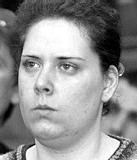
Timea Faludi
Homicide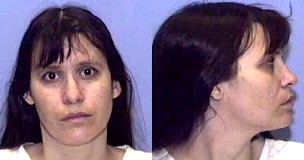 Andrea Yates
Homicide · USA · 2001
Andrea Pia Yates (born Andrea Pia Kennedy on July 2, 1964) was a former Houston…
5 victims
Andrea Yates
Homicide · USA · 2001
Andrea Pia Yates (born Andrea Pia Kennedy on July 2, 1964) was a former Houston…
5 victims
 Coleen Thompson
Homicide · USA · 2002
Coleen Thompson was a former intensive care nurse at Shady Grove Adventist Hosp…
5 victims
Coleen Thompson
Homicide · USA · 2002
Coleen Thompson was a former intensive care nurse at Shady Grove Adventist Hosp…
5 victims
 Christine Paolilla
Homicide · USA · 2003
Christine Marie Paolilla was an American woman born on Long Island, New York on…
4 victims
Christine Paolilla
Homicide · USA · 2003
Christine Marie Paolilla was an American woman born on Long Island, New York on…
4 victims
 Melissa Marvin
Homicide · USA · 1999
Melissa Lynn Marvin was a 29-year-old waitress and amateur surfer at the time o…
4 victims
Melissa Marvin
Homicide · USA · 1999
Melissa Lynn Marvin was a 29-year-old waitress and amateur surfer at the time o…
4 victims
 Erin Caffey
Homicide · USA · 2008
Erin Caffey (juvenile daughter of Terry Caffey and Penny Caffey; charged in con…
3 victims
Erin Caffey
Homicide · USA · 2008
Erin Caffey (juvenile daughter of Terry Caffey and Penny Caffey; charged in con…
3 victims
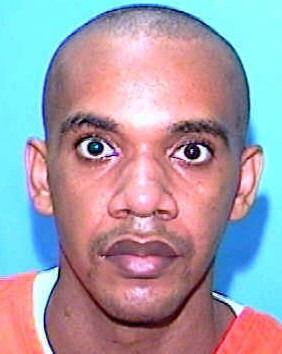 Carlton Francis
Murderer · USA · 1997
Carlton Francis was a neighbor of twin sisters Claire Brunt and Bernice Flegel.…
2 victims
Carlton Francis
Murderer · USA · 1997
Carlton Francis was a neighbor of twin sisters Claire Brunt and Bernice Flegel.…
2 victims
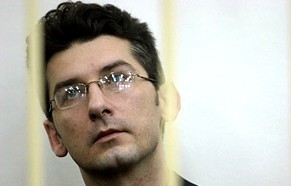 Krystian Bala
Murderer · Poland · 2000
Krystian Bala (born 1973) was a Polish writer and photographer. In 2007, he was…
1 victim
Krystian Bala
Murderer · Poland · 2000
Krystian Bala (born 1973) was a Polish writer and photographer. In 2007, he was…
1 victim
 Clara Schwartz
Murderer · USA · 2001
Clara Schwartz was convicted of first-degree murder and sentenced to serve 48 y…
1 victim
Clara Schwartz
Murderer · USA · 2001
Clara Schwartz was convicted of first-degree murder and sentenced to serve 48 y…
1 victim
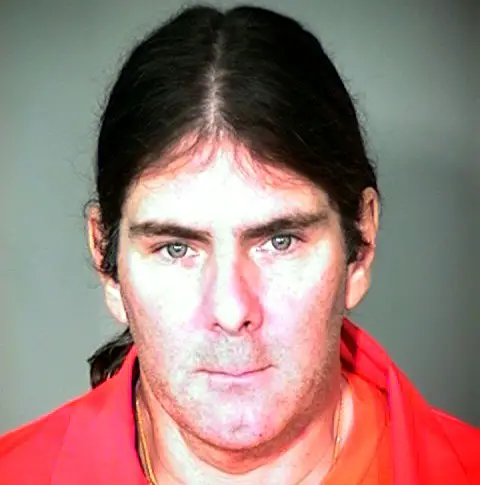 Frank Jarvis Atwood
Murderer · USA · 1984
Frank Jarvis Atwood was a 28-year-old pedophile, a drifter from California who…
1 victim
Frank Jarvis Atwood
Murderer · USA · 1984
Frank Jarvis Atwood was a 28-year-old pedophile, a drifter from California who…
1 victim
 George Twitchell
Murderer · USA · 1868
George Twitchell, Jr. had failures in business and received callers upon him in…
1 victim
George Twitchell
Murderer · USA · 1868
George Twitchell, Jr. had failures in business and received callers upon him in…
1 victim
 David James Gates
Homicide · New Zealand · 1999
David James Gates was charged in connection with the murder of Gavin Edward Das…
1 victim
David James Gates
Homicide · New Zealand · 1999
David James Gates was charged in connection with the murder of Gavin Edward Das…
1 victim
- Gender
- female
- Country
- Hungary
- Location
- Budapest, Hungary
- Date of birth
- 1977
- Age at first offence
- 23
- Characteristics
- nurse
- Victim profile
- Terminally ill patients
- Method of murder
- Poisoning (lethal injections)
- Date(s) of murder
- May 2000 - February 2001
- Years active
- 2000–2001
- Date of arrest
- February 19, 2001
- Status
-
Imprisoned
Sentenced to 9 years in prison on December 2, 2002; conviction included repeated attempts of murder and intentionally endangering lives, and the court banned her from ever working as a nurse again.
Case overview
Timea Faludi was a Hungarian nurse dubbed the “Black Angel”. She was sentenced to 9 years in prison after she pleaded guilty to killing patients by lethal injection in a Budapest hospital in 2000 and 2001. The court also banned Time Faludi from ever working as a nurse again.
Faludi was accused of killing patients during night shifts at the Gyula Nyiro hospital in Budapest while she had been responsible for a special unit for the terminally ill. Her confessions to police and later testimony described that she used lethal doses or injections to relieve suffering, but she later retracted parts of her confessions during the trial.
Euthanasia was described as illegal in Hungary, and her defence position was that her actions were intended to ease patients’ suffering rather than to kill them.
Timeline
- May 2000 — Faludi arbitrarily gave intravenous injections to seven seriously ill patients; the cases were found to involve deaths shortly afterwards.
- February 2001 — Faludi was arrested after colleagues became suspicious when patient deaths coincided with her shifts.
- February 19, 2001 — Faludi was in custody after admitting helping up to 40 seriously ill patients die.
- December 2, 2002 — A Budapest court sentenced Faludi to 9 years in prison and banned her from ever working as a nurse again.
Background
Faludi joined the Gyula Nyiro hospital staff in 1994. Colleagues at the hospital dubbed her the “Black Angel” because of her long black hair and her habitual black clothing.
In the trial, Faludi claimed that she had only wanted to ease patients’ suffering and denied that she wanted to kill them.
Faludi had been arrested in February 2001 after colleagues became suspicious when patient deaths coincided with her shifts. Police were called and found that she had illegally administered tranquilisers and pain killers to patients.
The offence
The prosecution described Faludi as administering deadly injections to terminally ill patients while she believed she was alone on her night shifts.
A court established that she arbitrarily gave intravenous injections to seven seriously ill patients between May 2000 and February 2001, and found that all seven patients died shortly afterwards. The court found her directly responsible for only three of the deaths, stating it “could not see a direct, proven link between the injections and the deaths” in the remaining cases.
During the investigation, Faludi admitted killing at least 40 terminally ill patients, but later withdrew that testimony.
During the trial, Faludi admitted killing eight people, but denied that she wanted to kill them, saying she only wanted to ease the patients’ suffering. She also told the court that she considered herself responsible not only in the eight charged cases, but also for a series of other patients who died from overdoses of morphine and other painkillers.
In her confession, Faludi told the court that she remembered administering lethal doses of drugs to 30 to 35 seriously ill elderly patients at the Gyula Nyiro hospital from May 2000 to February 2001. In that confession she stated she administered the drugs to relieve the patients’ pain, not to intentionally kill them. Her confessions included a statement that she considered herself guilty in the eight cases of killing patients by lethal injection for which she was charged, and in other cases as well.
Faludi’s lawyer told the court that she had lied about the killings “to make herself seem more interesting”.
Investigation
The case was uncovered when the medical director of the Gyla Nyiro Hospital in Budapest noticed that the death toll was unusually high when Faludi was on night shift.
Controls of drug usage showed a shortage of tranquilizer. Police found that Faludi had illegally administered tranquilisers and pain killers to patients when the alarm was raised by a colleague who finally saw her giving dying patients intravenous injections without a doctor’s prescription.
A major inquiry was ordered in hospitals across Hungary after Faludi confessed to killing more than 40 patients in Budapest. The inquiry was ordered by Hungary’s health minister.
Istvan Mikola, the health minister, said:
"I have ordered an investigation by the Public Health Officer at every Hungarian hospital to regain the confidence of the public in the health service," said the minister, Istvan Mikola. "Whatever a hospital's procedures may be, you cannot have a situation whereby a nurse has the power of life and death."
Police spokesman Attila Petoefi said:
the case was "unprecedented" in Hungarian police and medical history.
Arrest
Faludi was arrested in February 2001 after colleagues became suspicious when patient deaths coincided with her shifts. Police were called in and found that she had illegally administered tranquilisers and pain killers to patients.
Trial
Faludi appeared in court in Budapest for the first day of her trial. She was charged with killing eight terminally ill patients at the Gyula Nyiro hospital between May 2000 and February 2001.
During the investigation she had admitted killing at least 40 terminally ill patients, but later retracted that testimony. The court retired to review videotapes of her often contradictory statements to police.
Faludi told the court that she had not intended to kill the patients but to alleviate their pain.
A court psychiatrist said:
Faludi had a "well-developed ability to empathise, while internally she felt she was God".
The court also said:
"She alternately put herself in the place of the doctor or in that of the patient and took decisions instead of them," the court said in its verdict.
The court rejected the prosecution’s request that Faludi be convicted of murder and instead found her guilty of attempted murder.
On the issue of euthanasia, the verdict stated:
"The term euthanasia can only be used at all if a patient expresses a wish to have his or her life terminated. In Faludi's cases, this did not happen," the verdict said.
The court also said that it could not see a direct, proven link between the injections and the deaths in the remaining cases beyond the directly responsible deaths.
Sentencing
On December 2, 2002, a Budapest court sentenced Faludi to nine years in jail after she pleaded guilty to killing patients by lethal injection in a Budapest hospital in 2000 and 2001.
The Budapest Municipal Court also banned Time Faludi, 25, from ever working as a nurse again in a verdict that may be appealed. The court spokesperson said the ban would be subject to appeal.
The court established that Faludi was convicted on multiple counts of attempted murder and intentionally endangering lives. The court found her directly responsible for only three deaths and stated it could not see a direct, proven link between the injections and the deaths in the remaining cases.
Outcome
Faludi received a nine-year prison sentence and a lifelong prohibition on working as a nurse.
She had withdrawn her confessions during trial, and all the victims had been cremated, meaning there was no evidence left. The prosecution faced difficulty because no causal link could be ascertained in the cases where material evidence was limited.
Aftermath
The revelations about Faludi’s activities sparked a review of procedures in hospitals across the country.
Although nurses at the Budapest hospital were banned from giving intravenous injections, the testimony indicated that such injections happened and were “tacitly accepted”.
Faludi said:
Although nurses at the Budapest hospital were banned from giving intravenous injections, this happened and was tacitly accepted, said Faludi in her testimony.
The Gyula Nyiro hospital said it was not to blame for the killings. Hospital director Gabor Takacs said:
"In the current situation, I do not feel that even a limited responsibility of doctors could be established," said hospital director Gabor Takacs. "If a psychopath, or a person with mental disorders or personality deviations - one who thinks to be master of life and death - gets into the system, the system cannot protect itself," he added.
Department chief Mariann Vadnai said:
"She had worked here for six years and was an experienced, professionally well-trained nurse. If you ask whether she had made any serious mistake that could have alerted us, the answer is no," department chief Mariann Vadnai told a press conference.


Spotted an error, or have more information about this case?