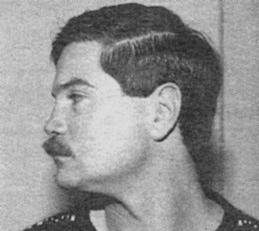
Thomas McIlvane
Mass murderer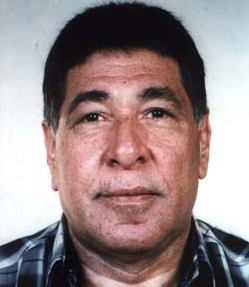 Gameel Al-Batouti
Mass murderer · USA · 1999
Gameel Al-Batouti (also rendered “Gamil ElBatouty” or “El Batouty” in U.S. offi…
216 victims
Gameel Al-Batouti
Mass murderer · USA · 1999
Gameel Al-Batouti (also rendered “Gamil ElBatouty” or “El Batouty” in U.S. offi…
216 victims
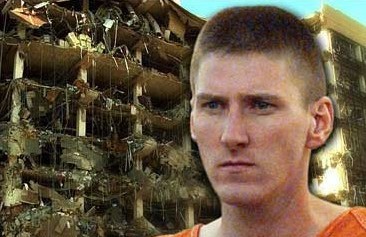 Timothy McVeigh
Mass murderer · USA · 1995
Timothy James McVeigh (April 23, 1968 – June 11, 2001) was a United States Army…
168 victims
Timothy McVeigh
Mass murderer · USA · 1995
Timothy James McVeigh (April 23, 1968 – June 11, 2001) was a United States Army…
168 victims
 Julio Gonzalez
Mass murderer · USA · 1990
Julio Gonzalez was sentenced to 174 twenty-five-year sentences (a total of 4,35…
87 victims
Julio Gonzalez
Mass murderer · USA · 1990
Julio Gonzalez was sentenced to 174 twenty-five-year sentences (a total of 4,35…
87 victims
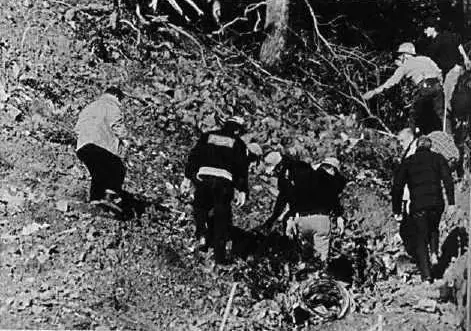 David Burke
Mass murderer · USA · 1987
David Augustus Burke (May 18, 1952–December 7, 1987) was an employee of USAir,…
43 victims
David Burke
Mass murderer · USA · 1987
David Augustus Burke (May 18, 1952–December 7, 1987) was an employee of USAir,…
43 victims
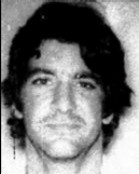 George Jo Hennard
Mass murderer · USA · 1991
George Jo Hennard carried out a mass killing at a Luby’s Cafeteria in Killeen,…
23 victims
George Jo Hennard
Mass murderer · USA · 1991
George Jo Hennard carried out a mass killing at a Luby’s Cafeteria in Killeen,…
23 victims
 Lee Ann Reidel
Murderer · USA · 2001
Lee Ann Reidel was sentenced to 25 years to life in prison on April 28, 2004 fo…
1 victim
Lee Ann Reidel
Murderer · USA · 2001
Lee Ann Reidel was sentenced to 25 years to life in prison on April 28, 2004 fo…
1 victim
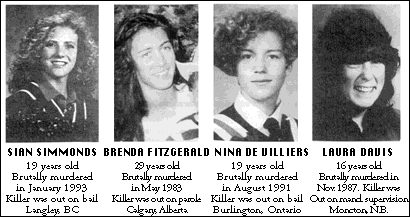 Jonathan Yeo
Murderer · Canada · 1991
Jonathan Yeo died by suicide by gunshot to avoid arrest in August 1991. On Augu…
2 victims
Jonathan Yeo
Murderer · Canada · 1991
Jonathan Yeo died by suicide by gunshot to avoid arrest in August 1991. On Augu…
2 victims
 Rodney Gray
Murderer · USA · 1994
Rodney Gray was convicted of capital murder for killing Grace Blackwell, a 79-y…
1 victim
Rodney Gray
Murderer · USA · 1994
Rodney Gray was convicted of capital murder for killing Grace Blackwell, a 79-y…
1 victim
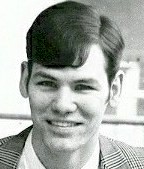 John Norman Collins
Serial killer? · USA · 1967
John Norman Collins was implicated in a series of killings targeting students a…
8 victims
John Norman Collins
Serial killer? · USA · 1967
John Norman Collins was implicated in a series of killings targeting students a…
8 victims
 Guen Aguilar
Murderer · Singapore · 2005
Guen Garlejo Aguilar was a Filipino domestic worker. She pleaded guilty and was…
1 victim
Guen Aguilar
Murderer · Singapore · 2005
Guen Garlejo Aguilar was a Filipino domestic worker. She pleaded guilty and was…
1 victim
- Gender
- male
- Country
- USA
- Location
- Royal Oak, Michigan, USA
- Date of birth
- 1960
- Age at first offence
- 31
- Characteristics
- revenge, former mental patient
- Victim profile
- Christopher Carlisle, 33 / Mary Benincasa, 32 / Keith Cszewski, 37 / ??? / (postal supervisors)
- Method of murder
- Shooting (sawed-off .22-caliber rifle)
- Date(s) of murder
- November 14, 1991
- Years active
- 1991
- Date of arrest
- —
- Status
-
Died in custody
Committed suicide by shooting himself on 16 November 1991 in Royal Oak, Michigan, after killing five people (including himself) with a Ruger 10/22 rifle in Royal Oak's post office.
Case record — Thomas McIlvane
Overview
Thomas McIlvane was a former postal worker who committed suicide by shooting himself the same day on 14 November 1991 in Royal Oak, Michigan, after killing five people, including himself, with a Ruger 10/22 rifle in Royal Oak's post office. Investigators recovered four banana-style clips, two of which were empty, and theorized that he fired scores of shots before the rampage ended.
Timeline
- 14 November 1991 — Thomas McIlvane walked into a regional postal center, opened fire with a sawed-off .22-caliber rifle, killed three postal workers and wounded six, then fatally wounded himself.
- Early on 15 November 1991 — He was declared dead at William Beaumont Hospital in Royal Oak, about two miles north of Detroit; doctors began removing his organs for transplants.
- 16 November 1991 — Died.
Background
Thomas McIlvane was 31 years old and of nearby Oak Park. Mark Mitchell, 28, who once worked with Mr. McIlvane and said they had served together in the Marines, said Mr. McIlvane was discharged dishonorably after running over a car with a tank.
After several running disputes with postal managers, Mr. McIlvane was dismissed from the Postal Service for what postal officials termed “insubordination.” He had been previously suspended for getting into altercations with postal customers on his route. Postal officials acknowledged that they had been aware of Mr. McIlvane's threats but said there was little they could do. “This is a mail-processing facility; it is impossible to keep it locked up tight,” said Art van de Putte, a postal inspector.
Mr. McIlvane appealed the dismissal through a union grievance procedure, and a postal official said he lost an arbitration hearing six days before the incident, which made the dismissal final. Charles Withers, a shop steward for the letter carrier's union, said the arbitration hearing loss made the dismissal final. He had been previously suspended once for fighting with customers on his route.
Mr. Mitchell described Mr. McIlvane as being a martial arts enthusiast with a black belt in kick-boxing who had competed on television.
He was known to police. Oakland County officials a year ago had issued Mr. McIlvane a permit to carry a concealed weapon, but the permit was revoked May 7 after the Oak Park police became concerned the man was mentally unstable during a police investigation into complaints that he was being threatened. The police in nearby Southfield said Mr. McIlvane recently had been acquitted of a charge of making threats over the telephone. Records show he bought a rifle three years ago and also owned a .357-caliber pistol.
He was described as having several times threatened violence if he was not reinstated. Edward Fink, 38, a postal clerk, said: “A lot of people thought he had a short fuse.”
The case context also included other prior incidents at post offices in recent years: in August 1986, a part-time letter carrier in Edmond, Okla., killed 14 people in the post office before taking his own life; in December 1988, a postal worker in New Orleans shot and wounded three people; in August 1989, a postal worker shot his wife to death in Escondido, Calif., then drove to the Orange Glenn post office and shot and killed two colleagues and wounded another before killing himself; and in October, a postal worker who had been let go killed a former supervisor and her fiance in Wayne, N.J., then went to the nearby Ridgewood post office, where he killed two mail handlers.
In narrative material associated with the case, it was said that a month after lethal postal worker Joseph Harris rampaged through his Ridgewood post office, Thomas McIlvane express mailed himself into oblivion. It was also stated that McIlvane was a “champion kick boxer with a black belt in karate,” that he was fired a year before for cursing at his supervisor as well as threatening other clerks and fighting with customers, and that he repeatedly warned he would make Pat Sherrill's massacre at Edmond look like “Disneyland.” It was also stated that after Harris' rampage in Ridgewood, one of the supervisors most hated by McIlvaine got very nervous and called the post-office security division in Detroit to ask for protection, but the request was denied.
The offence
On Thursday morning, Thomas McIlvane walked into a regional postal center and opened fire with a sawed-off .22-caliber rifle. The authorities said he killed three workers and wounded six. Three other workers were injured while trying to escape by jumping out windows of the two-story building during the shooting spree.
The police estimated the shooting spree lasted five or six minutes. After the rampage, Thomas McIlvane turned the weapon on himself and was fatally wounded.
The weapon he used was described as a Ruger semiautomatic carbine he bought at a local gun store. Don Higgerson, an agent for the Bureau of Alcohol, Tobacco and Firearms, said the barrel may have been sawed off to make the weapon easy to conceal.
A man dressed in a postal uniform who declined to identify himself said he saw Mr. McIlvane come into a large room where letters are sorted, start shooting, and then leave the room with a coat draped over the rifle. It was said that Mr. McIlvane walked in through an unlocked entrance used by employees.
A woman who worked on the loading dock said she had been told a month ago by supervisors to “keep Tom McIlvane out if he showed up.”
In additional narrative material, it was stated that on November 14, 1991, the day after his reinstatement was denied, McIlvaine returned to his former post office in Royal Oak with a sawed-off Ruger .22-caliber semiautomatic hidden under his raincoat and “wasted four supervisors,” among them the poor man who requested protection, and wounded five others. After his “ten minutes” of inflicting terror, the narrative states that McIlvane ended his rampage by stamping a bullet through his head and that he lingered in a coma for a day before dying.
In that same narrative, Thomas McIlvane was quoted threatening: “you had better not turn your head because you'll be dead! I'm going to get you!”
Investigation
The police identified three dead workers as Christopher Carlisle, 33, of Rochester; Mary Benincasa, 32, of Mt. Clemens; and Keith Cszewski, 37, of Livonia. All three of the dead were postal supervisors.
Oakland County officials had issued a permit to carry a concealed weapon that was revoked May 7 after police became concerned he was mentally unstable. The police in nearby Southfield said he recently had been acquitted of a charge of making threats over the telephone.
Arrest
No arrest was described. Thomas McIlvane committed suicide by shooting himself after the attack.
Trial
No trial was described. The police said Mr. McIlvane had been acquitted of a charge of making threats over the telephone.
Sentencing
No sentencing was described.
Appeals
No appeal related to sentencing was described. He had appealed the dismissal through a union grievance procedure and lost an arbitration hearing six days before the incident, making the dismissal final.
Outcome
Thomas McIlvane killed five people, including himself. He was declared dead early at William Beaumont Hospital in Royal Oak; doctors began removing his organs for transplants. He died on 16 November 1991.
Aftermath
The authorities described the postal service center, which processes mail for four counties, becoming a scene of pandemonium when the shots rang out, as more than 160 frightened workers sought to barricade themselves in offices or escape through exits and windows.
Postal officials acknowledged awareness of his threats but said it was impossible to keep the facility locked up tight.
Mark Mitchell said Mr. McIlvane was suspended once for fighting with customers on his route. Mark Mitchell also said Mr. McIlvane was a martial arts enthusiast with a black belt in kick-boxing who had competed on television.
In narrative material connected to the case, it was said that workers planned escape routes and feared giving their names because of friction between workers and supervisors during the past two years. Edward Fink said: “Management pushes, pushes and pushes and doesn't know when to quit.” He added: “They don't know when someone is going to break.”
Dan Chestnutt, 37, said: “They pushed the wrong guy too far.”
The narrative also stated that Mr. Mitchell acknowledged he, himself, was recently acquitted on a charge of threatening a postal supervisor with a knife.
Senator Carl Levin and Representative Sander M. Levin agreed to take up complaints from customers and employees of the service center with the Postal Service.
In narrative material, it was stated that Thomas McIlvane repeatedly threatened that if he was not reinstated he would make Pat Sherrill’s massacre at Edmond look like “Disneyland,” and that other descriptions used included “a tea party” and “a picnic.” It also stated he “continuously made threating calls to his supervisors (who reported them to police, who did nothing).” It further stated: “Another postman gone mad. This time in Royal Oak, Michigan.”
Other details
Mr. Fink said a new supervisor was particularly unpopular and recently had suspended a worker for whistling, a report confirmed by several others.
Thomas McIlvane was also described as being a “31-year-old ex-Marine” and “ex-Marine.” It was stated that he was fired a year before for “cursing at his supervisor as well as threatening other clerks and fighting with customers.”
Thomas McIlvane’s death date was listed as 16 November 1991, and his commission suicide description stated “DIED : 16 November, 1991.”

Spotted an error, or have more information about this case?