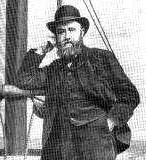
Thomas Dudley
Homicide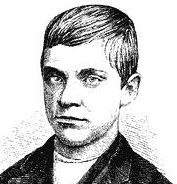 Jesse Pomeroy
Homicide · USA · 1874
Jesse Pomeroy was sentenced to death on two counts in 1876. His sentence was co…
10 victims
Jesse Pomeroy
Homicide · USA · 1874
Jesse Pomeroy was sentenced to death on two counts in 1876. His sentence was co…
10 victims
 Troisville Sykes
Homicide · USA · 1883
Troisville Sykes. Kate Townsend was Troisville Sykes’s mistress. She owned a ho…
1 victim
Troisville Sykes
Homicide · USA · 1883
Troisville Sykes. Kate Townsend was Troisville Sykes’s mistress. She owned a ho…
1 victim
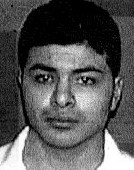 Edward Brian Capetillo
Homicide · USA
Edward Brian Capetillo was a Latino male who was 17 years of age at the time of…
1995 victims
Edward Brian Capetillo
Homicide · USA
Edward Brian Capetillo was a Latino male who was 17 years of age at the time of…
1995 victims
 Hu Wanlin
Homicide · China · 1997
Hu Wanlin (胡万林), born 1949, was from Mianyang, Sichuan Province. · 1993 — While…
146 victims
Hu Wanlin
Homicide · China · 1997
Hu Wanlin (胡万林), born 1949, was from Mianyang, Sichuan Province. · 1993 — While…
146 victims
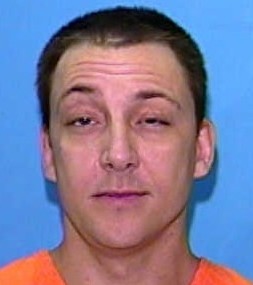 Troy Merck
Murderer · USA · 1991
Troy Merck, Jr. was convicted of first-degree murder and was sentenced to death…
1 victim
Troy Merck
Murderer · USA · 1991
Troy Merck, Jr. was convicted of first-degree murder and was sentenced to death…
1 victim
 John Mills
Murderer · USA · 1982
John Mills Jr. was a Florida prison inmate. In 1982, a jury convicted him of fi…
1 victim
John Mills
Murderer · USA · 1982
John Mills Jr. was a Florida prison inmate. In 1982, a jury convicted him of fi…
1 victim
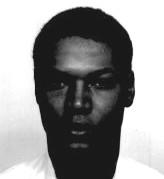 Harvey Earvin
Murderer · USA · 1976
Harvey Earvin was convicted of capital murder by a jury and was sentenced to de…
1 victim
Harvey Earvin
Murderer · USA · 1976
Harvey Earvin was convicted of capital murder by a jury and was sentenced to de…
1 victim
 Christopher Lee Simmons
Homicide · USA · 1993
Christopher Lee Simmons was 17 years old at the time of his arrest for the Sept…
1 victim
Christopher Lee Simmons
Homicide · USA · 1993
Christopher Lee Simmons was 17 years old at the time of his arrest for the Sept…
1 victim
 Jens Soering
Murderer · USA · 1985
Jens Soering was born August 1, 1966, in Bangkok, Thailand. He was a German cit…
2 victims
Jens Soering
Murderer · USA · 1985
Jens Soering was born August 1, 1966, in Bangkok, Thailand. He was a German cit…
2 victims
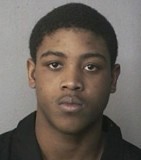 Demetrius Carey
Homicide · USA · 2005
Demetrius Carey was a 14-year-old student at Westview Middle School near Opa-lo…
1 victim
Demetrius Carey
Homicide · USA · 2005
Demetrius Carey was a 14-year-old student at Westview Middle School near Opa-lo…
1 victim
- Gender
- male
- Country
- On the high seas
- Location
- On the high seas
- Date of birth
- 1 852
- Characteristics
- cannibalism
- Victim profile
- Richard Parker, 17 (cabin boy)
- Method of murder
- St abbing with knife
- Date(s) of murder
- July 25, 1884
- Years active
- 1884
- Date of arrest
- —
- Status
-
Sentenced to the statutory death penalty with a recommendation for mercy in December 1884; commuted to six months' imprisonment
Case record: Thomas Dudley
Status and legal outcome
Thomas Dudley was sentenced to the statutory death penalty with a recommendation for mercy in December 1884. His sentence was commuted to six months' imprisonment.
Background
Thomas Dudley was the captain of the English yacht Mignonette, which sailed in 1884 with a crew of four: Dudley, Edwin Stephens, Edmund Brooks, and Richard Parker, the cabin boy. Parker was 17 years old and an inexperienced seaman.
The offence
During a survival situation after the yacht Mignonette sank, Dudley participated in killing Richard Parker to preserve the others' survival. Dudley later described the killing and the ensuing meal.
Parker murmured, "What me?" as he was slain.
Dudley and Brooks consumed the most, and Stephens consumed very little. The crew also ate bones after consuming Parker’s body.
Investigation and arrest
After rescue and return, the survivors attended the customs house in Falmouth. Dudley and Stephens entered statutory statements under the Merchant Shipping Acts, required in the event of a shipping loss. All three survivors were candid about the circumstances, and Dudley and Stephens believed they were protected by a Custom of the Sea.
Serjeant Laverty, a policeman, questioned Dudley about the means by which Parker had been killed. Laverty took custody of the knife and promised to return it. The depositions were telegraphed to the Board of Trade and to the registrar general of shipping in Bassinghall Street in London.
Bassinghall Street advised that the men should be detained in Falmouth. The Board of Trade gave conflicting advice to take no action but informed the Home Office. While the Home Office was closed for the weekend, Laverty sought warrants for the men's arrest for murder on the high seas and obtained warrants later that day from mayor of Falmouth Henry Liddicoat.
Dudley, Stephens, and Brooks were held in the borough police station until they could appear before the magistrates on the morning of Monday, 8 September. Dudley appeared to have been confident that the magistrates would dismiss the charges, and Liddicoat visited the men to apologise for their inconvenience. The magistrates had been instructed to seek advice of the Treasury Solicitor in murder cases. They consulted and then returned the men to the police cells until 11 September.
Trial
The trial of Dudley and Stephens opened in Exeter on 3 November before Judge Baron Huddleston. Arthur Charles QC led for the prosecution and Arthur J. H. Collins QC for the defence. Collins had been paid for out of a defence fund established by public subscription.
Dudley and Stephens pleaded not guilty.
Charles opened for the prosecution, outlining legal arguments and dismissing the defence of necessity. Charles also dismissed the insanity defence and suggested an ultimate appeal to clemency.
Huddleston and Collins discussed the law. Huddleston had already planned how to ensure a guilty verdict and settle the law on necessity once and for all. Huddleston planned to invite the jury to return a special verdict stating only the facts they found, without giving an opinion on guilt. Huddleston would then decide whether the facts found amounted to guilt. Huddleston also planned to adjourn the trial after the special verdict and reconvene with fellow judges to pronounce guilt.
The prosecution produced depositions written by the defendants and evidence that the Mignonette was registered in Britain to establish the court's jurisdiction under s.267 of the Merchant Shipping Act 1854.
Danckwerts called as witnesses those who had heard the survivors' stories and Brooks. In cross-examination, Collins did not challenge Brooks’ account but made him confirm the conditions on the boat, Brooks’ own cannibalism, their inevitable death without recourse to Parker's body, and the belief that Parker would have died first.
When the case was heard by the magistrates on 18 September, Danckwerts told the court he intended to offer no evidence against Brooks and requested that he be discharged so he could be called as a witness for the prosecution. The magistrates agreed. Danckwerts opened the prosecution case and called as witnesses those who had heard the survivors' stories and Brooks.
The magistrates committed Dudley and Stephens for trial at the winter Cornwall and Devon assizes in Exeter, but extended their bail. The case was again adjourned when the magistrates heard it on 18 September, with bail being obtained by Tilly. The three returned to their homes while the case appeared across British and worldwide press.
Huddleston produced a special verdict he had written the night before and invited the jury to indicate their assent to each paragraph as he read it out. Silence was sufficient. Huddleston insisted that the jury’s observations were already incorporated when the jury tried to add some facts to the verdict. The final words of the verdict were, "But whether upon the whole matter, the prisoners were and are guilty of murder the jury are ignorant and refer to the Court."
After receiving the special verdict, Huddleston renewed Dudley and Stephens' bail and adjourned the assizes to his rooms in the Royal Courts of Justice in London for 25 November.
Legal background and theory
The morality, ethics, and legality of taking another’s life to increase one's own chances of survival were discussed in thought experiments from the Plank of Carneades to The Case of the Speluncean Explorers.
The Saint Christopher case involved seven Englishmen who, after being lost for 17 days, cast lots to see who would sacrifice their life for the others, and the man who consented to the subsequent killing was tried for homicide. The judge pardoned them on the basis of "inevitable necessity". The case was cited in defence of Dudley and Stephens but was reported only anecdotally some years later in a medical work and not in the law reports.
In U.S. v. Holmes (1841), after a ship William Brown sank, crewmen believed their overloaded lifeboat was in danger and put 14 or 16 passengers overboard to their deaths. Holmes was arrested and charged with murder, but the grand jury rejected the indictment and substituted manslaughter. The judge instructed the jury that necessity might be a complete defence but that "before the protection of the law of necessity can be invoked, a case of necessity must exist, the slayer must be faultless, he must owe no duty to the victim." The jury convicted Holmes.
In James Archer’s case, the collier Euxine was lost, and Archer took charge of a lifeboat. Archer and four survivors said they had killed and butchered Francis Shufus selected by drawing lots. The acting British consul, William J. Fraser, took their depositions and the men were eventually landed and processed through Singapore. Prosecution was started in Singapore but was ultimately dropped after procedural disputes over whether Singapore or England was the most appropriate jurisdiction.
The Criminal Law Commissioners considered codification of necessity several times: 1839, Fourth report, Digest of Law (Art.39) included necessity as a defence to homicide; 1843, Seventh report (Art.29) also included the defence; 1846, Second report favoured leaving questions of necessity to royal prerogative of clemency (Art.19); 1878/1879 declined to codify the defence as it was "better to leave such questions to be dealt with when, if ever, they arise in practice by applying the principles of law to the circumstance of the particular case." In 1874, James Fitzjames Stephen introduced a Homicide Law Amendment Bill that included a defence of necessity but it was lost, and Stephen himself had changed his mind by 1884.
Procedural and record issues
After the trial, but before the special verdict was copied for the London review, Huddleston realised he had made errors. In his original draft, Huddleston had described the Mignonette as an "English Merchant vessel" and had altered it to "yacht". He also described the lifeboat as "an open boat" and had omitted its provenance on the Mignonette. He realised he had omitted a critical finding needed for jurisdiction and altered his record of the verdict.
On 25 November, the Cornwall and Devon winter assizes reconvened at No. 2 Court, Royal Courts of Justice in London. Attorney-General Sir Henry James appeared for the prosecution and pointed out an issue: the Queen’s Bench Divisional Court had authority to decide law with a panel after referral from an inferior court following a conviction, and there had been no conviction in Exeter. James suggested alternatives, and Huddleston expressed scepticism about adding judges once the trial had begun. Collins requested shorthand notes, and proceedings continued without a stable court arrangement. The case was listed for 4 December with the defendants ordered to attend in London.
At a further hearing on 2 December, James withdrew his augmented assize suggestion and gave an opinion that the court should sit as the Queen’s Bench Divisional Court, to be heard with an appropriate number of judges, not five.
Judgment in the Queen’s Bench Division
The Queen's Bench Division sat on 4 December under Lord Chief Justice Lord Coleridge. James appeared for the prosecution, leading Charles and Danckwerts. At the beginning of the hearing, the report of the Exeter trial was read out in full, allowing Collins to submit that the special verdict had been altered.
Collins challenged the jurisdiction and competence of the court. Collins submitted that the court was not competent to return a verdict as the Exeter jury had not given a conditional verdict asserting they would find in accordance with the judge’s ruling. The judges treated the point as one of form only and dismissed it.
James submitted that there was no common law authority to support necessity as a defence to murder. The Saint Christopher case was rejected because it had not been formally recorded in the law reports.
Lord Coleridge instructed Collins to confine remarks to murder, which dismissed a plausible alternative that necessity could be a partial defence leading to conviction for manslaughter by analogy with provocation.
At the conclusion of Collins’ submissions, the judges withdrew and returned. Lord Coleridge declared, "We are all of the opinion that the conviction should be affirmed but we will put our reasons in writing and give them on Saturday next."
The panel committed Dudley and Stephens to Holloway Prison, then a men’s institution until Tuesday, 9 December, when the court would deliver its reasons and sentence.
The judges found no common law defence of necessity to a charge of murder, either on the basis of legal precedent or ethics and morality. The judges reasoned that to preserve one’s life was generally a duty but might be a duty to sacrifice life in cases such as shipwreck, the duty of a captain to crew, crew to passengers, soldiers to women and children, as in the noble case of the Birkenhead. The judges stated that in a Christian country it was enough to remind oneself of "the Great Example [Jesus Christ] whom we profess to follow". The judges questioned who was qualified to decide who should live and who die, and observed that such a principle might be the "legal cloak for unbridled passion and atrocious crime".
They acknowledged the men’s predicament and stated:
It must not be supposed that in refusing to admit temptation to be an excuse for crime it is forgotten how terrible the temptation was; how awful the suffering; how hard in such trials to keep the judgment straight and the conduct pure. We are often compelled to set up standards we cannot reach ourselves, and to lay down rules which we could not ourselves satisfy. But a man has no right to declare temptation to be an excuse, though he might himself have yielded to it, nor allow compassion for the criminal to change or weaken in any manner the legal definition of the crime .
Sentencing
Dudley and Stephens were sentenced to the statutory death penalty with a recommendation for mercy.
Dudley’s sentence was commuted to six months' imprisonment.
Cultural impact and background narrative details preserved in the case account
The case involved survival cannibalism following a shipwreck and discussion of justification on the basis of a Custom of the Sea.
The yacht Mignonette was a 19.43 net tonnage, 52 feet (16 m) cruiser built in 1867. In 1883, she was purchased as a leisure vessel by Australian lawyer John Henry Want. The yacht was set sail for Sydney from Southampton on 19 May 1884 with a crew of four: Dudley, Edwin Stephens, Edmund Brooks, and Richard Parker.
On 5 July, the yacht was running before a gale at 27°10′S 9°50′W, around 1,600 miles (2,600 km) northwest of the Cape of Good Hope. Though the weather was not extreme, Dudley gave the order to heave to so that the crew could enjoy a good night's sleep. As Parker was sent below to prepare tea, a wave struck and washed away the lee bulwarks. Dudley ordered the single 13-foot (4 m) lifeboat to be lowered; it was of flimsy construction with boards only 0.25 inches (6 mm) thick and was holed in the haste to get it away. The Mignonette sank within five minutes and the crew abandoned ship for the lifeboat, salvaging navigational instruments along with two tins of turnips and no fresh water.
Dudley improvised a sea anchor to keep the lifeboat headed into the waves and maintain stability. Over the first night, the crew fought off a shark with their oars. They were around 700 miles (1,100 km) from the nearest land, being either St. Helena or Tristan de Cunha.
Dudley kept the first tin of turnips until 7 July when its five pieces were shared among the men to last two days. On or around 9 July, Brooks spotted a turtle which Stephens dragged on board. The crew avoided drinking seawater as it was universally held to be fatal; they devoured the turtle but forwent drinking its blood when contaminated with seawater. The turtle yielded about three pounds (1.4 kg) of meat each. Along with the second tin of turnips, they lasted until 15 or 17 July.
The crew failed to catch any rainwater and by 13 July began to drink their own urine. It was probably on 20 July that Parker became ill through drinking seawater. Stephens was also unwell, possibly having experimented with seawater.
Drawing lots to nominate a sacrificial victim was first discussed on 16 or 17 July and debate intensified on 21 July without resolution. On 23 or 24 July, with Parker probably in a coma, Dudley told the others that one of them should die so the others could survive, and they should draw lots. Brooks refused. That night Dudley raised the matter again with Stephens, pointing out Parker was probably dying and that Dudley and Stephens had wives and families. They agreed to leave the matter until the morning.
With no prospect of rescue in sight, Dudley and Stephens silently signalled that Parker would be killed. Killing Parker before natural death would better preserve his blood to drink. Brooks claimed to have signalled neither assent nor protest, while Dudley insisted Brooks had assented.
Dudley said a prayer and, with Stephens standing by to hold Parker’s legs if he struggled, pushed his penknife into Parker’s jugular vein, killing him.
Dudley later described the scene:
I can assure you I shall never forget the sight of my two unfortunate companions over that ghastly meal we all was like mad wolfs who should get the most and for men fathers of children to commit such a deed we could not have our right reason .
The crew finally managed to catch some rainwater. They sighted a sail on 29 July.
Rescue and arraignment: Dudley, Stephens, and Brooks were picked up by the German sailing barque Moctezuma, which returned them to Falmouth, Cornwall on Saturday 6 September en route to its destination in Hamburg. On arrival, survivors attended the customs house and entered statutory statements. They were later held until hearings before magistrates and then committed for trial.
In 1974 Arthur Koestler ran a competition in The Sunday Times inviting readers to send in the most striking coincidence they knew of, and the winning entry pointed out that in Edgar Allan Poe's novel The Narrative of Arthur Gordon Pym of Nantucket, published decades before the Mignonette sank, four men were cast adrift on their capsized ship and drew lots to decide which of them should be sacrificed as food for the other three; the unfortunate loser was the sailor who proposed the idea: Richard Parker.
The case was also the basis for a Monty Python sketch where sailors in a lifeboat survived through cannibalism; it also included a further Undertakers sketch featuring cannibalism.
Other details
Collins still had the option of moving a writ of error to raise arguable issues of jurisdiction and constitution of the court, but he knew the verdict had been pre-decided. Dudley and Stephens anticipated an immediate release. By 11 December, there was still no announcement and public opinion seemed to move against the men.
Queen Victoria would exercise any royal prerogative of mercy on the advice of the Home Secretary. Although Harcourt was personally in favour of abolition of the death penalty, he was conscientious in his official duties. He feared that commuting the sentence to anything other than life imprisonment would mock the law. Attorney-General Sir Henry James felt that a life sentence would not resist the attack of public opinion, and noted that if the court had withheld manslaughter from the jury it had not been available and the jury might have returned a manslaughter verdict, stating "no judge would have inflicted more than three months' imprisonment". Solicitor-General Sir Farrer Herschell concurred. Harcourt decided on six months' imprisonment on 12 December, and Dudley and Stephens were advised the next day. They were disappointed at being in custody for so long.
Named individuals (as established in the case account)
- Thomas Dudley — captain of the yacht Mignonette
- Edwin Stephens — crew member
- Edmund Brooks — crew member
- Richard Parker — cabin boy; 17 years old; inexperienced seaman; the victim killed to feed the others
- John Henry Want — Australian lawyer who purchased the yacht in 1883
- Serjeant Laverty — policeman who questioned Dudley and took custody of the knife
- Henry Liddicoat — mayor of Falmouth who obtained warrants
- Harry Tilly — local solicitor who appeared for the men
- Sir William Harcourt — Home Secretary consulted by Attorney-General Sir Henry James and Solicitor General Sir Farrer Herschell
- Sir Henry James — Attorney-General consulted by Harcourt; appeared for the prosecution in the Queen’s Bench Division
- Sir Farrer Herschell — Solicitor General consulted by Harcourt
- William Otto Adolph Julius Danckwerts — barrister of only six years’ call; briefed for the prosecution
- Arthur Charles QC — led for the prosecution at trial
- Arthur J. H. Collins QC — led for the defence at trial
- Judge Baron Huddleston — judge at Exeter assizes
- Lord Chief Justice Lord Coleridge — judge at the Queen’s Bench Division
- Queen Victoria — advised by the Home Secretary for mercy decision
- Daniel — Parker's brother who appeared in court and shook hands with the three survivors
- Moctezuma — German sailing barque that rescued the men
- William J. Fraser — acting British consul referenced in the James Archer narrative
- Henry Ellis — shipping master referenced in the James Archer narrative
- Thomas Braddell — Attorney General for Singapore referenced in the James Archer narrative
- Sir Andrew Clarke — Singapore Governor referenced in the James Archer narrative
- James Archer and Francis Shufus and August Muller — referenced in the James Archer narrative
- Daniel — Parker's brother referenced in the magistrates context
- Henry Liddicoat — mayor referenced in warrants context
Spotted an error, or have more information about this case?