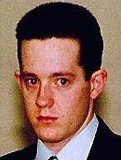
Aaron McKinney
Murderer Russell Ellwood
Murderer · USA · 1991
Russell Ellwood was a former taxi driver. Authorities suspected him of killing…
20 victims
Russell Ellwood
Murderer · USA · 1991
Russell Ellwood was a former taxi driver. Authorities suspected him of killing…
20 victims
 Robert Martines Perez
Murderer · USA · 1994
Name: Robert Martines Perez · Other name used in proceedings: Robert Martinez P…
15 victims
Robert Martines Perez
Murderer · USA · 1994
Name: Robert Martines Perez · Other name used in proceedings: Robert Martinez P…
15 victims
 Billy Frank Vickers
Murderer · USA · 1993
Billy Frank Vickers Vickers was executed by lethal injection in Texas on Januar…
14 victims
Billy Frank Vickers
Murderer · USA · 1993
Billy Frank Vickers Vickers was executed by lethal injection in Texas on Januar…
14 victims
 Leo Alexander Jones
Murderer · USA · 1981
Leo Alexander Jones (April 13, 1950 – March 24, 1998) was sentenced to death an…
1 victim
Leo Alexander Jones
Murderer · USA · 1981
Leo Alexander Jones (April 13, 1950 – March 24, 1998) was sentenced to death an…
1 victim
 Andre Alexander
Murderer · 26 · 1978
Andre Alexander was a former classmate at Venice High School. Nothing happened…
4 victims
Andre Alexander
Murderer · 26 · 1978
Andre Alexander was a former classmate at Venice High School. Nothing happened…
4 victims
 Howard Milton Belcher
Murderer · 2002
Howard Milton Belcher was 26 years old when he was formally charged in the deat…
4 victims
Howard Milton Belcher
Murderer · 2002
Howard Milton Belcher was 26 years old when he was formally charged in the deat…
4 victims
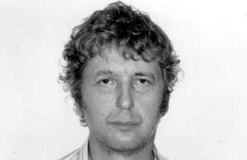 Robert Peernock
Murderer · USA · 1987
Robert John Peernock (born c. 1937) was convicted of murdering his wife, Claire…
1 victim
Robert Peernock
Murderer · USA · 1987
Robert John Peernock (born c. 1937) was convicted of murdering his wife, Claire…
1 victim
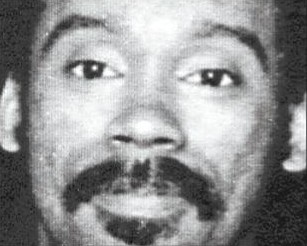 Michael Marnell Smith
Murderer · USA · 1977
Michael Marnell Smith was a condemned murderer and rapist who was executed in V…
1 victim
Michael Marnell Smith
Murderer · USA · 1977
Michael Marnell Smith was a condemned murderer and rapist who was executed in V…
1 victim
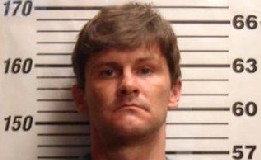 Dennis Edgecomb
Murderer · USA · 2010
Dennis Edgecomb pleaded guilty to murder at the beginning of the sentencing hea…
1 victim
Dennis Edgecomb
Murderer · USA · 2010
Dennis Edgecomb pleaded guilty to murder at the beginning of the sentencing hea…
1 victim
- Gender
- male
- Country
- USA
- Location
- Albany County, Wyoming, USA
- Date of birth
- 1976
- Age at first offence
- 22
- Characteristics
- robbery, kidnapping, drug addict, alcohol, hate crime
- Victim profile
- Matthew Wayne Shepard, 21 (gay man)
- Method of murder
- Beating
- Date(s) of murder
- October 7, 1998
- Years active
- 1998
- Date of arrest
- —
- Status
-
Life imprisonment
Sentenced to two consecutive life terms without the possibility of parole on November 3, 1999
Case record: Aaron McKinney
Names and parties
- Aaron McKinney was convicted in the 1998 beating death of Matthew Shepard.
- Matthew Wayne Shepard was the victim.
- Russell Arthur Henderson was a one-time co-defendant who pleaded guilty to felony murder and kidnapping.
- Kristen Leanne Price was McKinney’s one-time girlfriend; she testified and later pleaded guilty to a reduced charge.
- Chastity Vera Pasley (also referred to as Chastity V. Pasley and Chastity Pasley) was Henderson’s girlfriend and later pleaded guilty to her charges.
- Aaron Kreifels discovered Shepard.
- Charles W. Dolan was a University of Wyoming professor whose nearby home Kreifels used to phone police.
- Reggie Fluty was a patrol officer who described discovering Shepard’s body and reported injuries and binding.
- Chastity Pasley and Kristen Price testified under oath during the trial.
- Dion Custis was a defense attorney.
- Jason Tangeman was a defense attorney.
- Cal Rerucha was the prosecutor.
- Judge Barton Voigt barred McKinney’s defense from presenting a so-called “gay panic defense.”
- Judge Jeffrey Donnell sentenced Henderson (as described in the material).
- Elizabeth Vargas was interviewed by ABC for a 20/20 report.
- Commander Dave O’Malley was a retired Police Chief of Laramie involved in interviews and criticism of the 20/20 report.
- Fred Phelps led the Westboro Baptist Church described in the material.
- Romaine Patterson organized a counter-protest referred to with “Angels of Peace” and “Angel Action.”
- Walter Boulden was described as a long-time friend of Matthew Shepard.
- Tom O’Connor was described as a long-time friend of McKinney interviewed for the 20/20 report.
- Dr. Patrick Allen of the Larimer County, Colorado coroner’s office testified at trial.
- Albany County Coroner Julie Heggie was quoted about information regarding whether Shepard was HIV-positive.
- Attorney General Janet Reno met with the Shepards.
- John Podesta met with the Shepards.
- Bill Clinton’s Chief of Staff John Podesta and President Bill Clinton were mentioned in relation to assurances about hate crimes legislation.
- Judy Shepard and Dennis Shepard were Matthew Shepard’s parents.
STATUS and sentencing outcome
McKinney reaches agreement to serve two consecutive life sentences By Bryan Robinson - CourtTV.com November 4, 1999
- With the consent of the parents of slain gay student Matthew Shepard, Wyoming prosecutors agreed to let Aaron McKinney serve two consecutive life sentences without the possibility of parole and thereby avoid the death penalty.
- On Wednesday, McKinney was convicted of first-degree felony murder and second-degree murder in the 1998 beating death of Shepard.
- The jury acquitted McKinney of first-degree premeditated murder, but convicted him of aggravated robbery and kidnapping.
- McKinney’s two life sentences applied to the combined first-degree felony and second-degree murder and the kidnapping charge.
- By reaching a plea agreement, McKinney gave up his right to appeal his sentence.
- McKinney’s death penalty hearing was scheduled to begin Thursday, but both sides reached a plea agreement sparing McKinney’s life and giving him the same sentence one-time co-defendant Russell Henderson was serving.
- The material also described Henderson’s guilty plea: Henderson pleaded guilty to felony murder in April and was sentenced to two consecutive life terms.
- Prosecutor Cal Rerucha said the defense approached him with the plea offer after McKinney’s conviction Wednesday.
- Rerucha admitted he did not even seriously consider agreement.
- McKinney’s attorneys then approached Shepard’s parents, and they consented to the plea agreement.
- Rerucha said the plea would not have happened without the Shepards’ support.
- McKinney addressed Shepard’s parents in court Thursday morning and apologized for the slaying.
“I really don't know what to say other than that I'm truly sorry to the entire Shepard family,” McKinney said.
“Never will a day go by that I won't be ashamed for what I have done.”
Quotes from sentencing and related court remarks
- The material described Dennis Shepard telling the court during McKinney’s formal sentencing that Matthew would remain in death a symbol of the horror of hate crimes.
“I would like nothing better than to see you die Mr. McKinney, but now is the time to heal,” Shepard's father told the 22-year-old roofer.
“Every time you wake up in your cell, remember you had the opportunity or the ability to stop your actions that night.
"Mr. McKinney, you will not become a symbol," the elder Shepard continued.
"Just a miserable symbol and a more a more miserable end. That's fine with me." - Another quotation attributed to prosecutor Cal Rerucha appeared in the material about the deal and a future message:
“I will never get over Judy Shepard's capacity to forgive,” prosecutor Cal Rerucha said.
- The material quoted Dennis Shepard speaking in court on Thursday to McKinney:
“I would like nothing better than to see you die, Mr. McKinney, but now is the time to begin the healing process. Every time you celebrate Christmas, a birthday, or the Fourth of July, remember Matthew isn't. Every time you wake up in that prison cell, remember you had the opportunity and the ability to stop your actions that night. "
- It quoted Dennis Shepard’s statement:
“You screwed up, Mr. McKinney, ” Shepard said. “You made the world realize that a person's lifestyle is not a reason for discrimination, intolerance, persecution and violence.”
- The material quoted a later statement about there being no proof Shepard groped McKinney, attributed to investigators DeBree and O’Malley:
“there is absolutely no proof that Shepard groped McKinney as defense attorney's insisted at the trial.”
- It quoted DeBree in connection with a view of motives:
DeBree told “Salon” magazine that McKinney and Henderson “knew damn well (Shepard) was gay... It started out as a robbery and burglary, and I sincerely believe the other activity (the repeated pistol-whipping that killed Shepard) was because he was gay.”
Offence overview and conviction details
McKinney was convicted of:
- first-degree felony murder and second-degree murder in the 1998 beating death of Matthew Shepard.
- aggravated robbery and kidnapping. The jury acquitted:
- first-degree premeditated murder.
Sentencing described:
- McKinney received two consecutive life sentences without the possibility of parole.
The material also described:
- The jury considered two kinds of first-degree murder charges: premeditated murder and felony murder.
- Felony murder referred to the prosecution’s robbery and kidnapping allegations and did not require intent to kill, while premeditated murder did.
- The material stated that both types of first-degree murder carried sentences of either life without parole or the death penalty.
- The material listed lesser-included charges considered: second-degree murder, manslaughter, aggravated robbery, larceny, kidnapping, false imprisonment and felonious restraint.
Plea agreement and effect on appeal and death penalty
- The material stated that by agreeing to serve two consecutive life sentences without possibility of parole, McKinney avoided the death penalty.
- It stated that McKinney promised never to appeal his conviction in the narrative about trial watchers.
- The material stated that the plea agreement involved giving up the right to appeal his sentence.
Trial proceedings and defenses
McKinney’s defense strategies described included:
- attempting to use a “gay panic defense,” arguing that they were driven to temporary insanity by alleged sexual advances by Shepard.
- alternatively arguing they only wanted to rob Shepard and never intended to kill him.
- the material stated McKinney’s defense argued that his actions were partly aggravated by abuse of alcohol and drugs.
- it stated the defense argued an alleged unwanted sexual advance by Shepard sent their client into a rage that led to the gay student’s fatal beating.
Judge Barton Voigt ruling described:
- On Monday, Judge Barton Voigt barred McKinney’s defense from presenting a so-called “gay panic defense.”
- It stated the defense argued in opening statements that McKinney’s “rage” and fatal beating were spurred partly by the defendant’s prior homosexual experience.
- The material described the defense contending McKinney was sexually abused by a male neighborhood bully when he was 7, and had a “confusing” experience at age 15 with one of his cousins.
- The material stated Judge Voigt was unconvinced and torpedoed that defense theory, citing legal basis and relevance.
- It also stated McKinney’s lawyers insisted they were not employing a “gay panic defense,” and argued prior homosexual experience and abuse would explain how McKinney reacted to Shepard’s alleged advance and provide insight into his state of mind.
- The material described defense attorneys Dion Custis and Jason Tangeman as wanting to further explore alleged reasons for McKinney’s violent reaction but could not.
Opening statements described in the material:
- Defense lawyers Jason Tangeman and Dion Custis outlined their strategy by blaming everything but the accused for the murder.
- The material said Tangeman told the jury several instances in which McKinney, starting at age 5, had been abused by other boys, including:
- a case at age 7 involving forced oral sex and a sexual act with another 7-year-old neighborhood bully who deemed McKinney a homosexual.
- a “confusing” experience at age 15 with one of McKinney’s cousins.
- It described a quote attributed to Tangeman quoting McKinney’s police testimony:
“’I don’t know what happened. I blacked out. I felt possessed. It was like I left my body.’”
- It included another quote attributed to McKinney on a police confession tape:
“It's like I could see what was going on, but somebody else was doing it, ”
- It described Tangeman quoting a police testimonial about intent:
“’I didn’t intend to kill him. I just hit him too hard.’”
- It included a statement from Tangeman to jurors:
“Did Matthew Shepard deserve to die? No, that’s ridiculous. No manslaughter victim deserved to die. That’s what Aaron McKinney is guilty of, manslaughter, ”
- It described Tangeman’s account of events beginning with McKinney and Henderson going to local bars after work and meeting Shepard at the Fireside, then Shepard asking for a ride home.
- It included a quote attributed to Tangeman:
“Eventually he asks for a ride home. From the demeanor of Mr. Shepard he (McKinney) thought he was gay,”
- It included additional quoted statements attributed to Tangeman from defense framing:
“Matthew Shepard grabbed (McKinney’s) genitals and licked his ear and at that point his past trauma’s bubbled up inside him and fueled by drugs and alcohol in his own words he ‘left his body,’ ”
- It included Custis’s framing in the material:
“Matt absolutely did not do one night stands.” (This quote appeared in a separate narrative passage about Shepard as remembered by Walter Boulden; it was included here only where it was present as quoted language.)
- It included a quote attributed to Custis about Shepard:
“five minutes of rage and chaos.”
- It included Prosecutor Cal Rerucha’s quoted opening outline language:
“If anything stood out, it was the fragileness of Shepard, ” “McKinney and Henderson picked Shepard out of the bar as an easy mark. The three left the bar in a truck, Henderson driving them out of town. Aaron said, ‘We’re not gay and you’re getting jacked,’ ” “McKinney was worried Mr. Shepard could see his license plates, ” “McKinney asked ‘Can you read my license plate?’ Matthew Shepard said, ‘Yes I can read your license’ and read it. ” “This further enraged McKinney who struck him three more times over the head as hard as he could, knocking him unconscious. ” “He read it back to me and I hit him again, ” “Matt Shepard begged for his life. Matt Shepard negotiated for his life, but McKinney gave him blow after blow, ” “It will simply be about the pain, suffering and death of Matthew Shepard at the hands of the defendant, Aaron James McKinney.”
- It described prosecutors counterattacking the “gay panic” defense as coming and described court framing that the case would not be about Shepard’s gay lifestyle.
Rest of trial narrative in the material:
- It stated after Judge Voigt’s ruling and the damage from McKinney’s confession, the defense rested after calling only a handful of witnesses.
- It stated jurors deliberated 10 hours and returned a verdict on Wednesday, November 3, 1999, of felony murder, kidnapping and aggravated robbery, while finding McKinney not guilty of first degree premeditiated murder.
Confession, evidence, and testimony described
The material described police investigators and trial evidence:
- It stated McKinney was “armed with his incriminating confession to robbery” and that the confession damaged the defense.
- It stated initially the defense argued McKinney never intended to rob Shepard and only took his wallet as an “afterthought.”
- It stated police investigators testified that Shepard’s wallet was found in a dirty diaper in McKinney’s home.
- It stated McKinney’s one-time girlfriend Kristen Price testified that he told her he and Henderson planned to pose as homosexuals and rob Shepard before he was beaten to death.
- In his confession, McKinney admitted his intention to rob Shepard and said he delivered the beating while Henderson stood by:
“We really had no intention of hurting this guy,” McKinney said.
“It was to take him out and scare him and take his wallet and leave.” - The material stated McKinney admitted hitting Shepard three more times when the gay student admitted he was still able to read back the license plate numbers on his assailant’s truck.
- It described Henderson pleaded guilty on April 5, and agreed to testify against McKinney to avoid the death penalty; Henderson received two consecutive life sentences.
Quoted details attributed to Henderson in the material:
- It included a quote attributed to Henderson:
“McKinney pulled out a gun and told Matthew Shepard to give him his wallet.”
- It included another quote attributed to Henderson regarding getting a rope:
“He (McKinney) told me to get a rope out of the truck,”
- It included a quote attributed to Henderson about leaving Shepard to die:
“with only the constant Wyoming wind as his companion,”
(as quoted within the narrative associated with Prosecutor Calvin Rerucha’s description.)
Quoted details attributed to McKinney in the material:
- It included a quote attributed to McKinney:
“Guess what. We're not gay. And you're gonna get jacked.”
- It included:
“He told me to get a rope out of the truck,” Henderson said. (This quote was attributed to Henderson in the material.)
- It included: (as quoted in the Prosecutor Cal Rerucha opening outline narrative and the taped confession reference.)
Forensic and medical evidence described:
- It stated a .357 Magnum was suspected of being the weapon used; it was found in McKinney’s home.
- Dr. Patrick Allen testified:
“but the skull fractures were caused by a blunt instrument consistent with that of a gun. Matthew Shepard died as a result of the blunt trauma injuries he sustained to his head and face.”
- It included Dr. Allen’s “yes” in response to a question about pain when tied to the fence:
“Yes, he may have felt pain because he may never have completely lost conciouness,” Dr. Allen said.
Other testimony and scenes described:
- It stated Fireside bartender Matthew Galloway later testified that he served drinks to Henderson and McKinney and said they did not seem drunk, countering McKinney’s defense that liquor and drugs incited the attack.
- Galloway’s quoted statement in the material:
“He had no mannerisms or actions that would lead me to believe he was in a state of intoxication.”
- The material described Shepard being found tied to a fence and in a coma, with discovery after eighteen hours.
- It described a patrol officer Reggie Fluty’s report and quoted statements:
“Baby boy, I’m so sorry this happened to you.” “His hands were tied tight and I wanted to free him.” “The only white skin I saw (on his face) was where he had been crying.” “I made the call (to 911). He (Shepard) was bloody. There was a large pool of blood in his right ear.” “Streaks of tears had washed the blood away”
- The material described Dolan and Kreifels and quoted Kreifels:
“He sounded to me like his lungs were full of blood. He was breathing hard,” Kreifels testified October 26, 1999 at the Aaron McKinney trial.
- It described a watch and Matthew’s school ID card being found near the crime scene.
Additional evidence and object descriptions in the material:
- It stated Shepard’s shoes, coat and credit card were found in McKinney’s pick-up truck.
- It stated Shepard’s wallet was found at McKinney’s home wrapped in a dirty nappy in a garbage pail.
- It stated the material mentioned bloody shoes of Henderson found in a shed belonging to Pasley’s mother.
- It stated the two women hid bloody shoes in a storage shed and provided alibis.
Co-defendant and related pleas described
Russell Henderson:
- Henderson pleaded guilty to felony murder in April (as described in the narrative).
- It stated Henderson pleaded guilty on April 5, 1999 and received two consecutive life sentences.
- It stated Henderson decided at the last minute he would not testify for either side, though he had been transported to the Albany Courthouse to testify.
- It included a mention of Henderson’s girlfriend’s involvement as described during testimony at McKinney’s trial.
- It included a statement that Henderson’s girlfriend Chastity V. Pasley was sentenced to 15 to 24 months as an accessory and Henderson’s sentencing remarks:
- The material included a quote from Judy Shepard at Henderson’s sentencing:
“I hope you never experience a day or night without experiencing the terror, humiliation, hopelessness and helplessness my son felt that night,” Judy Shepard told him through her tears. “He was my son, my first born, but more, he was my friend, my confidant, my constant reminder of how good life can be,” she said.
- It included Dennis Shepard’s quote:
“Who will be their friend now? ”
- It included Judge Jeffrey Donnell’s statement:
“Quite frankly the court does not believe you really feel a true sense of remorse for your role in this matter.”
- It included Prosecutor Cal Rerucha’s post-hearing quote:
“My hope is that Russell Henderson will die in the Wyoming State penitentiary.”
- The material included a quote from Judy Shepard at Henderson’s sentencing:
Kristen Price:
- It stated Kristen Price was charged as an accessory after the fact.
- It stated on December 23, 1999 Pasley pleaded guilty to her charges; Price later pleaded guilty to a reduced charge.
- It stated Kristen Price pleaded guilty to one misdemeanor charge of interfering with a police officer.
- It stated Kristen Price was sentenced to 180 days in jail, credited with 120 days, with the remaining 60 days suspended.
Chastity Pasley:
- The material stated two women described as suspect’s girlfriends, Chastity Vera Pasley (20) and Kristen Leanne Price (18), were charged as accessories after the fact of first-degree murder.
- It stated Pasley pleaded guilty on December 23, 1999.
- It stated they allegedly hid Henderson’s bloody shoes in a storage shed in Pasley’s mother’s home and provided alibis.
Additional background facts about Matthew Shepard and the attack described
The material included:
- Matthew Wayne Shepard (December 1, 1976 – October 12, 1998) was a student at the University of Wyoming who was tortured and subsequently murdered near Laramie, Wyoming.
- He was attacked on the night of October 6–7, 1998.
- Shepard died at Poudre Valley Hospital in Fort Collins, Colorado, on October 12, from severe head injuries.
- The material stated he was targeted because he was gay during the trial, according to witnesses.
The background section described Shepard’s early life and education:
- He was the oldest son to Dennis and Judy Shepard, born in Casper, Wyoming.
- He attended Natrona public schools including Crest Hill Elementary School and Dean Morgan Junior High School.
- He attended Natrona County High School from his freshman to sophomore year, before transferring to The American School in Switzerland.
- After graduating from high school in 1995, he attended Catawba College and Casper College before relocating to Denver.
- He became a first-year political science major at the University of Wyoming and was chosen as the student representative for the Wyoming Environmental Council.
- The material quoted his parents describing him:
“an optimistic and accepting young man [who] had a special gift of relating to almost everyone. He was the type of person who was very approachable and always looked to new challenges. Matthew had a great passion for equality and always stood up for the acceptance of people's differences.”
- The material described abuse and depression:
- During a high school trip to Morocco he was beaten and raped, causing him to withdraw and experience bouts of depression and panic attacks, according to his mother.
- One of his friends feared his depression caused him to become involved with drugs during his time in college.
The murder narrative described:
- Shortly after midnight on October 7, 1998, 21-year-old Shepard met McKinney and Henderson in a bar.
- McKinney and Henderson offered Shepard a ride.
- Subsequently Shepard was robbed, pistol-whipped, tortured, tied to a fence in a remote rural area, and left to die.
- McKinney and Henderson found out his address and intended to rob his home.
- Shepard was discovered eighteen hours later by Aaron Kreifels at first thought to be a scarecrow.
- At discovery Shepard was still alive but in a coma.
- The material described injuries:
- A fracture from the back of his head to the front of his right ear.
- Severe brain stem damage affecting regulation of heart rate, body temperature and other vital signs.
- About a dozen small lacerations around his head, face and neck.
- Injuries were too severe for doctors to operate.
- Shepard never regained consciousness and remained on full life support.
- The material stated he was pronounced dead at 12:53 A.M. on October 12, 1998, at Poudre Valley Hospital in Fort Collins.
Arrest and initial evidence described:
- Police arrested McKinney and Henderson shortly thereafter, finding the bloody gun as well as the victim’s shoes and wallet in their truck.
- The two men had attempted to get their girlfriends to provide alibis.
Timeline
- April 5, 1999 — Russell Henderson pleaded guilty to felony murder and received two consecutive life sentences (as described).
- October 6–7, 1998 — Matthew Shepard was attacked (as described).
- October 7, 1998 (shortly after midnight) — Shepard met Aaron McKinney and Russell Henderson in a bar (as described).
- October 7, 1998 — Shepard was discovered eighteen hours later, still alive but in a coma (as described).
- October 12, 1998 — Shepard died at Poudre Valley Hospital in Fort Collins after five days in a coma; pronounced dead at 12:53 A.M. (as described).
- November 3, 1999 — Jury returned verdicts of felony murder, kidnapping and aggravated robbery; McKinney was found not guilty of first-degree premeditated murder (as described).
- November 4, 1999 — Prosecutors agreed to let McKinney serve two consecutive life sentences without possibility of parole, sparing the death penalty (as described).
- November 10, 1999 — A McKinney hearing described in the material included a quoted statement attributed to Prosecutor Calvin Rerucha about leaving Shepard to die (as described).
- December 23, 1999 — Chastity Pasley pleaded guilty to her charges (as described).
- March 20, 2007 — The Matthew Shepard Act was introduced as federal bipartisan legislation in the U.S. Congress (as described).
- May 3, 2007 — The bill passed the House of Representatives (as described).
- September 27, 2007 — Similar legislation passed in the Senate (as described).
- 2007 — The material stated President Bush indicated he might veto the legislation if it reached his desk and that he did veto the bill in 2007 (as described).
- December 10, 2007 — Hate crimes legislation was attached to a Department of Defense Authorization bill, though it failed to get passed (as described).
- April 29, 2009 — The U.S. House debated expansion of hate crimes legislation (as described).
- April 28 (year described in the material as 2009) — The bill was introduced in the Senate (as described).
- July 15, 2009 — The Matthew Shepard Act was adopted as an amendment to S.1390 by a vote of 63-28 (as described).
Investigation and charge framing described
- The material stated McKinney and Henderson were charged with first-degree murder, which carried the possibility of the death penalty.
- It stated they were also charged with kidnapping and aggravated robbery.
- It stated prosecutors portrayed the killing as a robbery-gone-bad and did not characterize Shepard’s slaying as a hate crime.
- It stated felony murder referred to intent to commit underlying felony and did not require intent to kill.
Hate crime discussion described:
- The material stated Henderson and McKinney were not charged with a hate crime because no Wyoming criminal statute provided for such a charge.
- It stated under U.S. federal law and Wyoming state law, crimes committed based on sexual orientation were not prosecutable as hate crimes at the time described.
- It described requests for new legislation and a Wyoming bill failing on a 30-30 tie in the Wyoming House of Representatives.
- It described federal attempts and legislative actions, including rejection in 1999, later passage in 2000 and stripping in conference committee, and later introduction and passage of the Matthew Shepard Act in 2007 and 2009.
Appeals
- The material stated McKinney gave up his right to appeal his sentence by reaching the plea agreement.
- It also stated McKinney promised never to appeal his conviction as part of the narrative around trial watchers and the deal.
Other details from later reporting and public reaction
ABC’s 20/20 report:
- The material stated that in late 2004, ABC’s Elizabeth Vargas reported on an investigation into the murder for the television program 20/20 and billed it as exploring “New Details Emerging in the Matthew Shepard Murder.”
- It said the report highlighted a possibility that motivation was drugs rather than sexual orientation.
- It said McKinney, Henderson and Kristen Price claimed in these interviews the attack resulted from heavy drug use, a robbery, and a beating gone awry.
- It included a quote attributed to Kristen Price in the Vargas interview:
“I do not think it was a hate crime at all. I never did.”
- It said this contradicted Price’s first 20/20 interview in 1998 where she said:
“They just wanted to beat him bad enough to teach him a lesson, not to come on to straight people, and don’t be aggressive about it anymore.”
- It stated the report mentioned Tom O’Connor’s belief that McKinney was bisexual and that O’Connor stated he and McKinney had sex in the past.
- It stated that when Vargas asked McKinney whether he had ever had a sexual experience with another male, McKinney said that he had not.
- It said the report also mentioned a statement by O’Connor that Shepard told him he was HIV-positive.
- It stated Commander Dave O’Malley criticized the report and included his quoted view:
“My feelings have been that the initial contact was probably motivated by robbery because they needed money. What they got was $20 and a pair of shoes ... then something changed and changed profoundly... But, we will never, ever know because Matt’s dead and I don’t trust what [McKinney and Henderson] said.”
Public reaction described:
- The material described Westboro Baptist Church picketing Shepard’s funeral and assailants’ trial led by Fred Phelps, with signs including:
“Matt Shepard rots in Hell”
“AIDS Kills Fags Dead”
“God Hates Fags” - It described attempted permits by Phelps after a Wyoming Supreme Court ruling and included quoted planned monument inscription:
“MATTHEW SHEPARD, Entered Hell October 12, 1998, in Defiance of God's Warning: 'Thou shalt not lie with mankind as with womankind; it is abomination.' Leviticus 18:22”
- It described a counterprotest by Romaine Patterson and individuals wearing white robes and gigantic wings, described as blocking protesters.
- It stated the fence to which Shepard was tied became an impromptu shrine and was removed by the land owner.
- It listed narrative films and a documentary made about Shepard: The Laramie Project, The Matthew Shepard Story, Anatomy of a Hate Crime and Laramie Inside Out.
- It stated The Laramie Project was often performed as a play involving interviews with citizens of Laramie.
Hate crimes legislation advocacy and public statements:
- The material stated Matthew Shepard’s parents Dennis and Judy visited Washington, DC November 8, 1999 to lobby for passage of the Hate Crimes Prevention Act (HPCA).
“This is one piece of unfinished business that we have now that the trial is over, ” Dennis Shepard said. “We need to do this for Matthew and for everybody else to keep this from happening again.”
- It stated the Shepards met with U.S. Attorney General Janet Reno and President Bill Clinton’s Chief of Staff John Podesta, who assured them both Clinton and Vice President Al Gore were committed to enacting the law.
Defense attorneys and courtroom participants mentioned
- Defense attorneys: Dion Custis, Jason Tangeman.
- Prosecutor: Cal Rerucha.
- Judge: Barton Voigt.
- Judge: Jeffrey Donnell (in Henderson sentencing described).
- Trial watchers and jurors were referenced as part of the narrative of the plea and sentencing but not otherwise identified.
Additional quoted statements and reported conversation fragments
- McKinney’s confession and police confession tape quotes were included above in the trial evidence and defense sections.
- A number of quoted lines appeared in the narrative about protest or advocacy; the quotes included above were those that were verbatim in the material.
- The material also included the following quote from a defense attorney’s described opening argument framing, attributed to prosecutor Cal Rerucha in the narrative:
“Could he feel the pain? Could he be thirsty? Could he feel the cold?” and it then included an exchange described in the material: “When Matthew Shepard was tied to the fence, could he feel the pain? Could he be thirsty? Could he feel the cold?”
Charges and verdicts as described in the material
- Conviction verdicts:
- first-degree felony murder
- second-degree murder
- aggravated robbery
- kidnapping
- Acquittal:
Prison transfers and confinement described
- The material stated Henderson and McKinney were incarcerated in the Wyoming State Penitentiary in Rawlins but were transferred to other prisons due to overcrowding.

Spotted an error, or have more information about this case?