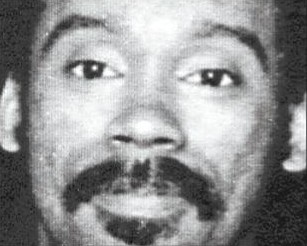
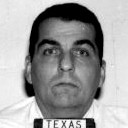
Michael Marnell Smith
Murderer Ervil LeBaron
Murderer · USA · 1972
Ervil Morrell LeBaron (1925 to August 16, 1981) was the leader of a polygamous…
35 victims
Ervil LeBaron
Murderer · USA · 1972
Ervil Morrell LeBaron (1925 to August 16, 1981) was the leader of a polygamous…
35 victims
 Brian Kevin Rosenfeld
Murderer · USA · 1985
Brian Kevin Rosenfeld Brian Kevin Rosenfeld was sentenced to three concurrent l…
23 victims
Brian Kevin Rosenfeld
Murderer · USA · 1985
Brian Kevin Rosenfeld Brian Kevin Rosenfeld was sentenced to three concurrent l…
23 victims
 Marvin Gray
Murderer · USA · 1975
Marvin Gray was convicted killer who claimed responsibility for 23 slayings and…
23 victims
Marvin Gray
Murderer · USA · 1975
Marvin Gray was convicted killer who claimed responsibility for 23 slayings and…
23 victims
 Yahweh ben Yahweh
Murderer · USA · 1980
Yahweh ben Yahweh was born and legally named Hulon Mitchell Jr. (October 27, 19…
23 victims
Yahweh ben Yahweh
Murderer · USA · 1980
Yahweh ben Yahweh was born and legally named Hulon Mitchell Jr. (October 27, 19…
23 victims
 John Francis Roche
Serial killer · USA · 1953
John Francis Roche was a male inmate. He was described as a mass murderer. Roch…
5 victims
John Francis Roche
Serial killer · USA · 1953
John Francis Roche was a male inmate. He was described as a mass murderer. Roch…
5 victims
 Randy Greenawalt
Serial killer · USA · 1974
Defendant: Randy Greenawalt Prison escape: July 30, 1978, from Arizona State Pr…
9 victims
Randy Greenawalt
Serial killer · USA · 1974
Defendant: Randy Greenawalt Prison escape: July 30, 1978, from Arizona State Pr…
9 victims
 Heinrich Pommerencke
Serial killer · Germany · 1959
Heinrich Pommerencke grew up in the German village of Bentwich and lived as a l…
4 victims
Heinrich Pommerencke
Serial killer · Germany · 1959
Heinrich Pommerencke grew up in the German village of Bentwich and lived as a l…
4 victims
 Bobby Lee Tankersley
Murderer · USA · 1991
Bobby Lee Tankersley lived in a hotel in Yuma, Arizona, in the same place as th…
1 victim
Bobby Lee Tankersley
Murderer · USA · 1991
Bobby Lee Tankersley lived in a hotel in Yuma, Arizona, in the same place as th…
1 victim
- Gender
- male
- Country
- USA
- Location
- James City County, Virginia, USA
- Date of birth
- 1946
- Age at first offence
- 31
- Characteristics
- rape
- Victim profile
- Audrey Weiler (female, 35)
- Method of murder
- St abbing with knife - Drowning
- Date(s) of murder
- May 23, 1977
- Years active
- 1977
- Date of arrest
- —
- Status
-
Executed
Executed by electrocution in Virginia on August 31, 1986
Case record: Michael Marnell Smith
Background
Michael Marnell Smith was a condemned murderer and rapist who was executed in Virginia.
Smith lived on a farm near the Colonial Parkway and had recently been released from prison after serving time for a rape conviction.
Smith was a 40-year-old father of three children at the time of execution, and he was a father of three children at the time of execution as described in reporting.
The offence
On May 23, 1977, Smith accosted Weiler at a beach along the Colonial Parkway in James City County.
Smith removed some briars from Weiler's feet, then led her into adjacent underbrush and produced a hunting knife.
Smith proceeded to rape the divorced 35-year-old mother of two at knife point.
After the rape, Smith choked Weiler to death.
Smith then dragged Weiler into the water, submerged her head, and stabbed her.
According to a later description of the killing, the immediate cause of death was drowning, although testimony indicated that stab wounds and strangulation also could have been responsible.
The jury convicted Smith of capital murder and rape of a young woman.
Investigation
A psychiatric issue arose in appellate and habeas proceedings. Smith’s counsel had consulted a psychiatrist at the instance of Smith’s counsel.
During a psychiatric interview, a psychiatrist asked Smith both about the murder and prior incidents of deviant sexual conduct, and Smith stated that he once tore the clothes off a girl on a school bus before deciding not to rape her.
A psychiatrist’s testimony at the sentencing phase included the description of the school bus incident.
The psychiatrist also repeated an earlier conclusion that petitioner was a “sociopathic personality”.
Arrest
Smith’s execution reporting described him as having spent more than eight years on death row.
Trial
Smith was convicted by a jury in James City County, Virginia on November 2, 1977 for the capital murder and rape of a young woman.
On the following day, November 3, 1977, the jury heard evidence at the penalty/sentencing phase and recommended a sentence of death.
In doing so, the jury had before it the Commonwealth’s claim that there were two separate aggravating circumstances, one of dangerousness and the other of vileness.
The jury found, with respect to each aggravating circumstance, that it alone merited imposition of the death penalty.
Smith later appealed his conviction and sentence to the Supreme Court of Virginia.
In his brief, Smith raised 13 separate claims, including a broad challenge to the constitutionality of Virginia’s death penalty provisions, objections to several trial court evidentiary rulings, and a challenge to the exclusion of a prospective juror during voir dire.
Smith did not assign any error concerning the admission of the psychiatrist’s testimony.
Smith’s appointed counsel explored the possibility of presenting psychiatric defenses before trial.
Appointed counsel, David Pugh, had requested that the trial court appoint a private psychiatrist, Dr. Wendell Pile, to conduct an examination of Smith.
Pugh advised Smith not to discuss any prior criminal episodes with anyone, because psychiatric reports were routinely forwarded to the court and were then admissible under Virginia law.
Pugh later testified that he “did not specifically tell [petitioner] not to say anything to Doctor Pile about the offense or any offenses.”
“did not specifically tell [petitioner] not to say anything to Doctor Pile about the offense or any offenses.”
David Pugh, appointed counsel
During the psychiatric examination, Dr. Pile asked Smith both about the murder and about prior incidents of deviant sexual conduct.
Although Smith initially declined to answer, he later stated that he had once torn the clothes off a girl on a school bus before deciding not to carry out his original plan to rape her.
That information, together with a tentative diagnosis of “Sociopathic Personality; Sexual Deviation (rape),” was forwarded to the trial court, with copies sent to Pugh and to the prosecutor.
At no point prior to or during the interview did Dr. Pile inform Smith that his statements might later be used against him or that he had the right to remain silent and to have counsel present if he so desired.
“At no point prior to or during the interview did Dr. Pile inform petitioner that his statements might later be used against him or that he had the right to remain silent and to have counsel present if he so desired.”
During the sentencing phase, the Commonwealth called Dr. Pile to the stand, and, over the defense’s objection, Dr. Pile described the incident on the school bus.
On cross-examination, Dr. Pile repeated his earlier conclusion that petitioner was a “sociopathic personality”.
Smith’s execution proceedings also included a description of the Commonwealth’s case at sentencing relating to dangerousness and prior acts.
The record included a jury trial context in which the jury recommended death after lengthy deliberation.
The defense then called 14 character witnesses who testified that Smith had been a regular churchgoer, a member of the choir, a conscientious student in high school, and a good soldier in Vietnam.
Sentencing
The jury recommended a sentence of death.
The case involved Virginia’s death penalty framework under which Smith was the first defendant condemned under Virginia’s new death penalty law, which had been reinstated by the General Assembly earlier that year.
The jury had before it two aggravating circumstances: dangerousness and vileness.
The evidence supporting “vileness” was unchallenged, while psychiatric testimony was directed to “dangerousness”.
The sentencing instructions included language that “if you find that other mitigating circumstances do not justify a sentence of death, you may fix the defendant's punishment at life imprisonment.”
The jury also received a related instruction that “that when determining the punishment to be imposed ... you shall consider ... any other facts in mitigation of the offense. Facts in mitigation may include, but shall not be limited to the following....”
“if you find that other mitigating circumstances do not justify a sentence of death, you may fix the defendant's punishment at life imprisonment.”
“that when determining the punishment to be imposed ... you shall consider ... any other facts in mitigation of the offense. Facts in mitigation may include, but shall not be limited to the following....”
Appeals
Smith filed automatic appeal to the Supreme Court of Virginia, which affirmed the conviction and the death sentence.
The United States Supreme Court denied a petition for a writ of certiorari.
A state court petition for writ of habeas corpus was denied on March 14, 1980 after an evidentiary hearing on Smith’s claim that there had been ineffective assistance of counsel.
On June 28, 1982, Smith filed a petition in the United States District Court for the Eastern District of Virginia for a writ of habeas corpus pursuant to 28 U.S.C. Sec. 2254.
A magistrate issued a written report proposing dismissal of the petition.
On December 4, 1984, the district court dismissed the petition.
On appeal, the Fourth Circuit decided the case involving issues concerning psychiatric testimony and sentencing procedures, and affirmed the dismissal of the habeas petition.
Fourth Circuit issues
The appeal raised issues including:
- Whether a Fifth Amendment violation occurred when a psychiatrist, consulted at the instance of Smith’s counsel, was wrongly permitted to testify in the sentencing phase about incriminating statements concerning an earlier attack Smith described during the psychiatric interview.
- Whether the assistance of counsel representing Smith at the sentencing phase was ineffective.
- Whether jury instructions at the sentencing phase unconstitutionally compromised Smith’s right to an individualized determination that death was the appropriate punishment.
The Fourth Circuit stated that guilt was not contested and that Smith questioned solely sentencing procedures.
Supreme Court habeas syllabus and procedural default issue
After further habeas review, the Supreme Court considered whether and, if so, under what circumstances a prosecutor may elicit testimony from a mental health professional concerning the content of an interview conducted to explore the possibility of presenting psychiatric defenses at trial.
The Supreme Court held that petitioner defaulted his underlying constitutional claim by failing to press it before the Supreme Court of Virginia on direct appeal.
The Supreme Court held that petitioner did not carry his burden of showing cause for noncompliance with Virginia’s rules of procedure, describing a deliberate, tactical decision not to pursue the claim.
The Supreme Court also held that application of the cause and prejudice test would not result in a “fundamental miscarriage of justice,” because the alleged constitutional error did not preclude the development of true facts or result in the admission of false ones.
The Supreme Court affirmed the judgment dismissing petitioner’s application for a writ of habeas corpus.
Outcome
Smith’s conviction and death sentence were affirmed.
The Supreme Court affirmed the judgment upholding dismissal of the habeas corpus application.
Smith was executed by electrocution in Virginia on August 31, 1986.
Other details
The offence description included that Smith paused to help remove briars from Weiler’s feet, and then the appearance of kindness dissipated when Smith grasped her arm, took her to a wooded area, produced a knife, and told her to undress.
The description of the killing stated that Smith forced intercourse and then, following it, choked Weiler, dragged her into the water, submerged her head, stabbed her, and left the dead victim lying where she fell.
The case involved the Commonwealth introducing Smith’s criminal record, which revealed that he had been convicted of rape in 1973 and had been paroled from the penitentiary on that charge less than four months prior to raping and murdering Ms. Weiler.
The appeals included discussion of the jury verdict’s structure and the aggravating factors, including references to “dangerousness” and “vileness.”
The appeals also discussed prior Virginia decisions and Fifth Amendment grounds for psychiatric testimony.
The Supreme Court’s consideration was framed around default and whether any constitutional error warranted habeas relief in a capital case.
Spotted an error, or have more information about this case?