
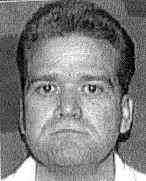
Roy Keough
Murderer Brian Kevin Rosenfeld
Murderer · USA · 1985
Brian Kevin Rosenfeld Brian Kevin Rosenfeld was sentenced to three concurrent l…
23 victims
Brian Kevin Rosenfeld
Murderer · USA · 1985
Brian Kevin Rosenfeld Brian Kevin Rosenfeld was sentenced to three concurrent l…
23 victims
 Yahweh ben Yahweh
Murderer · USA · 1980
Yahweh ben Yahweh was born and legally named Hulon Mitchell Jr. (October 27, 19…
23 victims
Yahweh ben Yahweh
Murderer · USA · 1980
Yahweh ben Yahweh was born and legally named Hulon Mitchell Jr. (October 27, 19…
23 victims
 Russell Ellwood
Murderer · USA · 1991
Russell Ellwood was a former taxi driver. Authorities suspected him of killing…
20 victims
Russell Ellwood
Murderer · USA · 1991
Russell Ellwood was a former taxi driver. Authorities suspected him of killing…
20 victims
 Robert Martines Perez
Murderer · USA · 1994
Name: Robert Martines Perez · Other name used in proceedings: Robert Martinez P…
15 victims
Robert Martines Perez
Murderer · USA · 1994
Name: Robert Martines Perez · Other name used in proceedings: Robert Martinez P…
15 victims
 Molly Midyette
Murderer · USA · 2006
Molly Midyette was convicted of child abuse resulting in death in the 2006 deat…
1 victim
Molly Midyette
Murderer · USA · 2006
Molly Midyette was convicted of child abuse resulting in death in the 2006 deat…
1 victim
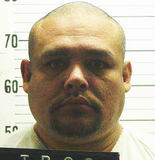 Heck Van Tran
Murderer · USA · 1987
Heck Van Tran was sentenced to death on August 28, 1989. The Supreme Court of T…
3 victims
Heck Van Tran
Murderer · USA · 1987
Heck Van Tran was sentenced to death on August 28, 1989. The Supreme Court of T…
3 victims
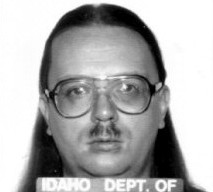 David Leslie Card
Murderer · USA · 1988
David Leslie Card (43), of Nampa, was convicted for the June 5, 1988, shooting…
2 victims
David Leslie Card
Murderer · USA · 1988
David Leslie Card (43), of Nampa, was convicted for the June 5, 1988, shooting…
2 victims
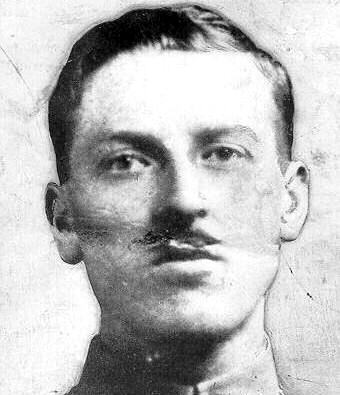 John Robinson
Murderer · London England United Kingdom · 1927
John Robinson was an estate agent who struggled to stay in business. He rented…
1 victim
John Robinson
Murderer · London England United Kingdom · 1927
John Robinson was an estate agent who struggled to stay in business. He rented…
1 victim
 Jeffrey Dahmer
Serial killer · USA · 1978
Jeffrey Dahmer lived in Milwaukee and committed multiple murders in which he dr…
17 victims
Jeffrey Dahmer
Serial killer · USA · 1978
Jeffrey Dahmer lived in Milwaukee and committed multiple murders in which he dr…
17 victims
- Gender
- male
- Country
- USA
- Location
- Mississippi / Shelby County, Tennessee, USA
- Date of birth
- August 17, 1944
- Age at first offence
- 45
- Characteristics
- arguments
- Victim profile
- A former brother-in-law / Betty Keough (his estranged wife)
- Method of murder
- Stabbing with a bayonet
- Date(s) of murder
- 1989 / December 24, 1995
- Years active
- 1989–1995
- Date of arrest
- —
- Status
-
Sentenced to death
Sentenced to death in Tennessee on May 9, 1997
Case overview
Roy Keough was convicted of one count of premeditated first degree murder and one count of attempted first degree murder. The jury imposed a death sentence after finding an aggravating circumstance—previous conviction of one or more felonies whose statutory elements involve the use of violence to the person—and finding that this aggravating circumstance outweighed evidence of mitigating circumstances beyond a reasonable doubt. The trial judge sentenced Keough to forty years for the attempted first degree murder conviction to run consecutively to the death sentence.
Timeline
- December 24, 1995 — Betty Keough visited the Holly residence multiple times looking for Roy Keough.
- December 24, 1995 (around 11:30 a.m.) — Betty Keough told Bobby Holly that she had a gun in her car and threatened to kill Roy Keough and his girlfriend if she found them; she returned around 3:00 p.m. and appeared to have been drinking.
- December 24, 1995 (around 8:30 p.m.) — Betty Keough asked Kevin Berry to join her for a drink at a neighborhood bar and drove to Irene’s Grill in her car.
- December 24, 1995 (around 10:00 p.m.) — Officer James Currin arrived at the scene after Berry escaped and called police.
- December 24, 1995 (after 10:00 p.m.) — Currin found Betty Keough in her car slumped over the steering wheel; he broke out the rear window so paramedics could examine her and confirm she was dead.
- December 24, 1995 (around 9:30 p.m.) — Roy Keough called his girlfriend, Martha Stephenson, at her daughter’s home and asked for money for gasoline.
- The next day — Roy Keough gave a statement to Detective James Nichols after receiving Miranda rights.
- April 10, 2000 — Supreme Court opinion was entered.
- May 9, 1997 — Sentenced to death in Tennessee.
- July 10, 2000 — The sentence of death was to be carried out on the 10th day of July, 2000, unless otherwise ordered by this Court or proper authority.
- September Session, 1998 — Court of Criminal Appeals proceedings were held for the appendix material (C.C.A. NO. 02C01-9708-CR-00317).
Background
Roy Keough and his estranged wife, Betty Keough, were separated following a stormy marriage of two years characterized by problems and arguments. After the separation, Roy Keough and his girlfriend rented a room at the home of Roy Keough’s girlfriend’s brother, Bobby Holly. In December 1995, Roy Keough moved out of the residence, and Kevin Berry, a friend of Holly’s, moved in.
Betty Keough visited the Holly residence several times on December 24, 1995 looking for Roy Keough.
The offence
Roy Keough sought Betty Keough on Christmas Eve in 1995 and attacked her with a bayonet on Christmas Eve in 1995 after arguing with her outside a nightclub.
At Irene’s Grill, Roy Keough arrived where Betty Keough and Kevin Berry were seated drinking beer. Witnesses testified that Roy Keough and Betty Keough began “talking loud” and appeared to have an argument. The bar owner asked them to leave; the bar owner testified that she did not hear the victim and Roy Keough arguing but refused to serve Roy Keough a beer. The group walked through a hallway toward the back door.
As they walked to Betty Keough’s car in the parking lot, witnesses testified that there was pushing and arguing. Kevin Berry testified that Roy Keough “pushed [the victim] with both hands” with “some force behind it.” When Berry tried to intervene, Roy Keough stabbed Berry in the chest with a knife. Berry attempted to run but was pursued and stabbed in the thigh. Berry pushed Roy Keough away and ran toward the bar; Roy Keough caught him again and stabbed him in the back.
Berry escaped into the bar where people tended to his wounds and called police.
Officer James Currin arrived at approximately 10:00 p.m. He checked Berry’s condition, then went outside to the parking lot and found Betty Keough in her car slumped over the steering wheel, not moving. Currin found blood on Betty Keough’s face and on the seat of the car. The car doors were locked; Currin broke out the rear window so paramedics could examine Betty Keough and confirm that she was dead.
Evidence and witness testimony
Threats and confrontation
Joanne Waine testified that she did not see any argument or pushing between Roy Keough and Betty Keough. Lisse Moore testified that she believed the victim may have pushed Roy Keough as they walked out of the bar. Virginia Walden testified that she saw the victim slap Roy Keough while still inside the bar. Bobby Holly testified that Betty Keough had been looking for Roy Keough on the day in question; she told Holly that she would kill Roy Keough and his girlfriend if she found them. Holly contacted Roy Keough and told him about the threat.
Statements and defendant’s account
Roy Keough told his girlfriend, Martha Stephenson, that “he had just stabbed his wife and her boyfriend” and that he had thrown the knife away. When Stephenson told Roy Keough that she did not have any money, he said he would just wait on the police.
Stephenson’s daughter, Mary Stokes, testified that Roy Keough asked to borrow money and stated that “he and the victim had a fight.” Stokes testified that Roy Keough asked for a drink, went outside to “wait for the police,” drank half a fifth of vodka and also some rum, and asked to use the phone to call his attorney. Stokes testified that she heard Roy Keough say that he had “stabbed his wife” and that “she was probably dead.”
The arresting officer testified that Roy Keough asked him, “which one did I get ?”
Forensic evidence
A forensic pathologist testified that Betty Keough, age forty-two, sustained a large stab wound at the top of her breastbone that penetrated almost six inches into her chest cavity. The wound probably did not immediately render Betty Keough unconscious, and death probably occurred within two to five minutes. The wound was consistent with that caused by a bayonet used with a moderate amount of force. There were no other wounds on the victim of a defensive nature.
Investigation and arrest
and later confirmed death after breaking out the rear window for paramedics to examine Betty Keough.
Roy Keough gave an oral statement to Detective James Nichols the next day after waiving Miranda rights, and he received Miranda rights again before a later statement to Detectives Sullivan and Stewart.
Confessions and statements
Detective James Nichols testified that he read Roy Keough his Miranda rights and that attorney Leslie Ballin was present for the interview. Nichols testified that Roy Keough said he had been looking for his wife when he found her in a bar with another man. Nichols testified that Roy Keough said the verbal dispute escalated once outside and that he stabbed the victim with a rifle knife. Nichols also testified that Roy Keough told him that he stabbed the man who was with his wife at the time.
Nichols testified that Roy Keough further said that “[h]e was angry or ․ his emotions were so high he couldn't remember how many times or where he had stabbed his wife or where he had stabbed the man that was with his wife.”
A dispute arose at trial concerning cross-examination of Detective Nichols with a statement Roy Keough later made to other officers. The record indicated that Nichols took notes of the interview but the statement was not transcribed or recorded. When Nichols was called away, Roy Keough, after receiving Miranda rights a second time, gave a statement to Detectives Sullivan and Stewart. This statement was placed in writing; it was similar to what Roy Keough had told Nichols but included an assertion that Betty Keough carried a gun and had shot at him on an earlier occasion.
Trial
Charges and verdict
After deliberating on the charges, the jury convicted Roy Keough of premeditated first degree murder and attempted first degree murder.
The jury found an aggravating circumstance under Tenn. Code Ann. § 39-13-204(i)(2) (1997 & Supp.1999). The jury imposed a sentence of death after finding that the aggravating circumstance outweighed mitigating circumstances beyond a reasonable doubt.
Sentencing
In a separate sentencing proceeding, the trial court imposed a forty-year sentence as a Range II offender for the attempted first degree murder conviction, to run consecutively to the death sentence.
Defense counsel arguments on appeal
Attorneys for Roy Keough, James Ball and Joseph Ozment, argued on appeal that previous lawyers should have looked further into lifelong drinking problems, brain damage, and other issues. The appellate panel stated “hindsight is 20-20” and said trial attorneys were not deficient in handling the case.
Roy Keough argued that his stabbing was not a capital case because he was angry and intoxicated, feared his wife had a gun, and did not go to the bar intending to kill her. State prosecutors Bobby Carter and Rosemary Andrews said Roy Keough hunted his wife down and stabbed her to death.
Sufficiency of evidence
Roy Keough argued that there was insufficient evidence of premeditation to establish the first degree murder of Betty Keough. The Supreme Court reviewed whether any rational trier of fact could have found the essential elements beyond a reasonable doubt.
The Supreme Court concluded that the evidence was legally sufficient to support premeditation. It described evidence including that Roy Keough was looking for Betty Keough on the night in question; Roy Keough was in possession of a rifle knife or bayonet; Roy Keough found Betty Keough at a bar drinking with another man; an argument ensued between Roy Keough and Betty Keough; once outside the bar Roy Keough stabbed the unarmed victim forcibly in the chest with the bayonet; Roy Keough disposed of the murder weapon; and Roy Keough sought money to flee.
Cross-examination issue
Roy Keough contended that the trial court erred in refusing to allow cross-examination of Detective Nichols with a statement Roy Keough later made to Detectives Sullivan and Stewart. The trial court refused on the basis that Nichols did not have personal knowledge of what Roy Keough told the other officers.
The Supreme Court concluded that the trial court did not abuse its discretion in refusing to allow the cross-examination. The Supreme Court reasoned that Roy Keough, in essence, gave two statements to different officers after Miranda warnings; the State did not call Sullivan or Stewart and did not attempt to introduce the written statement; and Roy Keough did not call those witnesses.
The Supreme Court also noted other evidence in the record that Betty Keough had threatened to kill Roy Keough on the day in question. It characterized its holding as a narrow one: the trial court did not abuse its discretion.
Proportionality review
Because Roy Keough had been sentenced to death, the Supreme Court undertook a comparative proportionality review pursuant to Tenn. Code Ann. § 39-13-206(c)(1) (1997).
The Supreme Court considered factors regarding the offence and factors regarding the defendant. It determined that the evidence did not show the death sentence was arbitrary or disproportionate, emphasizing the strength of the aggravating circumstance from Roy Keough’s two prior convictions for violent felonies.
The Supreme Court stated that the defendant learned Betty Keough was looking for him and had threatened to kill him, and Roy Keough decided to try to find her. It stated Roy Keough went to Irene’s Grill and found Betty Keough having a drink with another man and that an argument ensued which escalated into the parking lot. It described the bayonet stabbing with sufficient force to produce a wound nearly six inches deep into the chest cavity. It stated there was no proof Betty Keough was armed and no proof Roy Keough was provoked or justified. It stated Roy Keough also pursued and repeatedly stabbed Kevin Berry and that Kevin Berry was not killed because he escaped and summoned help.
The Supreme Court described Roy Keough as a white male who was fifty-three years of age at sentencing. It described prior convictions: in 1974 Roy Keough was convicted of assault with intent to commit voluntary manslaughter, and in 1989 Roy Keough pled guilty to manslaughter. It stated these convictions established the single aggravating circumstance.
The Supreme Court stated there was no evidence regarding Roy Keough’s mental, physical or psychological condition and noted evidence of a troubled marriage. It stated Roy Keough waited for police to arrive to make the arrest but disposed of the murder weapon and tried to obtain money for gasoline to flee. It stated Roy Keough told individuals that he had stabbed Betty Keough and another individual, but that there was no proof of remorse and that there was little evidence regarding potential for rehabilitation.
The Supreme Court reviewed and upheld death sentences in numerous similar cases including cases where defendants killed an estranged wife or girlfriend in a domestic violence context and cases where the sole aggravating circumstance involved prior convictions for violent felonies, and it referenced death sentences involving stabbing and defendants of similar age.
Appeal and outcome
Supreme Court of Tennessee
The Supreme Court affirmed the judgment of the Court of Criminal Appeals authored by Judge David Welles and joined in by Judge Joe Riley, and it affirmed Roy Keough’s death sentence. The Supreme Court concluded that the evidence supported the jury’s findings of the statutory aggravating circumstance; that the aggravating circumstance outweighed mitigating circumstances beyond a reasonable doubt; that the sentence was not excessive or disproportionate; and that the issues raised by Roy Keough did not warrant relief.
The Supreme Court ordered that Roy Keough’s sentence of death would be carried out on the 10th day of July, 2000, unless otherwise ordered by the Court or proper authority. It taxed costs of appeal to the State because Roy Keough was indigent.
Court of Criminal Appeals appendix material
The appendix included a Court of Criminal Appeals proceeding in Shelby County, C.C.A. NO. 02C01-9708-CR-00317, at Jackson September Session 1998, before Hon. L.T. Lafferty, concerning first degree murder, attempted murder, and the death penalty. It identified the appellant as ROY E. KEOUGH and the appellee as STATE OF TENNESSEE.
In that appeal material, it stated that Roy Keough also challenged the constitutionality of Tennessee’s death penalty statute based on arguments from his pretrial motions, and it concluded that the issue was without merit and cited multiple Tennessee cases.
Other details
People and roles named
- Betty Keough — victim; estranged wife of Roy Keough; age forty-two at death.
- Roy Keough — defendant and appellant.
- Kevin Berry — friend of Bobby Holly; was present with Betty Keough at Irene’s Grill and was wounded.
- Bobby Holly — girlfriend’s brother; residence host; testified about threats and communication with Roy Keough.
- Martha Stephenson — Roy Keough’s girlfriend; testified about Roy Keough’s statements.
- Mary Stokes — Martha Stephenson’s daughter; testified about Roy Keough’s statements and actions.
- Officer James Currin — arrived at the scene and found Betty Keough in the vehicle; broke out the rear window.
- Detective James Nichols — took Roy Keough’s oral statement; testified about the contents.
- Detectives Sullivan and Stewart — received Roy Keough’s later written statement after Miranda warnings.
- Attorney Leslie Ballin — was present for Detective Nichols interview.
- Joice Smart — identified as the victim’s sister; testified about the victim and “our Christmases will never be the same.”
- James V. Ball and Joseph S. Ozment — counsel listed for the appellant (as part of appellate procedural material).
- Bobby Carter and Rosemary Andrews — assistant district attorneys listed as at trial prosecutors.
- Michael E. Moore — Solicitor General listed (on appeal procedural material).
- Tonya Miner — Assistant Attorney General listed (on appeal procedural material).
- John W. Pierotti — District Attorney General listed (at trial procedural material).
- John Knox Walkup — Attorney General & Reporter listed (appendix material).
- Kathy Morante — Deputy Attorney General listed (appendix material).
- Judge David Welles — author of the Court of Criminal Appeals opinion (noted by Supreme Court).
- Judge Joe Riley — joined the Court of Criminal Appeals decision (noted by Supreme Court).
- Chief Justice ANDERSON — delivered the opinion of the Court.
- Paul G. Summers — J., not participating.
Prior convictions mentioned
The prosecution introduced court records indicating:
- 1974 (Tennessee) — conviction for assault to commit voluntary manslaughter.
- 1989 (Mississippi) — conviction for manslaughter. The Supreme Court further referenced that in 1974 Roy Keough was convicted of assault with intent to commit voluntary manslaughter and in 1989 Roy Keough pled guilty to manslaughter.
Witness and trial quotations
- Kevin Berry testified that Roy Keough “pushed [the victim] with both hands” with “some force behind it.”
- Stokes testified that Roy Keough “stabbed his wife” and that “she was probably dead.”
- Roy Keough told Martha Stephenson: “he had just stabbed his wife and her boyfriend” and “he had just stabbed his wife and her boyfriend” and “he had thrown the knife away.”
- Stokes testified Roy Keough said he and the victim had a fight.
- The jury imposed death after its findings under Tenn. Code Ann. § 39-13-204(i)(2) (1997 & Supp.1999).
Conditional references to scheduling and review
The Supreme Court affirmed the decision of the Court of Criminal Appeals and ordered the carrying out of the death sentence on July 10, 2000 unless otherwise ordered.
Spotted an error, or have more information about this case?