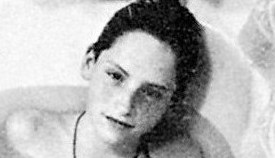
Antony Baekeland
Murderer Barry Prudom
Murderer · United Kingdom · 1982
Barry Prudom was the prime suspect in the killings of police officers after pol…
3 victims
Barry Prudom
Murderer · United Kingdom · 1982
Barry Prudom was the prime suspect in the killings of police officers after pol…
3 victims
 David McGreavy
Murderer · United Kingdom · 1973
David McGreavy was born in 1950 or 1951. He was an English convicted murderer w…
3 victims
David McGreavy
Murderer · United Kingdom · 1973
David McGreavy was born in 1950 or 1951. He was an English convicted murderer w…
3 victims
 Harry Maurice Roberts
Murderer · United Kingdom · 1966
Name: Harry Maurice Roberts Birth year: 1936 Birthplace: Kennington, London, En…
3 victims
Harry Maurice Roberts
Murderer · United Kingdom · 1966
Name: Harry Maurice Roberts Birth year: 1936 Birthplace: Kennington, London, En…
3 victims
 Ronald Jebson
Murderer · United Kingdom · 1970
Ronald Jebson (born 1939) was a convicted pedophile who was also known as Ronal…
3 victims
Ronald Jebson
Murderer · United Kingdom · 1970
Ronald Jebson (born 1939) was a convicted pedophile who was also known as Ronal…
3 victims
 Sara Kruzan
Homicide · USA · 1994
Sara Jessimy Kruzan was born on January 8, 1978. She was raised by her mother i…
1 victim
Sara Kruzan
Homicide · USA · 1994
Sara Jessimy Kruzan was born on January 8, 1978. She was raised by her mother i…
1 victim
 Patrick McIntyre
Murderer · USA · 1997
Patrick McIntyre was the son of a former Vero Beach police detective. Molly McI…
1 victim
Patrick McIntyre
Murderer · USA · 1997
Patrick McIntyre was the son of a former Vero Beach police detective. Molly McI…
1 victim
 Reetika Vazirani
Murderer · USA · 2003
Reetika Vazirani (1962–2003) was an American poet and educator. On July 16, 200…
1 victim
Reetika Vazirani
Murderer · USA · 2003
Reetika Vazirani (1962–2003) was an American poet and educator. On July 16, 200…
1 victim
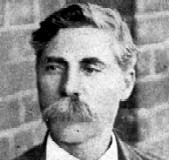 Floyd Allen
Murderer · USA · 1912
Floyd Allen (July 5, 1856 – March 28, 1913) was an American landowner and patri…
5 victims
Floyd Allen
Murderer · USA · 1912
Floyd Allen (July 5, 1856 – March 28, 1913) was an American landowner and patri…
5 victims
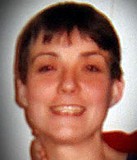 Sabine Radmacher
Murderer · Germany · 2010
Sabine Radmacher Sabine Radmacher was fatally shot by special police units the…
3 victims
Sabine Radmacher
Murderer · Germany · 2010
Sabine Radmacher Sabine Radmacher was fatally shot by special police units the…
3 victims
- Gender
- male
- Country
- United Kingdom
- Location
- London, England, United Kingdom
- Date of birth
- 1951
- Age at first offence
- 21
- Characteristics
- parricide, incest
- Victim profile
- Barbara Daly Baekeland (his mother)
- Method of murder
- St abbing with knife
- Date(s) of murder
- November 17, 1972
- Years active
- 1972
- Date of arrest
- —
- Status
-
Died in custody
Found guilty of manslaughter (1973); released on July 21, 1980; suffocated with a plastic bag on March 20, 1981; death described as not known if suicide or murder
Background
Antony Baekeland lived with his mother, Barbara Baekeland, in a penthouse flat in London after his parents separated, when he was twenty-one. His mother was Barbara Baekeland, described as an ex-film star. Antony was known to have homosexual tendencies and to experiment with LSD.
Barbara Baekeland was the wife of Brooks Baekeland, grandson of Leo Baekeland, founder of Bakelite plastic. She was described as a wealthy socialite and was murdered at her London home. Before meeting Brooks Baekeland, Barbara was a model and would-be Hollywood starlet; she had a screen test in Hollywood with the actor Dana Andrews.
During her marriage to Brooks Baekeland, Barbara was described as having an unstable personality, rude outbursts and bouts of severe depression. She was described as leading a decadent lifestyle of drinking and risqué sexual encounters. Brooks left her for a younger woman, Sylvie. It was suggested that Sylvie had been his son's girlfriend first. Brooks and Barbara divorced, which was followed by severe depression and a suicide attempt that was said to have been saved by her friend Gloria Jones, wife of James Jones.
Antony Baekeland and his mother had an enmeshed, co-dependent and allegedly incestuous relationship. It was alleged that Barbara tried to “cure” her son’s homosexuality. It was also alleged that after that failed, she had convinced or coerced him into sexual intercourse. Antony displayed signs of schizophrenia with paranoid tendencies. It was said that his father refused to allow him to be treated by psychiatrists, whom he believed were “professionally amoral”.
Her son’s erratic behavior caused concern among family friends, and over the years, Antony and his mother had several threatening arguments involving knives.
The offence
On 17th November 1972, Antony stabbed his over-indulgent mother, Barbara Baekeland, to death. The knife severed a main artery, and she died almost instantly.
When police arrived, they found Antony ordering a Chinese meal.
Antony later told police that he wanted to have sex with his grandmother “just as he had with his mother,” linking his later attack to the relationship described in his background.
Investigation
After the murder, paramedics alerted the police, who arrived to find Barbara lying on her back in the kitchen with a single stab wound near her heart; the knife had severed a main artery.
Arrest
After Barbara’s murder, the police arrested Antony, and he was charged with murder.
Trial
Antony Baekeland’s Old Bailey trial began on 6th June 1973. His defence was diminished responsibility, and it was successfully argued.
At trial, witnesses told of the possibility of an incestuous relationship between Antony and his mother. It was suggested that Barbara had been trying to “cure” him of his sexual preferences.
Antony was found guilty of the lesser charge of manslaughter.
His defence was described as being successfully argued and he was found guilty of manslaughter with diminished responsibility.
Sentencing
Antony was sent to Broadmoor for an indefinite period after being found guilty of manslaughter with diminished responsibility.
In the final months before his release, he was described as seeming happy in Broadmoor, working in a handicrafts shop, having clandestine relationships with other male inmates, and welcoming visitors including the actress Patricia Neal, taken along by one of the Baekelands’ friends who was painting her portrait at the time.
Another visitor was his grandmother, Nini Daly. A note in his file said:
“She still seems less disturbed by her daughter's death than by the fact that her dear little Tony is in trouble,”
“She seems just as mad as the rest of the family.”
Timeline
- 17th November 1972 — Antony stabbed his mother, Barbara Baekeland, to death.
- 6th June 1973 — Antony’s Old Bailey trial began.
- June 1973 — Antony appeared at the Old Bailey; he was found guilty of manslaughter with diminished responsibility and sent to Broadmoor.
- July 21, 1980 — Antony was discharged from Broadmoor and went to live with his grandmother in New York.
- Sunday, July 27 — Six days after his release, Antony stabbed his grandmother, Nini Daly.
- March 20, 1981 — Antony was found dead in his bed in Rikers Island, suffocated with a plastic bag.
- 21st March 1981 — Antony’s death was described as committed suicide by suffocating himself with a plastic bag on the prison island.
Outcome
Antony was found guilty of manslaughter. He was discharged from Broadmoor in July 1980.
He relocated to New York City to live with his grandmother after his release. He attacked the elderly woman less than a week later, because she nagged him. He was sent to Rikers Island, and he was suffocated with a plastic bag on March 20, 1981; it was not known if his death was a suicide or murder.
Brooks Baekeland believed Antony had been murdered, possibly because Antony had threatened to reveal his relationship with a guard or refused to hand over money to a more dangerous and violent inmate. Others were convinced it was suicide.
Aftermath
After being taken to Rikers Island, Antony’s trust fund was described as leading to prisoners preying on him for money. Within a few months, he had given away almost £20,000, described as protection money and gifts, including it was said to one of the male guards and an inmate who had raped and decapitated a young boy.
After his death, a film and related publications were discussed:
- The Baekeland murder was made into the film Savage Grace in 2007, starring Julianne Moore, Stephen Dillane, Eddie Redmayne and Elena Anaya, based on the book Savage Grace: A True Story Of Incest And Murder Among The Wealthy Elite by Natalie Robins and Stephen M. L. Aronson.
- After the film appeared, Barbara Baekeland’s former lover, Sam Green, wrote an article arguing that elements in the film possibly misled those trying to read back to reality inspiring it.
Sam Green’s quoted statements included:
- “it is true that almost 40 years ago I did have an affair with Barbara, but I certainly never slept with her son...Nor am I bisexual.”
- “she started telling people she had had an incestuous relationship with her son as a way of 'cure' him of homosexuality...But I don't believe she had sex with Tony. I think she simply enjoyed shocking people.”
- “I was more disturbed than most. I am Sam Green.”
- “I certainly never slept with her son, and nor did she, to the best of my knowledge.”
- “The movie producers have changed my sexual orientation but couldn't be bothered to change my name.”
- “I'm taking legal advice because the film has damaged me and distorted a life that certainly needs no exaggeration.”
- “But I don't believe she had sex with Tony.
- “I found out about her death when I got a call from Interpol telling me I was the executor of her estate and asking what my instructions were for her body.”
- “He spoke to my secretary, who asked who he was. He said: 'I'm the guy who killed his mother.'”
- “'I'm the guy who killed his mother.'”
- “'I told my secretary to say I wasn't there.'”
- “One scene in the controversial new movie Savage Grace that the audience finds especially uncomfortable.”
- “To watch the Sam Green in the movie, played by British actor Hugh Dancy, passionately kiss Tony turned my stomach.”
- “There is also an implication that I am somehow responsible for Barbara's murder because Tony becomes confused and unbalanced after the three-in-a-bed incest scene.”
- “It is an outrageous suggestion.”
- “I admit I may have led a life that is worthy of a movie. But not this one.”
Other details
Antony’s age at the time of Barbara’s murder was stated as 25 years old at the time the police arrived.
During the Old Bailey trial, Antony was defended by John Mortimer.
Antony was described as having been described by John Mortimer (in relation to Antony’s presentation) as “very gentle, calm and nice.”
During the release campaign, it was said that a campaign for his release was led by the honourable Hugo Money-Coutts, whose family controlled London’s exclusive Coutts Bank, and whose mother-in-law was one of the Baekelands’ oldest friends. The case was said to have been discussed with telegrams shuttling between the American Embassy in London and Cyrus Vance, the U.S. Secretary of State in Washington. Antony’s discharge was described as being on condition that he was repatriated. Antony’s father Brooks opposed this move.
Brooks Baekeland was described as having a new son born shortly after Antony was sent to Broadmoor, and Antony was described as having used his time in the handicrafts workshop to fashion toys that Brooks had to throw away as soon as they arrived. Brooks received abusive letters from Antony, some threatening to murder his new wife Sylvie.
Anthony’s release to the United States involved Cecelia Brebner, described as his paternal grandmother’s friend. A quotation attributed to Cecelia Brebner’s advice conversation was included:
- “I was staying at the time with Lady Mary Clayton at Kensington Palace, and she said: 'Celia, I don't think it's the right thing to do, but we'll ask Prince George of Denmark.' ”
- “He thought it was a very altruistic thing to do, so I embarked upon it.”
Antony’s Broadmoor consultant Dr Philip Gogarty was referenced as having later described his release as a faux pas and was said to have discharged Antony only on condition that Antony would live in some kind of half-way house in the United States.
Antony was described as spending most of the few days after his arrival in New York in his grandmother’s cramped and sweltering flat, playing morbid music and mumbling satanic masses in front of a shrine to his dead mother, created by placing candles and photos of her on top of a chest of drawers with her ashes as a centrepiece.
Grandmother attack and attempted murder
On Sunday, July 27, six days after Antony’s release from Broadmoor, Nini Daly’s nurse Lena Richards arrived at the apartment to begin her day’s shift. Richards had been asked to lend her key to Antony while he stayed there, so she waited for him to let her in. There was no reply when she rang the bell. Antony came to the door wearing only a pair of shorts and shouted:
“Lena, quick, get the ambulance,' he shouted. 'I've just stabbed my grandmother.”
Richards ran to a nearby phone box and called the police. As the police entered the apartment, they heard Nini Daly shrieking with terror and saw Antony rushing out of her bedroom towards them. Antony shouted:
“She won't die, the knife won't go in! And she keeps screaming! I can't understand it,” he shouted as they grabbed him.
The police found Nini Daly lying against the wall in a corner of her bedroom with blood soaking through her satin nightgown. She had been stabbed eight times and had multiple other injuries including a fractured collar bone and ribs. While they waited for an ambulance, Antony was taken to the local police station.
Antony later explained that he wanted to have sex with his grandmother “just as he had with his mother.” He said the trigger for the attack was that she had tried to stop him making a phone call to England. He threw the phone at her head, knocking her to the floor. He then began attacking her with a kitchen knife. He told the police:
“I hate it when this happens,” he told the police.
Antony was charged with attempted murder and sent to Rikers Island.
Death at Rikers Island
On March 20, 1981, Antony was taken to court for a preliminary hearing and learned that his trial would not take place for another month because his medical records had still not arrived from Britain. His application for bail was refused. He was found dead in his bed after returning to his cell at 3.30pm that day.
Brooks Baekeland believed Antony had been murdered. Others believed it was suicide, but it was described as not known if his death was a suicide or murder. What ended his life was described as a bag made of plastic placed over his head.

Spotted an error, or have more information about this case?