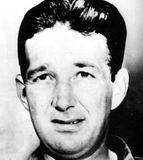
Wilbert Coffin
Murderer Donald Staley
Murderer · Canada · 1946
Donald Staley was a Canadian army veteran. He was 29 years old and was of Brace…
2 victims
Donald Staley
Murderer · Canada · 1946
Donald Staley was a Canadian army veteran. He was 29 years old and was of Brace…
2 victims
 Bobby Jack Fowler
Murderer · Canada · 1973
Bobby Jack Fowler (June 12, 1939 – May 15, 2006) was an American who was a nati…
20 victims
Bobby Jack Fowler
Murderer · Canada · 1973
Bobby Jack Fowler (June 12, 1939 – May 15, 2006) was an American who was a nati…
20 victims
 Allan Legere
Murderer · Canada · 1986
Name: Allan Legere · Citation: R. v. Legere (1988), 89 N.B.R. (2d) 361 · Other…
5 victims
Allan Legere
Murderer · Canada · 1986
Name: Allan Legere · Citation: R. v. Legere (1988), 89 N.B.R. (2d) 361 · Other…
5 victims
 James Roszko
Murderer · Canada · 2005
James Roszko was a Canadian man operating a hydroponic marijuana grow-op in Roc…
4 victims
James Roszko
Murderer · Canada · 2005
James Roszko was a Canadian man operating a hydroponic marijuana grow-op in Roc…
4 victims
 Angelo Colalillo
Murderer · Canada · 1993
Angelo Colalillo was suspected of committing serial sexual assaults and murders…
3 victims
Angelo Colalillo
Murderer · Canada · 1993
Angelo Colalillo was suspected of committing serial sexual assaults and murders…
3 victims
 Denis Lortie
Murderer · Canada · 1984
Denis Lortie was a Canadian army corporal in the Royal 22 e Régiment of the Can…
3 victims
Denis Lortie
Murderer · Canada · 1984
Denis Lortie was a Canadian army corporal in the Royal 22 e Régiment of the Can…
3 victims
 Dale Hausner
Serial killer · USA · 2005
Dale Hausner was convicted of six counts of first-degree murder, 18 attempted f…
6 victims
Dale Hausner
Serial killer · USA · 2005
Dale Hausner was convicted of six counts of first-degree murder, 18 attempted f…
6 victims
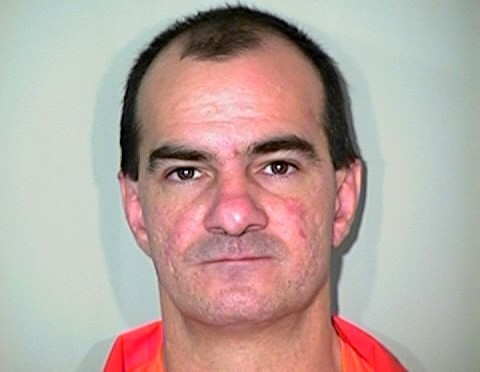 Phillip Bocharski
Murderer · USA · 1995
Phillip Bocharski was convicted in Yavapai County of burglary in the first degr…
1 victim
Phillip Bocharski
Murderer · USA · 1995
Phillip Bocharski was convicted in Yavapai County of burglary in the first degr…
1 victim
 Debra Hartmann
Murderer · USA · 1982
Debra Hartmann was sentenced to 22 years in prison for conspiracy connected to…
1 victim
Debra Hartmann
Murderer · USA · 1982
Debra Hartmann was sentenced to 22 years in prison for conspiracy connected to…
1 victim
 Larry Wayne White
Murderer · USA · 1977
March 1, 1977 — Larry Wayne White killed Elizabeth St. John at her apartment ho…
2 victims
Larry Wayne White
Murderer · USA · 1977
March 1, 1977 — Larry Wayne White killed Elizabeth St. John at her apartment ho…
2 victims
 Rodney Rachal
Murderer · USA · 1990
Rodney Charles Rachal was the petitioner-appellant in the United States Court o…
1 victim
Rodney Rachal
Murderer · USA · 1990
Rodney Charles Rachal was the petitioner-appellant in the United States Court o…
1 victim
- Gender
- male
- Country
- Canada
- Location
- Gaspé, Quebec, Canada
- Date of birth
- 1913
- Age at first offence
- 40
- Characteristics
- robbery
- Victim profile
- Eugene Lindsey, his son Richard Lindsey, 17, and Frederick Claar, 20 (hunters)
- Method of murder
- Shooting
- Date(s) of murder
- July 14, 1953
- Years active
- 1953
- Date of arrest
- —
- Status
-
Executed
Executed by hanging at Montreal's Bordeaux Prison on February 10, 1956
Case details
Wilbert Coffin (1913 – February 10, 1956) was a Canadian prospector from York Centre, in the County of Gaspé, Québec.
Background
The case involved three Pennsylvania men who arrived in the Gaspé region for a bear-hunting trip in 1953 and never returned home. Their bodies were found in a forest in Québec. The last person said to have seen any of them alive was Wilbert Coffin, who had been seen with the youngest of the three Americans at a gas station. Coffin had purchased a pump to repair the pickup truck the Americans were driving.
Coffin was described as a mining prospector and an experienced woodsman. The unspoiled wilderness of the Gaspé region made it a popular spot for American outdoorsmen.
The offence
Eugene Lindsey’s body was found in the Gaspé area, Québec, torn apart by bears, and later the bodies of Lindsey’s son Richard Lindsey and Frederick Claar were found about four kilometres further. The men had last been seen going into the woods to hunt. Eugene Lindsey had graduated from high school the day before the trip.
Coffin was accused of ambushing the three victims and stealing more than 600 dollars. Coffin denied committing the murders but admitted stealing some of the victims’ luggage.
Investigation
Searchers eventually came upon the remains of all three, which were described as having been eaten by animals. An expert witness concluded the men had died by June 17. Eugene Lindsey’s remains were found July 15 near a small stream; his wallet was found in the water and the money was gone. Coffin was found to have many items belonging to the men in his possession.
Eugene Lindsey had been carrying at least $650 when he left Pennsylvania. His rifle was found nearby with a mark that could have been a bullet grazing. Richard Lindsey’s remains were found July 23. Beside them were a sweater and two shirts perforated by bullet holes. A trouser pocket had been turned inside-out and his brown leather wallet was missing. Claar’s remains were found about 200 feet away, and his wallet had been rifled.
A prosecution expert testified that the bullet holes in the clothing did not contain potassium nitrate deposits. The only cartridges that did not leave such deposits were said to be used in .32-40 calibre rifles. The prosecution said Coffin borrowed such a gun in May 1953 and had not returned it. Another witness told the jury he saw a muzzle of a gun in the back of Coffin’s truck when he came out of the bush June 12.
The testimony about the gun sighting was later described as uncertain in meaning; it was said that the witness had “thought” he saw a muzzle, and it could have been an iron rod.
Police were described as having interrogated Coffin for 16 days, and Coffin said he was impaired at the time when he later described actions. Coffin made his statement to police after 16 days of interrogation in a filthy, rat-infested basement of a firehall, while maintaining his innocence.
During a preliminary hearing, Coffin was allowed to meet with his father while police were trying to get him to incriminate himself. Coffin asked him to “tell Mother I’m fine” and not to worry because the police were not “man enough to break me.”
After Coffin was convicted, he swore an affidavit that named 13 people for whom he had staked prospecting claims in May 1953, claims worth some $580. A local garage owner later confirmed that two Americans with a yellow jeep were still in the woods when Coffin had left for Montreal.
A police note written by one of the hunters on June 13, when Coffin was in Montreal, was mentioned.
Arrest and initial events
Coffin’s arrest followed the discovery of the missing men and their bodies.
Coffin later told police that he met up with the trio on June 10 while driving a friend’s truck into the bush to prospect for minerals. The truck had broken down, and he drove Richard Lindsey to the town of Gaspé to buy a new fuel pump.
Coffin said he drove Lindsey back to the camp, and two other Americans were there in a yellow jeep with a plywood box. Coffin and the three men were described as having dinner together, after which Coffin continued into the bush, promising to look in on the Lindsey party in a few days.
According to Coffin, Eugene Lindsey paid him $40 U.S. in a twenty and two ten-dollar bills, and the younger Lindsey gave him a pocket knife for his son.
On June 12, Coffin said he returned to find the camp deserted but for Lindsey’s truck. He waited several hours and, when no one returned, took the fuel pump and Claar’s valise, described as containing a shirt, two pairs of shorts, two pairs of socks, blue jeans and two towels. Coffin said he was impaired at the time.
After emerging from the bush, Coffin visited several friends to repay debts, went to a hotel, and paid for beer with a $20 U.S. bill. At midnight, he set out for Petrie’s Montreal home, and he drove into the ditch twice and paid people who helped pull him out. One person said he took a $20 U.S. bill out of a brown wallet, filled with bills to a depth of a half-inch. Coffin also had a $65 pair of binoculars, described as a gift from the Americans to Petrie.
Coffin was seen with the youngest of the three Americans at a gas station. He purchased a pump to repair the pickup truck.
Timeline
- June 5, 1953 — Eugene Lindsey, his son Richard, and his friend Frederick Claar left on a hunting trip to Québec.
- June 10, 1953 — Coffin met up with the trio while driving a friend’s truck into the bush to prospect for minerals.
- June 12, 1953 — Coffin returned to the camp, found it deserted, and took the fuel pump and Claar’s valise; he later visited friends, went to a hotel, paid for beer, and set out for Petrie’s Montreal home.
- June 13, 1953 — A police note was written by one of the hunters while Coffin was in Montreal.
- July 10, 1953 — Their abandoned truck was found.
- July 15, 1953 — Eugene Lindsey’s remains were found near a small stream; his wallet was found in the water and the money was gone.
- July 23, 1953 — The bodies of Richard Lindsey and Frederick Claar were found about four kilometres further.
- July 1954 — Coffin was sent to trial; he was convicted with one count of murder.
- August 5, 1954 — Coffin was sentenced to hang.
- September 6, 1955 — Coffin escaped from prison using a fake gun carved from soap.
- February 8, 1956 — A 5-2 decision upheld the conviction.
- February 9, 1956 — Coffin was executed by hanging on the next day after being upheld by the court.
- February 10, 1956 — Coffin mounted the gallows and was hanged at Montreal’s Bordeaux Prison at 12:01 AM.
Trial
Coffin was sent to trial in July 1954. The evidence against him was described as mostly circumstantial.
The penal code was described as prohibiting multiple convictions of murder in the same trial, so Coffin was convicted with one count of murder.
Coffin was found guilty of murdering one of the hunters. The jury deliberated described as resulting in a conviction in just 30 minutes.
Coffin’s lawyer was Raymond Maher. At the outset, Maher told the jury he travelled 1,500 miles interviewing witnesses and planned to call more than 100 as part of the defence case. When his moment arrived, Maher called not a single witness and told the court: “The defence rests.”
A witness described seeing a muzzle of a gun in the back of Coffin’s truck; it was later described as being only a “thought” and possibly an iron rod. Coffin’s lawyer did not cross-examine that witness.
Coffin maintained his innocence.
Prosecutor Noel Dorion told the jury: “I have faith that you will set an example for your district, for your province and for the whole of your country before the eyes of America, which counts on you, and which has followed all of the details of this trial.”
Sentencing
The mandatory sentence was death by hanging. Coffin was sentenced to death on August 5, 1954 and was described as having seven stays of execution over the next 18 months while courts rejected his appeals.
Appeals
An appeal to the Quebec Court of Queen’s Bench was dismissed. Coffin’s application for leave to appeal to the Supreme Court of Canada was turned down.
A reference question was submitted to the Supreme Court of Canada, asking: “If the application made by Wilbert Coffin for leave to appeal to the Supreme Court of Canada had been granted on any of the grounds alleged on the said application, what disposition of the appeal would now be made by the court?”
The Supreme Court answered that it would have upheld the conviction: Reference re Regina v. Coffin, [1956] S.C.R. 191.
Outcome
Coffin was executed by hanging at Montreal’s Bordeaux Prison on February 10, 1956. He was described as mounting the gallows and having his execution carried out at 12:01 AM.
Coffin was refused his final wish of marrying Marion Petric, his partner and mother of his 8-year-old son James.
Aftermath
After Coffin was hanged, a crowd of 500 waited at the train station for his body to return home. He was buried in the churchyard of St. Andrew’s Anglican Church in the tiny town of York Centre. A service and prayers were described as being held on the 50th anniversary.
A Quebec government inquiry in 1964 found no wrongdoing by police or prosecutors.
A coroner named Lionel Rioux said he believed Coffin was innocent. Rioux accused Maurice Duplessis, premier of Québec at the time, of making Coffin into a scapegoat for the killings of foreign tourists. Rioux held a coroner’s inquest at which Coffin testified, and Rioux said the provincial government destroyed the transcript of Coffin’s testimony. Coffin did not testify at his trial.
At least two people were described as having claimed to have committed the murders. One later recanted, and another was treated as a hoax.
Jacques Hébert, a reporter during the trial and later a senator, raised doubt in Coffin’s guilt and published:
- “Coffin était innocent” (1958)
- “J’accuse les assassins de Coffin” (1963)
Hébert’s 1963 book caused controversy and led the provincial government to establish a Commission of Inquiry into the case, headed by judge Roger Brossard with Jules Deschênes as Counsel to the Commission. Over 200 witnesses were interviewed, and the commission found that Coffin did receive a fair trial.
In 1979, filmmaker Jean-Claude Labrecque made a feature film entitled L’Affaire Coffin, released on September 10, 1980.
Other documents inspired by the case included Dale Boyle’s song “The Wilbert Coffin Story” and the Alton Price book, To Build A Noose.
In 2006, four generations of Coffin’s family commemorated his death at his gravesite. The Association in Defence of the Wrongly Convicted announced it was studying the case, and its director of client services described the case as “a blot on the criminal justice system.” Prominent criminal lawyer Edward Greenspan blamed Coffin’s trial lawyer Raymond Maher for keeping Coffin out of the witness box and said: “It was incompetence with a capital I,” and “It’s the worst case of lawyering I’ve ever seen.”
Other details
Coffin had an 8-year-old son, James, at the time of his hanging. Coffin’s common-law wife Marion Petrie wanted to marry Coffin before the execution, but Duplessis denied permission and said it would not be “decent”.
Coffin escaped from prison on September 6, 1955 using a fake gun carved from soap. It was also said that Maher talked Coffin into giving himself up.
A 384 page book titled L’affaire Coffin: une supercherie (translation: The Coffin Affair: A Hoax?) was published by Wilson & Lafleur in Montreal by Clément Fortin, a retired attorney and law professor. Fortin concluded the jurors in 1954 were justified to render a verdict of guilty as charged. In 1964, the Royal Commission of Enquiry on the Coffin Affair reached the same conclusion.
Judge Jules Deschêne was described as being appointed chief prosecutor of an inquiry commission to rule out any wrongdoing and injustice in the Coffin Affair.
In telephone comments, Hébert said: “When I began writing articles about the trial, I thought it was a complicated case, with plenty of uncertainties, new witnesses and new facts surfacing. I thought it would be better not to hang Coffin too quickly.” and: “Given all these new facts, I am convinced this was a judicial error.”
The Supreme Court effectively declared the death penalty unconstitutional in a later year described as making it almost certain never to return.
The case was described as having helped spur moves to abolish the death penalty in Canada, and Pierre Trudeau cited it when the death penalty was abolished in 1976. It was also cited during a debate on restoring capital punishment.
Coffin’s case was described as having attracted international attention and as having been reviewed by the Supreme Court.
A final status description also noted that a black flag flew and seven bells announced Coffin was about to die.
Spotted an error, or have more information about this case?