
Kim Anthony McMichen
Murderer Brian Kevin Rosenfeld
Murderer · USA · 1985
Brian Kevin Rosenfeld Brian Kevin Rosenfeld was sentenced to three concurrent l…
23 victims
Brian Kevin Rosenfeld
Murderer · USA · 1985
Brian Kevin Rosenfeld Brian Kevin Rosenfeld was sentenced to three concurrent l…
23 victims
 Yahweh ben Yahweh
Murderer · USA · 1980
Yahweh ben Yahweh was born and legally named Hulon Mitchell Jr. (October 27, 19…
23 victims
Yahweh ben Yahweh
Murderer · USA · 1980
Yahweh ben Yahweh was born and legally named Hulon Mitchell Jr. (October 27, 19…
23 victims
 Russell Ellwood
Murderer · USA · 1991
Russell Ellwood was a former taxi driver. Authorities suspected him of killing…
20 victims
Russell Ellwood
Murderer · USA · 1991
Russell Ellwood was a former taxi driver. Authorities suspected him of killing…
20 victims
 Robert Martines Perez
Murderer · USA · 1994
Name: Robert Martines Perez · Other name used in proceedings: Robert Martinez P…
15 victims
Robert Martines Perez
Murderer · USA · 1994
Name: Robert Martines Perez · Other name used in proceedings: Robert Martinez P…
15 victims
 Stephen Grant
Murderer · USA · 2007
February 14, 2007 — Stephen Grant contacted the Macomb County sheriff's departm…
1 victim
Stephen Grant
Murderer · USA · 2007
February 14, 2007 — Stephen Grant contacted the Macomb County sheriff's departm…
1 victim
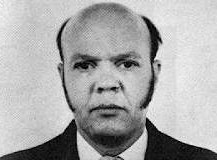 David Carpenter
Serial killer · USA · 1979
David Carpenter (born May 6, 1930), also known as the Trailside Killer, was an…
11 victims
David Carpenter
Serial killer · USA · 1979
David Carpenter (born May 6, 1930), also known as the Trailside Killer, was an…
11 victims
 Christiana Edmunds
Murderer · United Kingdom · 1871
Christiana Edmunds (3 October 1828–1907) was an Englishwoman known as The Choco…
1 victim
Christiana Edmunds
Murderer · United Kingdom · 1871
Christiana Edmunds (3 October 1828–1907) was an Englishwoman known as The Choco…
1 victim
 Tyler Edmonds
Miscarriage of justice · USA · 2003
Tyler Edmonds was a 19-year-old man from Mississippi who was tried and convicte…
0 victims
Tyler Edmonds
Miscarriage of justice · USA · 2003
Tyler Edmonds was a 19-year-old man from Mississippi who was tried and convicte…
0 victims
 James Roszko
Murderer · Canada · 2005
James Roszko was a Canadian man operating a hydroponic marijuana grow-op in Roc…
4 victims
James Roszko
Murderer · Canada · 2005
James Roszko was a Canadian man operating a hydroponic marijuana grow-op in Roc…
4 victims
 Alexey Pichugin
Murderer · Russia · 1998
Alexei Vladimirovich Pichugin (Aleksey Pichugin) was born in the town of Orekho…
5 victims
Alexey Pichugin
Murderer · Russia · 1998
Alexei Vladimirovich Pichugin (Aleksey Pichugin) was born in the town of Orekho…
5 victims
- Gender
- male
- Country
- USA
- Location
- Douglas County, Georgia, USA
- Date of birth
- March 4, 1959
- Age at first offence
- 31
- Characteristics
- alcohol, domestic violence, rape, torture
- Victim profile
- Luan McMichen, 27 (his estranged wife) and Jeff Robinson, 27 (her boyfriend)
- Method of murder
- Shooting
- Date(s) of murder
- November 16, 1990
- Years active
- 1990
- Date of arrest
- Same day
- Status
-
Sentenced to death
Sentenced to death on August 6, 1993
Status and appellate court disposition
Kim Anthony McMichen was sentenced to death on August 6, 1993. He was convicted on two counts of malice murder of his estranged wife, Luan McMichen, and her boyfriend, Jeff Robinson. The jury recommended the death penalty for each of the two counts of murder, finding that each murder was committed during the course of the other murder and that each was outrageously or wantonly vile, horrible or inhuman in that it involved depravity of mind. The jury also found that the murder of Luan McMichen was outrageously or wantonly vile, horrible or inhuman in that it involved torture. The trial court imposed two death sentences for the murder convictions.
Timeline
- November 16, 1990 — McMichen shot Luan McMichen (27) and Jeff Robinson (27).
- December 10, 1990 — McMichen was indicted.
- January 1990 — Luan told others that McMichen entered the trailer in Bremen, Georgia, destroyed her clothes, and raped her.
- January 1990 — Luan resolved to end her marriage, and she left McMichen.
- February or March 1990 — Luan learned she was pregnant.
- March 1990 — Luan told McMichen she was pregnant.
- October 1990 — Shortly before the baby was due, McMichen told a woman he had dated in high school that if the new baby turned out not to be his, he would kill Luan and her boyfriend.
- November 16, 1990 (afternoon) — McMichen loaded his truck with a .38 revolver, a .44 revolver, a bolt action rifle, and his beer cooler, told five-year-old Katie he was taking her deer hunting, and waited while Luan and Robinson were together in their trailer.
- April 12, 1993 — After a jury found McMichen competent to stand trial, the state filed notice of intent to seek the death penalty.
- May 3, 1993 — Voir dire began.
- May 24, 1993 — McMichen’s trial began.
- June 7, 1993 — The jury returned its verdict finding McMichen guilty of the crimes charged.
- June 9, 1993 — The jury’s recommendation of death sentences was returned.
- July 1, 1993 — The trial court imposed sentence.
- July 1, 1993 — McMichen’s motion for new trial was filed.
- June 27, 1994 — McMichen’s motion for new trial was amended.
- August 25, 1994 — The motion for new trial was denied.
- October 26, 1994 — The appeal was docketed in this Court.
- February 13, 1995 — The case was orally argued.
- July 14, 1995 — Decided.
- July 28, 1995 — Reconsideration denied.
Background
Kim Anthony McMichen, 39, and Luan McMichen were married in 1983 and had one child, Katie, born in 1985. Throughout most of their turbulent marriage, the couple lived with McMichen’s parents in a rural home in Douglas County. Luan worked steadily, primarily as an employee of her father-in-law in the basement of the McMichen home. McMichen worked sporadically, chronically abused alcohol, and suffered recurring bouts of depression.
In or about January 1990, Luan resolved to end her marriage. The couple were living in a trailer in Bremen, Georgia. Luan secured a job in Atlanta independent of her parents-in-law and asked McMichen to move out. McMichen returned to his parents’ home, taking Katie with him.
Soon after the couple separated, McMichen began harassing Luan. Luan told her mother and co-workers that, on one occasion, McMichen entered the trailer in Bremen, destroyed Luan’s clothes, and raped her. Luan also said that, on another occasion, McMichen threw her purse and car keys on top of the trailer when she was attempting to leave for work, causing her to have to climb on top of the trailer to retrieve them.
Luan eventually abandoned the trailer and attempted to conceal her whereabouts from McMichen. She began living with Jeff Robinson, a renewed acquaintance whom she had known in high school. Luan confided to co-workers that she believed Robinson could offer her protection from McMichen.
Unable to find Luan at the trailer in Bremen, McMichen began harassing Luan at work. McMichen insisted that Luan return to him and refused to allow her to see Katie alone unless she complied with his demands. Co-workers testified that McMichen’s harassment caused Luan severe distress. They testified that Luan frequently cried and spoke of her desire to have custody of Katie, her fear that McMichen would kill Luan, and her fear that his harassment would cause her to lose her job.
In February or March 1990, Luan learned she was pregnant. Although Luan was intimate with Robinson at the time of conception, the paternity of the child was and remains questionable because of the alleged rape. In March, Luan told McMichen she was pregnant, and McMichen began insisting that the unborn child was his.
In October 1990, shortly before the baby was due, McMichen happened upon a woman he had dated in high school. He confided in the woman about his marital problems and told her that if the new baby turned out not to be his, he would kill Luan and her boyfriend.
When Luan left her employment for maternity leave just before the birth of the new baby, McMichen began harassing Luan’s co-workers by telephone and insisted that they tell him Luan’s whereabouts. On instructions from Luan, her co-workers refused to disclose information to McMichen.
After the baby was born, McMichen learned that Luan and Robinson were living in a trailer park in Douglas County. Although McMichen would not permit Luan to visit Katie alone, he agreed to bring Katie to Luan’s trailer for prearranged visits. McMichen also began making frequent visits to the trailer unaccompanied by Katie. During these visits, McMichen stayed outdoors, drinking beer and challenging Robinson to fight. McMichen was usually armed.
On at least one occasion, a neighbor became concerned enough by the shouting to persuade her husband to go to the truck and coax a weapon away from McMichen. Neighbors testified that in each dispute, McMichen threatened and challenged Robinson and that the victims implored McMichen simply to leave.
The offence
On the afternoon of November 16, 1990, McMichen loaded his truck with a .38 revolver, a .44 revolver, a bolt action rifle, and his beer cooler. He told five-year-old Katie they were going deer hunting. He drove to Luan and Robinson’s trailer for a scheduled visit and waited in the truck while Katie played with her mother inside.
When Robinson returned home, McMichen provoked an argument with him. The argument continued for a prolonged period, during which both men drank alcohol. At some point, the two men went to the liquor store. While they were away, Luan took McMichen’s guns from his truck and placed them on a table inside the trailer.
Upon returning, McMichen retrieved the guns and went back outdoors where he continued to harass the victims. A neighbor overheard McMichen yell, “I've got something for the both of you.” Thereafter, McMichen fired two shots with the .38 revolver. The first shot entered Robinson’s right ear from close range, killing him instantly. The second shot struck Luan in the heart, killing her within minutes.
The bodies lay on the pavement near McMichen’s truck, bleeding profusely, with blood pouring down an incline into the street.
After killing the victims, McMichen retrieved a beer from his truck. He entered the trailer, took Katie by the hand, walked her past both bodies through the victims’ blood, and left her in the truck in view of the murder scene. He then walked to a neighbor’s trailer to call his mother and told her, “I've done it. Come get Katie.” While at the neighbor’s home, McMichen sat in a lounge chair, drank his beer, and smoked a cigarette.
When Katie was found a short time later, she was still in the truck with blood on her shoes, screaming for someone to call an ambulance for her mother. When the police arrived at the scene, McMichen was mumbling, “I didn't mean to do it,” and “it all happened so quick.” He told one officer, “I fucked up, didn't I?”
Investigation and arrest
Police arrived at the scene shortly after Katie was found screaming for someone to call an ambulance for her mother. McMichen made the statements: “I didn't mean to do it,” “it all happened so quick,” and “I fucked up, didn't I?” The evidence presented at trial included testimony from co-workers and neighbors about McMichen’s harassment and disputes, including that it was McMichen who threatened and challenged Robinson and that Robinson and Luan implored McMichen to leave.
Trial
McMichen contended he acted in self-defense, testifying that he shot the victims while defending himself against an attack by Robinson. McMichen claimed that Robinson pinned him against a truck, bent over him face to face so that McMichen was bent backwards, and was choking him to unconsciousness when McMichen fired the two fatal shots.
The evidence at trial included physical evidence contradicting McMichen’s account. It showed that McMichen took the gun from his right pocket with his right hand and shot Robinson in the right ear. The evidence further indicated that the bullet traveled horizontally through Robinson’s brain. It also showed that Luan stood a few feet away when the shots were fired, and that the bullet which struck Luan in the heart traveled at an angle downward before exiting through her back. The jury’s verdict convicted McMichen of two counts of malice murder of his estranged wife and her boyfriend.
The jury recommended the death penalty for each of the two counts of murder. For each murder, the jury found that it had been committed during the course of the other murder and that each murder was outrageously or wantonly vile, horrible or inhuman in that it involved depravity of mind. The jury also found that the murder of Luan McMichen involved outrageously or wantonly vile, horrible or inhuman conduct in that it involved torture.
Judge Emerson presided over the trial court proceedings.
Sentencing
The trial court imposed two death sentences for the murder convictions, based on the jury’s findings. The jury found statutory aggravating circumstances including that each murder was committed during the course of the other murder (OCGA 17-10-30 (b) (2)). The jury also found that the murder of Luan McMichen involved torture (OCGA 17-10-30 (b) (7)), and both murders involved depravity of mind (OCGA 17-10-30 (b) (7)).
McMichen had no prior criminal convictions.
McMichen raised multiple issues on appeal, including challenges to the sufficiency of the evidence supporting statutory aggravating circumstances and challenges to evidentiary and jury instruction rulings.
Admissions and evidentiary disputes addressed on appeal
McMichen argued for reversal claiming that none of the requisite statutory aggravating circumstances could withstand scrutiny. The appellate court affirmed, finding that each death sentence was supported by an aggravating circumstance.
In assessing depravity of mind, the appellate court addressed the “novel question” whether McMichen’s conduct toward Katie in the course of killing the victims—knowing but not intending that his actions would cause Katie severe mental distress—was alone sufficient to prove depravity. The court held that the evidence was sufficient, based on walking the five-year-old child past her mother’s blood, leaving the child screaming in the truck overlooking the murder scene, and McMichen drinking beer at a neighbor’s house.
The appellate court also addressed “mutually supporting aggravating circumstances” and selected which aggravator could be upheld for each sentence. It eliminated the OCGA 17-10-30 (b) (2) aggravating circumstance supporting the sentence of death for the murder of Luan McMichen and held that McMichen’s death sentence for the murder of Jeff Robinson was supported by OCGA 17-10-30 (b) (2) because the murder was committed while McMichen was in the course of murdering Luan.
The appellate court did not reach the issue whether evidence of McMichen’s harassment of Luan throughout the ten or more months preceding her death was sufficient to support psychological torture under OCGA 17-10-30 (b) (7).
The appellate court also addressed other claimed errors during trial, including:
- denial of McMichen’s ex parte motions for funds to hire a forensic pathologist and a ballistics expert;
- admission of evidence of attempted drug use with a minor child and admission of DUI evidence;
- admission of Robinson’s medical records about surgery in January 1990 for a chronic degenerative back problem;
- admission of evidence of Robinson’s propensity for violence toward McMichen and others;
- admission of evidence of cocaine metabolites in Robinson’s blood and urine and a syringe containing cocaine found in Robinson’s sock;
- exclusions and limits concerning Luan’s alleged extramarital affairs, correspondence with Luan’s step-mother, a photograph of McMichen with Katie, and testimony limits involving McMichen’s divorce attorney and her employees;
- the state’s examination of McMichen about prior inconsistent statements made while in custody, and related impeachment instructions and claims about voluntariness charges for custodial statements;
- admission of testimony of cellmate Williams at the sentencing trial, and denial of claims that Williams’ testimony was irrelevant, prejudicial, or subject to a required limiting instruction;
- denial of a request that the trial judge disqualify himself due to the judge’s asserted role as a witness to Williams’ escape;
- handling of a proffer outside the presence of the jury regarding hearsay statements by the victims under a necessity exception, and use of sworn testimony for impeachment;
- cross-examination at trial about whether McMichen faked mental illness and memory loss after the murders, and the interplay with competency proceedings;
- a prosecutor’s comment during a defense demonstration, sustaining an objection, and refusal of a mistrial;
- claims of victim impact evidence interjections during both phases and the conclusion that the examples were either probative or offered to rebut defense attacks;
- juror misconduct incidents, including a note referencing “Copy of '88-'89 Ga. Hunting & Fishing Regulations.” and excusal after a hearsay-based affidavit about a juror wanting “go ahead and fry” McMichen;
- alleged prosecutor misconduct in closing arguments, including specified statements made at both phases and the conclusion that none were improper in context;
- alleged flaws in guilt-innocence phase jury charges, including refusal to instruct on accident or involuntary manslaughter;
- claims of sentencing phase charge errors, including refusal to charge life without parole and adequacy of the charge as a whole;
- allowing the jury to view a videotaped interview of Katie McMichen a second time during deliberations.
Appeals
McMichen’s appeal argued that both death sentences must be reversed, challenging statutory aggravating circumstances and multiple trial rulings. The appellate court affirmed, holding:
- each death sentence was supported by an aggravating circumstance;
- the evidence supported the jury’s findings of statutory aggravating circumstances including depravity of mind and the double murder course-of-other-murder relationship;
- the trial court did not commit reversible error in the various other enumerations of error.
The appellate court also addressed constitutional and procedural challenges including:
- constitutionality of the death penalty statute;
- proportionality review method;
- claim that the death penalty was unconstitutional because the district attorney had unfettered discretion;
- prior rejection of claims that electrocution was cruel and unusual punishment;
- death qualification of jurors;
- denial of separate juror panels;
- denial of requests to question prospective jurors about types of cases that would warrant the death penalty;
- handling of challenges for cause and peremptory strikes, and other voir dire issues;
- refusal to make jurors’ handwritten notes part of the appellate record;
- constitutionality of provisions for report of the trial court in death penalty cases;
- whether the death sentences were imposed under the influence of passion, prejudice, or other arbitrary factor, and whether the sentences were excessive or disproportionate.
The appellate court stated that similar cases listed in an Appendix supported the imposition of the death sentence in this case. The appellate court’s decision was dated July 14, 1995, with reconsideration denied on July 28, 1995.
Other details
The indictment alleged that the crimes occurred on November 16, 1990. McMichen was indicted on December 10, 1990. On April 12, 1993, after a jury found McMichen competent to stand trial, the state filed its notice of intent to seek the death penalty. Voir dire began on May 3, 1993, and the trial began May 24, 1993. The jury returned its verdict on June 7, 1993 and recommended death sentences on June 9, 1993. The trial court imposed sentence on July 1, 1993.
McMichen’s motion for new trial was filed on July 1, 1993, amended on June 27, 1994, and denied on August 25, 1994. His appeal was docketed in the appellate court on October 26, 1994 and orally argued on February 13, 1995.
The names Michael Mears and Nancy Mau, and Elizabeth A. Geoffroy, were listed for appellant. The appellate case caption included MCMICHEN v. THE STATE S95P0209 (265 Ga. 598) (458 SE2d 833) (1995), with SEARS, Justice.

Spotted an error, or have more information about this case?