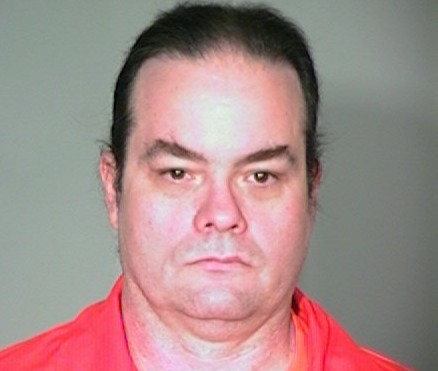
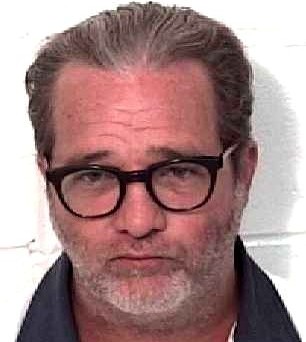
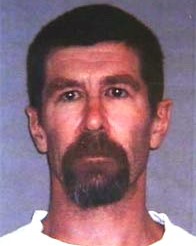
Jasper McMurtrey
Murderer Ervil LeBaron
Murderer · USA · 1972
Ervil Morrell LeBaron (1925 to August 16, 1981) was the leader of a polygamous…
35 victims
Ervil LeBaron
Murderer · USA · 1972
Ervil Morrell LeBaron (1925 to August 16, 1981) was the leader of a polygamous…
35 victims
 Brian Kevin Rosenfeld
Murderer · USA · 1985
Brian Kevin Rosenfeld Brian Kevin Rosenfeld was sentenced to three concurrent l…
23 victims
Brian Kevin Rosenfeld
Murderer · USA · 1985
Brian Kevin Rosenfeld Brian Kevin Rosenfeld was sentenced to three concurrent l…
23 victims
 Marvin Gray
Murderer · USA · 1975
Marvin Gray was convicted killer who claimed responsibility for 23 slayings and…
23 victims
Marvin Gray
Murderer · USA · 1975
Marvin Gray was convicted killer who claimed responsibility for 23 slayings and…
23 victims
 Yahweh ben Yahweh
Murderer · USA · 1980
Yahweh ben Yahweh was born and legally named Hulon Mitchell Jr. (October 27, 19…
23 victims
Yahweh ben Yahweh
Murderer · USA · 1980
Yahweh ben Yahweh was born and legally named Hulon Mitchell Jr. (October 27, 19…
23 victims
 Tommy David Strickler
Murderer · USA · 1989
Tommy David Strickler was executed by lethal injection in Virginia on July 21,…
1 victim
Tommy David Strickler
Murderer · USA · 1989
Tommy David Strickler was executed by lethal injection in Virginia on July 21,…
1 victim
 Leroy Drayton
Murderer · USA · 1984
Leroy Joseph "Ricky" Drayton was executed by lethal injection in South Carolina…
1 victim
Leroy Drayton
Murderer · USA · 1984
Leroy Joseph "Ricky" Drayton was executed by lethal injection in South Carolina…
1 victim
 Anthony & Damian Clemente
Murderers · USA · 1995
November 6, 1995 — Anthony and Damian went to the 99 Restaurant; Anthony used a…
4 victims
Anthony & Damian Clemente
Murderers · USA · 1995
November 6, 1995 — Anthony and Damian went to the 99 Restaurant; Anthony used a…
4 victims
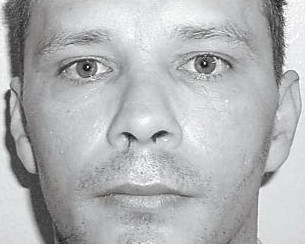 Dennis Mitchell Orbe
Murderer · USA · 1998
Dennis Mitchell Orbe was executed by lethal injection in Virginia on March 31,…
1 victim
Dennis Mitchell Orbe
Murderer · USA · 1998
Dennis Mitchell Orbe was executed by lethal injection in Virginia on March 31,…
1 victim
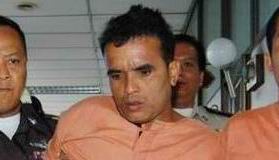 Somkhid Phumphuang
Serial killer · Th ailandia · 2005
Somkhid Phumphuang was sentenced to death on March 2, 2010. He was described as…
5 victims
Somkhid Phumphuang
Serial killer · Th ailandia · 2005
Somkhid Phumphuang was sentenced to death on March 2, 2010. He was described as…
5 victims
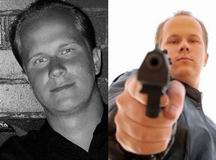 Matti Saari
Mass murderer · Finland · 2008
Matti Juhani Saari committed suicide by shooting himself in the head on 23 Sept…
10 victims
Matti Saari
Mass murderer · Finland · 2008
Matti Juhani Saari committed suicide by shooting himself in the head on 23 Sept…
10 victims
- Gender
- male
- Country
- USA
- Location
- Tucson, Arizona, USA
- Date of birth
- October 29, 1951
- Age at first offence
- 28
- Characteristics
- —
- Victim profile
- Barry Collins and Albert Hughes
- Method of murder
- Shooting
- Date(s) of murder
- August 10, 1979
- Years active
- 1979
- Date of arrest
- —
- Status
-
Sentenced to death on August 28, 1981; sentence vacated and conviction overturned in March 2003; guilty plea entered and new sentences imposed on June 30, 2009 (second-degree murder: 21 years; manslaughter: concurrent 10 years).
Defendant
Jasper Newton McMurtrey (also identified as Jasper McMurtrey).
Background
McMurtrey was a biker and Ranch House Bar was a biker hangout. McMurtrey claimed he did not want any trouble so he armed himself for self-defense after three men wanted a piece of McMurtrey and invited him outside.
McMurtrey had mental health issues and was found to have competency concerns related to his trial. In March 2003, a federal judge ordered a new trial, ruling that McMurtrey's legal representation had been inadequate. He spent 22 years on Arizona's death row. He was monitored by Pretrial Services and was living out of state; later accounts described him living in South Carolina and adjusting “really, really well” and living a productive, crime-free and substance abuse-free life, including going to school and getting a job.
The offence
On August 10, 1979, McMurtrey became involved in a fight at the Ranch House Bar in Tucson. Three men wanted a piece of McMurtrey and invited him outside. McMurtrey claimed one of the victims pointed a gun at him.
McMurtrey opened fire, killing Barry Collins and Albert Hughes, and wounding the third man. During the 1981 trial, McMurtrey’s lawyers argued self-defense and insanity.
In later proceedings described in the record, McMurtrey was sentenced to death in 1981 for the shooting deaths of Barry F. Collins of North Carolina and Albert Hughes Jr. of New Jersey at the now-defunct Ranch House bar, described as a topless-dancer club and biker hangout at 4950 N. Casa Grande Highway. He was also sentenced to 21 years for wounding another bar patron, Eugene Taylor.
Investigation
Presiding Judge: Jack Arnold.
Trial
Start of Trial: July 1, 1981. Start of Trial (trial timing): July 1, 1981. Verdict: July 13, 1981.
Prosecutors:
- James D. Himelic (Trial)
- Kenneth Peasley (resentencing)
Aggravating Circumstances: Grave risk of death to others. Mitigating Circumstances: None sufficient to call for leniency.
Sentencing
Sentencing: August 28, 1981. Resentencing: November 17, 1983 (first resentencing). Resentencing: April 30, 1985 (second resentencing).
McMurtrey was sentenced to death.
Appeals
Published opinions:
- State v. McMurtrey, 136 Ariz. 93, 664 P.2d 637 (1983).
- State v. McMurtrey, 143 Ariz. 71, 691 P.2d 1099 (1984).
- State v. McMurtrey, 151 Ariz. 105, 726 P.2d 202 (1986).
A 9th U.S. Circuit Court of Appeals ruling held that McMurtrey’s right to a fair trial was violated when he was convicted and sentenced to death for a 1979 Tucson-area double murder. The ruling was based on a reasonable doubt as to McMurtrey’s mental competence to stand trial, given “McMurtrey’s memory problems, his erratic behavior, and the variety and quantity of medications that he was prescribed, combined with the absence of an expert evaluation made at the time of trial.”
The record included the following verbatim quotation from Judge Harry Pregerson:
“We hold that McMurtrey's memory problems, his erratic behavior, and the variety and quantity of medications that he was prescribed, combined with the absence of an expert evaluation made at the time of trial, created a reasonable doubt as to McMurtrey's mental competence to stand trial,"
Defense attorney Gregory J. Kuykendall was quoted:
“What it means," said defense attorney Gregory J. Kuykendall, "is that Mr. McMurtrey did not ever receive a hearing at the time of his trial to determine whether he was competent to stand trial. And because of the failure to conduct a hearing at that time about his competence and because of a number of factors that seriously indicate that he was, in fact, incompetent, his right to a fair trial was violated."
Tucson attorney Natman Schaye was also described as representing McMurtrey in his appeal.
The record included a verbatim quotation from David Berkman:
“They are weighing their options regarding to the appeal. " and another verbatim quotation: “This is in the hands of the Attorney General's Office," said David Berkman, chief criminal Pima County Attorney.
The record described that the Arizona Attorney General's Office could decide to ask for a rehearing at the 9th Circuit or take an appeal to the U.S. Supreme Court, and that barring appeal, McMurtrey would return to Arizona to find out whether prosecutors would retry him, offer a plea deal or dismiss charges.
The record included a verbatim quotation from Rick Unklesbay:
“We will review the case and determine our options,” Berkman said.
Outcome
McMurtrey’s death sentence was vacated. The record described that after 20 years on death row, he was “free.”
In June 2009, McMurtrey entered a plea agreement and pleaded guilty to second-degree murder and manslaughter in the 1979 deaths of Albert Hughes and Barry Collins. In Pima County Superior Court, Judge John Leonardo sentenced him to 21 years on the murder charge and a concurrent 10-year sentence on the manslaughter charge and gave him credit for time served.
A record passage described the factual background for the plea: Hughes and Collins and McMurtrey were in a Tucson bar arguing about how tough they were; they arm-wrestled, bit and chewed glass, and showed off Harley-Davidson tattoos. McMurtrey left the bar, returned with a revolver, killed Hughes and Collins, and wounded a third man.
The record also stated that McMurtrey was released in December 2003 by U.S. District Judge William Fremming Nielsen; it described that Nielsen released McMurtrey saying he did not believe he intended to kill.
Aftermath
Following the conviction overturning and release, the record described that prosecutors could appeal and that the 9th Circuit ultimately upheld Nielsen’s ruling and granted McMurtrey a new trial.
The record stated that the deadline for the new trial had not been met within 180 days, and as a sanction McMurtrey was released from prison.
The record described reasons given for allowing McMurtrey to enter a plea agreement:
- The majority of the witnesses in the cases had died.
- Doctors would have had to try to determine McMurtrey’s mental status 30 years ago.
The record included verbatim quotations from Kuykendall:
“He's gone to school, gotten a job and he's just done extraordinarily well,” Kuykendall said. and: and: “He's adjusted really, really well and has been living a productive, crime-free and substance abuse-free life,” Kuykendall said. and: “It's a real tribute to the power of redemption.”
The record described that if doctors had ruled McMurtrey was incompetent at the time of the slayings, trial transcripts would be inadmissible because McMurtrey, if incompetent, would have been unable to assist in his defense at the time of the trial and incompetent to testify. It also stated that Leonardo could not have given McMurtrey more than 21 years on the murder charge because that was the maximum sentence at the time of the slayings, and that the manslaughter charge could have been run consecutively but the judge opted not to do so because McMurtrey had remained out of trouble since release from prison.
Victims
Barry Collins (Barry F. Collins), described as from North Carolina. Albert Hughes (Albert Hughes Jr.), described as from New Jersey. Eugene Taylor, described as a bar patron who was wounded.
Spotted an error, or have more information about this case?