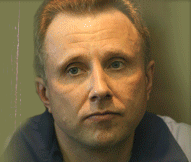
Alexey Pichugin
Murderer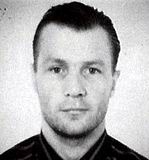 Alexander Solonik
Murderer · Russia · 1990
In February 1997, Greek newspapers published articles that claimed a Russian mo…
10 victims
Alexander Solonik
Murderer · Russia · 1990
In February 1997, Greek newspapers published articles that claimed a Russian mo…
10 victims
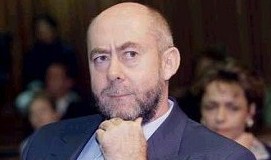 Dr. Wouter Basson
Murderer · 1992
Wouter Basson (born July 6, 1950) was a South African cardiologist and the form…
230 victims
Dr. Wouter Basson
Murderer · 1992
Wouter Basson (born July 6, 1950) was a South African cardiologist and the form…
230 victims
 Darya Saltykova
Murderer · Russia · 1757
Darya Saltykova (b. 1730, d. 1801) was a Russian noblewoman from Moscow, common…
139 victims
Darya Saltykova
Murderer · Russia · 1757
Darya Saltykova (b. 1730, d. 1801) was a Russian noblewoman from Moscow, common…
139 victims
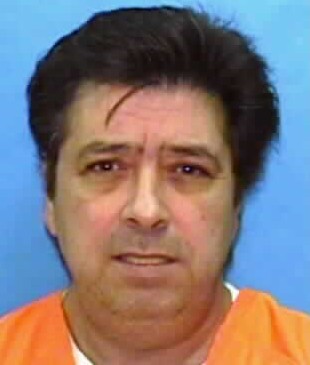 Dominick Occhicone
Murderer · USA · 1986
Dominick Occhicone (DOB: 08/29/45) was sentenced in the Sixth Judicial Circuit,…
2 victims
Dominick Occhicone
Murderer · USA · 1986
Dominick Occhicone (DOB: 08/29/45) was sentenced in the Sixth Judicial Circuit,…
2 victims
 Banita Jacks
Murderer · USA · 2007
Banita Jacks was a Washington, DC resident convicted of murdering her four daug…
4 victims
Banita Jacks
Murderer · USA · 2007
Banita Jacks was a Washington, DC resident convicted of murdering her four daug…
4 victims
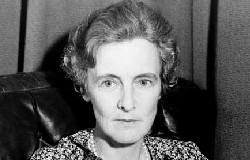 Grace Fortescue
Murderer · USA · 1932
Grace Hubbard Fortescue (née Grace Hubbard Bell; 1883–1979) was a New York soci…
1 victim
Grace Fortescue
Murderer · USA · 1932
Grace Hubbard Fortescue (née Grace Hubbard Bell; 1883–1979) was a New York soci…
1 victim
 Irina Gaidamachuk
Serial killer · Russia · 2002
Irina Viktorovna Gaidamachuk (Russian: Ирина Викторовна Гайдамачук) was born in…
17 victims
Irina Gaidamachuk
Serial killer · Russia · 2002
Irina Viktorovna Gaidamachuk (Russian: Ирина Викторовна Гайдамачук) was born in…
17 victims
- Gender
- male
- Country
- Russia
- Location
- Russia
- Date of birth
- J uly 25, 1962
- Age at first offence
- 36
- Characteristics
- murder for hire, torture, fugitive
- Victim profile
- 3 men and 2 women
- Method of murder
- Shooting
- Date(s) of murder
- 1998 - 2002
- Years active
- 1998–2002
- Date of arrest
- J uly 19, 2003
- Status
-
Life imprisonment
Sentenced to life in prison on August 6, 2007
Case record
Alexei Vladimirovich Pichugin (Aleksey Pichugin) was born in the town of Orekhovo-Zuevo, Moscow Region, in 1962. He had been a high ranking security official at the erstwhile Russian oil giant Yukos. His early years included an aspiration for a military career; after leaving school in 1979, he entered Interior Ministry’s Higher Command School in Novosibirsk. He graduated in 1983 and was sent to the Interior Ministry’s unit in the Tula region.
In 1986, Pichugin entered the KGB’s School in Novosibirsk. He graduated and began working for the Committee for State Security. From 1987 to 1994, he worked in the Administration of the KGB’s Military Secret Service. He gave 15 years of his life to the protection of Soviet and Russian state interests in the military and the secret services. In 1994, after restructuring exercises in state security, he left the FSB with the rank of Major. After leaving the FSB, he joined the security service of “Menatep Bank”. In 1998, “Menatep Bank” acquired YUKOS Oil Company, and Pichugin began working for YUKOS. He was appointed head of a section within the security department. As head of YUKOS’s Internal Economic Security Department, his responsibilities included safeguarding the company’s properties and prevention of theft and plunder in its enterprises. Former colleagues described him as “a true professional and a stern but just superior”. He had been more than once rewarded for irreproachable service in Interior Ministry and FSB units of Russia.
Timeline
- 1979 — After leaving school, he entered Interior Ministry’s Higher Command School in Novosibirsk.
- 1983 — He graduated and was sent to the Interior Ministry’s unit in the Tula region.
- 1986 — He entered the KGB’s School in Novosibirsk.
- 1987 — He began working in the Administration of the KGB’s Military Secret Service.
- 1994 — After restructuring exercises in state security, he left the FSB with the rank of Major.
- 1998 — “Menatep Bank” acquired YUKOS Oil Company and he began working for YUKOS.
- April 2003 — He was arrested.
- 2002 — He was allegedly responsible for the murder of Sergei and Olga Gorin.
- March 30, 2005 — After a closed-door trial, he was found guilty of the murder the Gorins and the attempted murder of Olga Kostina.
- August 2006 — The Moscow City Court sentencing described for him resulted in a total of 24 years behind bars.
- September 2007 — His lawyers placed questions by the European Court for Human Rights to the government of the Russian Federation at the disposal of journalists.
- August 6, 2007 — He was sentenced to life in prison.
Arrest, interrogation, and alleged torture
Pichugin was arrested in April 2003, allegedly for the murder of his good friends Sergei and Olga Gorin in 2002. During interrogation at the FSB’s Lefortovo prison, he was given drugged coffee and subsequently injected with an unknown substance. After that he could not remember anything. In the following weeks, he began to lose weight precipitously. His lawyers later raised issues of torture in connection with proceedings at the European Court for Human Rights.
Trial (first conviction) and sentence
On March 30, 2005, following a closed-door trial in which the original jury had been replaced by the state and the star witness against him was a multiple-murderer serving a life sentence—a fact the jury was not allowed to know—Pichugin was found guilty of the murder the Gorins and the attempted murder of Olga Kostina. He received a sentence of 20 years in prison.
In the BBC account, it was stated that prosecutors originally asked for a life sentence, but reduced this to 20 years after he cooperated with them. The BBC account also said he denied all charges and that his lawyers were appealing against the conviction.
Additional conviction in Moscow City Court
In August 2007, Pichugin was additionally found guilty by the Moscow City Court of murder of three people and assaults on four. The convictions included organising the murders of Moscow businessman Valentina Korneyeva, Nefteyugansk mayor Vladimir Petukhov, and a person by the last name of Fedotov. He received a life sentence for organising the murders.
A separate description of the sentencing indicated that the Moscow City Court sentenced him to 24 years in prison for organising a series of murders and two attempted murders, and that the court applied “by means of partial addition” such that the new verdict carried only 4 years in addition to an earlier term, resulting in a total of 24 years behind bars. That description also stated that the state prosecutor had asked for a life sentence for the key accused and that the judge sentenced the former KGB major to 21 years, then applied partial addition.
Prosecutors’ theory of responsibility and described events
The sentencing description stated that Pichugin carried out orders of YUKOS’s major shareholder Leonid Nevzlin, who oversaw the security department where Pichugin worked. It described a series of murders and attempted murders attributed to orders allegedly carried out by Pichugin, including the following episodes:
- The first murder was described as committed on January 21, 1998. Shortly before it, Nevzlin requested Pichugin to settle a dispute with Valentina Korneeva, owner of the Tea shop, who declined to sell the office that YUKOS wanted to occupy.
- Pichugin was said to go to his friend Sergey Gorin. The man received “$5,000 and a Huydai Galloper jeep to find killers-for-hire, unemployed Mikhail Ovsyannikov and former police officer Vladimir Shapiro.”
- Shapiro and Gorin were said to have drunk a bottle of vodka and shot the shop owner.
- In summer 1998, he was said to have carried out Leonid Nevzlin’s order and to have found men through Gorin, Shapiro and Volgograd’s gangster Arkady Goritovsky (described as killed in 2002) to murder Nefteyugansk Mayor Vladimir Petukhov. The mayor demanded that YUKOS pay taxes to the local budget in full.
- Former paratrooper Evgeny Reshetnikov and convicted criminal Gennady Tsigelnik were said to have agreed to execute the order for $10,000. On June 26, 1998, Reshetnikov shot the mayor dead with a machine gun, wounding his security man.
- Some time later, Tsigelnik and Reshetnikov were said to have been hired to assault Vladimir Kolesov, a business manager of Rosprom, and the manager was described as being severely beaten up as “his career achievements ran against Nevzlin’s interests”.
- In fall 1998 and spring 1999, Reshetnikov and Tsigelnik were described as making two murder attempts on Evgeny Rybin, executive at East petroleum handelgas GmbH. Rybin wanted YUKOS to return $100 million his company had invested in development of the Zapodno-Poludennoye and Krapivinskoye oil fields.
- In the first attempt, the killer missed. Later, the killers were described as throwing a bomb and firing on the car where only Rybin’s bodyguards were riding in; the driver died and two security men were injured.
Verdict details and sentencing in 2005 (and related sentencing description)
A description of the court’s verdict stated that the accused were ruled guilty and sentenced to terms in prison camps. The same description reported the following individual sentences:
- Vladimir Shapiro got 19 years.
- Tsegelnik and Reshetnikov were said to have to serve 18 and 17 years, respectively.
- Mikhail Ovsyannikov was sentenced to 10 years.
- Vladislav Levin was described as taking no part in YUKOS’s business but committing a robbery with Tsigelnik; he was to spend 7 years and a half behind bars. It also said that Pichugin received the most unexpected conviction because the state prosecutor had asked for a life sentence for the key accused. It then stated the judge sentenced him to 21 years, but applied “by means of partial addition” so he had to spend the total of 24 years behind bars, and that the new verdict carried only 4 years because of the addition.
In the BBC account of March 2005, Pichugin was sentenced to 20 years in jail for murder and attempted murder, after being convicted of carrying out two murders in 2002 and an attack on the head of the Moscow mayor’s communication service, specifically:
- organising the murder of Sergei and Olga Gorin in 2002; and
- organising the attempted murder of Olga Kostina.
Appeals and European Court for Human Rights questions
Pichugin’s lawyers appealed against his conviction. His lawyers also planned, if that failed, to consider taking the case to the European Court of Human Rights. In September 2007, his lawyers placed questions by the European Court for Human Rights to the government of the Russian Federation at the disposal of journalists. These questions dealt with his first criminal case concerning the disappearance of Tambov businesspersons, Sergey and Olga Gorina. The questions were drafted on June 5, 2007, based on complaints from Pichugin and his lawyers filed in Strasbourg.
The defence had called to the attention of the Strasbourg court the violations of:
- Articles 3 (Prohibition of torture),
- 5 (Right to life, liberty and security of person), and
- 6 (Right to fair trial), of the European Convention on Human Rights.
The BBC account stated that his lawyers said there was no proof of the murders because the bodies of the married couple had never been found and described the claimed presence of criminal procedural violations.
Quotations from named individuals
Pichugin’s lawyer, Georgy Kaganer, told Kommersant:
“Investigators did not mention a single solid argument that could prove that Alexey Pichugin has any connection to the crimes,”
“The whole prosecution was based on testimonies of murderers and rapists from gangs of Korovnikov, Reshetnikov and Tsigenlnik, who had been sentenced to long prison terms,”
“All of them allegedly learnt the names of the people who allegedly contracted them for murders not directly, but from Gorin who went missing and Goritvosky who was killed.”
“It is already impossible to understand what they told was truth.”
“The only ‘guilt’ of Pichugin is that he worked for YUKOS.”
Mikhail Zhidkov, a member of his defence team, said:
“Since there were criminal procedural violations in the trial we consider that it was impossible to make such a verdict on Pichugin’s guilt,”
The victim Rybin was quoted:
“I anticipated a bigger term for Pichugin,”
“But it is not the last trial. He will get his life sentence after all.”
Dmitry Kharitonov, lawyer of Leonid Nevzlin, told Kommersant:
“Pichugin has become a victim again,”
“It is clear that his case is just an effort to have Nevzlin [who lives in Israel] extradited. But it’s not the kind of methods of making business that people abroad would be sympathetic with. This verdict will have no effect on the life of my client.”
Other details: private life and related persons
Pichugin was married at the time of his arrest in 2003 and had three sons, the youngest of whom, Sergey, was only 5 at the time. After several years of defending his husband’s honor in public, his wife left him.
The described sentencing and accusations involved a major shareholder of Yukos, Leonid Nevzlin, described as denying any wrongdoing and being wanted by Russian authorities, with exile in Israel. The sentencing description also referenced a person Evgeny Rybin, business manager Vladimir Kolesov of Rosprom, and East petroleum handelgas GmbH associated with Rybin. It also referenced Mikhail Khodorkovsky and Platon Lebedev in the BBC account, noting the ongoing trials relating to fraud and tax evasion, and that a verdict in their case was expected in May.
Outcome
Pichugin was sentenced to life in prison on August 6, 2007.

Spotted an error, or have more information about this case?