Carl Menarik
Serial killer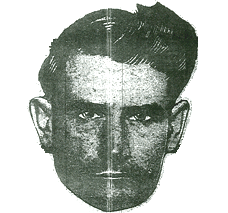 Henry Lee Moore
Serial killer · USA · 1911
Henry Lee Moore was sentenced to life in prison in Missouri in 1913. He was rel…
26 victims
Henry Lee Moore
Serial killer · USA · 1911
Henry Lee Moore was sentenced to life in prison in Missouri in 1913. He was rel…
26 victims
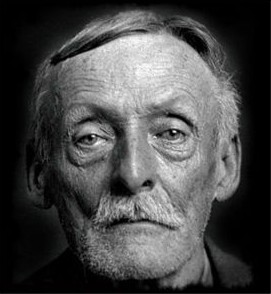 Albert Fish
Serial killer · USA · 1924
Albert Hamilton Fish (May 19, 1870 – January 16, 1936) was an American sado-mas…
10 victims
Albert Fish
Serial killer · USA · 1924
Albert Hamilton Fish (May 19, 1870 – January 16, 1936) was an American sado-mas…
10 victims
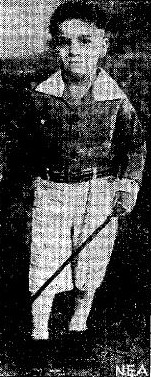 Peter Kudzinowski
Serial killer · USA · 1924
Peter Kudzinowski (1903 – December 21, 1929) was a serial killer who committed…
3 victims
Peter Kudzinowski
Serial killer · USA · 1924
Peter Kudzinowski (1903 – December 21, 1929) was a serial killer who committed…
3 victims
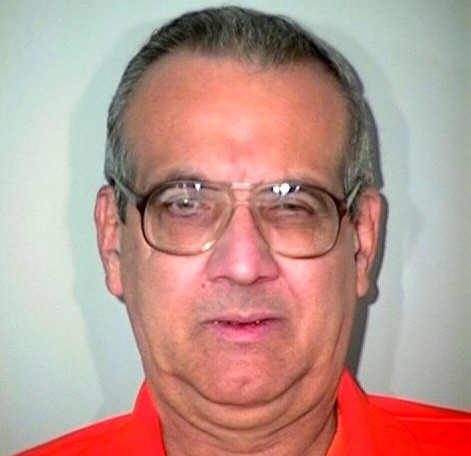 Edward Schad
Murderer · USA · 1978
Edward Schad was tried for the killing of Lorimer “Leroy” Graves, a 74-year-old…
1 victim
Edward Schad
Murderer · USA · 1978
Edward Schad was tried for the killing of Lorimer “Leroy” Graves, a 74-year-old…
1 victim
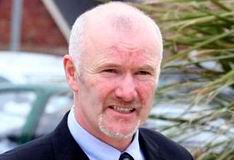 Colin Howell
Murderer · United Kingdom · 1991
Colin Howell (born 14 March 1959) was a Northern Irish convicted double murdere…
2 victims
Colin Howell
Murderer · United Kingdom · 1991
Colin Howell (born 14 March 1959) was a Northern Irish convicted double murdere…
2 victims
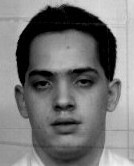 Steven Brian Alvarado
Homicide · 1991
Steven Brian Alvarado was a juvenile aged 17 at the time of the crimes. Alvarad…
2 victims
Steven Brian Alvarado
Homicide · 1991
Steven Brian Alvarado was a juvenile aged 17 at the time of the crimes. Alvarad…
2 victims
 Bruce Rich
Murderer · USA · 1995
Name: Bruce Rich Bruce Rich was accused of killing his parents so that he could…
2 victims
Bruce Rich
Murderer · USA · 1995
Name: Bruce Rich Bruce Rich was accused of killing his parents so that he could…
2 victims
 Kayla Henriques
Murderer · USA · 2011
Kayla Henriques was convicted after pleading guilty to manslaughter in connecti…
1 victim
Kayla Henriques
Murderer · USA · 2011
Kayla Henriques was convicted after pleading guilty to manslaughter in connecti…
1 victim
- Gender
- male
- Country
- USA
- Location
- New York City, New York, USA
- Date of birth
- October 2, 1889
- Age at first offence
- 25
- Characteristics
- poisoner
- Victim profile
- Elderly patients at rest home
- Method of murder
- Poisoning (arsenic and chloroform)
- Date(s) of murder
- 1914 - 1915
- Years active
- 1914–1915
- Date of arrest
- February 2, 1915 (surrenders)
- Status
-
Imprisoned
Confined to asylum in 1915; escaped in 1916 and was never recaptured
Case record: Carl Menarik
Background
Carl Menarik was born on October 2, 1889, in Vienna. He immigrated to New York in 1914. During July 1914, he obtained a job at the German Odd Fellows Home in Yonkers. He worked there for six months using the name "Frederick Mors" and aroused no suspicions as he performed his duties. Patients came and went throughout his tenure, several leaving in a hearse, and no second thought was given to their demise before the early days of February 1915.
The offence
Carl Menarik confessed to the murders of eight “superannuated octogenarians,” which he said were killed in order to “make room for more inmates” at the home.
Police questioning and subsequent discussion of the deaths also involved the deaths of elderly patients while he worked at the home. The material described a four month period from September 1914 to January of the following year in which an unusually high number of patients died at the home, with the total described as seventeen. It stated that he had been purchasing pharmacy items from a local druggist, including arsenic and chloroform, and that he used those substances to murder at least eight of the elderly residents. It also stated that he later claimed he was “putting them out of their misery”.
One variant of the material stated that he commissioned his first murder using arsenic and later switched to chloroform after encountering difficulties with arsenic.
Investigation
On the afternoon of February 2, “Mors” presented himself at the district attorney’s office. He was dressed in a corduroy hunting outfit, complete with knee-pants and a feathered alpine cap. He approached the desk sergeant and confessed to the murders of eight “superannuated octogenarians,” killed in order to “make room for more inmates” at the home. A phone call confirmed the eight deaths, which were all listed as natural. He was taken into custody.
After his initial confession, his story changed. In jail, he claimed that the homicides had not been his idea and that they had been ordered by officials at the home. He described the elderly victims as “a lot of trouble and no good anyhow.”
Although the material stated that authorities refused to order exhumation of remains, investigation seemed to bear out his account of inmates killed with chloroform and arsenic. He had warned patient Elizabeth Houser of her impending death a day in advance. A mortician recalled red markings that were described as similar to chloroform burns on the face of alleged victim Henry Horn.
A teenage inmate informed police about an errand she had run on January 4. The errand involved delivering a bottle of chloroform from employee Max Ring—jailed as a material witness—to “Mors,” in the room occupied by patient Ferdinand Scholz. Scholz had died the same day. The material further stated that other inmates suspected “Mors” of sabotaging the painter’s scaffold that dropped Jacob Groh to his death on December 14.
It also described the administration calling the police in early in the investigation due to fear among elderly patients that “Mors” had become the primary suspect. When questioned, “Mors” was described as readily and calmly admitting to killing eight of the seventeen patients that had recently died. The material stated that he claimed they were mercy killings and that they had been nuisances. It also included a description of his method in his own words:
"First I would pour a drop or two of chloroform on a piece of absorbent cotton and hold it to the nostrils of the old person. Soon my man would swoon. Then I would close the orifices of the body with cotton, stuffing it in the ears, nostrils and so on. Next I would pour a little chloroform down the throat and prevent the fumes escaping the same way."
Arrest and custody
After his February 2 confession, he was taken into custody. On February 5, the home’s superintendent and three more employees were jailed as material witnesses, and the Odd Fellows lodge refused to muster their bail. The material also stated that Max Ring was jailed as a material witness.
Trial and psychiatric assessment
The material stated that prosecution was deferred in favor of a psychiatric test. It described him as “not well mentally” and stated that he was committed to Poughkeepsie’s Hudson River State Hospital for the Insane. Another variant stated that he was found criminally insane and committed to a mental hospital, naming the Matteawan Institution for the Insane.
The material stated that his employer and co-workers were released and that the case was dismissed, with questions still unanswered. Another variant stated that his employer and co-workers were released after he was committed and that the case was dismissed.
Sentencing
No sentencing details were included beyond commitment to an insane asylum.
Appeals
No appeals were included.
Outcome
Carl Menarik was confined to an asylum in 1915. He escaped from the hospital in Poughkeepsie on May 10, 1916, a week before his scheduled deportation to Austria. He disappeared and was never recaptured. Authorities took the loss in stride, announcing that the fugitive was “not considered dangerous.”
The material also stated that he was never found and never heard from again.
Timeline
- July 1914 — Carl Menarik obtained a job at the German Odd Fellows Home in Yonkers using the name "Frederick Mors".
- September 1914 — The material placed a period of increased deaths at the home starting from September 1914.
- December 14 — Jacob Groh died after a painter’s scaffold was suspected to have been sabotaged.
- January 4 — A teenage inmate delivered a bottle of chloroform from employee Max Ring to “Mors,” in the room occupied by patient Ferdinand Scholz.
- February 2 — “Mors” confessed at the district attorney’s office to the murders of eight “superannuated octogenarians”; a phone call confirmed the eight deaths as natural.
- February 5 — The home’s superintendent and three more employees were jailed as material witnesses; the Odd Fellows lodge refused to muster bail.
- May 10, 1916 — Carl Menarik escaped from the hospital in Poughkeepsie.
- 1915 — He was committed to an asylum and confined there.
- 1916 — He escaped and was never recaptured.
Other details
The material described Carl Menarik and “Frederick Mors” as having megalomaniac or delusional tendencies, including ruling the home with a heavy hand and forcing patients to address him as “Herr Doktor” or “doctor,” though he was not and was not an important man there in at least one variant. One variant described him as dressing in a white lab coat with a stethoscope around his neck and behaving arrogantly.
The material also identified victims mentioned by name: Elizabeth Houser, Henry Horn, Ferdinand Scholz, and Jacob Groh. It also described Max Ring as an employee who was jailed as a material witness. It mentioned Jacob Groh’s death at the home and linked it to suspected sabotage.
It also mentioned that he was scheduled for deportation to Austria but escaped before deportation. It stated that authorities announced the fugitive was “not considered dangerous.”
Other fragments named “Michael Newton - An Encyclopedia of Modern Serial Killers - Hunting Humans” and “Wikipedia.org Carl Menarik,” but no additional case-specific legal facts were provided in those fragments beyond those already stated.
Spotted an error, or have more information about this case?