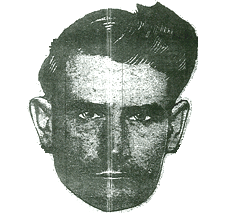
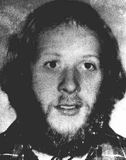
Henry Lee Moore
Serial killer Billy Gohl
Serial killer · USA · 1903
Billy Gohl (? - 1928) was an American serial killer who, while working as a uni…
40 victims
Billy Gohl
Serial killer · USA · 1903
Billy Gohl (? - 1928) was an American serial killer who, while working as a uni…
40 victims
 Donald Henry Gaskins
Serial killer · USA · 1969
Donald Henry Gaskins, also known as Donald “Pee Wee” Gaskins, was a serial kill…
200 victims
Donald Henry Gaskins
Serial killer · USA · 1969
Donald Henry Gaskins, also known as Donald “Pee Wee” Gaskins, was a serial kill…
200 victims
 Carl Eugene Watts
Serial killer · USA · 1974
Carl Eugene Watts (born November 7, 1953; died September 21, 2007), also known…
100 victims
Carl Eugene Watts
Serial killer · USA · 1974
Carl Eugene Watts (born November 7, 1953; died September 21, 2007), also known…
100 victims
 James Crittenton Lucas
Murderer · USA · 1938
James Crittenton Lucas was an American criminal known as James “Texas Bank Robb…
1 victim
James Crittenton Lucas
Murderer · USA · 1938
James Crittenton Lucas was an American criminal known as James “Texas Bank Robb…
1 victim
 Tian Mingjian
Mass murderer · China · 1994
Tian Mingjian (Chinese: 田明建) was an Army officer with the rank of First Lieuten…
23 victims
Tian Mingjian
Mass murderer · China · 1994
Tian Mingjian (Chinese: 田明建) was an Army officer with the rank of First Lieuten…
23 victims
 Diego Santoy
Murderer · Mexico · 2006
Diego Santoy Riveroll was a Mexican university student who was accused of stabb…
2 victims
Diego Santoy
Murderer · Mexico · 2006
Diego Santoy Riveroll was a Mexican university student who was accused of stabb…
2 victims
 Kevin Underwood
Murderer · USA · 2006
Kevin Ray Underwood (born December 19, 1979) was a convicted murderer from Purc…
1 victim
Kevin Underwood
Murderer · USA · 2006
Kevin Ray Underwood (born December 19, 1979) was a convicted murderer from Purc…
1 victim
- Gender
- male
- Country
- USA
- Location
- Kansas/Illinois/Iowa/Colorado/Missouri, USA
- Date of birth
- November 1, 1874
- Age at first offence
- 37
- Characteristics
- parricide, domestic violence
- Victim profile
- Men, women (including his mother and grandmother) and children
- Method of murder
- Beating with an ax and a pick
- Date(s) of murder
- 1911 - 1912
- Years active
- 1911–1912
- Date of arrest
- —
- Status
-
Released
Sentenced to life in prison in Missouri in 1913; released in 1949; sentence commuted on 30 July 1956
Case record: Henry Lee Moore
Status
Henry Lee Moore was sentenced to life in prison in Missouri in 1913. He was released in 1949, and the governor commuted his sentence on 30 July 1956.
Background
Henry Lee Moore was born November 1, 1874, in Boone County, Missouri. He was the eldest son of Enoch and Georgia Ann Wilson Moore. There were three other sons born of the couple. Henry’s father was a famer and served in the Civil War. Henry’s mother was a nurse. Two of Henry’s brothers, Tilden and Turner Moore, as well as his father, passed away before 1910. Henry’s remaining brother, Charles, died in 1960 in Stockton, California. Charles left the area prior to the deaths of his mother and grandmother and did not return for the trial. It was unknown whether or not he was aware of the situation.
In 1900, Henry was living with a family in Franklin County, Iowa, and working as a farmhand. It was suspected that Henry may have fathered a child with the young daughter of the farmer.
Moore was sentenced to the Kansas State Reformatory in Hutchinson, Kansas, on a forgery charge and was released on April 11, 1911. During the period leading up to the murders, testimony indicated that Moore had lived with his mother and grandmother during the winter of 1911 and the summer of 1912. He left to take a job on the railroad.
Henry Lee Moore served 36 years of a life sentence before being paroled by the governor of Missouri on December 2, 1949. Henry Moore was 82 years old and had been living at the Salvation Army Center in St. Louis. It was unknown when he died or where he was living at the time.
The offence
Murder of Moore’s mother and grandmother in Columbia, Missouri
Moore was prosecuted for murdering his mother and maternal grandmother in Columbia, Missouri. His mother and maternal grandmother were slaughtered with an ax.
Investigation
Lawmen in Villisca, Iowa, requested federal assistance in the solution of a local massacre in June 1912. A case involving an ax massacre at Villisca involved an unidentified assailant who slaughtered J.B. Moore, four children, and a pair of female visitors, the Stillinger sisters. A federal officer, M.W. McClaughry, was assigned to the case.
McClaughry’s investigation indicated that the crime in Iowa was not unique. Nine months earlier, in September 1911, six victims had been slain in Colorado Springs. The victims there included H.C. Wayne, his wife and child, along with Mrs. A.J. Burnham and her children. October 1911 included triple murder wiping out the Dewson family in Monmouth, Illinois, rebounding into Ellsworth, Kansas, where the Showman family—five in all—were slaughtered in their home. On June 5, 1912, Rollin Hudson and his wife were murdered in Paola, Kansas. Axes had been used in every case. In no case had a suspect been identified, and rumors of “a romance angle” in the Hudson crime produced no leads.
Despite McClaughry’s confidence in Henry Moore’s participation, the Villisca case, officially, remained unsolved.
Other murders linked by similarities
During the Villisca investigation, other axe murders also came to light.
- Nine months before the Villisca crime, H.C. Wayne, his wife and child, and Mrs. A.J. Burnham and her two children were bludgeoned with an axe in Colorado Springs, Colorado.
- In October 1911, a family was killed in Monmouth, Illinois (Dewson family), and a month later five members of a family in Ellsworth, Kansas, were murdered as they slept (Showman family).
- Just a week before the killing of the Moore’s and Stillinger’s in Villisca, a man and his wife were killed in Paola, Kansas (Rollin Hudson and his wife).
McClaughry received information about Moore’s conviction from his father, the warden of the Leavenworth, Kansas federal penitentiary. McClaughry’s belief was that Henry Moore had committed all of the murders. For whatever reason, McClaughry’s announcement largely went ignored, and Henry Moore was not convicted of any of the other crimes.
Arrest and custody
Moore was bound over by Justice Stockton to await action of the circuit court at a preliminary hearing. The preliminary hearing occurred on Saturday.
At the preliminary hearing, Moore was charged with the murder of his mother, Mrs. Georgia Moore, with an ax on December 17. The hearing in the other case against the prisoner, the murder of his grandmother, Mrs. Mary Wilson, was waived. Moore was bound over to await action of the circuit court.
Moore was held without bond at the preliminary hearing.
Moore was taken to Jefferson City Saturday morning and incarcerated in the penitentiary.
Trial
Trial court and start of trial
Judge David H. Harris opened circuit court at Columbia for the trial of Henry Lee Moore on the charge of murdering his own mother at her home in the north part of Columbia a few days before Christmas. The crime involved two defenseless, unprotected women: one aged and the other asleep in her bed, and they were hacked to death with an old axe in the hands of some fiend in human form.
Prosecution and defence
The state was represented by Prosecuting Attorney Anderson, his assistant George S. Starrett, and James C. Gilaspy. The attorneys for the defense were Ralph T. Finley and William H. Sapp.
Evidence and witness testimony
Prosecuting Attorney Anderson made an opening statement outlining his theory as to the motive for the crime and then circumstances surrounding its commission. He said Moore had lived with his mother in her humble home for some time prior to last September; that about the middle of that month he went to Moberly and took a job in the Wabash shops; and that a few weeks before the murder Moore formed the acquaintance of Mary Turnbaugh in Moberly. Anderson’s theory stated that Moore gave Mary Turnbaugh money, bought her an expensive hat, and bargained for the purchase of the furniture of a Moberly rooming house for her to run. Anderson said Moore applied to his foreman for a pass to Columbia, obtained by giving as a reason the sickness of his mother.
Anderson described the movements: on the afternoon before the murder Moore left Moberly at 1 o’clock; Mary Turnbaugh was at the depot when he left. He reached Columbia about 4 o’clock and went to the Central Hotel and secured a room. The next morning he went to his mother’s home, stopping at the residence of Mrs. A.J. Coates, a neighbor, to inquire after the health of his mother and grandmother. He then went to the home of Mrs. Cornelison, next door to his mother’s, told her that no one seemed to be home, and asked if she knew anything about them. Anderson’s theory said he then went to the back door and shortly afterwards came back and asked her to come to his mother’s to see what had happened.
Mrs. Cornelison went, saw the bodies, and called other neighbors. Anderson told of the arrest of the accused, his conflicting stories, and his subsequent admission that he had not told the truth as to when he came to Columbia. Anderson also described the discovery of blood on the clothing of Moore and explanations accounting for it.
J. L. Whiteside, chief of police, testified for the state about the house and finding the bodies after being summoned to the place. Anderson’s trial summary described that the front doors were locked and the back door was open with the lock not broken. The defendant told Whiteside he had come to Columbia that morning at 8 o’clock. After his arrest, Moore was searched in the sheriff’s office, and blood was found on his wrist, underclothes, and clothing. Moore denied that it was blood and claimed that it was paint gotten on his clothing while at work.
There were blood spots on a handkerchief taken from Moore’s coat pocket; Moore claimed those were from his nose bleeding. Drs. W. R. Blankenship and C. O. Davidson testified as to the wounds and conditions of the bodies. Undertaker Ben Baker also testified along the same line.
Mrs. Cornelison testified that she saw Moore go to the home of his mother the morning the murder was discovered. He later came to her house and asked where his folks were. She told him she supposed they were home. He then went to the back door of his mother’s home and returned to ask her to come and see what had happened. She went, saw the body of Mrs. Moore, and called some neighbors. At Moore’s request she called the Tandy Undertaking Company. She testified that Mrs. Wilson usually retired earlier than Mrs. Moore, and that Moore did not seem to be agitated when he came the first time. When he came the second time, he had his handkerchief to his face, but she could not tell whether or not he was crying; he was not crying aloud.
Mrs. Eliza Coats testified that Moore passed by her home the same morning and stopped to inquire about his family, then went on toward his mother’s home. Shortly thereafter she was called to the Moore home and saw the bodies. Moore had his handkerchief over his face, but she did not know whether he was crying. Moore told her he had come home to fix for his mother and grandmother for Christmas, as he had to work that week.
Fred Whiteside, constable, testified to being present in the sheriff’s office when Moore was questioned. He testified that blood stains were found on Moore’s arm and clothing when he was examined.
Dr. Jordan testified about attending Moore’s mother professionally. He testified that Moore had told him it was hard to meet his bills sometimes because he had his mother to support. Dr. Jordan also testified Moore talked about the property his mother had and said she would leave it to him when she died.
A.J. Coats testified that he came down town from the scene of the murder on the morning it was discovered in company with Moore. They met others and in conversation about the mutilated bodies Moore said he had seen worse looking cases. A.J. Coats testified that he went with Moore to the telegraph office, where Moore sent some telegrams in reference to the tragedy.
Chas. M. Roberts, proprietor of the Central Hotel, testified Moore came about 4 o’clock the afternoon before the murder and registered as “L. Smith.” Roberts testified that Moore was shown to a room, afterward ate supper, and returned to his room, and that the witness did not see him again until the next morning around 7 o’clock. Roberts also testified that there was a back stairway in the hotel which Moore could have left the hotel and returned without passing through the hotel office. Roberts testified on cross-examination that Moore’s going out the back stairway might have been more noticeable than if he had gone out the usual way.
Dr. W. J. Calvert testified he analyzed the spots found on Moore’s clothing and that they were undoubtedly blood spots.
Witnesses from the Moberly shops testified about Moore’s wages running from $65 to $70 a month and that he rarely lost time from his work.
I. H. Clark, of Moberly, testified Moore bargained with him for the purchase, at $275, of the furniture in a rooming house and that Moore paid him $4 on the trade the day he left Moberly and had agreed to pay the balance in three days.
Mrs. Pagett, with whom Moore boarded in Moberly, testified that Moore left the day before the murder saying his mother was very sick and that he was going to Columbia to see her, but that he would be back by the next night.
In rebuttal of Moore’s statements about his mother being ill, the state introduced neighbors who testified she was in her usual health the day before her death and had done her week’s washing two days before she was murdered.
Moore testified in his own behalf. He told his story as to coming to Columbia the day before the murder, going to the hotel very tired and remaining there over night. He testified he ate supper at the usual time and went to bed, then after getting up and eating breakfast he went to his mother’s home and discovered the dead bodies. He denied knowledge of the crime but said he thought he knew who committed it; when questioned as to that he admitted he did not know any motive that man could have whom he accused. Moore said the blood on his clothing was caused by his nose bleeding, to which he was frequently subject.
Moore was described as standing the fire of cross-examination without becoming confused. He admitted he never offered to give the prosecuting attorney any suggestion about his own suspicions concerning the person guilty of the murder. He admitted his only ground for suspicion was due to having been told the man in question would be a witness against him and would testify he had seen Moore near his mother’s house at 2 o’clock the morning of the murder, which Moore said “was a lie.”
Inmates of the jail testified they had seen Moore’s nose bleeding since he had been confined in jail.
Jury and verdict
Twelve jurors were called: Joseph Graves, A. W. Brundige, Roy Davis, M. R. McCaslin, V. P. Toalson, George Tribble, F. D. Davis, L. F. Jones, D. L. Mayes, J. I. Garrett, E. C. Tucker, and Henry Fountain.
The jury returned a verdict of guilty last Friday about 10 o’clock and gave him a life sentence in the state penitentiary. It was stated that the jury was unanimous on the first ballot as to guilt. It was also said that four favored hanging on the second ballot as to punishment. After deliberations, the jury retired and resumed consideration Friday morning; it was a few minutes before 10 o’clock when the last man who favored hanging agreed to consent to vote for a life sentence, which was the result of the tenth ballot.
Moore’s attorneys presented a motion asking for a new trial. Judge Harris promptly overruled the motion. Moore was called before the bar at noon and Judge Harris asked, “Is there any reasons why I should not now pronounce this sentence upon you?” Moore replied, “There is not.” Judge Harris pronounced the sentence. Moore was returned to jail and taken to Jefferson City Saturday morning and incarcerated in the penitentiary.
Sentencing
Moore was sentenced to life in the state penitentiary.
Appeals
The account stated that in due time Moore’s attorneys would perfect an appeal to the State Supreme Court.
Outcome and aftermath
Moore’s sentence was later handled as follows: he served 36 years of a life sentence before being paroled by the governor of Missouri on December 2, 1949. The governor commuted his sentence on July 30, 1956.
During the Villisca investigation, another person was arrested. In September 1917, Reverend Lynn George Kelly was arrested for murders at Villisca. Kelly signed confessions indicating the massacre was perpetrated in response to God’s direction. Kelly said booming astral voices had directed him to a rubbish heap, where he retrieved a cast-off ax, and that he then went on until he reached the home of J.B. Moore, obeying instructions to “slay utterly,” and killing eight persons as he wandered through the house. On the same day the confessions were publicized, George Kelly told his wife the documents contained “pure fabrications.” Approaching trial, he publicly recanted, and his ramblings seemed to bolster pleas of mental illness. That November, members of a jury deliberated four and a half hours before acquitting Rev. Kelly on all counts.
“pure fabrications.”
“slay utterly,”
“Is there any reasons why I should not now pronounce this sentence upon you?”
“There is not.”
Other details
Victims and ages in the Columbia, Missouri case narrative
Mrs. Mary Wilson and Mrs. Georgia Moore were slain in their home in Columbia, Missouri. Mrs. Wilson was described as about 82 years old. Her daughter, Mrs. Georgia Moore, was described as aged 61. Moore was described as the son of Mrs. Georgia Moore and grandson of Mrs. Wilson, and he was described as about 35 years old.
Events mentioned in the preliminary hearing narrative
At the preliminary hearing, the ax was identified and blood-stained clothing found upon Moore was described.
Conductor L.E. Hill described Moore’s trip to Columbia from Moberly on the afternoon before the murder. W.J. Calvert testified as to stains on the clothing worn by Moore and pronounced them blood spots. Chas. Roberts testified Moore registered as L. Smith on December 17 and described Moore’s conduct while there.
Mrs. Sam Cornelison testified she lived next door to the murdered women, saw Moore visit the home on the morning of December 18, and described his manner when he came to ask about them.
Dr. J. E. Jordan testified he had treated the defendant and had known him for about 20 years, and that Moore mentioned that at his mother’s death the property would come to him.
C. A. Raum, of the Western Union Telegraph Company, produced originals of telegrams sent by Moore, including one introduced in evidence.
A letter Moore wrote to Queenie Nichols was introduced and described. The letter contained statements including: “if he knew that he love was true he would dress her in silk; he promised to send her money next payday”; he stated he had to send money to his mother who was sick and he had received his last pay; and he asked her if she would come to Moberly if he would send the money, promising that if she did so he would secure a position for her at the shoe factory and promised “a good time every night where there would be no one to interfere or bother.” The letter was signed, “Your dear husband.”
Mrs. Turnbough testified Moore gave her a $20 hat and spoke of buying a rooming house and asking her if she would conduct it. She testified she had two children dependent on her and that it would afford her a means of supporting them. She testified she received a telegram from Moore after he arrived in Columbia and on December 18, which read: “Arrived O. K. Found mother and grandmother dead. Come if you can.”
Dr. T. S. Riggs testified he officiated at the birth of Lee Moore about thirty-five years ago and purchased the eighty acre farm owned by Moore’s grandmother formerly, in which she had a lifetime interest. Dr. Riggs testified he contracted with Mrs. Wilson to pay her $100 per year during the remainder of her life, paid quarterly. He testified he had intended to pay Mrs. Wilson $25 the day she was murdered, the payment falling due on that date.
Ed. G. Davis, coroner, described the condition of the bodies when found and had heard Mr. Anderson advise Moore as to constitutional rights.
Other witnesses included A. J. Coates, Drs. Blakenship and Davidson, Ed. McDonnell (who found the ax in a ravine near the house), Hollis Edwards (witness to a conversation between Moore and E. C. Anderson), Allen Burnett (neighbor who told of the habits of the murdered women), Constable Fred Whitesides, and C. A. Raum, who identified a telegram sent by Moore.
Constable Fred Whitesides testified Moore said he could prove by Bob Hall, of Moberly, that the blood on his clothes was from a nose bleeding.
Prosecuting Attorney Anderson told of his talk with Moore on the morning of December 18. Anderson testified Moore was asked about relatives, and after being informed there was a son, Moore asked for Moore. Moore replied that he did not know but said he had heard his mother talk of committing suicide. Anderson testified Moore replied: “I don’t know anything about it. I arrived in Columbia this morning.” At the inquest, Anderson testified he told he came to Columbia the day before and was asked why he told two stories about it; Moore replied: “That he was afraid suspicion would rest on him if it was known that he was in town.”
Motive discussion in the narrative
The Columbia Missouri Herald narrative included that the crime must have had back of it some motive and stated it could hardly have been robbery because the premises and surroundings would not have tempted a stranger bent on robbery and no one familiar with the two women would have sought to rob them.
Additional identity and description details
In the case narrative, Moore was described as in jail charged with the commission of the terrible crime, and he asserted that he left Moberly on the Accommodation at 6 o’clock Wednesday morning and reached Columbia at 8:15.
The jury and punishment discussion included statements about “diabolical crime” in the closing argument of Prosecuting Attorney Anderson, and that there was universal approval of the verdict of guilt, with the only criticism being the failure to sentence the defendant to be hanged.
Collation across multiple case fragments
The record narrative also included descriptions of other ax-related killings spanning eighteen months, five states, and more than twenty homicides, and repeated references to transient maniac and a comparison of modus operandi across crimes. It also stated there was a ghoulish post-script in the case that launched McClaughry’s own investigation, culminating in Reverend Lynn George Kelly’s arrest and acquittal.
Spotted an error, or have more information about this case?