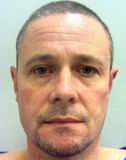
Mark Bridger
Murderer Dale Cregan
Murderer · United Kingdom · 2012
Dale Christopher Cregan (born 6 June 1983) was convicted in the United Kingdom…
4 victims
Dale Cregan
Murderer · United Kingdom · 2012
Dale Christopher Cregan (born 6 June 1983) was convicted in the United Kingdom…
4 victims
 Rahan Arshad
Murderer · United Kingdom · 2006
Rahan Arshad (born 1970) was a taxi driver. He lived at Turves Road, Cheadle Hu…
4 victims
Rahan Arshad
Murderer · United Kingdom · 2006
Rahan Arshad (born 1970) was a taxi driver. He lived at Turves Road, Cheadle Hu…
4 victims
 Arthur Simpson-Kent
Murderer · United Kingdom · 2015
Name: Arthur Simpson-Kent · Age at sentencing: 49 · Age at time of offence (as…
3 victims
Arthur Simpson-Kent
Murderer · United Kingdom · 2015
Name: Arthur Simpson-Kent · Age at sentencing: 49 · Age at time of offence (as…
3 victims
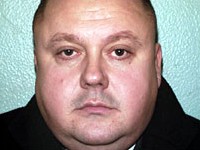 Levi Bellfield
Murderer · United Kingdom · 2003
Levi Bellfield (born 17 May 1968) was a British murderer. He was described by p…
3 victims
Levi Bellfield
Murderer · United Kingdom · 2003
Levi Bellfield (born 17 May 1968) was a British murderer. He was described by p…
3 victims
 Mark Martin
Murderer · United Kingdom · 2004
Mark Martin (born 1981 in Nottingham, England) was a British murderer. He kille…
3 victims
Mark Martin
Murderer · United Kingdom · 2004
Mark Martin (born 1981 in Nottingham, England) was a British murderer. He kille…
3 victims
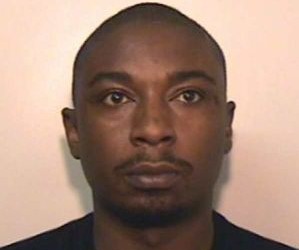 Pierre Williams
Murderer · United Kingdom · 2007
Pierre Williams was described by neighbours as the mother’s boyfriend and as a…
3 victims
Pierre Williams
Murderer · United Kingdom · 2007
Pierre Williams was described by neighbours as the mother’s boyfriend and as a…
3 victims
 John Glenn Roe
Murderer · USA · 1984
John Glenn Roe was executed by lethal injection in Ohio on February 3, 2004. ·…
1 victim
John Glenn Roe
Murderer · USA · 1984
John Glenn Roe was executed by lethal injection in Ohio on February 3, 2004. ·…
1 victim
 Carl Junior Isaacs
Mass murderer · USA · 1973
Carl Junior Isaacs was a white male. He was born on 08/09/1953, was 5'08'' tall…
6 victims
Carl Junior Isaacs
Mass murderer · USA · 1973
Carl Junior Isaacs was a white male. He was born on 08/09/1953, was 5'08'' tall…
6 victims
 Richard Wayne Smith
Murderer · USA · 1992
Richard Wayne Smith was executed by lethal injection in Texas on September 21,…
1 victim
Richard Wayne Smith
Murderer · USA · 1992
Richard Wayne Smith was executed by lethal injection in Texas on September 21,…
1 victim
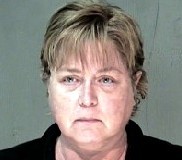 Shari Tobyne
Murderer · USA · 2009
Shari Tobyne Shari Tobyne was the wife of Dwight Tobyne and had been married to…
1 victim
Shari Tobyne
Murderer · USA · 2009
Shari Tobyne Shari Tobyne was the wife of Dwight Tobyne and had been married to…
1 victim
 Friedrich Leibacher
Mass murderer · Switzerland · 2001
Friedrich Leibacher (July 21, 1944 – September 27, 2001) was a Swiss spree kill…
14 victims
Friedrich Leibacher
Mass murderer · Switzerland · 2001
Friedrich Leibacher (July 21, 1944 – September 27, 2001) was a Swiss spree kill…
14 victims
- Gender
- male
- Country
- United Kingdom
- Location
- Machynlleth, Powys, Wales, United Kingdom
- Date of birth
- November 6, 1965
- Age at first offence
- 47
- Characteristics
- child killer, paedophile
- Victim profile
- April Jones, 5
- Method of murder
- Unknown (the body was never found)
- Date(s) of murder
- October 1, 2012
- Years active
- 2012
- Date of arrest
- Next day
- Status
-
Life imprisonment
Sentenced to life imprisonment with a whole-life tariff on May 30, 2013
Case details
Mark Bridger was convicted of abduction and murder of April Jones, and of perverting the course of justice. He was sentenced to life imprisonment with a whole-life tariff on May 30, 2013, and was ordered never to be released from prison.
April Jones was four years old at the time of the offence. She was born on 4 April 2007 and disappeared in Machynlleth, Powys, Wales, around 1 October 2012. She disappeared on 1 October 2012 after being sighted willingly getting into a vehicle near her home. Her disappearance generated a large amount of national and international press coverage.
Timeline
- 1 October 2012 — April Jones disappeared after being sighted willingly getting into a vehicle near her home.
- 3 October 2012 — April Jones’s mother made an appeal for information about her daughter.
- 4 October 2012 — Prime Minister David Cameron issued an appeal to the public, commenting on April Jones’s cerebral palsy.
- 5 October 2012 — Police officially designated the case a murder inquiry.
- 6 October 2012 — Mark Bridger was charged with child abduction, murder, and attempting to pervert the course of justice.
- 8 October 2012 — Bridger appeared before magistrates at Aberystwyth; he was additionally charged with the unlawful concealment and disposal of a body.
- 10 October 2012 — Bridger appeared at Caernarfon Crown Court via videolink.
- 14 January 2013 — At Mold Crown Court, Bridger pleaded not guilty to the charge of murdering Jones, but accepted that he was "probably responsible" for her death.
- 25 February 2013 — The trial was scheduled to begin at Mold Crown Court but was adjourned.
- 29 April 2013 — The trial began at Mold Crown Court.
- 24 May 2013 — The BBC reported the defence case had ended; the judge was to begin summing up on Tuesday 28 May after the bank holiday.
- 29 May 2013 — The judge concluded his summation and ordered the jury to retire to consider its verdicts.
- 30 May 2013 — Bridger was found guilty of abduction, murder, and perverting the course of justice; he was sentenced to life imprisonment with a whole-life tariff.
- 3 October 2012 — (appeal for information made by April Jones’s mother; included in timeline above)
- 12 December 2012 — Police stated that the search for Jones would continue into 2013.
- 27 March 2013 — Police revealed they would call off the search at the end of April.
- 22 April — Police confirmed the search had officially ended.
- 26 September 2013 — Funeral service for April Jones was held in Machynlleth.
- July 2013 — While serving his sentence, Bridger was attacked by a fellow prisoner with an improvised shank; he received stitches for facial and throat injuries.
- December 2013 — Bridger launched an appeal against his whole-life sentence.
- January 2014 — Bridger dropped the appeal.
- 8 October 2012 — A 19-year-old male from Chorley in Lancashire pleaded guilty to sending a grossly offensive message and posting comments about Jones and Madeleine McCann on his Facebook page.
- 7 November — An 18-year-old male from Worcester who posted his opinions about the case on his Facebook page received a six-week suspended prison sentence and was ordered to do 200 hours of community service.
- 4 August 2014 — It was announced that the cottage in Ceinws, Powys, where Jones is believed to have been killed, had been purchased by the Welsh government for £149,000.
- November 2014 — The cottage was demolished.
Background
April Jones was described as suffering from cerebral palsy.
Prime Minister David Cameron issued an appeal to the public on 4 October 2012, commenting:
"clearly having this happen to you, and the fact that she suffers from cerebral palsy, something I know a little about from my own children, only makes this worse. My appeal would be to everyone. If you know anything, if you saw anything, heard anything, have any ideas you can bring forward, talk to the police."
Cameron also said:
"heart goes out"
He referred to Jones’s family, particularly as Jones suffered from cerebral palsy, the same condition that his son, Ivan, succumbed to in 2009.
The offence
April Jones was sighted willingly getting into a vehicle near her home before she disappeared.
Bridger was found guilty of April’s abduction and murder, and also of perverting the course of justice. The trial judge described Bridger as "pathological liar" and "a paedophile" when sentencing.
During the trial, Bridger pleaded not guilty to murdering Jones but accepted he was "probably responsible" for her death:
"probably responsible"
Investigation
Police mounted a large search operation for April Jones around the Machynlleth area in the days following her disappearance. The search involved police and search and rescue teams using specialised equipment, and hundreds of volunteers. Police stated that the search for Jones would continue into 2013 on 12 December. Police later revealed it would be called off at the end of April on 27 March 2013, and confirmed the search had officially ended on 22 April. Police stated:
"a reactive team of specialist officers are available to respond to any new information that is received."
Police officially designated the case a murder inquiry on 5 October 2012.
Sky News presenter Kay Burley was accused of insensitivity after breaking the news of Jones's probable death live on-air to volunteers searching for her, and the interviewees were unaware the case had changed from a search for a missing person into a murder inquiry.
Detective Superintendent Andy John described aspects of the investigation during later remarks. He said the team had very little time early on and needed to establish who the suspect was:
"We knew from the outset we had very little time to play with in terms of trying to find April alive and well and so finding out who he was, what his background was, where he lived, what vehicles he had access to was obviously a priority and we did it as quickly as we could."
He also described the decision to instigate a Child Rescue Alert as unprecedented:
"given the urgency of the situation DS John made the unprecedented decision to instigate the Child Rescue Alert"
He said officers handled more than 1,200 calls and created 4,700 messages within the first 24 hours.
John stated it was important to explain the evolving evidence to the family while maintaining the integrity of the investigation:
"It is a balance because you have to maintain the integrity of the investigation but equally the last thing I ever wanted was for the family to find out from a third person some significant information about their daughter."
John said that, once he had an initial version of events, he took the decision to explain to the family during the first night that everything was pointing to April being dead:
"As soon as we had that initial version of events I took the decision to explain to the family that night that everything was pointing to the fact that April was dead and that they needed to know that at that point so I could try and manage and support them going forward."
He said the family were traumatised, deeply upset and shocked because they hoped April would be found alive and well:
"They were understandably extremely traumatised, deeply upset and shocked because obviously their hope is that we would have found April alive and well and that the matters could have been resolved fairly quickly."
John said the family needed a significant amount of support:
"Obviously that wasn’t the case and as a result they needed a significant amount of support from that moment on."
John said the overriding objective from an investigative perspective was to find April, and that evidence preservation was also important:
"The overriding objective from an investigative prospective was always to find April and it’s important to point out that as this was a crime in action it’s very different to most crimes that we deal with," DS John said.
"The priority was to find April, the secondary objective was to preserve and secure evidence and it’s important to point that out"
He explained officers were not forensically aware and were trying to find a child:
"when we were going into the address we were obviously going in trying to find Bridger and at the same time we were looking for April and on that basis the officers were not forensically aware, they were very much going in, kicking doors in, in order to try and find a child."
John described evidence found and said it moved the investigation from abduction to murder:
"When we recovered blood that we were able to match with April’s DNA, it was at that point that the investigation moved from one of abduction to one of a murder investigation"
He said fragments of bone believed to be from a child's skull were found in the ashes of Bridger's fireplace.
John said no blood was found on the arsenal of blades kept at Bridger’s rented three-bedroom home:
"And while no blood was found on any of the arsenal of blades Bridger kept at his rented three-bedroom home, it is because of these findings that DS John believes April may have been cut up before being dumped in the surrounding countryside."
He said he believed the body had been dismembered and that parts were placed in different areas:
"I think the body has been dismembered and various parts of the remains have been placed in different areas," he said.
John said April’s body was never found and suggested it was because the remains had been dismembered:
"That’s possibly why, because they are so small and damaged, that we’ve had so much difficulty in actually locating them."
When asked where he thought Bridger would have disposed of the body, John said:
"Clearly he’s got windows of opportunity between the time of the abduction and the time of his arrest so we haven’t been able to rule out 100% that he’s travelled a significant distance to dispose of parts of the body."
He added:
"We can’t rule out parts would’ve gone into the river, we can’t rule out certain parts haven’t been burnt based on the remains in the fire"
He said he could not rule out parts being burnt:
"based on the remains in the fire albeit it’s important to note that scientist have said that had significant parts of April’s remains been burnt on the fire there would have been an expectation to have found more evidence."
John said attempts to explain bone fragment findings involved clean-up:
"What we’ve recovered from the fire, the fragments seem to point towards parts of the clean up operation which has taken place with Bridger and any remains recovered from the floor might have been put on the fire with various other things."
John described an early account given by Bridger during an urgent interview after his detention, in which Bridger claimed he accidentally knocked April down with his Land Rover.
John said he was extremely doubtful of Bridger’s account and, without April’s body, the focus shifted to forensic examinations, and that the biggest examination from a forensic perspective was the house:
"The biggest examination from a forensic perspective was obviously at the house"
He said officers recovered significant evidence:
"We had to work through the house in a methodical way which took a significant amount of time but in the end we recovered some significant evidence."
Arrest and detention
Bridger was arrested on foot walking between Machynlleth and his village of Ceinws, around six hours after he was identified as a suspect.
He was remanded into custody after appearing before magistrates at Aberystwyth and held at HMP Manchester pending an appearance at Caernarfon Crown Court.
At Caernarfon Crown Court, Bridger appeared via videolink on 10 October 2012.
On 14 January 2013 at Mold Crown Court, he pleaded not guilty to the charge of murdering Jones while accepting he was "probably responsible" for her death.
The trial began on 29 April 2013 at Mold Crown Court.
Trial
The trial of Mark Bridger began on 29 April 2013 before judge Mr. Justice Griffith-Williams.
On 29 May 2013, the judge concluded his summation and ordered the jury to retire to consider its verdicts.
On 30 May 2013, Bridger was found guilty of abduction, murder, and perverting the course of justice.
During sentencing, the trial judge called him a "pathological liar" and "a paedophile."
After the verdict, it was revealed that Bridger confessed to the Strangeways' prison chaplain that he had disposed of April's body in the fast-flowing River Dovey, which flows past Bridger’s house before terminating in the sea near Aberdyfi. Dyfed-Powys Police said they doubted Bridger's claims and believed he scattered April's remains across the countryside near his house.
Sentencing
On 30 May 2013, Bridger was sentenced to life imprisonment with a whole-life tariff.
The trial judge ordered that he never be released from prison.
Appeals
Bridger launched an appeal against his whole-life sentence in December 2013 but dropped the appeal in January 2014.
Outcome
April Jones’s body was never found. Despite the police search operation, her remains were not recovered.
Funeral arrangements were made without the body being found.
Aftermath
Funeral
Although her body was never found, the funeral service for April Jones was held in Machynlleth on 26 September 2013.
House in Ceinws
On 4 August 2014, it was announced that the cottage in Ceinws, Powys, where Jones is believed to have been killed, had been purchased by the Welsh government for £149,000. The cottage was demolished in November 2014, and April’s family watched the house being demolished.
Prison attack
In July 2013, while serving his sentence, Bridger was attacked by a fellow prisoner with an improvised shank. He suffered facial and throat injuries and received stitches.
Whole-life sentence admission and police assessment
After Bridger was convicted, it was revealed that he admitted disposing of April’s body in the fast-flowing River Dovey to a prison chaplain.
Dyfed-Powys Police said they doubted his claims and believed he scattered April’s remains across the countryside near his house.
Search engines
In November 2013, after campaigning by Jones’s parents, Google and Bing modified their systems to block results from searches aimed at producing child abuse images.
Facebook-related cases
On 8 October 2012, a 19-year-old male from Chorley in Lancashire pleaded guilty to sending a grossly offensive message and for posting comments about Jones and Madeleine McCann on his Facebook page. The offence was under section 127 (1)a of the Communications Act 2003. He was sentenced to 12 weeks’ imprisonment in a Young Offender Institution.
In a separate case, an 18-year-old male from Worcester who posted his opinions about the case on his Facebook page received a six-week suspended prison sentence on 7 November and was ordered to do 200 hours of community service.
Other details
Marks and personal details
Mark Leonard Bridger was born at the War Memorial Hospital in Carshalton, London, on 6 November 1965. He was the middle of three children of Pamela and policeman Graham Bridger. He had an older sister and a younger brother.
He grew up in a semi-detached house in Wallington, London, and attended John Ruskin High School in Croydon, leaving with seven CSEs.
Prior offending and work history
Bridger had a history of legal infractions:
- At age 19, he was convicted of firearms offences and theft.
- He moved to Wales in the 1980s, where he was convicted of criminal damage, affray, and driving without insurance in 1991.
- The next year, he was convicted again, for driving whilst disqualified and without insurance.
- In 2004, he was convicted of battery and threatening behaviour.
- In 2007, he received his fifth conviction, for assault.
His work history included abattoir worker, hotel porter, firefighter, lifeguard, mechanic, and welder.
Family relationships and children
Bridger had six children by four women, including two by his wife, whom he married in 1990.
Additional victim-related images and evidence handling during trial
During the trial, it emerged that Bridger kept photographs of Soham victims Holly Wells and Jessica Chapman in a file on his computer. The computer also stored pictures of Caroline Dickinson (a British 13-year-old murdered in France in July 1996), Jessica Lunsford (a nine-year-old murdered in Florida, United States, in 2005), and Esra Akyuz (a six-year-old Turkish girl murdered in 2001). Jurors were told Bridger performed searches on American serial killer Ted Bundy, who kidnapped, raped and murdered dozens of women during the 1970s, and on the murder of Jamie Bulger.
Jurors asked the judge to stop Bridger viewing those images, and the judge banned him from looking at the computer evidence by turning off or moving the court's computer screens out of his line of vision.
Video recording allegation
At the time of Bridger’s arrest, a recording of a violent rape scene from a film was found inside Bridger's VCR machine. The video was positioned in the middle of the scene from cult film "The Last House on the Left" and Bridger had recorded the clip twice over.
Quotes attributed to Detective Superintendent Andy John
Detective Superintendent Andy John said:
He said he admitted no-one would ever truly know what Bridger did to April unless he told the truth:
"Detective Superintendent Andy John, the officer responsible for the case, admitted no-one will ever truly know what Bridger did to the vulnerable cerebral palsy sufferer in his Ceinws house and how he disposed of her body afterwards unless he tells the truth."
He said there was evidence to support the fact April had been "possibly sexually assaulted" before she suffered significant harm:
"evidence to support the fact April had been 'possibly sexually assaulted before she suffered significant harm'."
He said forensic evidence suggested there may have been "a level of dismemberment in the house":
"a level of dismemberment in the house"
He said this would have resulted in the "deposition of the body or body parts at various locations":
"deposition of the body or body parts at various locations"
He said:
He also asked rhetorically about why police had difficulty obtaining information from the public:
"That is why we did not get that information from the public in terms of someone standing out as a potential suspect," DS John said.
Spotted an error, or have more information about this case?