
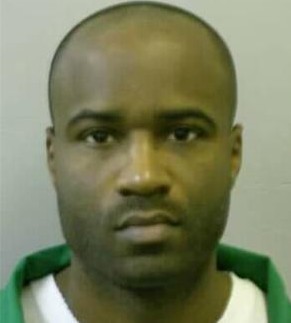
Carl Junior Isaacs
Mass murderer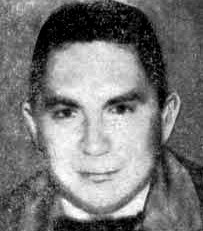 Francisco Paula Gonzales
Mass murderer · USA · 1964
Francisco Paula Gonzales was a passenger on Pacific Air Lines Flight 773. Gonza…
44 victims
Francisco Paula Gonzales
Mass murderer · USA · 1964
Francisco Paula Gonzales was a passenger on Pacific Air Lines Flight 773. Gonza…
44 victims
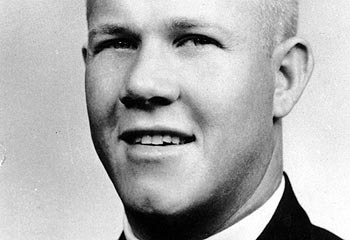 Charles Whitman
Mass murderer · USA · 1966
Charles Joseph Whitman (June 24, 1941 – August 1, 1966) shot and killed 14 peop…
15 victims
Charles Whitman
Mass murderer · USA · 1966
Charles Joseph Whitman (June 24, 1941 – August 1, 1966) shot and killed 14 peop…
15 victims
 George Emil Banks
Mass murderer · USA · 1982
George Emil Banks was an American mass murderer and a former Camp Hill prison g…
13 victims
George Emil Banks
Mass murderer · USA · 1982
George Emil Banks was an American mass murderer and a former Camp Hill prison g…
13 victims
 James Edward Pough
Mass murderer · USA · 1971
James Edward Pough (1948 – 18 June 1990) was an American mass murderer. On 18 J…
12 victims
James Edward Pough
Mass murderer · USA · 1971
James Edward Pough (1948 – 18 June 1990) was an American mass murderer. On 18 J…
12 victims
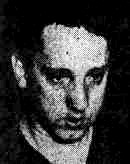 James Ruppert
Mass murderer · USA · 1975
James Ruppert killed his mother, brother, sister-in-law, and eight nieces and n…
11 victims
James Ruppert
Mass murderer · USA · 1975
James Ruppert killed his mother, brother, sister-in-law, and eight nieces and n…
11 victims
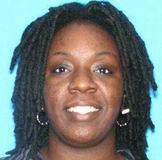 Tonya Thomas
Mass murderer · USA · 2012
Tonya Thomas was a Florida mother who killed her four children and then killed…
4 victims
Tonya Thomas
Mass murderer · USA · 2012
Tonya Thomas was a Florida mother who killed her four children and then killed…
4 victims
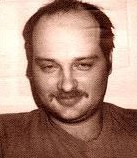 Robert Leroy Anderson
Murderer · USA · 1994
Robert Leroy Anderson was sentenced to death by lethal injection on April 9, 19…
2 victims
Robert Leroy Anderson
Murderer · USA · 1994
Robert Leroy Anderson was sentenced to death by lethal injection on April 9, 19…
2 victims
 Grete Beier
Murderer · Germany · 1907
Marie Margarethe (Grete) Beier was executed by guillotine on July 23, 1908. She…
1 victim
Grete Beier
Murderer · Germany · 1907
Marie Margarethe (Grete) Beier was executed by guillotine on July 23, 1908. She…
1 victim
 Stephen Kazmierczak
Mass murderer · USA · 2008
Stephen Kazmierczak died of a self-inflicted gunshot wound during the Northern…
5 victims
Stephen Kazmierczak
Mass murderer · USA · 2008
Stephen Kazmierczak died of a self-inflicted gunshot wound during the Northern…
5 victims
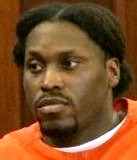 Mark Aaron Brown
Murderer · USA · 1994
Mark Aaron Brown (also referred to as Mark A. Brown) was born on November 13, 1…
2 victims
Mark Aaron Brown
Murderer · USA · 1994
Mark Aaron Brown (also referred to as Mark A. Brown) was born on November 13, 1…
2 victims
- Gender
- male
- Country
- USA
- Location
- Seminole County, Georgia, USA
- Date of birth
- August 9, 1953
- Age at first offence
- 20
- Characteristics
- fugitive, rape, robbery
- Victim profile
- Jerry Alday, 35; Ned Alday, 62; Jimmy Alday, 25; Mary Alday, 26; Chester Alday, 32, and Aubrey Alday, 57
- Method of murder
- Shooting
- Date(s) of murder
- May 14, 1973
- Years active
- 1973
- Date of arrest
- May 26, 1973
- Status
-
Executed
Executed by lethal injection in Georgia on May 6, 2003
Case record: Carl Junior Isaacs
Background
Carl Junior Isaacs was a white male. He was born on 08/09/1953, was 5'08'' tall, weighed 141, and had blue eyes and brown hair. He was in Seminole County.
Isaacs escaped from a Maryland penal institution in May of 1973. He drove with his younger brother Billy Isaacs, his half-brother Wayne Coleman, and a friend, George Dungee, to Florida.
The offence
On the afternoon of May 14, 1973, Isaacs and the others were in Seminole County. Their car was almost out of gas. They thought they saw a gas pump behind the rural mobile home belonging to Jerry Alday and Mary Alday and stopped to investigate. They discovered that there was no pump; however, the trailer was empty, and they decided to burglarize it.
Dungee remained in the car while Carl Isaacs and Wayne Coleman entered the trailer. While they were inside, Billy Isaacs warned them that two men were approaching in a jeep. Jerry Alday and his father Ned Alday pulled in behind the trailer, unaware that it was being burglarized. Carl Isaacs met them and ordered them inside at gunpoint. After their pockets were emptied, Jerry Alday was taken into the south bedroom while Ned was taken to the north bedroom.
Carl Isaacs shot and killed Jerry Alday, and then both he and Coleman shot and killed Ned Alday. Soon afterward, Jerry Alday’s brother Jimmy Alday drove up on a tractor, walked to the back door, and knocked. Coleman answered the door, “stuck a pistol up in the guy’s face,” and ordered Jimmy Alday inside. Jimmy Alday was taken into the living room and forced to lie on the sofa. Carl Isaacs shot and killed Jimmy Alday.
After Carl Isaacs went outside to move the tractor, Mary Alday drove up. Isaacs entered the trailer behind her and accosted her. Chester Alday and Aubrey Alday (Jerry’s brother and uncle) drove up in a pickup truck. Leaving Coleman and Dungee to watch Mary Alday, Carl and Billy Isaacs went outside to confront Chester Alday and Aubrey Alday, and forced them at gunpoint into the trailer.
Once inside, Aubrey Alday was taken to the south bedroom where Carl Isaacs shot and killed him, while Chester Alday was taken to the north bedroom and killed by Coleman. Coleman and Carl Isaacs raped Mary Alday on her kitchen table. Afterward, they drove to a heavily wooded area several miles away where Mary Alday was raped again. Dungee killed Mary Alday.
The group abandoned their car in the woods and took Mary Alday’s car, which they later abandoned in Alabama. They stole another car there. The group was arrested a few days later in West Virginia in possession of guns later identified as the murder weapons and property belonging to the victims.
Isaacs was convicted of six counts of murder.
Investigation
After Isaacs’ original trial, Isaacs was interviewed by a film maker producing a documentary about the case. In that interview, the defendant admitted shooting Jerry, Ned, Aubrey and Jimmy Alday, raping Mary Alday, and burglarizing the trailer.
The admissions introduced in evidence at the retrial included Isaacs’ admissions of shooting Jerry, Ned, Aubrey and Jimmy Alday, raping Mary Alday, and burglarizing the trailer.
Arrest
After abandoning their car in the woods and taking Mary Alday’s car to Alabama, they stole another car. They were arrested a few days later in West Virginia. At the time of arrest, they were in possession of guns later identified as the murder weapons, and property belonging to the victims.
Trial
Isaacs was originally convicted in Seminole County and sentenced to death in 1974. His conviction and sentence were affirmed on direct appeal to the Georgia Supreme Court.
Following habeas relief granted by the Eleventh Circuit, Isaacs was retried in Houston County Superior Court. Pretrial proceedings in Seminole County had resulted in the recusal of the trial judge assigned to preside over the retrial. Superior Court Judge Hugh Lawson was assigned to the case.
Judge Lawson granted a change of venue to Houston County and quashed the Seminole County indictment. Isaacs was re-indicted in Houston County on August 17, 1987. The trial began on January 4, 1988, with the commencement of voir dire proceedings, and ended on January 30, 1988, when the jury reached its verdict on the issue of sentence.
A motion for new trial was timely filed and heard on June 9, June 23 and June 30, 1988. The motion for new trial was denied on July 15, 1988. An appeal was docketed in the Georgia Supreme Court on September 16, 1988. On the defendant’s motion for a remand to complete the record, the case was remanded on November 16, 1988. The case was redocketed in the Georgia Supreme Court on February 27, 1989. Oral arguments were heard on June 13, 1989.
The Georgia Supreme Court concluded that it did not find that the sentences of death were imposed under the influence of impermissible passion, prejudice or other arbitrary factor. The Georgia Supreme Court also concluded that the sentences of death were neither excessive nor disproportionate to sentences imposed in similar cases, considering the crime and the defendant, and affirmed.
Sentencing
In 1974, Isaacs and two co-defendants were sentenced to death.
In 1988, after retrial, Isaacs was again sentenced to death. The jury deadlocked on giving Coleman the death penalty, and Coleman was sentenced to life in prison. Dungee later pleaded guilty but mentally disabled and was sentenced to life in prison. Billy Isaacs was paroled in 1994 after serving time on a 40-year sentence.
Appeals
Isaacs v. State, 226 S.E.2d 922 (Ga. 1976). (Direct Appeal)
Isaacs v. Kemp, 778 F.2d 1482 (11th Cir.1985). (Habeas Granted)
Isaacs v. State, 355 S.E.2d 644 (Ga. 1987). (Recusal)
Isaacs v. State, 386 S.E.2d 316 (Ga. 1989). (Direct Appeal)
Isaacs’ final appeal argued that spending nearly 30 years on death row was “cruel and unusual” punishment. The U.S. Supreme Court denied his final appeal, and the execution proceeded.
At the time of the U.S. Supreme Court action on the execution date, a U.S. Supreme Court stay was briefly in place and then was lifted; minutes later, the execution was allowed to proceed.
Isaacs’ 2001 appeal to the 11th U.S. Circuit Court of Appeals claimed his rights were violated 32 times during the retrial, and that court upheld his death sentence.
Outcome
Isaacs was executed by lethal injection in Georgia on May 6, 2003.
The execution was carried out at 8:07 p.m. at the Georgia Diagnostic and Classification Prison in Jackson.
Isaacs declined an opportunity to make a final statement, but he asked for a final prayer. After the prayer, he mouthed “Amen.”
He was pronounced dead at 8:07 p.m. A warden pronounced the death with the statement:
“At 8:07 p.m. on May 6, 2003, the court-ordered execution ... was carried out.”
Witnesses said Isaacs appeared alert, laughing and talking as restraints were tightened. He declined a final last statement and only requested a prayer. He scanned the room after the prayer, and then the lethal dose began to take effect; he gasped three times and his eyes closed partially as he lost consciousness.
A statement from Isaacs’ attorney at the time of execution included:
“We became one with a killer tonight. We all became less of a person.”
The Georgia Department of Corrections set Isaacs’ execution for May 6 at 7 p.m.
Aftermath
A few days after his interview and admissions were introduced at retrial, Isaacs’ case continued through years of appeals and retrials.
His stepbrother Wayne Coleman and George Dungee were convicted and sentenced to die in 1974. Their sentences were reduced to life in prison after retrials; Dungee later pleaded guilty but mentally disabled and received life in prison. Coleman and Dungee received life sentences with possibility of parole. They were still in prison.
Billy Isaacs testified against his brother in exchange for a plea agreement calling for a 40 year sentence. He was paroled in 1994.
Isaacs was the longest serving inmate on death row in any state in the U.S.
Isaacs asked for a “regular institutional tray” of pork and macaroni, pinto beans, cabbage, carrot salad, dinner roll, chocolate cake and fruit punch, but he pushed the meal away.
A friend from Baltimore was expected to pick up Isaacs’ remains, returning them to Maryland for burial.
The slain members of the Alday family were buried in Spring Creek Baptist Church Cemetery in Seminole County and were remembered with gray marble headstones.
Seminole County Sheriff Jerry Godby said the Aldays had raised peanuts, cotton, corn, wheat and soybeans and had also raised hogs. Godby said he had asked to witness the execution of Isaacs. If executed, Isaacs would die eight days from the 30th anniversary of the slayings.
A Georgia bill requiring state officials to contact families of victims of criminals on death row twice a year had been unanimously passed the previous year. The proposal was inspired by the family of Ken Alday, killed in Seminole County in 1973.
Faye Alday Barber, the daughter of Ned Alday, wrote in a letter in 1998 to the editor of a local newspaper. She wrote:
“legal plunder”
and “predator.”
Barber wrote:
“For 25 years my family has pursued justice,” Barber wrote. “The only thing that stood between the Alday family and justice was the law, and it was the law, not Carl Isaacs that became our ultimate predator. Our courts and legislators are nothing but vandals at the gates of justice. It took them a quarter of a century, but they beat us; they won. Like Pontius Pilate, they simply washed their hands of innocent blood. We lost our family, our farms, and our heritage. We lost hope... but liberty was not lost; it was stolen.”
She also wrote about the family dog, Tub:
“He went out into the field and laid down, refused to eat or sleep, wouldn't let anyone touch him, and over a period of time his hair fell out, exposing rib bones that protruded through his skin,” Barber wrote.
Barber wrote:
“He was a pitiful sight. He became so thin that when it rained, he could have crawled under a honeysuckle vine to keep from getting wet. A veterinarian said (Tub) grieved himself to death. That dog had more compassion for my family than our courts.”
Timeline
- May 1973 — Carl Isaacs escaped from a Maryland penal institution.
- May 14, 1973 — The burglary and killings occurred at the rural mobile home belonging to Jerry Alday and Mary Alday in Seminole County, Georgia.
- August 17, 1987 — Carl Isaacs was re-indicted in Houston County.
- January 4, 1988 — Trial began in Houston County Superior Court with voir dire proceedings.
- January 30, 1988 — The jury reached its verdict on the issue of sentence.
- July 15, 1988 — The motion for new trial was denied.
- June 13, 1989 — Oral arguments were heard in the Georgia Supreme Court.
- May 6, 2003 — Carl Isaacs was executed by lethal injection in Georgia at 8:07 p.m.
Other details
Isaacs was scheduled to die eight days before the 30th anniversary of the slayings.
Isaacs asked to decline a final statement and asked for a final prayer; after the prayer he mouthed “Amen.”

Spotted an error, or have more information about this case?