
John Glenn Roe
Murderer Brian Kevin Rosenfeld
Murderer · USA · 1985
Brian Kevin Rosenfeld Brian Kevin Rosenfeld was sentenced to three concurrent l…
23 victims
Brian Kevin Rosenfeld
Murderer · USA · 1985
Brian Kevin Rosenfeld Brian Kevin Rosenfeld was sentenced to three concurrent l…
23 victims
 Marvin Gray
Murderer · USA · 1975
Marvin Gray was convicted killer who claimed responsibility for 23 slayings and…
23 victims
Marvin Gray
Murderer · USA · 1975
Marvin Gray was convicted killer who claimed responsibility for 23 slayings and…
23 victims
 Yahweh ben Yahweh
Murderer · USA · 1980
Yahweh ben Yahweh was born and legally named Hulon Mitchell Jr. (October 27, 19…
23 victims
Yahweh ben Yahweh
Murderer · USA · 1980
Yahweh ben Yahweh was born and legally named Hulon Mitchell Jr. (October 27, 19…
23 victims
 Russell Ellwood
Murderer · USA · 1991
Russell Ellwood was a former taxi driver. Authorities suspected him of killing…
20 victims
Russell Ellwood
Murderer · USA · 1991
Russell Ellwood was a former taxi driver. Authorities suspected him of killing…
20 victims
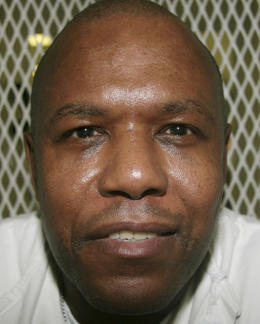 Larry Wayne Wooten
Murderer · USA · 1996
Defendant: Larry Wayne Wooten Status: Executed by lethal injection in Texas on…
2 victims
Larry Wayne Wooten
Murderer · USA · 1996
Defendant: Larry Wayne Wooten Status: Executed by lethal injection in Texas on…
2 victims
 Michael Anthony Mullen
Murderer · USA · 2005
Michael Anthony Mullen was an inmate at Stafford Creek Corrections Center. He w…
2 victims
Michael Anthony Mullen
Murderer · USA · 2005
Michael Anthony Mullen was an inmate at Stafford Creek Corrections Center. He w…
2 victims
 Brian Gene Nichols
Murderer · USA · 2005
Brian Gene Nichols was born December 10, 1971. He was known for his escape and…
4 victims
Brian Gene Nichols
Murderer · USA · 2005
Brian Gene Nichols was born December 10, 1971. He was known for his escape and…
4 victims
 Mark Allen Pinnell
Murderer · USA · 1985
August 1985 — Mark Allen Pinnell contacted Randy Brown in response to an advert…
1 victim
Mark Allen Pinnell
Murderer · USA · 1985
August 1985 — Mark Allen Pinnell contacted Randy Brown in response to an advert…
1 victim
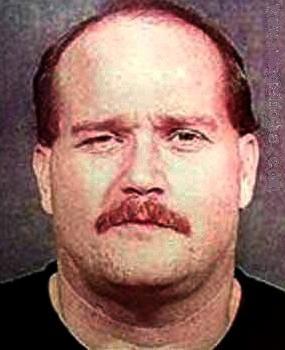 Buford Furrow
Murderer · USA · 1999
Buford O'Neal Furrow, Jr. (born November 25, 1961) perpetrated the August 1999…
1 victim
Buford Furrow
Murderer · USA · 1999
Buford O'Neal Furrow, Jr. (born November 25, 1961) perpetrated the August 1999…
1 victim
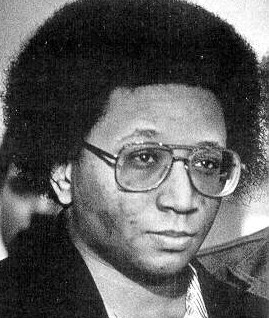 Wayne Williams
Serial killer? · USA · 1979
Wayne Bertram Williams was sentenced to two consecutive terms of life imprisonm…
24 victims
Wayne Williams
Serial killer? · USA · 1979
Wayne Bertram Williams was sentenced to two consecutive terms of life imprisonm…
24 victims
- Gender
- male
- Country
- USA
- Location
- Franklin County, Ohio, USA
- Date of birth
- April 4, 1962
- Age at first offence
- 22
- Characteristics
- kidnapping, armed robbery, drug addict, abuse
- Victim profile
- Donette Crawford (female, 21)
- Method of murder
- Shooting ( .357 magnum handgun)
- Date(s) of murder
- October 6, 1984
- Years active
- 1984
- Date of arrest
- November 6, 1984
- Status
-
Executed
Executed by lethal injection in Ohio on February 3, 2004
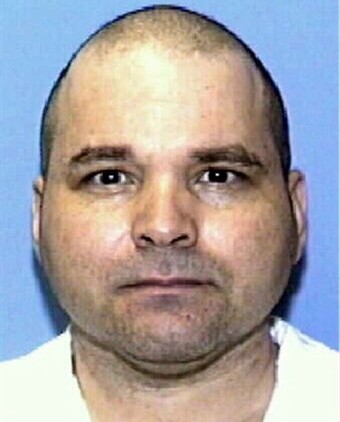
Case record: John Glenn Roe
Status / legal outcome
John Glenn Roe was executed by lethal injection in Ohio on February 3, 2004.
Timeline
- October 6, 1984 — Donette Crawford was abducted outside a convenience store on the southwest side of Columbus.
- October 6, 1984 — Donette Crawford’s shooting death occurred.
- November 6, 1984 — John Glenn Roe and Moses Matthew Stevens were arrested in Beaver Creek, Ohio.
- November 7, 1984 — John Glenn Roe was interviewed by Detective Harry Anthony of Beaver Creek for approximately three and one-half hours.
- November 12, 1984 — Dave Verne and Steve Judy, Columbus police officers, came to Xenia to speak with John Glenn Roe.
- November 15, 1984 — The body of Donette Crawford was discovered in precisely the area John Glenn Roe had designated.
- November 15, 1984 — Anthony showed John Glenn Roe pictures from which he selected the photograph of Jerry Powell.
- November 20, 1984 — Anthony photographed a bullet wound in John Glenn Roe’s foot.
- October 5, 1984 — Donette Crawford left a tavern and drove her friend home.
- October 7, 1984 — A security guard watched Huntington Clothiers after an entry on October 6, 1984.
- October 6, 1984 (approx.) — A hole was made in the side of Huntington Clothiers and clothing was stolen; a security guard later chased the person and shot three times.
- September 11, 1984 — John Glenn Roe was released from prison.
- October 3, 1984 — John Glenn Roe saw Jerry Powell with Donette Crawford when they came to Roe’s home in her dark-colored Trans Am or Firebird.
- January 23, 1984 — Not applicable; this date appears as part of a separate article date, not as an event in the case narrative.
- February 3, 2004 — John Glenn Roe was executed.
- Jan. 30 — Judge Eric Clay dissented to the Sixth Circuit’s ruling.
- January 13 — A poll was referenced in the Sixth Circuit discussion.
- Ohio App. Aug. 25, 1987 — The Ohio appellate citation “State v. Roe, Not Reported in N.E.2d (Ohio App. Aug. 25, 1987)” appears in the record.
- 1999 — Ohio resumed executions in 1999.
- 2002 — “Roe v. Baker, 316 F.3d 557 (6th Cir. 2002)” appears in the record.
- Feb. 4, 2004 — A Times-Reporter piece about the execution date appears in the record.
- January 23, 2004 — Another Times-Reporter piece about events leading to the scheduled execution appears in the record.
- March 30 — The next scheduled execution was referenced for William Dean Wickline.
Background
John Glenn Roe apologized on the execution table but did not apologize for the murder of Donette Crawford. Roe blamed others for lying about him and newspapers for not doing more to help him. Roe professed his innocence to the end and said, “I’m actually innocent,” before a lethal dose of three drugs killed him Tuesday, adding, “God is my witness. I did not commit this crime. You are killing an innocent man today.”
Media witnesses complained that a camera set up in Roe’s holding cell where he was prepared for execution robbed them of viewing the entire procedure. The television monitor witnesses watched came on after Roe already was on the preparation table and his head and shoulders were blocked from view. Prison officials said the camera was moved to a new location for the “convenience” of the execution team.
Roe was described as an admitted drug addict and thief. Gov. Bob Taft rejected Roe’s appeal for clemency. The Ohio Supreme Court rejected a request for a stay Monday night.
Roe had no breakfast Tuesday except sips of root beer while smoking cigarettes. Monday night he had T-bone steak, A-1 Steak Sauce, onion rings, macaroni and cheese, butter-pecan ice cream and root beer. He later had ham and roast beef sandwiches, strawberry ice cream and root beer.
Roe was the 10th person executed since Ohio resumed executions in 1999. The next execution was William Dean Wickline, scheduled to die on March 30.
The offence
Donette Crawford was the mother of a 9-month-old girl. She was abducted outside a convenience store on the southwest side of Columbus. Roe’s .357-caliber Ruger was described as the murder weapon.
Her decomposed body was discovered in a wooded area adjacent to a camp site frequented by defendant and his brother. Her body was found about seven miles away on the city’s southeast side in a field behind a cement plant.
Roe maintained innocence and claimed he did not abduct and strangle Donette Crawford, shoot her in the head and leave her body in a stand of trees near a cement plant on Oct. 6, 1984.
Last known movements and abduction narrative
Sometime after 9 p.m. on Friday, October 5, 1984, Donette Crawford left a tavern and drove her friend home. Crawford and her close friend Toni Jester decided to go to the Alrosa Villa, a club in Columbus. Crawford had taken Ashley to her mother’s home in anticipation of the evening. Crawford and Jester arrived at the Alrosa Villa, locked their money in the car, and stayed until it closed. On returning to the west side, Jester drove Crawford’s car while Crawford searched for a pack of cigarettes she seemed unable to locate. Jester arrived back at her home at approximately 2:40 a.m., and Crawford still had not found the cigarettes. Crawford then indicated she was going to pick up Ashley and go home.
A 7-Eleven store was located on Mound Street diagonally across the street from Jester’s home. A woman who looked like Crawford went to the 7-Eleven on October 6 between 2 a.m. and 3 a.m., purchased a pack of cigarettes and left. Around 2 a.m. on October 6, Jeannie Grim was passing by the 7-Eleven on Mound Street when a Camaro or Firebird with license plate TOE and three numbers pulled out of the 7-Eleven and proceeded west on Mound Street. Grim turned off Mound Street onto Hague Avenue, but the car, later determined to be driven by Crawford, continued west.
Around 5:30 a.m. on October 6, Crawford’s mother realized that her daughter had not come for Ashley. When she learned Donette was not at home or with Jester, she drove around the west side in an unsuccessful effort to locate her. Later that morning, Donette’s father found her car at St. Agnes Church on Mound Street. The car had been ransacked: the ashtray was hanging out on the floor, invitations were scattered on the back seat, the baby seat was lying on the floor, the lid on the console between the bucket seats was hanging by a hinge, the glove box was left open, and papers were scattered out of the glove box in the car. No keys were found at that time, but later they were discovered in the yard at St. Agnes. Donette’s wallet, purse, and money were never found. Columbus police searched the west side in an unsuccessful effort to locate Donette Crawford.
Crawford’s disappearance was covered heavily by Columbus newspapers, and there was talk of a reward fund for the capture of her killer. Crawford’s reported daughter missing occurred two days after her death, and more than a month passed before he found out she was dead.
Investigation
Columbus police searched the west side in an unsuccessful effort to locate Donette Crawford after her car was found ransacked at St. Agnes Church on Mound Street.
Arrest and interview in Beaver Creek
On November 6, 1984, defendant (John Glenn Roe) and Moses Matthew Stevens were arrested in Beaver Creek, Ohio. Defendant had been released from prison on September 11, 1984 and was looking for an opportunity to avoid returning to prison as a result of his difficulties in Beaver Creek.
When John Turner, a detective with the Beaver Creek Police Department, began to interview defendant regarding the incident in Beaver Creek, defendant responded that he had information regarding a missing white woman in Columbus. Defendant told Turner that Jeanette Crawford, as he called her, had not disappeared and stated that he had information about who might have done it and where the body and weapon could be found. Defendant agreed to talk about it further. Detective Harry Anthony of Beaver Creek overheard defendant relating that information to Turner and inquired whether defendant would like to talk about it. Defendant agreed to talk with Anthony.
During a November 7, 1984 interview, defendant explained that he had a black friend who had been seeing Jeanette Crawford and that they had been dating. Defendant stated that his friend had picked her up around the campus. Defendant had seen his friend with her on October 3, when they came to defendant’s home in her dark-colored Trans Am or Firebird. Defendant told Anthony that the suspect, later identified as Jerry Powell, said Crawford would not be playing around any more and had shot her with a gun in the “face area.” Defendant believed Powell still had the gun and stated that the body could be found in the area of Alum Creek and Livingston, drawing a map for Anthony indicating where the body could be found.
Discovery of the body and identification
On November 12, 1984, Dave Verne and Steve Judy, two Columbus police officers, came to Xenia to speak with defendant. After their conversation with defendant, the body of Donette Crawford was discovered on November 15, 1984 in precisely the area defendant had designated.
On November 15, Anthony showed defendant a series of pictures from which defendant was able to select the photograph of Jerry Powell. On November 20, Anthony photographed a bullet wound in defendant’s foot.
Related vandalism/theft incident
About the same time that Donette Crawford disappeared, Huntington Clothiers was vandalized. Sometime after approximately 5:15 p.m. on Saturday, October 6, 1984, a hole was made in the side of the building, and a considerable amount of clothing was stolen. The management hired a security guard to watch the building on Sunday night, October 7, 1984. While the security guard was on watch, someone entered the building again, and the guard tried to block the entrance when the subject came out and ran. The guard chased the subject by car and shot three times but was unable to apprehend the person.
Evidence about the weapon
On December 3, 1984, Tammy Norris, Moses Stevens’ girlfriend, turned over to Columbus police a .357 magnum which defendant had had with him when he and Stevens were in Dayton on November 6, 1984. The .357 magnum fired the bullet found at the scene and in the skull of Donette Crawford.
The .357 magnum had been stolen from Castner’s Sporting Goods in Kirkersville, Ohio, on September 8, 1982. Castner’s had been broken into on March 20 and March 23, 1981. Each time the crime was committed in the same manner.
Prior break-ins and related custody information
Defendant admitted to having committed both crimes, entered a plea of guilty to the March 23, 1981 break-in, and was sentenced thereon. The September 8, 1982 break-in was committed in the same manner as the March 1981 entries.
Local law enforcement authorities determined whether defendant was incarcerated on September 8, 1982. They learned that he was not and discovered that on September 13, 1982, he was in custody for an incident in Heath, Ohio. Detective Sergeant Raymond Back met with defendant in the Heath holding cell to discuss the September 8, 1982 break-in at Castner’s. Back advised defendant of his rights. Defendant said he understood his rights, refused to sign a waiver, and stated that he did not want to go back to jail for Castner’s. Back had not mentioned Castner’s at the time defendant made that statement.
Cellmate testimony and alleged confession
While awaiting trial, defendant was placed in a cell with Vincent Boyd. Boyd had already received a two to ten year sentence on other charges. Boyd and defendant discussed defendant’s pending charges.
Defendant first stated that he was accused of having murdered a man, but later admitted he was charged with murdering a woman. Defendant described to Boyd circumstances bringing him to the charges: defendant and another intended to rob a 7-Eleven at Mound Street, but they could not commit the robbery because too many people were outside. They waited for twenty to forty-five minutes, during which a woman entered the store. After she came out, they followed her, with another car between them and the woman, also driven by a woman. Defendant told Boyd that they followed her after she pulled off Mound Street, and they pointed a gun, motioned her to stop, took her car, drove it around the block, and parked it at a church. They then took defendant’s car and the woman back to defendant’s mother’s home. Behind the home was a wooded area. Defendant stated that he and another person did their “little thing” with her and that because she knew both his first name and what he looked like, he would have to kill her. Defendant told Boyd he took her to the woods where she pleaded, told Boyd to “tell it to someone who gives a fuck,” and shot her behind the ear, moving her approximately a quarter of a mile back into the woods. Defendant also told Boyd he went to his girlfriend Renie and asked her to corroborate his story that he had been at a pizza place at the time of the murder.
Defendant told Boyd he was involved in a burglary, and described that a security guard had fired on him and shot him in the foot. Defendant told Boyd he had gone to Dayton and “got jammed” on a burglary charge, and that his attempt to work a deal and pin the murder on another named Moses had backfired.
Boyd’s two to ten year prison sentence was reduced to six months in the Franklin County jail as a result of his willingness to testify at trial.
Testimony about events around the time of the murder
Defendant’s brother Donnie testified that on the night Donette Crawford was murdered he and defendant were with their respective girlfriends at My Bar near campus. Defendant’s former girlfriend Renie Hillman testified that she and defendant were at My Bar on the Thursday night before Crawford was murdered.
Mike Daniels testified that defendant’s description of Friday’s events included an admission of murder:
“And he just said that he had this chick * * * and she was screaming and yelling and he was choking her, and there was like blood and stuff coming out of her mouth and her nose and she just wouldn't die. * * * He just said, I just went bang, then she was quiet or then she died * * *.” (Tr. 1502.)
Patty Daniels also testified:
“And he said, so I took my gun, or he said my .357, went poosh, and then he said the bitch died or shut up or was quiet.” (Tr. 1457.)
Arrest
On November 6, 1984, John Glenn Roe and Moses Matthew Stevens were arrested in Beaver Creek, Ohio.
Trial
Conviction and jury findings
John Glenn Roe was convicted of the aggravated murder of Donette Crawford.
The Ohio appellate summary states that the jury found defendant guilty of aggravating circumstances of kidnapping and aggravated robbery as set forth in R.C. 2929.04(A)(7). In addition, the jury rendered guilty verdicts on two counts of kidnapping and one count of aggravated robbery with firearm specifications.
After the jury’s guilt determination, a mitigation hearing was held pursuant to R.C. 2929.03. The jury found that the aggravating circumstances outweighed the mitigating factors and recommended that defendant be sentenced to death on each of the two counts of aggravated murder. Following an independent review of the mitigation evidence, the trial court concluded similarly that the aggravating circumstances outweighed the mitigating factors. The trial court imposed a sentence of death, and also sentenced defendant on the other counts, including three-year sentences on the gun specifications to run consecutively with other sentences.
Roe’s statements about innocence and explanations
Roe maintained his innocence and gave varying accounts. As execution neared, he said the state “will probably have to murder me because I’m not ready. I ain’t never going to be ready.” He blamed prosecutors, a jailhouse snitch, his court-appointed attorneys, the trial judge, and his own stupidity for leaving him with little hope to escape a deadly combination of three drugs on February 3.
Roe said he initially blamed a childhood friend for the murder under pressure from police. He also said he claimed a man named Jerry Powell killed Crawford and told him where the body was located. Roe claimed he later blamed Vincent Boyd for twisting information to get a better deal.
A prosecutor, George Ellis, said: “Part of Roe's problem is his story has changed,” and also that Roe initially denied it was his gun but later admitted it was his gun. Ellis stated that a bullet fragment recovered from Crawford’s skull matched a .357-caliber revolver.
Judge Dale Crawford of Franklin County Common Pleas Court sentenced Roe to death in 1985.
Mitigation evidence and mitigation hearing
At the mitigation hearing, defendant presented evidence including that his father was a diabetic and an alcohol abuser who could not secure employment. The evidence described that his father was verbally and physically abusive to defendant’s mother and to defendant and his brother Donnie. The evidence stated that although the family experienced some pleasant times such as fishing or picnicking, defendant, his mother and his brother often had to leave the home to escape defendant’s father’s wrath. The evidence described that defendant’s father died in February 1971 when defendant was eight years old.
Evidence also stated that defendant’s mother began to see Harry Lucas and in 1970 moved with him from Barnesville, where defendant had been born, to California and then eventually to Columbus. It also stated that defendant’s mother was a thief and taught defendant to be one, and did not explain to him that it was wrong to steal.
For school, evidence described attendance, disciplinary, and motivational problems. It stated that teachers attempted to work with defendant to gain him part-time employment, but defendant seemed uninterested, and he was consistently in the principal’s office for skirmishes and talking in class and other disciplinary problems.
Evidence described that at a very early age defendant began to use drugs. Although defendant was given opportunities for drug counseling, he did not stop using drugs. It stated he stole to obtain money to buy drugs and had a lengthy juvenile and adult record, with little of the record involving violent crimes. Witnesses testified defendant was never a violent person.
Following mitigation evidence, the jury recommended death and the court imposed it.
Sentencing
Judge Dale Crawford sentenced Roe to death in 1985.
After the jury found aggravating circumstances outweighed mitigating factors, the trial court imposed a sentence of death. The trial court also sentenced defendant on the other crimes including three-year sentences on the gun specifications to run consecutively with other sentences.
Following sentencing, Roe followed the case from his cell, watched television, and wrote letters or read. He said, “Every time I think back, that person back out on the streets, the person I used to be, that person no longer exists. The only world I know, really, is this,” as his execution date approached.
When asked to describe his 18 years on death row, Roe answered: “Boredom.”
Appeals
Sixth Circuit habeas/procedural issues
Roe’s lawyers sought relief from the U.S. Supreme Court and argued in a petition that Roe’s “constitutional rights to due process were violated when an invalid group of appellate judges manipulated en banc rules to trump a valid majority’s decisions to stay his execution and hear his appeal….”
Judge Eric Clay in a dissenting opinion to the Sixth Circuit’s Jan. 30 ruling argued against the voting methods:
“… the decision of this Court to conduct another vote on whether to hear Roe’s appeal en banc, combined with Judge Cook’s participation in that vote, has created the perception that certain members of this Court have manipulated the process to avoid, what is in their view, the unfavorable result of the January 13th poll. This outcome unfortunately conveys the impression of a result-oriented process rather than an orderly process which seeks to preserve the appearance and reality of due process.”
Federal habeas and district court/court of appeals outcomes
The record includes “Roe v. Baker, 316 F.3d 557 (6th Cir. 2002).” It states that petitioner, convicted in state court of kidnapping, aggravated robbery, and aggravated murder, and sentenced to death, sought federal habeas relief after exhausting state-court appeals and postconviction remedies. The United States District Court for the Southern District of Ohio, Edmund A. Sargus, Jr., J., denied petition, and petitioner appealed.
The Court of Appeals, Siler, Circuit Judge, held that:
- Antiterrorism and Effective Death Penalty Act’s (AEDPA) amendments to habeas statute did not apply;
- trial court’s failure to instruct jury at sentencing phase that it was not required to unanimously reject death sentence in order to impose life sentence did not violate petitioner’s constitutional rights;
- prosecutor’s statements during closing argument at penalty phase that victim’s perspective was ignored in mitigation hearing were not plain error;
- prosecutor’s improper comments on statutory mitigating factors on which defendant had not presented evidence did not render sentencing phase fundamentally unfair in violation of due process;
- claim that trial court’s refusal to sentence petitioner on non-capital felonies prior to sentencing phase on murder conviction was error was barred by Teague; and
- petitioner had adequate notice of charge of aggravated murder.
The record states: “Affirmed.” Clay, Circuit Judge, filed a concurring opinion.
Clemeny and stay decisions
Gov. Bob Taft rejected Roe clemency. The Ohio Parole Board unanimously denied Roe clemency, citing continuing denial of responsibility. A federal appeals court denied his appeals the same day that Taft denied clemency, and Tkacz said she would appeal Roe’s case to the U.S. Supreme Court. The U.S. Supreme Court turned down Roe’s last request for a stay.
Execution and courtroom/procedure details
Appointment of witnesses and communications
Roe had Tkacz, Rev. Gary Sims, the department’s religious services administrator, and John Lee, an investigator with the Public Defender’s office, as his witnesses.
Ruth Tkacz, an assistant Ohio public defender, said the difficulty the execution team had getting shunts into Roe’s arms showed the process was cruel. She said prison officials had trouble finding veins in both of Roe’s arms, and that the process took 20 minutes, which was longer than earlier executions. Shunts were eventually put near both wrists, normally near an inmate’s elbow.
Roe did not resist during the execution process, partly because he took a sedative. Roe’s 5-foot, 6-inch and 235-pound body lay nearly motionless on the preparation table. He used a step stool to climb onto the execution table.
Warden James S. Haviland declared Roe dead after Roe entered the execution chamber. Before Warden Haviland declared Roe dead, Donette’s fiancé Steve Steiner said: “It doesn’t seem inhumane to me.”
During the execution, Don Crawford, the victim’s father and a witness to the execution, said: “That son of a bitch never quits does he,” after Roe professed innocence.
Roe stared at Crawford, his daughter Michelle and Donette’s fiancé Steve Steiner while holding hands, with eight feet and a wall of thick glass separating them. Michelle Crawford patted a picture of her sister within a heart shape on the T-shirt she was wearing and said: “Right here,” and “Look at her picture right here buddy.”
Family presence and reactions
Crawford’s wife did not witness the execution and collapsed distraught in a chair just after 16 members of the Crawford family entered a room at the prison to speak to journalists. Don Crawford later said he felt no sorrow for Roe, and he said: “The last words out of his mouth on his death bed and he’s lying.”
Don Crawford stated:
- “I feel after 19 years finally justice has been served, but it won’t bring no solace to me or my wife or my family. Every day of my life and our life we’ve been thinking about my daughter. We’ve raised our granddaughter, and she’s almost identical to Donette.”
- “We’ve had hell, and we’ve had happiness. The hell will still go on. This won’t bring any closure to us. I’m not happy, but I’m satisfied. I’m glad justice has been served.”
Roe’s stepfather and mother, Harry and Joyce Lucas, were at the prison Tuesday but did not witness Roe’s execution.
Roe’s sister Michelle Crawford planned to witness Roe’s execution and hoped he was scared about it.
Roe said he did not want his mother or family to witness his death and said: “I don’t think I could take it from them if they wanted to be there,” and “but I wouldn’t want them there.”
Other details
Legal claims and reported statements about evidence
State Public Defender David Bodiker argued: “We wouldn't put a stray dog to sleep with the drugs we use to execute human beings,” and “Apparently, veterinarians worry more about torturing pets than Ohio’s executioners worry about torturing human beings.”
Roe’s .357 Ruger was described as the murder weapon. A bullet fragment recovered from Crawford’s skull matched the gun, a .357-caliber revolver.
Roe said his gun was involved but also said he wouldn’t comment about how his gun was involved. He claimed he initially blamed a childhood friend under pressure from police and that later he blamed Jerry Powell.
Roe claimed a man named Jerry Powell killed Crawford and told him where the body was located. Roe also said he initially blamed a childhood friend under pressure from police.
Conflicting alibi and accounts
Roe said his breaking and entering on the night of Crawford’s murder was his alibi but said he did not get caught and there were no witnesses. He stated he stole a couple radios from a game store in the same vicinity where Crawford was found.
Roe’s mother kept the stolen radios for 10 years hoping they would help prove Roe’s innocence and later threw them away.
Roe described his upbringing and personal history in interviews. He said his father was an alcoholic who beat him and his five brothers and sister. He said he dropped out of the 10th grade because he “couldn’t do the work.” He said it was “embarrassing sitting in class,” missed school regularly, and cut classes. He said he couldn’t read or write and flunked at least one grade, advancing only because “of my age,” and he said that “If they would have flunked me one more time I would have been driving a car to junior high school.”
Roe said it was difficult to find work when he wasn’t in prison and that because he couldn’t read or write he couldn’t fill out job applications. He said he got one job at a Kentucky Fried Chicken restaurant after his mother filled out the application for him, but “that lasted to about three or four weeks until I got locked up.”
Roe stated he got in trouble early and said he had been a thief and “I've been a thief. I've been locked up for being a thief,” and “I've never killed nobody.”
He said he turned to theft “as a way of life,” adding: “It's just something I always did.”
Other family names and relationships mentioned
The record identified Donette Crawford’s husband as Steve Steiner’s relationship status as fiancé, and it identified Ashley as Donette Crawford’s daughter and Michelle Crawford as Donette Crawford’s sister. The record also identified Roe’s stepfather and mother as Harry and Joyce Lucas. Roe’s witnesses included Rev. Gary Sims and John Lee.
Child details in the record
Donette Crawford was the mother of a 9-month-old girl at the time of the murder, and the record also referenced a daughter Ashley and later referenced her granddaughter in statements by Don Crawford. Roe was described as 41 in the period leading to the scheduled execution.
Prosecution and evidence discussion
George Ellis stated that there was no coaching and that an inmate who testified against Roe was removed from Roe’s holding area in the county jail when the inmate volunteered to testify. Ellis said: “One thing that cooks him is it's his gun. He now admits it's his gun, but he initially denied it's his gun.”
Ellis also said a bullet fragment recovered from Crawford’s skull matched the gun, a .357-caliber revolver.
Appellate court outcome in Ohio appeal
The Ohio appellate summary states that Roe’s thirty-seventh assignment of error was overruled and that “The conviction and death sentence imposed by the trial court are affirmed.” The summary also stated that, considering the “random, cold-blooded, senseless, and cruel nature” of Roe’s execution of a victim and the “paucity of mitigating factors presented,” the death sentence was appropriate. It also stated the court expressed “no personal views in favor of or against the death penalty; we, as judges, are bound to apply the law.”

Spotted an error, or have more information about this case?