
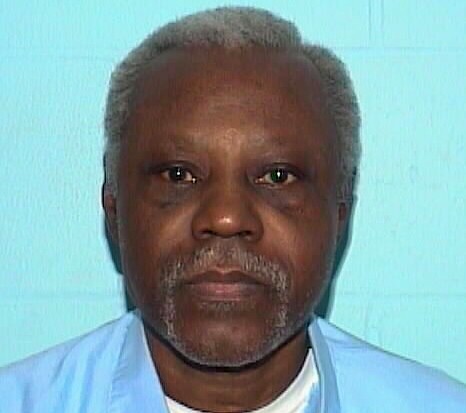
Donald Middlebrooks
Murderer Brian Kevin Rosenfeld
Murderer · USA · 1985
Brian Kevin Rosenfeld Brian Kevin Rosenfeld was sentenced to three concurrent l…
23 victims
Brian Kevin Rosenfeld
Murderer · USA · 1985
Brian Kevin Rosenfeld Brian Kevin Rosenfeld was sentenced to three concurrent l…
23 victims
 Yahweh ben Yahweh
Murderer · USA · 1980
Yahweh ben Yahweh was born and legally named Hulon Mitchell Jr. (October 27, 19…
23 victims
Yahweh ben Yahweh
Murderer · USA · 1980
Yahweh ben Yahweh was born and legally named Hulon Mitchell Jr. (October 27, 19…
23 victims
 Russell Ellwood
Murderer · USA · 1991
Russell Ellwood was a former taxi driver. Authorities suspected him of killing…
20 victims
Russell Ellwood
Murderer · USA · 1991
Russell Ellwood was a former taxi driver. Authorities suspected him of killing…
20 victims
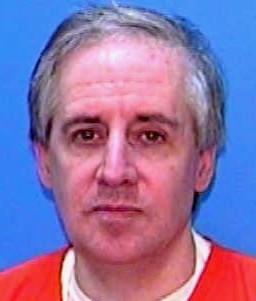 Richard Lynch
Murderer · USA · 1999
Name: Richard Lynch · Date of birth: 06/19/53 · Case citation: Florida Supreme…
2 victims
Richard Lynch
Murderer · USA · 1999
Name: Richard Lynch · Date of birth: 06/19/53 · Case citation: Florida Supreme…
2 victims
 Paul Merhige
Mass murderer · USA · 2009
Paul Merhige was held without bail and remained in prison awaiting trial. · 200…
4 victims
Paul Merhige
Mass murderer · USA · 2009
Paul Merhige was held without bail and remained in prison awaiting trial. · 200…
4 victims
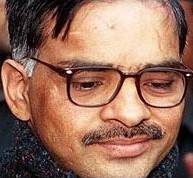 Javed Iqbal
Serial killer · Pakistan · 1998
Javed Iqbal (born 1956 in Lahore, Punjab, Pakistan; died October 8, 2001, in La…
100 victims
Javed Iqbal
Serial killer · Pakistan · 1998
Javed Iqbal (born 1956 in Lahore, Punjab, Pakistan; died October 8, 2001, in La…
100 victims
 Willie Ray Williams
Murderer · USA · 1980
Willie Ray Williams was executed by lethal injection in Texas on January 31, 19…
1 victim
Willie Ray Williams
Murderer · USA · 1980
Willie Ray Williams was executed by lethal injection in Texas on January 31, 19…
1 victim
 Haji Mammadov
Murderer · Azerbaijan · 1995
Haji Mammadov was a former officer of the Crime Investigation Department of the…
11 victims
Haji Mammadov
Murderer · Azerbaijan · 1995
Haji Mammadov was a former officer of the Crime Investigation Department of the…
11 victims
 John Joseph Romano
Murderer · USA · 1985
John Joseph Romano was convicted of killing jeweler Roger Joel Sarfaty during t…
2 victims
John Joseph Romano
Murderer · USA · 1985
John Joseph Romano was convicted of killing jeweler Roger Joel Sarfaty during t…
2 victims
- Gender
- male
- Country
- USA
- Location
- Davidson County, Tennessee, USA
- Date of birth
- July 30, 1962
- Age at first offence
- 25
- Characteristics
- torture
- Victim profile
- Kerrick Majors, 14
- Method of murder
- Stabbing with knife
- Date(s) of murder
- April 26, 1987
- Years active
- 1987
- Date of arrest
- 2 days after
- Status
-
Sentenced to death
Sentenced to death on September 22, 1989
Case information
Donald Ray Middlebrooks was sentenced to death for torturing and murdering 14-year-old Kerrick Majors in 1987.
Timeline
- 1987 — Donald Ray Middlebrooks, his wife Tammy Middlebrooks, and their friend Roger Brewington chased Kerrick Majors and other boys from a make-shift flea market in East Nashville; Majors was abducted, tortured, and killed.
- April 26, 1987 — The murder occurred.
- 1992 — A death sentence was overturned by the Court because one aggravating factor duplicated felony murder and failed to narrow the class of death-eligible defendants as required under the Tennessee Constitution.
- January 15, 1998 — The Tennessee Court of Criminal Appeals filed its opinion affirming the sentence of death.
- July 6, 1999 — The Tennessee Supreme Court upheld Middlebrooks’ death sentence.
- November 11, 1999 — The sentence was scheduled to be carried out as provided by law unless otherwise ordered.
The offence
On April 26, 1987, Donald Ray Middlebrooks, a twenty-four-year-old white male, his wife Tammy Middlebrooks, a seventeen-year-old white female, and their friend Roger Brewington, a sixteen-year-old white male, set up a make-shift flea market in East Nashville.
When Kerrick Majors, the fourteen-year-old black male victim, and four of his friends walked over and began looking at items on a table, Tammy Middlebrooks yelled “Hey, ya'll niggers leave our stuff alone.” Donald Middlebrooks and Brewington chased after Majors and the other boys. Shannon Stewart testified that as he fled, he saw Brewington grab Majors and drag him toward the table, where Middlebrooks struck Majors in the face and knocked him down. Stewart heard Middlebrooks order Majors to “shut up nigger.”
Majors’ mother was told what had happened and called the police, and she also searched for her son. The next day, Majors’ naked body was found lying face up in a dry creek bed in the woods near the area where Majors had been abducted. Majors’ body had bruises, scrapes, abrasions, and burns.
A woven belt was strapped around Majors’ left wrist. A large laceration was sliced across his right wrist. Two large lacerations made by a sharp instrument formed an “X” across his chest. A bloody and swollen gash was above his left eye. His nose was bloody, red, badly burned, and had pieces of skin missing. His lips were swollen and lacerated, and the inside of his mouth was bloody and lacerated. His testicles were badly swollen, and his legs were covered in blood down to his feet. There was urine on different parts of his body and on a rag tied in a tight knot around his neck that had been used as a gag in his mouth. A bloody stick lay next to his head. Finally, there were two deep stab wounds in his chest a couple of inches apart.
The autopsy indicated the cause of death was a stab wound to the chest, and the murder weapon was plunged to a depth of 3.3 inches. The “X” carved into Majors’ chest was inflicted before the stab wounds, and at least one of the stab wounds was made prior to his death. Majors was alive and conscious throughout the infliction of the injuries and wounds. Majors lived a minimum of five to six minutes and a maximum of thirty minutes from the time of the stab wounds. He would have been conscious part of the time while bleeding to death after being stabbed.
Majors was described as 4'11" tall and weighing 112 pounds.
Investigation
Two days after the murder, Brewington voluntarily notified the police that Donald Middlebrooks and Tammy Middlebrooks were involved. Brewington showed officers a bloodstained knife with a brass knuckle handle that had been used on Majors. Brewington also told officers where to find Middlebrooks and his wife.
After being arrested, Middlebrooks gave a video-taped confession to the police in which he admitted his own involvement but described Brewington as the leader.
Arrest and confession
In the video-taped confession, Middlebrooks admitted involvement and described Brewington as the leader. Middlebrooks said that after dragging Majors into the woods, Brewington tied Majors’ hands and then slapped him, beat him with brass knuckles, urinated in his mouth, and made him swallow. Middlebrooks stated that Brewington beat Majors’ testicles, threatened to cut “it” open, beat Majors’ mouth and tongue with a stick, and stuck a stick in Majors’ anus. Whenever Majors resisted or screamed, Brewington continued to beat and slap him. Brewington told Majors he was taking him “back to the days of Roots.” Brewington “dropped” the knife repeatedly on top of Majors, gagged him, and slashed Majors’ wrist.
Middlebrooks said Tammy Middlebrooks also slapped Majors and burned his nose with a cigarette lighter. Middlebrooks said that Majors was crying and begging them to stop. When Majors pleaded that all he wanted to do was to “go to school and get an education,” Brewington replied “F--- you, nigger.” Middlebrooks also said that Majors’ cries were getting on his nerves so he asked Brewington to stop. Brewington then kissed Majors on the forehead and told him that it was “the kiss of death.”
In the video-taped confession, Middlebrooks admitted stabbing Majors once and striking him across his legs with a switch. Middlebrooks explained that both he and Brewington stabbed Majors once. In a prior statement, however, Middlebrooks claimed he inflicted both stab wounds.
Middlebrooks also claimed he did not stop the torture because he was afraid of Brewington and is “scared to fight.” He also contended that he stabbed Majors to prove he was “cooler” than Brewington.
Trial (resentencing and appeals)
Resentencing and jury findings
Middlebrooks’ case proceeded to a Davidson County resentencing hearing for first degree murder where the jury again sentenced him to death.
The trial court instructed the jury that “no death penalty shall be imposed unless you unanimously find that the State has proven beyond a reasonable doubt that the murder was especially heinous, atrocious, or cruel in that it involved torture or depravity of mind.”
The trial court instructed the jury on definitions:
- Heinous means grossly wicked or reprehensible, abominable, odious, vile.
- Atrocious means extremely evil or cruel, monstrous, exceptionally bad, abominable.
- Cruel means disposed to inflict pain or suffering, causing suffering, painful.
- Torture means the infliction of severe physical or mental pain upon the victim while he remains alive and conscious.
- Depravity means moral corruption, wicked or perverse act.
At the resentencing hearing, the jury found that the aggravating circumstance—Tenn. Code Ann. § 39-2-203(i)(5) (1982), that the murder was “especially heinous, atrocious, or cruel in that it involved torture or depravity of mind”—outweighed the evidence of mitigating factors. The jury sentenced Middlebrooks to death.
Issues raised on appeal
After the case was docketed as a death penalty appeal, three issues were specified for oral argument:
- whether Tenn. Code Ann. § 39-2-203(i)(5) (1982) applied in the case was constitutional;
- whether the prosecutor’s closing argument violated Middlebrooks’ right to due process;
- whether the sentence of death was disproportionate.
(1) Constitutionality of the aggravating circumstance
Middlebrooks argued the aggravating circumstance was unconstitutionally vague and that its application violated the Tennessee Constitution and the United States Constitution. The Tennessee Supreme Court rejected his claim and concluded that the aggravating circumstance was constitutionally applied.
The Tennessee Supreme Court’s analysis also referenced the trial court’s jury instructions and explained that the “especially heinous, atrocious, or cruel” language in Tennessee’s statute was modified and limited by the phrase “in that it involved torture or depravity of mind.”
The Tennessee Supreme Court concluded the proof in this case was sufficient to establish both torture and depravity of mind as defined by prior decisions.
(2) Prosecutorial misconduct in closing argument
Middlebrooks contended the prosecutor engaged in misconduct in three ways: emphasizing the victim’s family’s desire that the death penalty be returned, introducing and arguing racial issues, and making extensive references to the Bible and scripture.
The Tennessee Supreme Court concluded:
- The prosecutor’s statement about the victim’s family’s wishes to impose the death penalty was improper.
- The prosecutor did not commit misconduct by using and arguing racial animus evidence and racial epithets.
- The prosecutor’s biblical references were improper, including a remark equating the jury with “the tool of the Lord.”
The Tennessee Supreme Court then applied an “affected the verdict to the prejudice of the defendant” harmless-error framework and concluded the prosecutor’s misconduct did not prejudicially affect the jury’s verdict.
The Supreme Court included the prosecutor’s argument about the victim’s family’s wishes verbatim:
We are not asking you to kill anybody. Each one of you said you follow the law, and if the punishment, under the law, should be death, you swore that you could impose that verdict. That is your oath. Kerrick Majors lays in his grave, six feet under, but the last memory of looking up and seeing this defendant thrust his knife into him twice, he cries out for justice. His family asks you to impose the death penalty. The State asks you to impose the death penalty. The facts support it. He deserves it. Justice demands it on the facts and the law.
The Supreme Court also reproduced portions of the biblical-reference argument verbatim from the record:
[Defense counsel] has asked you to consider something else. He has asked you to consider the book where the words of our Lord are written, vengeance is mine. This lady [victim's mother] has come to this courtroom, not for vengeance, but to turn this over to you, the law. If she was after vengeance, this case would have never made it here. The same book that says vengeance is mine says whoever sheddeth man's blood, whoever sheddeth man's blood, then by man shall his blood be shed. The Lord meant for the system of laws and justice to govern societies wherever they are, and you are the tool of the Lord, that part of justice-[objection by defense counsel].
The Supreme Court further described the defense counsel objection in the biblical-reference portion as:
[objection by defense counsel].
Additionally, the Court of Criminal Appeals’ appendix excerpt included the final closing argument racial references by the prosecutor verbatim:
The testimony in this case tells you more about Donald Middlebrooks from the days it happened, from Shannon Stewart, than all the psychologists that you can bring in this courtroom, from 1989 to the present. Shannon Stewart told you more about this man than any Ph[.]D. could ever do. * * * * And when we found out from his psychologist that the psychologist had conveniently neglected to dictate on the transcription words such as we [sic] used racial epithets. The complexity of this murder dealt with race. * * * * You decide this case on evidence. We've said that, and there are some pretty ugly things in this case that are embarrassing and frightening to many of you on the jury. What happened in this case is every mother's worst nightmare, but even so, in this case, because, no doubt, Kerrick Majors had been told that there were a small group of people in this world who will never like you, no matter what you do, what you become, or how you treat them. They will only see your skin. We note that on direct appeal, the supreme court held that Stewart's testimony was admissible: The testimony is clearly relevant to show premeditation and a motive for the victim's brutal slaying. The testimony is also relevant to contradict the defendant's statement that Roger Brewington was the leader in the commission of the offense. In addition, given the relevancy of the statements, we find that the prejudicial effect did not substantially outweigh their probative value. State v. Banks, 564 S.W.2d 947, 951 (Tenn.1978). Accordingly, we hold that the trial court correctly admitted Shannon Stewart's testimony about these statements. Middlebrooks, 840 S.W.2d at 330.
The Court of Criminal Appeals appendix also reproduced the trial court’s ruling verbatim on the racial-belief evidence:
What I needed to do and did do is read the transcript so I could understand exactly what the questions and answers were, and it appears to me that it is relevant, and I have conducted the requisite balancing test and find it to be admissible, if the State chooses to introduce it. In response to your argument that the stated basis of admissibility previously was to prove premeditation. You have to put that in the context. That was in a case where both phases were being tried, and the proof was being introduced in the guilt or innocence phase, so the State would not have been addressing that at sentencing. For purposes of this hearing, where this jury is just hearing all this for the first time, the evaluation has to be made independent of that totally, which, you know, for the reason I just stated, did not address before, but it is relevant and admissible for sentencing. That is the evaluation I have conducted, not based on what was done the last time, because it is apples and oranges.
The appendix excerpt also reproduced Shannon Stewart’s testimony about the appellant’s statements verbatim:
[The appellant] was telling me stuff, you know, that I really didn't, you know, care to listen to at that age, you know, telling me like he was KKK and he said a nigger walked up to him and said, Hi, and he hit him in his mouth and he had a little ring on, a tiger head, and he showed me some blood in the creases of his ring, and stuff.
In the body of the Tennessee Supreme Court opinion, the Court included quotations about Middlebrooks’ role in the capture and infliction of pain:
“Middlebrooks by his own admission fully participated in the capture of Kerrick Majors and in the infliction of severe physical and mental pain to the victim by acts of unimaginable cruelty, despite the young victim’s pleas for his life,” Anderson wrote.
(3) Proportionality review
The Tennessee Supreme Court conducted a comparative proportionality review under Tenn. Code Ann. § 39-13-206(c)(1)(D) (1997). The Court stated it began with a presumption that the death sentence was proportionate to first degree murder.
The Tennessee Supreme Court concluded that the penalty was not aberrant and was neither excessive nor disproportionate to the penalty imposed for similar crimes.
Previously overturned death sentence and resentencing
Middlebrooks initially had been convicted of felony murder and sentenced to death based on two aggravating circumstances:
- the murder was “especially heinous, atrocious, or cruel in that it involved torture or depravity of mind,”
- and that the victim was killed in the commission of a felony.
On appeal, the Court remanded for resentencing because the (i)(7) felony murder aggravating circumstance duplicated the felony murder offense and failed to narrow the class of death-eligible defendants under Article I, Section 16 of the Tennessee Constitution.
At resentencing, the jury again sentenced Middlebrooks to death based on the (i)(5) aggravating circumstance, “especially heinous, atrocious, or cruel in that it involved torture or depravity of mind.”
Sentencing
Middlebrooks was sentenced to death by electrocution.
The Tennessee Supreme Court affirmed the sentence of death on July 6, 1999.
The Tennessee Supreme Court stated:
“We have considered the entire record in this cause and find that the sentence of death was not imposed in any arbitrary fashion and that the evidence supports the jury’s finding that the aggravating circumstance outweighed mitigating circumstances beyond a reasonable doubt,” Chief Justice Riley Anderson wrote for the court.
The Tennessee Supreme Court affirmed the sentence of death and ordered that it be carried out on the 11th day of November, 1999, unless otherwise ordered by the Court or other proper authorities.
Other people and related outcomes
Co-defendants’ outcomes
Roger Brewington was eventually tried as an adult and convicted of first degree murder, aggravated kidnapping, and armed robbery. Brewington received consecutive sentences of life, 40 years, and 35 years. Because he was a minor, he was not eligible for the death penalty.
Tammy Middlebrooks pled guilty to first degree murder and was sentenced to life imprisonment.
Third-party reference in another case
The Tennessee Supreme Court granted the state’s application to appeal a decision ordering a new trial and sentencing hearing for death row inmate Sylvester Smith. The Court of Criminal Appeals found that Smith’s attorney was deficient for failing to adequately investigate his client’s competency, sanity, and mental retardation, rendering the trial and sentencing hearings fundamentally unfair. The Supreme Court also granted a review of one issue raised by Smith in response to the state’s application concerning whether Smith’s rights were violated by the prosecution’s failure to disclose an alleged deal with a witness in exchange for testimony against Smith. Sylvester Smith was sentenced to death for the 1989 Memphis murder of Olive Brewer. Smith beat the elderly widow, cut her throat, and stole her jewelry and other items. His fingerprints and a bloody knife identified by Smith’s sister were found in the victim’s home.
Other details
Victim characteristics and testimony
The State’s proof described Kerrick Majors as a good student who loved school, not a violent person, and not carrying a weapon.
Majors’ mother’s health deteriorated after the murder; she was on medication and would not leave the house except for doctor appointments. She had a nervous breakdown, suffered from panic attacks, and had not been able to sleep at night since the murder.
Majors’ older brother blamed himself and suffered from mood swings.
Shannon Stewart testified that he spoke with Middlebrooks the morning of the murder. Middlebrooks told Stewart that he was a member of the KKK, that he “hated niggers,” and that he punched a black man just for saying hello. Stewart also testified that he overheard Middlebrooks order Majors to “shut up nigger.”
Mitigation evidence and expert testimony
Middlebrooks’ cousins James and Carol Sue Little, and his half-sister Sharon Fuchs, testified about his childhood.
Middlebrooks grew up in Texas. His father died when he was four. His mother remarried and had another child, Sharon Fuchs, before she again divorced. The proof indicated Middlebrooks’ mother left the children at night with relatives or took them to bars. She often brought men to the house, and the children sometimes heard or saw their mother having sex. Sharon Fuchs testified that sometimes these men would molest her while her mother watched. She said she, Middlebrooks, and other children in the family were molested by different family members. She testified that Middlebrooks was often left alone with a male relative who had sexually abused him, and Middlebrooks’ mother would grab him between his legs and watch him use the bathroom. Sharon Fuchs testified that the small town lacked counseling services or social service agencies where they could seek help for sexual abuse, and no one in the family discussed or admitted the family’s problems.
The proof indicated Middlebrooks was often angry and got into trouble. He was sent to a Methodist Home for Children in Waco for two years. Later, he was twice sent to prison. Between prison stays, he started to have seizures. On one occasion, he climbed a water tower and threatened to commit suicide. He was hospitalized more than once at a mental institution.
A psychologist, Dr. Jeffrey L. Smalldon, performed neuropsychological and psychological evaluations. Smalldon concluded that Middlebrooks had a severe borderline personality disorder, including inconsistent behavior, instability of mood, a marked identity disturbance, impulsive and reckless behavior, poor anger control, and recurring suicidal or self-destructive acts.
Smalldon testified that documents from other mental health professionals indicated Middlebrooks suffered from substance abuse, psychotic personality disorder, and schizophrenia. Smalldon testified that Middlebrooks also had a mild degree of organic brain impairment causing him to be more impulsive and less able to delay responses. Smalldon also testified that Middlebrooks exhibited characteristics of adults who were sexually abused as children.
During cross-examination, Smalldon admitted Middlebrooks confessed to a greater involvement in Majors’ death than he had in the video-taped confession. Smalldon disclosed that Middlebrooks admitted it was his idea to hold Majors for ransom, that he helped tie Majors up, and that he urinated on Majors. Smalldon said Middlebrooks was a chronic liar to resolve discrepancies between the police video-taped confession and the confession made to him. Smalldon conceded Middlebrooks had never expressed any remorse to him. Smalldon agreed there were some indications in the medical records of malingering, and he testified these indications were not inconsistent with mental illness.
In rebuttal, the State introduced testimony of two experts. One testified that Middlebrooks was exaggerating mental illness symptoms, that he was competent to stand trial, that he did not have an insanity defense, and that he was not committable. The expert testified he could not say whether Middlebrooks was mentally ill. The other expert testified he made no finding of mental illness and did not consider a personality disorder to be a mental illness.
Evidence and role in the murder
The Tennessee Supreme Court summarized that Middlebrooks participated in brutal torture for approximately four hours before finally stabbing Majors. The victim was mocked, urinated upon, severely beaten, cut, raped with a stick, and had his genitals beaten. The Court stated Majors was alive and conscious throughout the torture and kept pleading that he wanted to “go to school and get an education.”
The Court referenced possible motives from Middlebrooks’ confession, including that he stabbed Majors to prove he was “cooler” than Brewington, retaliation after knocking over an item on the flea market table, and that he said he stabbed to end the torture and put Majors out of his misery.
The Tennessee Supreme Court stated there was no evidence Majors provoked the attack and that Majors was a small fourteen-year-old boy who was unarmed and defenseless. The Court stated there was no evidence Middlebrooks felt remorse and that, despite claims his role was slight, evidence showed he helped drag Majors into the woods and participated in acts of torture inflicted on a helpless victim. The Court also stated that Middlebrooks admitted stabbing the victim at least once and initially resisted arrest while later providing a confession that attempted to minimize his role.
The Tennessee Supreme Court concluded that Middlebrooks had little to show a strong potential for rehabilitation.

Spotted an error, or have more information about this case?