
John Joseph Romano
Murderer Brian Kevin Rosenfeld
Murderer · USA · 1985
Brian Kevin Rosenfeld Brian Kevin Rosenfeld was sentenced to three concurrent l…
23 victims
Brian Kevin Rosenfeld
Murderer · USA · 1985
Brian Kevin Rosenfeld Brian Kevin Rosenfeld was sentenced to three concurrent l…
23 victims
 Marvin Gray
Murderer · USA · 1975
Marvin Gray was convicted killer who claimed responsibility for 23 slayings and…
23 victims
Marvin Gray
Murderer · USA · 1975
Marvin Gray was convicted killer who claimed responsibility for 23 slayings and…
23 victims
 Yahweh ben Yahweh
Murderer · USA · 1980
Yahweh ben Yahweh was born and legally named Hulon Mitchell Jr. (October 27, 19…
23 victims
Yahweh ben Yahweh
Murderer · USA · 1980
Yahweh ben Yahweh was born and legally named Hulon Mitchell Jr. (October 27, 19…
23 victims
 Russell Ellwood
Murderer · USA · 1991
Russell Ellwood was a former taxi driver. Authorities suspected him of killing…
20 victims
Russell Ellwood
Murderer · USA · 1991
Russell Ellwood was a former taxi driver. Authorities suspected him of killing…
20 victims
 Matthew Hoffman
Murderer · USA · 2010
Matthew Hoffman was an unemployed tree trimmer and had an obsession with trees…
3 victims
Matthew Hoffman
Murderer · USA · 2010
Matthew Hoffman was an unemployed tree trimmer and had an obsession with trees…
3 victims
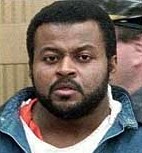 Colin Ferguson
Mass murderer · USA · 1993
Colin Ferguson was convicted of the December 7, 1993 shooting of 25 people aboa…
6 victims
Colin Ferguson
Mass murderer · USA · 1993
Colin Ferguson was convicted of the December 7, 1993 shooting of 25 people aboa…
6 victims
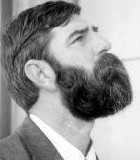 Louis Van Schoor
Serial killer · South Africa · 1986
Louis van Schoor was a security guard and an ex-policeman who was convicted and…
39 victims
Louis Van Schoor
Serial killer · South Africa · 1986
Louis van Schoor was a security guard and an ex-policeman who was convicted and…
39 victims
 Miyoko Sumida
Serial killer · Japan · 2003
Miyoko Sumida was a Japanese serial killer who killed six people in a case invo…
6 victims
Miyoko Sumida
Serial killer · Japan · 2003
Miyoko Sumida was a Japanese serial killer who killed six people in a case invo…
6 victims
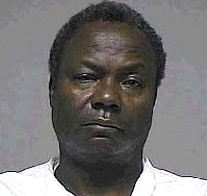 Said Ali Biyad
Mass murderer · USA · 2006
Said Ali Biyad — defendant. · Christie Foster — representing the Commonwealth's…
4 victims
Said Ali Biyad
Mass murderer · USA · 2006
Said Ali Biyad — defendant. · Christie Foster — representing the Commonwealth's…
4 victims
 Janice Carter
Murderer · United Kingdom · 2011
Janice Carter was a Margate woman. She was 29 at the time of being jailed for a…
1 victim
Janice Carter
Murderer · United Kingdom · 2011
Janice Carter was a Margate woman. She was 29 at the time of being jailed for a…
1 victim
- Gender
- male
- Country
- USA
- Location
- Oklahoma County, Oklahoma, USA
- Date of birth
- November 23, 1958
- Age at first offence
- 27
- Characteristics
- robbery, abuser, alcohol
- Victim profile
- Roger Joel Sarfaty, 52 (jeweler) / Lloyd Thompson, 63 (acquaintance)
- Method of murder
- St abbing with knife
- Date(s) of murder
- October 16, 1985 / July 19, 1986
- Years active
- 1985–1986
- Date of arrest
- —
- Status
-
Executed
Executed by lethal injection in Oklahoma on January 29, 2002
Case record: John Joseph Romano
Background
John Joseph Romano was convicted of killing jeweler Roger Joel Sarfaty during the course of a robbery. At the time of Sarfaty’s murder, Romano was serving a prison sentence and had been out on weekend furlough from Friday evening, October 11 through Sunday evening, October 13.
A friend first discovered Roger Joel Sarfaty’s body around 11:00 P.M. Tuesday, October 15, 1985.
Romano’s death sentence for Sarfaty’s murder was also presented in relation to a prior unrelated prosecution involving Lloyd Thompson. The State jointly tried Woodruff and Romano for the Sarfaty murder, and separately the State had jointly tried Woodruff and Romano for murdering another Romano acquaintance, Lloyd Thompson.
The Oklahoma Court of Criminal Appeals later overturned the Thompson convictions and death sentences, holding that the trial court had erred in jointly trying Woodruff and Romano for that murder. After the overturning, the State retried Woodruff and Romano for Thompson’s murder.
Romano also had a death sentence for murdering 63-year-old Lloyd Thompson during a July 19, 1986, robbery in Oklahoma City. Woodruff received a sentence of life imprisonment without parole for his part in the murder of Lloyd Thompson.
The offence
Roger Joel Sarfaty was killed during the course of a robbery.
Sarfaty was an acquaintance of Romano. Sarfaty was found bound hand and foot and strangled, beaten about the head, and stabbed five times.
Sarfaty’s apartment was robbed. Sarfaty kept as many as six large containers of quarters in his apartment, which were missing after the murder.
The State’s theory was that the murder occurred on Saturday, October 12, between 2:00 A.M. and 2:00 P.M. Romano and Woodruff did not have alibis for at least part of that time period.
On Sunday, October 13, Woodruff’s girlfriend observed that Woodruff had a lot of jewelry which he could not afford.
Before the Sarfaty murder, a friend testified that Romano was in need of money and had asked a friend, Tracy Greggs, to help him rob Sarfaty and stated he would have to kill him.
Romano and Woodruff attempted to purchase a television at a mall store on Saturday afternoon, October 12, using only quarters. When mall security took them into custody for being drunk and disorderly, Romano had a "lock blade" folding knife. He was also wearing an expensive-looking gold necklace. Romano and Woodruff were then intoxicated during the attempt to purchase the television.
Investigation and arrest
When police arrested Woodruff ten months after Sarfaty’s murder, Woodruff called his girlfriend and asked her to "clear" the house.
Trial
The State jointly tried Woodruff and Romano for the Sarfaty murder.
The jury convicted both men of first degree malice murder and robbery with a dangerous weapon.
In a related matter prior to the Sarfaty trial, the State had jointly tried Woodruff and Romano for murdering Lloyd Thompson. In that case, a jury convicted both men of first degree murder and sentenced them to death.
During sentencing in the Sarfaty trial, the State introduced evidence of the Thompson convictions and death sentences.
Romano and Woodruff later appealed their convictions and sentences.
Sentencing
In the Sarfaty case, Romano’s jury sentenced him to death. Woodruff received a sentence of life imprisonment without parole.
During the pendency of Romano’s appeal from his conviction and sentence for the Sarfaty murder, the Oklahoma Court of Criminal Appeals vacated his conviction for the Thompson murder.
The Oklahoma Court of Criminal Appeals had concluded in the Thompson matter that the trial court had erred in jointly trying Woodruff and Romano for that murder.
After the Oklahoma Court of Criminal Appeals vacated the Thompson convictions and death sentences, the State retried Woodruff and Romano for Thompson’s murder, and separate juries again convicted both men of first degree murder. Romano’s second jury sentenced him to death, and Woodruff received a sentence of life imprisonment without parole.
Appeals
The U.S. Supreme Court considered a petition involving Romano. The opinion excerpt included a dissent.
The U.S. Supreme Court docket information included: No. 92-9093, John Joseph Romano, petitioner v. Oklahoma. The record excerpt also referenced Romano v. Oklahoma, 827 P. 2d 1335 (1992) (Thompson Direct Appeal) and Romano v. Oklahoma, 847 P. 2d 368, 390 (1993) (Sarfaty Direct Appeal).
Supreme Court dissent (verbatim quotations and statements)
Justice Ginsburg, with whom Justice Blackmun, Justice Stevens, and Justice Souter join, dissented.
The dissent discussed Caldwell v. Mississippi and quoted a prosecutor’s statements in Caldwell:
"[Y]our [sentencing] decision is not the final decision"; "the decision you render is automatically reviewable by the [state] Supreme Court."
The dissent stated:
"[I]t is constitutionally impermissible to rest a death sentence on a determination made by a sentencer who has been led to believe that the responsibility for determining the appropriateness of the defendant's death rests elsewhere."
The dissent then described the penalty phase in Romano’s trial:
At the penalty phase of Romano's trial for the murder of Roger Safarty, the prosecution sought to put before the jury a copy of the "Judgment and Sentence" from an earlier and unrelated prosecution. That document revealed that Romano had been convicted of the first degree murder of Lloyd Thompson and that he was to be executed for that crime. Defense counsel offered to stipulate to Romano's conviction for the Thompson murder, but objected to the jury's consideration of the death sentence. The trial court overruled defense counsel's objection and admitted the "Judgment and Sentence" document.
The dissent quoted language in the "Judgment and Sentence" document:
That document stated that Romano had given "no good reason why [the] Judgment and Sentence [for the murder of Thompson] should not be pronounced," and commanded the State's Department of Corrections "to put the said JOHN JOSEPH ROMANO to death."
The dissent stated that Romano urged on appeal in the Safarty case that, under Caldwell v. Mississippi, it was impermissible to place before the jury evidence that Romano was already under sentence of death.
The dissent quoted the Oklahoma court’s acknowledgement about relevance:
"[l]earning that the defendant had previously received a death sentence for another murder could diminish the jury's sense of importance of its role and mitigate the consequences of [its] decision."
The dissent quoted the Oklahoma court’s conclusion about relevance:
"evidence of the imposition of the death penalty by another jury is not relevant in determining the appropriateness of the death sentence for the instant offense."
The dissent quoted the Oklahoma court’s conclusion:
"when the jury is properly instructed as to its role and responsibility in making such a determination we cannot, on appellate review, conclude that the jur[ors] inany way shifted the responsibility for their decision or considered their decision any less significant than they would otherwise."
The dissent quoted a further Caldwell formulation:
" `truly awesome responsibility' "
The dissent quoted Caldwell’s language about responsibility:
The dissent quoted Caldwell’s description of jury responsibility:
"whether a specific human being should die at the hands of the State"
The dissent quoted Caldwell’s description of jurors:
placed in a very unfamiliar situation and called on to make a very difficult and uncomfortable choice
The dissent quoted the reasoning about appellate review and responsibility:
"minimize the importance of its role," "believ[ing] that the responsibility for determining the appropriateness of the defendant's death rest[ed] elsewhere."
The dissent quoted that the evidence of prior sentence "could diminish the jury's sense of importance of its role and mitigate the consequences of [its] decision."
The dissent discussed the risk and referenced cases and quoted material from those cases:
"`[T]he jury's awarenessof defendant's prior death sentence would diminish its sense of responsibility . . . . Assuming that defendant was already going to be executed, the jurors may consider their own decision considerably less significant than they otherwise would.'"
and:
"`another jury had previously resolved the identical issue adversely to defendant.' "
and:
" `send a message' of extreme disapproval for the defendant's acts,"
and quoted:
"unacceptable in light of the ease with which [it] could have been minimized."
The dissent stated:
Unable to say that the jury's consideration of Romano's prior death sentence "had no effect on the [instant] sentencing decision," Caldwell , 472 U. S., at 341, I would vacate that decision and remand the case for a new sentencing hearing.
The dissent included notes and margins, including statements that the trial court admitted the Thompson "Judgment and Sentence" document over Romano’s objection despite his offer to stipulate to the conviction, and additional discussion of appellate review.
Outcome
Romano was convicted and sentenced to death for the Sarfaty murder. The legal process included the U.S. Supreme Court’s consideration of Romano’s petition, which included a dissent.
Execution dates for Romano and Woodruff were requested. The U.S. Supreme Court denied final appeals of death row inmates John Joseph Romano and David Wayne Woodruff.
Aftermath
John Joseph Romano was executed by lethal injection in Oklahoma on January 29, 2002.
The final meal listed for Romano was spaghetti with meatballs, ravioli and sausage and strawberry or cherry cheesecake.
Romano’s final words were:
"For whoever I've wronged, I'd like for them to forgive me. I'd like to tell my family and friends I love you. Thanks for your love and support."
Attorney General news release material included a statement attributed to W.A. Drew Edmondson, Attorney General:
"It is the practice of this office, before an execution date is requested, to examine each case to determine if the testing of DNA evidence should occur," and: "We have determined, after a thorough review, that DNA testing would be of no value and would have no relevance as to actual innocence. I see nothing that should stand in the way of these executions being carried out."
The excerpt also included scheduling information for execution of Romano and Woodruff, with Romano scheduled for Jan. 29 and Woodruff scheduled for Jan. 31 in Oklahoma.
Other details
John Joseph Romano was described in the materials as having been serving a prison sentence at the time of the Sarfaty murder, and he had been on weekend furlough from Friday evening, October 11 through Sunday evening, October 13.
Tracy Greggs was named as the friend asked by Romano to help rob Sarfaty, and Romano had stated he would have to kill him.
Roger Joel Sarfaty’s body was found Oct. 16, 1985, in his Oklahoma City apartment in addition to the friend’s discovery around 11:00 P.M. Tuesday, October 15, 1985.
Romano and Woodruff were described as having no alibis for at least part of the time period during which the State theorized the murder occurred.
The materials included identification of Romano as age 43 and Woodruff as age 42 in connection with denial of final appeals, and Sarfaty as age 52 and Thompson as age 63.
Romano’s execution was carried out by lethal injection in Oklahoma on January 29, 2002.
Spotted an error, or have more information about this case?