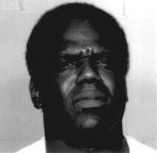
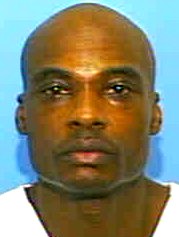
Willie Ray Williams
Murderer Ervil LeBaron
Murderer · USA · 1972
Ervil Morrell LeBaron (1925 to August 16, 1981) was the leader of a polygamous…
35 victims
Ervil LeBaron
Murderer · USA · 1972
Ervil Morrell LeBaron (1925 to August 16, 1981) was the leader of a polygamous…
35 victims
 Brian Kevin Rosenfeld
Murderer · USA · 1985
Brian Kevin Rosenfeld Brian Kevin Rosenfeld was sentenced to three concurrent l…
23 victims
Brian Kevin Rosenfeld
Murderer · USA · 1985
Brian Kevin Rosenfeld Brian Kevin Rosenfeld was sentenced to three concurrent l…
23 victims
 Marvin Gray
Murderer · USA · 1975
Marvin Gray was convicted killer who claimed responsibility for 23 slayings and…
23 victims
Marvin Gray
Murderer · USA · 1975
Marvin Gray was convicted killer who claimed responsibility for 23 slayings and…
23 victims
 Yahweh ben Yahweh
Murderer · USA · 1980
Yahweh ben Yahweh was born and legally named Hulon Mitchell Jr. (October 27, 19…
23 victims
Yahweh ben Yahweh
Murderer · USA · 1980
Yahweh ben Yahweh was born and legally named Hulon Mitchell Jr. (October 27, 19…
23 victims
 Lewis Williams
Murderer · USA · 1983
Lewis Williams was tried in the Cuyahoga County Court of Common Pleas and found…
1 victim
Lewis Williams
Murderer · USA · 1983
Lewis Williams was tried in the Cuyahoga County Court of Common Pleas and found…
1 victim
 Larry Davis
Murderer · USA · 1986
Larry Davis (May 28, 1966 - February 20, 2008) changed his name to Adam Abdul-H…
6 victims
Larry Davis
Murderer · USA · 1986
Larry Davis (May 28, 1966 - February 20, 2008) changed his name to Adam Abdul-H…
6 victims
 John Joseph Romano
Murderer · USA · 1985
John Joseph Romano was convicted of killing jeweler Roger Joel Sarfaty during t…
2 victims
John Joseph Romano
Murderer · USA · 1985
John Joseph Romano was convicted of killing jeweler Roger Joel Sarfaty during t…
2 victims
 Raymond Clark
Murderer · USA · 2009
Annie Marie Le (July 3, 1985 – September 8, 2009) was a 24-year-old American do…
1 victim
Raymond Clark
Murderer · USA · 2009
Annie Marie Le (July 3, 1985 – September 8, 2009) was a 24-year-old American do…
1 victim
- Gender
- male
- Country
- USA
- Location
- Harris County, Texas, USA
- Date of birth
- February 12, 1956
- Age at first offence
- 24
- Characteristics
- robbery
- Victim profile
- Claude Schaffer Jr., 70 (delicatessen employee)
- Method of murder
- Shooting ( .380 semi-automatic pistol)
- Date(s) of murder
- October 13, 1980
- Years active
- 1980
- Date of arrest
- 3 days after
- Status
-
Executed
Executed by lethal injection in Texas on January 31, 1995
Outcome
Willie Ray Williams was executed by lethal injection in Texas on January 31, 1995.
Background
Willie Ray Williams was sent to death row for the killing of Claude Shaffer Jr. during a robbery of Joseph’s Delicatessen and Grocery store in Houston on October 13, 1980.
Williams was 17 at the time he was convicted of capital murder and sentenced to death. The case described him as having a history of criminal activity before he was old enough to vote, including multiple robberies known to have been committed before the deli incident.
Williams and Joseph Nichols were both sent to death row for killing Claude Schaffer Jr. on October 13, 1980, while robbing the delicatessen where he worked. The case described that prosecutors identified each man as the one who fired the fatal shot in their separate trials.
Williams pleaded guilty to a capital murder case. It was described as unusual because Williams pleaded guilty to a capital murder case.
Williams tried to waive the jury trial, but jury trial was described as mandatory in capital punishment cases.
The case described Parker as a former girlfriend of Williams who testified against him in a plea-bargain attempt she made with the prosecutor earlier in an effort to save herself.
The offence
On October 13, 1980, Williams and Joseph Nichols drove to a spot near Joseph’s Delicatessen and Grocery in Houston and entered the deli. Williams was armed with a .380 semi-automatic pistol, while Nichols had a snub-nosed .38 revolver.
Williams and Nichols pointed their pistols at deli employee Claude Shaffer Jr., who was behind the counter near the cash register. When Shaffer saw the guns, he began to bend over or squat down.
Both Nichols and Williams opened fire on Shaffer, who collapsed behind the counter. Shaffer died from a single gunshot wound.
The case included testimony from deli employee Cindy Johnson that she was watching Shaffer after Nichols and Williams pointed their guns at him and that Shaffer never reached for a gun that he kept under the counter.
Investigators found a fully loaded .45 semi-automatic pistol on a shelf under the counter. There were no fingerprints on it and no .45 caliber fired bullets or empty shell casings were found.
After firing at Shaffer, Nichols and Williams ran to the door, and Nichols went out. The case stated that Williams either exited or partially exited and then turned and fired once more at Shaffer.
Williams then went behind the counter and grabbed the deli’s cash box, then ran out of the deli with his gun and the cash box.
The case stated that Nichols and Williams joined co-defendants Charlotte Parker and Evelyn Harvey in a waiting car and drove away.
The case reported that a few days later Williams, Nichols, Parker, and Harvey were arrested.
The case stated that Nichols told Parker and Harvey “he had shot the man” and “he thought he shot him in the chest,” and that Williams said he had run back into the deli and shot the man again.
The case described that on October 13, 1980 around 9 a.m., Williams and friends Charlotte Parker, Evelyn Harvey and Joseph Nichols were crammed into a blue Toyota when they decided to rob Joseph’s Delicatessen and Grocery store in Houston. It described that the girls stayed parked in the getaway car down the road while Williams and Nichols went in.
The case described that they went to the back of the store and Williams got a quart of beer from the cooler, and then came up front and Nichols got a corn dog. It also described that Williams and Nichols pulled their guns on 70-year-old deli employee Claude Shaffer Jr. and demanded that all the money be put into a sack.
The case described a sequence in which Shaffer bent down as if to get a sack and came up from behind the counter with a gun, Nichols got scared and fired a shot, Shaffer then squatted down behind the counter to hide, and Williams and Nichols started to run out but Williams turned around and saw Shaffer squatting with his back towards him.
The case further described that Williams shot Shaffer in the back, killing him, and ran back into the store to get the cash register box containing $8 and to look and see if he had hit Shaffer.
Investigation and arrest
A few days after the deli shooting, the case stated that Williams, Nichols, Parker, and Harvey were arrested.
The case stated that Williams was arrested three days later and confessed to the murder.
The case described that investigators found that Williams had already committed six other robberies that were known about by the time of the capital murder conviction, and described that his previous record included three other robberies and that later police found out two more robberies after the deli incident.
Trial
Williams and Joseph Nichols were both tried separately. The case stated that prosecutors in their separate trials identified each man as the one who fired the fatal shot.
The case described that Parker testified against Williams during trial as part of a plea-bargain attempt to save herself.
The case included a quotation attributed to Blake Hall, one of Williams attorneys:
“Parker really hurt Williams case during the trial,” Blake Hall, one of Williams attorneys, said. “She’s the one who told the police about all of the other robberies. She only did it because she was involved and she wanted to get off easier.”
The case described that Williams pleaded guilty to a capital murder case. It included a quotation attributed to Joseph A. Garnett, another one of Williams attorneys:
“I’ve never heard of that before,” Joseph A. Garnett, another one of Williams attorneys, said. “It was strange because Williams lead counsel, Joe Cannon, had told him to plead guilty. He thought that since Williams committed the crime he would have a better chance at getting life imprisonment rather than the death penalty if he did so.”
The case described that the jurors found Williams actions to be deliberate so they gave him the death penalty rather than life imprisonment.
The case included a statement attributed to Matt Pletcher, a Williams attorney, about attempts to appeal:
“We tried to appeal on grounds of ineffective assistance of counsel, but the courts wouldn’t go with it,” Williams attorney Matt Pletcher said. “We also tried to appeal on the petty crimes that Parker had admitted as evidence because they were irrelevant to this case. We tried everything, but the governor wouldn’t pardon him. I just felt really sorry for him.”
Sentencing and appeals
Williams was sentenced to death for capital murder.
The case described that a federal district judge overturned the Nichols conviction because of the inconsistency, but that ruling was reversed by the 5th U.S. Circuit Court of Appeals.
The case described that Williams’s appeals were attempted on grounds of ineffective assistance of counsel, and on grounds related to petty crimes that Parker had admitted as evidence being irrelevant to this case, but that the courts did not go with ineffective assistance of counsel and that the governor would not pardon him.
Aftermath
Williams was executed on January 31, 1995 by lethal injection in Texas.
The case described that Williams’s execution was different from others and a first for Texas prison guards because two people were to be executed the same day. It stated that Clifton Russell was the other person executed that day, and that they were kept in separate buildings so one wouldn’t have to see the others being rolled out.
Williams’s last statement was:
“There’s love and peace in Islam.”

Spotted an error, or have more information about this case?