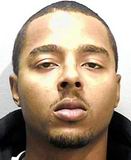
Lovelle Mixon
Murderer Joshua Wayne Andrews
Murderer · USA · 2000
Joshua Wayne Andrews was a serial killer accused of killing several people in V…
5 victims
Joshua Wayne Andrews
Murderer · USA · 2000
Joshua Wayne Andrews was a serial killer accused of killing several people in V…
5 victims
 Leon Davis Jr.
Murderer · USA · 2007
Leon Davis Jr. was sentenced to death on April 29, 2011, for the execution-styl…
5 victims
Leon Davis Jr.
Murderer · USA · 2007
Leon Davis Jr. was sentenced to death on April 29, 2011, for the execution-styl…
5 victims
 Raymond Lee Oyler
Murderer · USA · 2006
Raymond Lee Oyler was convicted for starting the 2006 Esperanza fire in Riversi…
5 victims
Raymond Lee Oyler
Murderer · USA · 2006
Raymond Lee Oyler was convicted for starting the 2006 Esperanza fire in Riversi…
5 victims
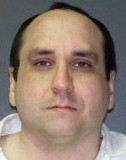 Terry Lee Hankins
Murderer · USA · 2000
Terry Lee Hankins was convicted by a jury of capital murder and was sentenced t…
5 victims
Terry Lee Hankins
Murderer · USA · 2000
Terry Lee Hankins was convicted by a jury of capital murder and was sentenced t…
5 victims
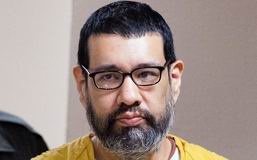 Anthony Garcia
Murderer · USA · 2008
Anthony Garcia was a former doctor who was found guilty on all counts including…
4 victims
Anthony Garcia
Murderer · USA · 2008
Anthony Garcia was a former doctor who was found guilty on all counts including…
4 victims
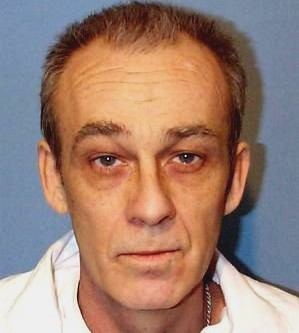 Daniel Lee Siebert
Serial killer · USA · 1979
Daniel Lee Siebert (53) was an American serial killer on Alabama's death row. D…
12 victims
Daniel Lee Siebert
Serial killer · USA · 1979
Daniel Lee Siebert (53) was an American serial killer on Alabama's death row. D…
12 victims
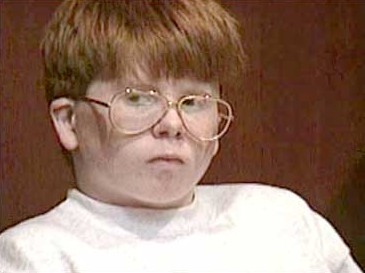 Eric Smith
Homicide · USA · 1993
Eric M. Smith was an incarcerated American criminal. Derrick Robie was a four-y…
1 victim
Eric Smith
Homicide · USA · 1993
Eric M. Smith was an incarcerated American criminal. Derrick Robie was a four-y…
1 victim
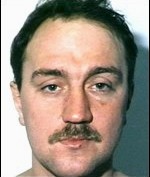 Ian Simms
Murderer · United Kingdom · 1988
Ian Simms — pub landlord and convicted of Helen McCourt’s murder. · Helen McCou…
1 victim
Ian Simms
Murderer · United Kingdom · 1988
Ian Simms — pub landlord and convicted of Helen McCourt’s murder. · Helen McCou…
1 victim
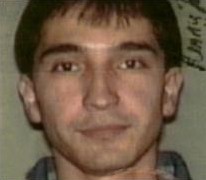 Simon Gonzales
Murderer · USA · 1999
Simon Gonzales Simon J. Gonzales had suicidal tendencies, and his estranged wif…
3 victims
Simon Gonzales
Murderer · USA · 1999
Simon Gonzales Simon J. Gonzales had suicidal tendencies, and his estranged wif…
3 victims
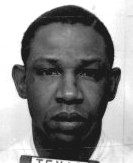 Rickey Lynn Lewis
Murderer · USA · 1990
Rickey Lynn Lewis was convicted of capital murder involving George Newman and s…
1 victim
Rickey Lynn Lewis
Murderer · USA · 1990
Rickey Lynn Lewis was convicted of capital murder involving George Newman and s…
1 victim
- Gender
- male
- Country
- USA
- Location
- Oakland, California , USA
- Date of birth
- 1982
- Age at first offence
- 27
- Characteristics
- convicted rapist, fugitive, police officer, armed robbery, rape, drugs, alcohol
- Victim profile
- Motorcycle Sergeant Mark Dunakin, 40; Motorcycle Officer John Hege, 41; SWAT Sergeant Ervin Romans, 43; and SWAT Sergeant Daniel Sakai, 35
- Method of murder
- Shooting
- Date(s) of murder
- March 21, 2009
- Years active
- 2009
- Date of arrest
- —
- Status
-
Died in custody
Shot and killed by Oakland police department as they returned fire after being fired upon by an assault weapon the same day
Case overview
Lovelle Mixon was a convicted felon who was wanted on a no-bail warrant for a parole violation. On March 21, 2009, Mixon shot and killed four Oakland police officers and injured one additional officer during shootings in Oakland, California. Two shootings of Oakland, California police officers took place on Saturday, March 21, 2009, when four officers were killed by a convicted felon wanted on a no-bail warrant for a parole violation. Mixon initially shot and killed two Oakland police officers during a traffic stop, then killed two more when SWAT team officers attempted to apprehend him about two hours later.
Mixon staged an ambush of the SWAT officers from his hiding place and was killed in a barrage of gunfire as the officers returned fire in self-defense. The killings made it one of the worst days for law enforcement in California history. It was the single deadliest attack on California police officers since the Newhall massacre in 1970, when four California Highway Patrol officers were shot and killed by two men in Santa Clarita, California. The incident brought the total number of Oakland police officers killed in the line of duty since 1867 to 51.
Victims
Killed
- Motorcycle Sergeant Mark Dunakin, age 40, had been with the Oakland Police Department since 1991. Officers Dunakin, Romans, and Sakai died on March 21, 2009.
- Motorcycle Officer John Hege, age 41, had been with the Oakland Police Department since 1999. Officer Hege died from his injuries on March 24, 2009.
- SWAT Sergeant Ervin Romans, age 43, had been with the Oakland Police Department since 1996. Romans died on March 21, 2009.
- SWAT Sergeant Daniel Sakai, age 35, had been with the Oakland Police Department since 2000. Sakai died on March 21, 2009.
Injured
- SWAT Sergeant Pat Gonzales was shot through the left shoulder and had a second bullet ricochet off his helmet. He was treated for his injuries and released.
Perpetrator
Lovelle Mixon was identified as an Oakland resident, age 26. He worked sporadically as a plumber and custodian.
Mixon wielded two different weapons—a 9mm semiautomatic handgun and an SKS rifle—during his assaults on the Oakland police officers. During the first assault, authorities said he used a semiautomatic pistol to shoot and kill Motorcycle Officer John Hege and Motorcycle Sergeant Mark Dunakin. Two hours later, Mixon opened fire with an SKS rifle or assault rifle from a hiding place in his sister’s nearby apartment, killing SWAT team sergeants Ervin Romans and Daniel Sakai. A local woman recalled seeing Mixon in a burgundy Buick during the previous few days.
Mixon had an extensive criminal history. Beginning at age 13, he was arrested multiple times for battery. By age 20, he was serving a Corcoran state prison sentence following a felony conviction for assault with a deadly weapon and armed robbery in San Francisco. After he was paroled, Mixon went in and out of prison.
When the shootings happened, he was living in East Oakland at his grandmother’s house and was wanted on a no-bail arrest warrant for violating his current parole conditions. The Oakland Police Department learned on March 20, 2009, that Mixon was linked by DNA to the February 5, 2009 rape of a 12-year-old girl who was dragged off the street at gunpoint in the East Oakland neighborhood where Mixon’s sister lived. On May 4, 2009, a state laboratory confirmed that DNA linked Mixon not only to that rape, but also to his robbery and rape of two young women about seven hours before the shootings.
Investigators said Mixon may have committed several other rapes during recent months, although no convictions or indictments had been secured before his death. If Mixon had been arrested for his parole violation, he would have faced at most six months in prison; if convicted of rape, he faced a life sentence.
Mixon had also been the primary suspect in a previous murder case; however, due to lack of evidence, he had been charged only with lesser violations: possession of drug paraphernalia, forgery, identity theft, attempted grand theft, and receiving stolen property.
Timeline
- February 5, 2009 — A 12-year-old girl was dragged off the street at gunpoint in the East Oakland neighborhood where Mixon’s sister lived.
- March 20, 2009 — The Oakland Police Department learned that Mixon was linked by DNA to the February 5, 2009 rape of a 12-year-old girl.
- March 21, 2009 — At about 1:08 p.m., two motorcycle officers shot and killed during a traffic stop; at about 3:20 p.m., SWAT officers attempted to apprehend Mixon; Mixon was killed in a barrage of gunfire as officers returned fire in self-defense.
- March 22 — California Gov. Arnold Schwarzenegger ordered flags at the state capitol flown at half-staff in honor of the slain officers.
- March 22 — Officer John Hege was pronounced officially brain dead.
- March 23 — Officer John Hege’s organs were harvested.
- March 23 — Hege was disconnected from life support that evening, and he died afterwards.
- March 24 — A vigil was held by the City of Oakland at the site of the shootings.
- March 24 — Lovelle Mixon’s sister, Enjoli Mixon, appeared in a Fremont court after being arrested on a bench warrant stemming from an October, 2008 misdemeanor drug charge.
- March 25 — United States Congressman Jerry McNerney gave a speech on the floor of the House of Representatives honoring the four slain police officers.
- March 25 — A vigil for Lovelle Mixon, sponsored by the Uhuru Movement, was held along Oakland’s MacArthur Blvd., close to where the shootings occurred.
- March 27 — A public funeral for the four officers was held at Oakland’s Oracle Arena.
- March 31 — Approximately 500 people attended the funeral service for Mixon.
- March 31 — Several hundred people gathered in the early evening at an event organized by Pastors of Oakland.
- April 10 — The Oakland Athletics paid tribute to the four slain officers at Oakland-Alameda County Coliseum in a special ceremony before its home opener against the Seattle Mariners.
- May 4, 2009 — A state laboratory associated with the Oakland Police Department reported that Mixon’s DNA linked him to the rape of a 12-year-old girl on February 5, 2009, and also proved that he robbed and raped two young women on the morning of the shootings.
Background
Mixon was wanted on a no-bail warrant for a parole violation. He was living in East Oakland at his grandmother’s house and worked sporadically as a plumber and custodian. His family members were well aware of his criminal activity. According to a cousin, Mixon had recently purchased his handgun (illegal for a felon on parole), as well as the burgundy Buick he had been driving during the traffic stop, by using profits from his most recent criminal endeavor, pimping.
Mixon was talking with his uncle on a cell phone at the time of the traffic stop and promised to call back afterwards. Curtis Mixon stated:
“But he was probably thinking about that piece he had in the car,” said Curtis Mixon, 38, “and he wasn’t about to go back to jail.”
An Oakland Police Department spokesman said the department had issued a no-bail, parole revocation warrant for Mixon’s arrest after he failed to appear for a meeting with his parole officer. Gordon Hinkle, a spokesman for the state Department of Corrections and Rehabilitation, said:
“We did pick him up previously, (and) he has been looked at as a suspect in other serious crimes.” “He was a suspect in a murder, but due to lack of evidence, on a homicide, he was charged with other violations.”
Mixon was convicted in 2002 of assault with a deadly weapon after an armed robbery in San Francisco, family members said. He served time in San Francisco County Jail and Corcoran State Prison. He had been released on parole in 2007, then was sent back to prison for nine months in 2008 after he had violated his parole. His attorney in the assault case, Lisa DewBerry, declined comment Sunday.
Mixon married his childhood girlfriend, Amara Langston, while he was behind bars, and worked briefly as a janitor in Hayward once he got out. His family said he was most recently released from prison in November. Family members said he skipped a home visit from his parole officer about three weeks before the shootings. Mixon’s grandmother said he had gotten angry at his parole officer because the agent had missed earlier appointments. Hinkle said that the family's assertion that the parole agent had missed a meeting was “highly unlikely” and said he was researching the matter:
“highly unlikely,” but added that he is researching the matter.
The offence
Double rape
On May 4, 2009, it was confirmed by a state laboratory that Mixon’s DNA proved him responsible for a double rape that took place on the morning of March 21, hours before the shootings.
At approximately 5:40 AM, seven hours before the first part of Mixon’s assault on the officers, two young women in their 20s were setting up a food court at High Street and International Boulevard. Mixon pulled a handgun and marched them four blocks at gunpoint, raped them, and then fled the scene. The sources stated that the handgun was believed to be the one he used hours later in the shootings.
Traffic stop on MacArthur Boulevard
At 1:08 PM PDT, approximately seven hours after the rapes, Mixon’s burgundy 1995 Buick sedan was pulled over by two motorcycle officers, Officer John Hege and Sergeant Mark Dunakin, for a traffic violation, in the 7400 block of MacArthur Boulevard in East Oakland. The area was one block away from Eastmont Town Center and an Oakland Police Department substation.
After collecting Mixon’s driver’s license, Sergeant Dunakin became suspicious that the license was fake and signaled to his partner to arrest Mixon. Authorities said Mixon accessed a semi-automatic pistol and exited the vehicle, opening fire without warning. After both officers collapsed to the ground, Mixon approached them and fired execution-style directly into their heads. He briefly remained standing over the bodies before fleeing on foot. Some witnesses reported Mixon fired six shots. Neither officer was able to return fire.
Witnesses called 911 and ran over to the stricken officers and started CPR. Sergeant Dunakin died at the scene. Officer Hege was mortally wounded, shot behind the left ear. Dunakin had radioed that he was going to make the stop, notifying authorities of the vehicle involved.
Mixon’s relatives said that when he was stopped by the police motorcycles, he was apparently looking for a parking space. They said he had bought the car a week earlier from someone in San Francisco. Mixon was having a phone conversation with his uncle, Curtis Mixon, just before the first shooting. Curtis Mixon said:
“He said, ‘The police just pulled up behind me. Let's see what's going on. I'll hit you back.’ ” “ Curtis Mixon said, ‘He never hit me back.’ ”
Investigation and apprehension
A manhunt followed the shootings. After about two hours, about 200 officers from the Oakland Police Department, Alameda County Sheriff's Office, BART police, and the California Highway Patrol combed the area for the suspect. Nearby streets were cordoned off, and an entire area of East Oakland was closed to traffic.
Acting on an informant’s tip, SWAT team officers raided the apartment of Mixon’s sister. The sources stated that Mixon had managed to secure an SKS carbine, likely stored in his sister’s apartment after securing it. SWAT officers broke down the door while throwing nonlethal shock (flashbang) grenades.
During the search operation, as SWAT entered a bedroom, Mixon ambushed them from the closet and shot through the wall and door. One member of the SWAT team, Sergeant Ervin Romans, was killed immediately. Sergeant Pat Gonzales was wounded, hit in the shoulder. Sergeant Daniel Sakai was also shot.
Alameda County Sheriff's Deputy Derrick Pope and other officers returned fire. Mixon was felled by the barrage of gunfire, yet managed to fatally wound Sergeant Sakai before dying.
The chaotic shootout occurred in a darkened apartment filled with smoke from officers’ nonlethal shock grenades and dust from bullets ripping through drywall. It ended when SWAT team officers returned fired and killed Mixon.
Statements and disputed connections mentioned
Oakland investigators were perplexed about what triggered Mixon’s sudden outburst of violence against their officers. Oakland police Capt. Steve Tull said:
“This is a strange one,” said Oakland police Capt. Steve Tull, who is overseeing the investigation. “We don't know what his motivation is.”
In connection with the investigation, authorities said they were not aware of Mixon’s possible connection to an earlier slaying in Alameda County and that investigators had tried to figure out why Mixon would commit such a crime.
Aftermath
Race-related issues and community response
Some race-related issues surfaced following the shootings. Because Mixon was black and the slain officers were white and/or of mixed race, some community leaders voiced concern that the confrontation might lead to increased tensions between Oakland’s black community and the Oakland Police Department. Several Oakland citizens had stepped forward to help at the scene of the motorcycle police shootings, while about 20 bystanders had taunted police as they gathered at the scene.
Uhuru House activists, who promoted “African internationalism,” handed out flyers in the neighborhood where Mixon was shot, inviting people to a rally where they might “uphold the resistance” of “Brother Lovelle Mixon.” The San Francisco Bay View, which identified itself as a “National Black Newspaper,” suggested that the killing of four police officers was a victory for “the people” and referred to Lovelle Mixon’s death as a “murder.” Approximately 60 people attended the March 25 Uhuru House rally in support of Mixon. The demonstrators marched down MacArthur Boulevard, with some carrying signs proclaiming “genocide.”
Caroline Mixon, Lovelle Mixon’s cousin, paid a public tribute to the Oakland police, thanking them for “serv[ing] and protect[ing] the city of Oakland.”
Funerals, vigils, and memorials
- March 24 vigil: A vigil was held by the City of Oakland at the site of the shootings. At least 1,000 people attended, including Mayor Ron Dellums, Police Chief Howard Jordan, and Lieutenant Governor John Garamendi.
- March 25 vigil for Mixon: A vigil for Lovelle Mixon, sponsored by the Uhuru Movement, was held along Oakland’s MacArthur Blvd. close to where the shootings occurred. It was attended by Mixon’s mother, his wife, some of his family members, and approximately 60 other people.
- March 27 officers’ funeral: A public funeral for the four officers was held at Oakland’s Oracle Arena and attended by at least 21,000 people.
- March 31 Mixon funeral: Approximately 500 people attended the funeral service for Mixon. The service included family members, friends, singers and poets, held at Fuller Funerals on International Boulevard in Oakland. A Nation of Islam minister asked everyone to remember that they were gathered to support Mixon’s family, and a family member spoke of how Mixon had strayed from God.
- March 31 pastors event: Several hundred people gathered in the early evening at an event organized by Pastors of Oakland, composed mainly of black ministers. Caroline Mixon praised the Oakland Police Department for serving and protecting the people of Oakland. Reverend Doug Stevens exhorted those gathered to live as if they were already in heaven, “without regard to color or class.”
- March 21 Olympics baseball tribute: April 10 - The Oakland Athletics paid tribute to the four slain officers at Oakland-Alameda County Coliseum in a special ceremony before its home opener against the Seattle Mariners. A’s players donned Oakland Police caps and debuted “OPD” patches on their white home uniforms, which were worn for the remainder of the 2009 season.
- Memorial highway and bridge designations: A portion of Interstate 580 (California) was called the Sgt. Daniel Sakai Memorial Highway. On March 21, 2012, the third anniversary of the shootings, the Keller Avenue Bridge on I-580 was designated as the Sergeant Mark Dunakin, Sergeant Ervin Romans, Sgt. Daniel Sakai and Officer John Hege Memorial Bridge.
Officers’ funeral details and tributes
The morning of March 27, 2009, Oakland citizens filled the overpasses and streets near the Oracle Arena. By the time the service started at 11:00 a.m. PDT, the arena was filled to its capacity of 19,000, including the entire 800-strong Oakland police force. An overflow of at least 2,000 persons spilled over into the adjacent Oakland Coliseum. Police officers from around the state and nation attended, as well as a contingent from Canada.
Speakers included Governor Arnold Schwarzenegger, Senators Dianne Feinstein and Barbara Boxer, and Attorney General Jerry Brown. Oakland Mayor Ron Dellums attended but was asked not to speak by at least two of the slain officers’ families. Congresswoman Barbara Lee, Lt. Gov. John Garamendi, Mayor Gavin Newsom of San Francisco, and Mayor Antonio Villaraigosa of Los Angeles also attended but did not speak.
Oakland Police Department Chaplain Father Jayson Landeza read a letter of sympathy and support from Barack and Michelle Obama. Relatives, friends, and comrades delivered eulogies praising the slain officers’ heroism, humanity, and selfless service to the people of Oakland.
Oakland Police Captain Edward Tracey, commander of the SWAT team that cornered Mixon, said:
“These were my men,” he said. “They died doing what they loved: riding on motorcycles, kicking in doors, serving on SWAT.”
Captain Tracey also thanked the witnesses who called 911 and attempted to aid Sergeant Dunakin and Officer Hege:
“To the citizens who called 911 last Saturday to report our officers down and the brave man...I hope you hear me, sir...the brave man who provided CPR to our fallen heroes, we thank you, we thank you from the bottom of our hearts. Your actions let us know that they, that these officers, did not die in vain. That the people, that they were there to serve, were the ones that helped them in the end.”
Captain Tracey’s “brave man” was Clarence Ellis, who used his own coat to tamponade the arterial blood spurting from Sergeant Mark Dunakin’s neck.
Retired Oakland Police Department Lieutenant Lawrence Eade admonished the press regarding attempts to link the police officers’ killings to the January 1, 2009, slaying of Oscar Grant. He said:
“For those who manipulate the story, may your careers be extremely difficult until you tell the truth... This is not about your ratings, this is about a tragic loss... The citizens are not arming themselves against the police, there is no war between us and you cannot create one!”
After the service concluded at approximately 3:00 p.m. PDT, long cavalcades of police cars escorted the officers’ coffins to their final resting places, and the thousands of mourners dispersed.
Additional details on Officer Hege’s death
Officer John Hege remained on life support to preserve his organs for donation. His death made Saturday’s shootings in East Oakland the deadliest attacks on California law enforcement in almost four decades. Investigators described him as brain dead and stated that his organs were harvested while he awaited official declaration and subsequent organ harvesting.
Other details
- Officer John Hege was declared brain dead at Highland Hospital in Oakland and remained on life support to preserve his organs for donation.
- His organ and tissue donations saved four lives and enhanced 50 others.
- Officer John Hege had been with the Oakland Police Department since 1999.
- SWAT Sergeant Daniel Sakai, age 35, was killed on March 21, 2009 in the line of duty along with fellow officers Sergeant Ervin Roman, Sergeant Mark Dunakin, and Officer John Hege. Daniel was survived by wife Jenni and daughter Jojiye.
- At a vigil for Mixon, the Uhuru Movement supported Mixon’s family. Mixon’s mother, his wife, some of his family members, and approximately 60 other people attended.
Spotted an error, or have more information about this case?