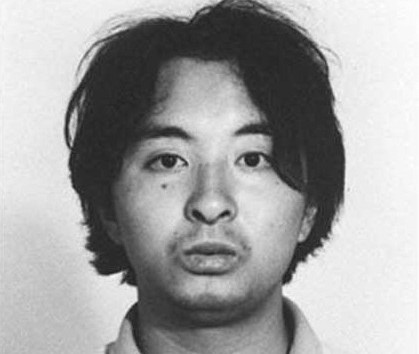
Tsutomu Miyazaki
Serial killer Hiroaki Hidaka
Serial killer · Japan · 1996
Hiroaki Hidaka (日高 広明; Hidaka Hiroaki; April 1962 – December 25, 2006) was a Ja…
4 victims
Hiroaki Hidaka
Serial killer · Japan · 1996
Hiroaki Hidaka (日高 広明; Hidaka Hiroaki; April 1962 – December 25, 2006) was a Ja…
4 victims
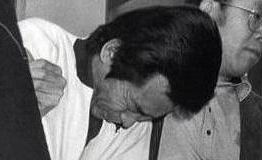 Kiyotaka Katsuta
Serial killer · Japan · 1972
Kiyotaka Katsuta (勝田 清孝; Katsuta Kiyotaka; August 29, 1948 - November 30, 2000)…
22 victims
Kiyotaka Katsuta
Serial killer · Japan · 1972
Kiyotaka Katsuta (勝田 清孝; Katsuta Kiyotaka; August 29, 1948 - November 30, 2000)…
22 victims
 Yoshio Kodaira
Serial killer · Japan · 1932
Yoshio Kodaira ( 小平 義雄 , Kodaira Yoshio , January 28, 1905 - October 5, 1949) w…
10 victims
Yoshio Kodaira
Serial killer · Japan · 1932
Yoshio Kodaira ( 小平 義雄 , Kodaira Yoshio , January 28, 1905 - October 5, 1949) w…
10 victims
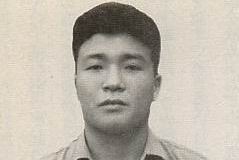 Genzo Kurita
Serial killer · Japan · 1948
Genzo Kurita ( 栗田 源蔵 , Genzo Kurita , 1926 - October 14, 1959) was a Japanese s…
8 victims
Genzo Kurita
Serial killer · Japan · 1948
Genzo Kurita ( 栗田 源蔵 , Genzo Kurita , 1926 - October 14, 1959) was a Japanese s…
8 victims
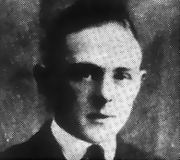 Ernest Brown
Murderer · 1933
Ernest Brown was executed by hanging at Armley prison in Leeds on February 6, 1…
1 victim
Ernest Brown
Murderer · 1933
Ernest Brown was executed by hanging at Armley prison in Leeds on February 6, 1…
1 victim
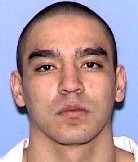 Robert Gene Garza
Mass murderer · USA · 2002
Robert Gene Garza (male; Hispanic; black hair; brown eyes; height 05'07"; weigh…
10 victims
Robert Gene Garza
Mass murderer · USA · 2002
Robert Gene Garza (male; Hispanic; black hair; brown eyes; height 05'07"; weigh…
10 victims
 Kürt Erich Tetzner
Murderer · Germany · 1929
Kürt Erich Tetzner (also known as Stranelli) was a German businessman born in 1…
1 victim
Kürt Erich Tetzner
Murderer · Germany · 1929
Kürt Erich Tetzner (also known as Stranelli) was a German businessman born in 1…
1 victim
 Miles Evans
Murderer · United Kingdom · 1997
Miles Evans was the stepfather of Zoe Evans. · Zoe Evans was a nine-year-old sc…
1 victim
Miles Evans
Murderer · United Kingdom · 1997
Miles Evans was the stepfather of Zoe Evans. · Zoe Evans was a nine-year-old sc…
1 victim
 Seth Privacky
Mass murderer · USA · 1998
Seth Privacky (June 2, 1980 - July 15, 2010) was sentenced to life in prison wi…
5 victims
Seth Privacky
Mass murderer · USA · 1998
Seth Privacky (June 2, 1980 - July 15, 2010) was sentenced to life in prison wi…
5 victims
- Gender
- male
- Country
- Japan
- Location
- Tokyo/Saitama, Japan
- Date of birth
- August 21, 1962
- Age at first offence
- 26
- Characteristics
- cannibalism, mutilation
- Victim profile
- Mari Konno, 4 / Masami Yoshizawa, 7 / Erika Namba, 4 / Ayako Nomoto, 5
- Method of murder
- Strangulation
- Date(s) of murder
- 1988 - 1989
- Years active
- 1988–1989
- Date of arrest
- July 23, 1989
- Status
-
Executed
Sentenced to death on April 14, 1997; executed by hanging on June 17, 2008
Case overview
Tsutomu Miyazaki was a Japanese serial killer. He murdered four girls aged between four and seven over a year-long period in the late 1980s in Tokyo and Saitama Prefecture. He strangled the children, took photographs, and sexually abused corpses. Investigators later described the case as involving mutilation and the consumption of flesh, and the use of videotapes and photos of victims.
STATUS
Sentenced to death on April 14, 1997; executed by hanging on June 17, 2008
Timeline
- August 21, 1962 — Tsutomu Miyazaki was born in Itsukaichi, Tokyo, and was prematurely born.
- May 1988 — Miyazaki’s grandfather died.
- August 22, 1988 — Mari Konno, 4, disappeared after being approached by Miyazaki; she was later strangled and photographed.
- September 1988 — Mari Konno’s kindergarten began its new term without her.
- October 3, 1988 — Miyazaki kidnapped and killed Masami Yoshizawa, 7, after persuading her to get into his car.
- December 12, 1988 — Miyazaki murdered Erika Namba, 4.
- February 6, 1989 — Mari Konno’s father Shigeo Konno found a box on his doorstep containing ashes, bone fragments, photographs, and ten baby teeth, and called the police.
- February 11, 1989 — A three-page letter arrived at the Konno home titled "Crime Confession" and signed "Yuko Imada."
- March 11, 1989 — Mari Konno was laid to rest.
- June 6, 1989 — Miyazaki grabbed Ayako Nomoto, 5, took photographs and videos, dismembered the corpse, and later hid remains in a cemetery area.
- July 23, 1989 — Miyazaki was apprehended in Hachioji after a father attacked him while he photographed his youngest daughter’s vagina.
- September 6, 1989 — Masami Yoshizawa’s remains were found in the forest near Komine Pass, Itsukaichi.
- Late 1980s (between October 1988 and June 1989) — Miyazaki killed three girls aged 4 to 7 in Hanno and Kawagoe, Saitama Prefecture, and Koto Ward, Tokyo.
- 1993 — A psychological evaluation expected to decide Miyazaki’s fate was due to be announced.
- April 14, 1997 — Miyazaki was sentenced to death.
- January 17, 2006 — The Supreme Court of Justice upheld the original death sentence.
- Early in 2006 — Miyazaki’s death sentence was upheld.
- June 17, 2008 — Miyazaki was executed by hanging.
Background
Miyazaki was known as "The Otaku Murderer," "The Little Girl Murderer," and "Dracula." His premature birth left him with deformed hands, with joints fused directly to the wrists, requiring him to move his entire forearm to rotate the hand. He was ostracized in elementary school and kept to himself. He read manga and comic books and later attended a local junior college to study to become a photo-technician.
After graduation in the spring of 1983, he worked at a printing plant owned by an acquaintance of his father. He shared with his eldest sister a two-room annex near his father’s printing business. He was described as courteous and as a mild-mannered, quiet, obedient employee during the day. He retained stacks of videotapes and read manga and comic books while incarcerated, watching anime on a small television in his cell.
Miyazaki’s mother was Rieko, and his father was Katsumi Miyazaki, who owned the Akikawa Shimbun. Miyazaki’s two younger sisters were Setsuko and Haruko. His grandfather was Shokichi, a man who had served on the city council. After his grandfather’s death in May 1988, Miyazaki’s life bonds with society were described as breaking.
Miyazaki confessed to police that he felt unable to talk to his parents about his problems and that he even thought about suicide. He also stated that whenever he saw a little girl playing on her own, it was almost like seeing himself.
The offence
Miyazaki murdered four girls and sexually abused them after killing. He strangled the victims and photographed them. Investigators described the murders as including mutilation and cannibalism, and he was described as a necrophile.
Mari Konno (age 4)
On August 22, 1988, Mari Konno, 4, left her home in Saitama to play with a friend. Shigeo Konno called the police at 6:23 pm after she failed to return. Witnesses and investigators later described Mari being picked up by Miyazaki, driven away, and slowly strangled in a forest. He then undressed her, fondled her, and left her nude body behind. He took photographs of Mari. He also took her clothing and photographed it.
After Mari’s murder, police search efforts included canvassing the area, using loudspeakers, and sending posters. Two boys and a housewife reported seeing Mari with a stranger, describing a pudgy man in his late thirties with curly hair, late thirties, about 170 cm tall, and wearing white slacks and a white summer sweater. Mari’s mother received a postcard that read:
- "There are devils about"
The fruitless hunt dwindled after four weeks, and in September Mari’s kindergarten began its new term without her.
After remains were recovered, Mari’s father said at the funeral:
"Her hands and feet didn't seem to be with the remains. When she gets to heaven, she won't be able to walk or eat. Please return the rest of her remains."
A later letter from "Yuko Imada" described changes in Mari’s dead body and stated:
"Before I knew it, the child's corpse had gone rigid. I wanted to cross her hands over her breast but they wouldn't budge. . . . Pretty soon, the body gets red spots all over it . . . . Big red spots. Like the Hinomaru flag. Or like you'd covered her whole body with red hanko seals. . . . After a while, the body is covered with stretch marks. It was so rigid before, but now it feels like its full of water. And it smells. How it smells. Like nothing you've ever smelled in this whole wide world."
Masami Yoshizawa (age 7)
On October 3, 1988, in Hanno, Saitama Prefecture, Miyazaki spotted Masami Yoshizawa, 7, walking along the roadside and coaxed her into his car. He drove her to hills above Komine Pass, where he strangled her to death. He then stripped her and sexually abused the corpse. Miyazaki left her remains less than 100 meters from where bones of Mari Konno lay, and then drove off. Masami was declared a missing person and posters were issued for her.
Masami’s remains were later found on September 6, 1989 in the forest near Komine Pass, Itsukaichi.
Erika Namba (age 4)
On December 12, Miyazaki murdered Erika Namba, 4. He lured her into his sedan and photographed her. He strangled her, wrapped the body in a sheet, and put it in the trunk. Investigators found Erika’s body the next day, with her hands and feet bound with nylon cord.
Strange phone calls had been received by Erika’s family, with the caller remaining silent. Erika’s father Shin’ichi Namba also received a postcard that read:
- "Erika. Cold. Cough. Throat. Rest. Death."
A worker at the Naguri Youth Nature House found some of Erika’s clothes a few days later, and hundreds of police searched the area.
Ayako Nomoto (age 5)
On June 6, 1989, Miyazaki grabbed Ayako Nomoto, 5, from a park after he had taken photographs of her. He took photographs and videos while she was alive and later led her into his Langley. He put her in his car, took her home, and videocaped her. He dismembered the corpse, consumed some flesh, and hid the remains in a cemetery area.
Ayako’s remains were identified through matching blood type and chest size. Police later reported that the stomach contents matched Ayako’s last meal.
A portion of the remains was discovered at the cemetery five days after police distributed 10,000 handbills with Ayako’s description and picture.
Investigation
Following Mari Konno’s disappearance, police patrols used loudspeakers to admonish parents to keep children in sight. Police sent 50,000 posters with Mari’s image to train stations and bus stops across Japan, and police spent man-days interviewing people around Mari’s home. Two boys and a housewife reported seeing Mari with a stranger and described the man.
Mari Konno’s family received strange telephone calls that rang without a response. After Mari’s disappearance, Yukie Konno received a postcard reading:
- "There are devils about"
In December 1988, investigators linked Erika Namba’s case to earlier disappearances when Erika’s body was discovered, prompting a special operations center. Authorities discovered that families of the three girls had received silent phone calls, and they received gruesome postcards with words cut from magazines to form phrases, including:
- "Erika. Cold. Cough. Throat. Rest. Death."
After Shigeo Konno found a box on his doorstep on February 6, 1989, it contained ashes, dirt, fragments of charred bones, and 10 baby teeth, along with photos and a copier-paper note reading:
- "Mari. Bones. Cremated. Investigate. Prove."
When Dr. Kazuo Suzuki of Tokyo Dental University first reported the teeth probably did not belong to Mari, he later changed his mind, saying the remains might be Mari’s. A police forensic expert then concluded that the bone fragments were human and that they were Mari Konno’s. On February 11, a three-page letter arrived at the Konno home titled "Crime Confession" and signed "Yuko Imada." It stated:
"I put the cardboard box with Mari's remains in it in front of her home," it began. "I did everything. From the start of the Mari incident to the finish. I saw the police press conference where they said the remains were not Mari's. On camera, her mother said the report gave her new hope that Mari might still be alive. I knew then that I had to write this confession so Mari's mother would not continue to hope in vain. I say again: the remains are Mari's."
Investigators identified the camera used for the photos as one commonly used by printers, and the box as a double-walled corrugated kind often used to ship camera lenses.
Handwriting experts examined the confession note but could not establish the author’s sex.
Arrest
Miyazaki was apprehended on July 23, 1989 in Hachioji after two sisters were playing near a public washstand. A father ran to find his daughter naked with a young man focusing a camera between her legs. Police apprehended Tsutomu Miyazaki on the charge of "forcing a minor to commit indecent acts."
Trial
Psychiatric evaluation during the period following his apprehension included findings that he had multiple personality disorder and schizophrenia. A team of psychiatrists from Tokyo University in 1997 concluded he was aware of the gravity and consequences of his crimes and was therefore accountable.
The case involved disputes in psychological testing. An earlier set of results was described as divided in later proceedings, including an extremely distorted personality and mental illness centered on multiple personality disorder or potential integration disorder syndrome. The district court accepted the first result and determined Miyazaki was competent, and the Tokyo High Court upheld the district court’s determination.
Sentencing
Miyazaki was sentenced to death by hanging on April 14, 1997.
He also appealed to have his sentence reduced to life imprisonment. He was described as voicing fear of being hanged and requesting American-style lethal injection.
Appeals
- A Supreme Court of Justice ruling on January 17, 2006 upheld the original death sentence.
- In 2001, a court in Japan ruled that Miyazaki must be executed, rejecting arguments that he should not be hanged because he was mentally ill and not responsible for his actions. The High Court in Tokyo ruled that although he suffered from a personality disorder, he was able to distinguish right from wrong at the time of the crimes.
- During an appellate trial closing arguments on November 24, 2005, defense counsel called for a retrial at a high court and a reexamination of his mental competence. Prosecutors demanded the appeal be rejected, and the Supreme Court’s No. 3 Petty Bench, chaired by Tokiyasu Fujita, was described as handing down a ruling next year.
During the November 24, 2005 closing remarks, defense lawyer Maiko Tagusari described medication Miyazaki received at the Tokyo Detention Center in Katsushika Ward and stated:
"If the death sentence is upheld, an appeal is necessary," Tagusari said.
Kensaku Iuchi of the Supreme Public Prosecutors Office said:
"There was no evidence that he was mentally ill when he killed the girls."
A lawyer for Miyazaki, Junji Suzuki, said about a desire for sentencing to life imprisonment:
"We want to build enough of a case for the judge to sentence Miyazaki to life in prison."
Outcome
Miyazaki’s death sentence was upheld early in 2006 and his execution was carried out on June 17, 2008 by hanging.
Other details
Miyazaki’s video collection included pornographic anime and slasher films, along with videos and pictures of his victims. Investigators described 5,763 videotapes found in his apartment after his arrest. The centerpieces of the collection included the first five Guinea Pig films, and he was described as using the second film in the series as a template for one of his killings.
A psychologist Dr. Susumu Oda concluded:
"Miyazaki's crimes were thrill killings of a rare kind."
"Yet you could call him a textbook case."
A law professor and psychotherapist Akira Ishii described Miyazaki’s killing as:
"It was like a game to him--a one-man play,"
In July 1989, police were described as believing they had found their serial killer after the apprehension. Seventeen days later, Miyazaki confessed to murdering Ayako Nomoto, and other confessions followed, including the murder of Erika Namba and Mari Konno.
In a letter written to police, Miyazaki’s confession included the "Crime Confession" letter signed "Yuko Imada." The pseudonym "Yuko Imada" was described as a pun on Japanese meaning "Now I'll Tell."
The record included a published discussion about whether Miyazaki was mad or bad, focusing on whether he was held criminally responsible. It also included discussion that he remained on death row for many years before execution, with him appealing for sentence reduction and requesting lethal injection instead of hanging.
At the funeral, Shigeo Konno made a statement asking for return of the remainder of Mari Konno’s remains:
Miyazaki’s father Katsumi Miyazaki refused to pay for legal defense and committed suicide after Miyazaki’s conviction. It was described that the father refused on the basis that it would be "unfair to the victims."

Spotted an error, or have more information about this case?