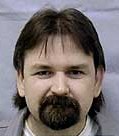
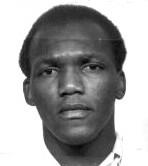
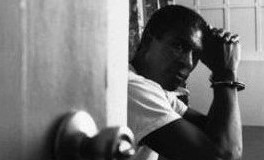
Kenneth Kenley
Murderer Brian Kevin Rosenfeld
Murderer · USA · 1985
Brian Kevin Rosenfeld Brian Kevin Rosenfeld was sentenced to three concurrent l…
23 victims
Brian Kevin Rosenfeld
Murderer · USA · 1985
Brian Kevin Rosenfeld Brian Kevin Rosenfeld was sentenced to three concurrent l…
23 victims
 Marvin Gray
Murderer · USA · 1975
Marvin Gray was convicted killer who claimed responsibility for 23 slayings and…
23 victims
Marvin Gray
Murderer · USA · 1975
Marvin Gray was convicted killer who claimed responsibility for 23 slayings and…
23 victims
 Yahweh ben Yahweh
Murderer · USA · 1980
Yahweh ben Yahweh was born and legally named Hulon Mitchell Jr. (October 27, 19…
23 victims
Yahweh ben Yahweh
Murderer · USA · 1980
Yahweh ben Yahweh was born and legally named Hulon Mitchell Jr. (October 27, 19…
23 victims
 Russell Ellwood
Murderer · USA · 1991
Russell Ellwood was a former taxi driver. Authorities suspected him of killing…
20 victims
Russell Ellwood
Murderer · USA · 1991
Russell Ellwood was a former taxi driver. Authorities suspected him of killing…
20 victims
 Perry Samuel
Murderer · United Kingdom · 2006
Perry Samuel was sentenced to life in prison (minimum 35 years) on March 8, 200…
2 victims
Perry Samuel
Murderer · United Kingdom · 2006
Perry Samuel was sentenced to life in prison (minimum 35 years) on March 8, 200…
2 victims
 Clinton Lee Spencer
Murderer · USA · 1989
Clinton Lee Spencer was sentenced to death on December 27, 1990. About 9:00 p.m…
1 victim
Clinton Lee Spencer
Murderer · USA · 1989
Clinton Lee Spencer was sentenced to death on December 27, 1990. About 9:00 p.m…
1 victim
 Ronald Allen Smith
Murderer · USA · 1982
Ronald Allen Smith (born September 7, 1957) was a Canadian man. He was sentence…
2 victims
Ronald Allen Smith
Murderer · USA · 1982
Ronald Allen Smith (born September 7, 1957) was a Canadian man. He was sentence…
2 victims
 Jermaine Marlow Wright
Murderer · USA · 1991
Jermaine Marlow Wright was born on 10/11/1972. He was Black and male. Jermaine…
1 victim
Jermaine Marlow Wright
Murderer · USA · 1991
Jermaine Marlow Wright was born on 10/11/1972. He was Black and male. Jermaine…
1 victim
- Gender
- male
- Country
- USA
- Location
- Butler County, Missouri, USA
- Date of birth
- September 17, 1960
- Age at first offence
- 24
- Characteristics
- rape, robbery
- Victim profile
- Ronnie Felts (male, 27)
- Method of murder
- Shooting (.38-caliber pistol)
- Date(s) of murder
- January 3, 1984
- Years active
- 1984
- Date of arrest
- Same day
- Status
-
Executed
Executed by lethal injection in Missouri on February 5, 2003
Name
Kenneth Kenley
Status
Kenneth Kenley was executed by lethal injection in Missouri on February 5, 2003.
The offence
Kenneth Kenley killed Ronald Felts during a crime spree that occurred in Poplar Bluff, Missouri, during the late hours of January 3 and the early hours of January 4, 1984.
Kenley and his cousin planned robberies to gain money to purchase drugs and to help his grandmother.
In preparation for the crime spree, Kenley broke into a sporting goods store and stole some guns. On January 2, Kenley purchased a box of .38 caliber hollow point bullets and practiced shooting at cans and trees.
At about 11:15 p.m. on January 3, Kenley entered the Kater Inn package store wearing a ski mask and holding a .38 caliber pistol. After the store clerk emptied the cash register into a bag, Kenley grabbed a bystander, Sandra Buttry, and forced her into a brown station wagon that he had borrowed from a friend. Kenley commanded Ms. Buttry to unzip his pants and perform oral sex on him, but Ms. Buttry was unable to unzip the pants. While Kenley unzipped his pants, Ms. Buttry located the door handle and jumped from the moving vehicle. Kenley shot her in the back as she exited the vehicle. Kenley returned to where he had shot Ms. Buttry, but drove on when he saw she was receiving aid from a passing motorist. Ms. Buttry survived.
Shortly after midnight, Kenley entered the Blue Moon Tavern and announced a hold-up. He ordered everyone to empty their pockets and lie down. When nobody immediately reacted, Kenley pulled his gun from his pocket and pointed it at Ronald Felts, who was standing approximately twenty feet away. Kenley shouted: "This is a hold up--hit the floor--I mean business. I'll kill you just like I'm going to kill him." Kenley fired a single shot that struck Mr. Felts in the head and killed him.
Kenley then told the owner of the bar, Ellen White, to open the cash register. Kenley grabbed the money, kicked Ms. White and Randy Jenkins, and instructed them to get up and leave with him. When the pair reacted slowly, Kenley fired a warning shot over their heads.
Kenley told Ms. White that she would have to perform oral sex on him or be killed. Kenley then changed his mind about taking Jenkins and shot him in the face. Jenkins survived.
Kenley left the tavern with Ms. White. In his haste to leave, Kenley backed the station wagon onto a curb and got it stuck. Kenley decided to take Ms. White's car instead, but the keys to the car were in the bar. When Kenley and Ms. White entered the kitchen where her keys were, Kenley found fifteen-year-old Lori Spralding hiding there. Kenley put his gun to her forehead and asked if she had called the police. Although the girl responded that she had not, Kenley threatened to kill her anyway.
Hoping to distract Kenley, Ms. White grabbed the keys and left the kitchen. Kenley followed her and left Spralding there. While she was driving, Ms. White was able to trick Kenley into believing that she needed to open her door to see because the windows were fogged over. Ms. White leapt from the moving car and ran to safety. She heard Kenley's gun click but it did not fire.
At around 12:30 a.m., Kenley arrived at the Coachlight Motel. The motel was owned by Ollie Gaultney and her husband, Truman. Kenley pulled his gun on Mrs. Gaultney and demanded money. When Mr. Gaultney entered the office, Kenley pointed the gun at him and said, "I'll kill you. I've killed already tonight and I'll kill you." Mrs. Gaultney heard the gun click, but again it did not fire. A struggle ensued between Mr. Gaultney and Kenley with Kenley being forced outside the office. When Mr. Gaultney retrieved a shotgun, Kenley left.
Mr. Gaultney fired three shots at the radiator of Ms. White's car while Kenley sat in the car reloading his gun. Kenley then drove away.
By that time, police were searching for Kenley. Police officers from Clay County, Arkansas, positioned themselves at the state line and the Corning Police Department set up a road block a few miles farther south. When Kenley crossed the state line, two officers pursued him to the roadblock. Kenley maneuvered around the roadblock but lost control of his car on an ice patch. The police officers disabled the car with gunshots to the radiator and front tire. Kenley fled after firing three shots at the police officers. After the officers returned fire, Kenley fired two more shots and escaped across a field.
Shortly after 1:30 a.m., Kenley arrived at Junior's Food Mart, in Corning, Arkansas. Kenley fired a warning shot into the ceiling and demanded a car and a driver. When no one volunteered, Kenley proclaimed, "I've done killed once tonight. Wouldn't bother me to do it again." Somebody in the store pointed out his car and told Kenley that the keys were in it.
As Kenley drove out of the parking lot, police officers manning the nearby roadblock drew their guns, approached the car, and ordered Kenley to stop. Kenley surrendered because "the odds were not in his favor." In response to being read his Miranda warnings, Kenley told the officers, "You all were lucky." While being transported to the Corning jail, Kenley asked if the person he shot in Missouri had died.
Investigation
Police officers pursued Kenley when he crossed the state line and disabled his car with gunshots to the radiator and front tire after he lost control on an ice patch. Kenley fired three shots at the police officers, and after the officers returned fire, Kenley fired two more shots and escaped across a field.
Arrest
Kenley surrendered after being ordered to stop at a roadblock manned by police officers near Junior's Food Mart in Corning, Arkansas. Kenley told officers, "You all were lucky," after being read his Miranda warnings.
Trial
Following a jury trial, Kenley was convicted of capital murder and received the death penalty.
In a separate trial, Kenley was convicted of three counts of robbery in the first degree, two counts of kidnapping, two counts of assault in the first degree, and one count of stealing.
Kenley’s capital murder conviction and sentence were affirmed on direct appeal in State v. Kenley, 693 S.W.2d 79 (Mo. banc 1985), cert. denied, 475 U.S. 1098 (1986).
The convictions for the other crimes were affirmed on direct appeal in State v. Kenley, 701 S.W.2d 185 (Mo. App.1985).
Sentencing
Kenley was sentenced to death in June 1984.
Seven years later, the 8th U.S. Circuit Court of Appeals ordered a new sentencing hearing for Kenley, ruling that Kenley’s defense lawyer had not put up an adequate case after trial.
After a five-day resentencing hearing in Rolla, Mo., in 1994, Kenley was condemned again. The U.S. Supreme Court declined to hear the case in October, clearing the way for his execution.
At the conclusion of the evidence at resentencing, the jury recommended that Kenley be given the death penalty, and the court sentenced Kenley in accordance with the jury's recommendation.
The sentence was affirmed in the appellate court’s discussion that “the nature of the crime and the strength of the evidence support the sentence of death,” and that “the judgments of the trial court and the motion court are affirmed.”
Evidence presented at resentencing
The State offered evidence of Kenley’s prior conviction for stealing, his conviction for the other crimes committed during the crime spree, and eighty-nine prison conduct violations, including forty-seven violations that occurred after the 1984 crime spree.
The State introduced evidence of Kenley’s conviction for stabbing an inmate while he was incarcerated at the Jefferson City Correctional Center. Over defense counsels' objection, prison guard Rollie Brizendine testified that in March 1985 Kenley pulled out a homemade ice-pick and began chasing an inmate in a fenced recreation yard. Kenley caught the inmate, whose hands were cuffed behind his back, and stabbed him in the chest. The State introduced two homemade ice-picks confiscated from Kenley after the incident and a certified copy of the conviction for first degree assault.
The State introduced evidence of Kenley’s conviction for possession of a prohibited article in a correctional institution related to a hostage incident in the Potosi Correctional Center. The State offered evidence that on April 19, 1992, Kenley took the librarian of the prison, Ms. Judy Robart hostage for two hours. During the incident, Kenley used the cutting blade of a paper cutter to keep Ms. Robart hostage and the prison staff at bay. At one point, Kenley swung the blade and hit a prison official who had been sent in to intervene. Superintendent Paul Delo testified that if Kenley had not released Ms. Robart by four o'clock, a last resort plan to end the crisis would have been put into action. The plan called for Delo to distract Kenley and tackle Ms. Robart, and a prison guard would then shoot Kenley. The plan was never put into action because Kenley surrendered at around three o'clock.
Appeals
Kenley sought post-conviction relief from each of the convictions by filing two separate Rule 27.26 motions. The motions were consolidated for hearing and denied in Kenley v. State, 759 S.W.2d 340 (Mo. App.1988). This Court denied Kenley’s application for transfer from the denial of post-conviction relief.
Kenley then filed for a writ of habeas corpus in the United States District Court for the Eastern District of Missouri. The federal district court denied Kenley’s petition. He appealed that decision to the United States Court of Appeals for the Eighth Circuit.
The Eighth Circuit affirmed the district court’s denial of relief regarding the guilt phase of Kenley’s trial, holding that due to overwhelming evidence of guilt, Kenley was not prejudiced by ineffective assistance of counsel. The Eighth Circuit reversed the denial of relief regarding the sentencing phase, finding trial counsel’s ineffectiveness for failing to conduct a reasonable investigation into mitigating circumstances. The Eighth Circuit remanded with instructions that the State of Missouri vacate Kenley’s death sentence and either reduce it to a life sentence without parole or conduct a new sentencing procedure. The State elected to hold a new sentencing hearing.
In a later appeal before the United States Court of Appeals for the Eighth Circuit, the court affirmed the District Court’s denial of Kenley’s claims of ineffective assistance of counsel at resentencing and remanded with directions that judgment be entered for Warden Bowersox and that Kenley’s § 2254 petition be dismissed.
Outcome
Other details
Kenneth Kenley was 42 at the time of execution. The execution took place at the Potosi Correctional Center.
Kenley selected five witnesses he chose to attend the execution. Kenley mouthed words to them and nodded after one of the women said, "I love you."
Before execution, Kenley wrote a final statement:
"Tell Amy 'I love you.' And Ronnie and Darla, 'I love you.' When I see Amy again, tell her she is my love."
During his arrest in Arkansas, Kenley asked if the person he shot in Missouri had died.
While incarcerated, Kenley logged 61 conduct violations that included eight assaults.
At the first sentencing, trial counsel included Perry Rhew. At re-sentencing, trial counsel included Karen Kraft and Robert Wolfrum. Current counsel included Frederick A. Duchardt, Jr., and Jennifer Brewer.
The proceedings referenced State v. Kenley, 952 S.W.2d 250 (Mo. 1997), cert. denied, 522 U.S. 1095 (1998). The appellate discussion referenced Kenley v. Bowersox, 228 F.3d 934, 936-37 (8th Cir. 2000) and Kenley v. Armontrout, 937 F.2d 1298 (8th Cir.), cert. denied, sub. nom., Delo v. Kenley, 502 U.S. 964 (1991).
Spotted an error, or have more information about this case?