
Wyley Gates
Homicide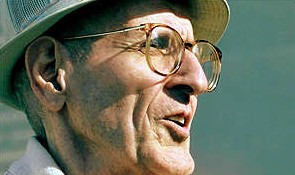 Jack Kevorkian
Homicide · USA · 1990
Jack Kevorkian (born May 26, 1928) was a controversial American pathologist. He…
130 victims
Jack Kevorkian
Homicide · USA · 1990
Jack Kevorkian (born May 26, 1928) was a controversial American pathologist. He…
130 victims
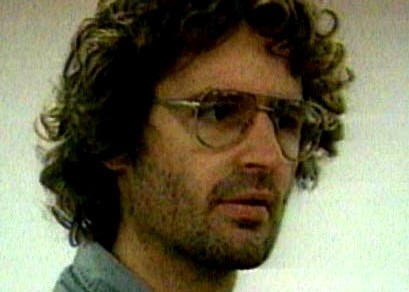 David Koresh
Homicide · USA · 1993
David Koresh (born Vernon Wayne Howell; August 17, 1959 – April 19, 1993) led t…
79 victims
David Koresh
Homicide · USA · 1993
David Koresh (born Vernon Wayne Howell; August 17, 1959 – April 19, 1993) led t…
79 victims
 Todd Hall
Homicide · USA · 1996
Todd Hall was described by neighbors as "mentally slow" and was said to have su…
9 victims
Todd Hall
Homicide · USA · 1996
Todd Hall was described by neighbors as "mentally slow" and was said to have su…
9 victims
 Edward Charles Allaway
Homicide · USA · 1976
Edward Charles Allaway Edward Charles Allaway was found not guilty by reason of…
7 victims
Edward Charles Allaway
Homicide · USA · 1976
Edward Charles Allaway Edward Charles Allaway was found not guilty by reason of…
7 victims
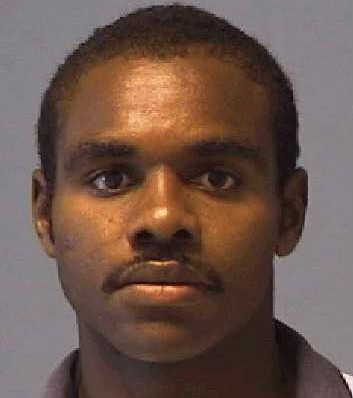 Clinton Bankston
Homicide · USA · 1987
15 August 1987 — Ann Morris (63), her sister Sally Nicholson (59), and Sally’s…
5 victims
Clinton Bankston
Homicide · USA · 1987
15 August 1987 — Ann Morris (63), her sister Sally Nicholson (59), and Sally’s…
5 victims
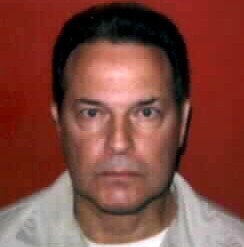 Richard Valenti
Murderer · USA · 1973
Richard Raymond Valenti was identified as a suspect from Navy photos. Investiga…
3 victims
Richard Valenti
Murderer · USA · 1973
Richard Raymond Valenti was identified as a suspect from Navy photos. Investiga…
3 victims
 Gary Etheridge
Murderer · USA · 1990
Gary Wayne Etheridge was convicted of capital murder and sentenced to death for…
1 victim
Gary Etheridge
Murderer · USA · 1990
Gary Wayne Etheridge was convicted of capital murder and sentenced to death for…
1 victim
 George Lamson
Murderer · United Kingdom · 1881
George Lamson was an English physician who, after the Crimean War, suffered fro…
1 victim
George Lamson
Murderer · United Kingdom · 1881
George Lamson was an English physician who, after the Crimean War, suffered fro…
1 victim
- Gender
- male
- Country
- USA
- Location
- Columbia County, New York, USA
- Date of birth
- 1969
- Age at first offence
- 17
- Characteristics
- parricide, juvenile (17), to inherit
- Victim profile
- His father, Robert Gates; his brother, Bobby, 18; his live-in girlfriend, Cheryl Brahm; and his orphaned nephew, Jason, 3
- Method of murder
- Shooting
- Date(s) of murder
- December 13, 1986
- Years active
- 1986
- Date of arrest
- Next day
- Status
-
Released
Released August 12, 2003
Case record: Wyley Gates
Background
Wyley Gates was a 17-year-old computer whiz and honors student who was described as a salutatorian of his class in 1986. He was the younger son of Robert Gates, and he lived in the same household as his father, his older brother Bobby, his father’s live-in girlfriend Cheryl Brahm, and his orphaned nephew Jason.
Four dead bodies were found in the home of Robert Gates on Dec. 13, 1986. The victims were:
- Robert Gates (businessman)
- Robert Gates’s older son, Bobby, age 19
- Cheryl Brahm (his live-in girlfriend)
- Jason (his orphaned nephew), age 3
Immediately suspected was Wyley Gates, the younger son, age 17.
The offence
Wyley Gates was accused of involvement in the murders of four family members: his father, his brother, his 3-year-old cousin, and his father’s girlfriend.
At trial, Wyley Gates was convicted of conspiracy to murder his father.
In closing arguments in the related proceedings involving accomplice liability, it was asserted that the plot involved stealing the pistol used in the killings and hiding the murder weapon.
Investigation
Investigators believed they had solved the case less than a week after the bodies of Robert Gates Sr. (39), Cheryl Brahm (36), Robert Jr. (19), and Jason Gates (3) were found on Dec. 13, 1986, in the home of Robert Gates Sr.
Investigators announced that Robert Gates’s death was tied to Wyley Gates’s confession and that investigators said the killings were committed to collect a $100,000 inheritance.
During Wyley Gates’s trial, the prosecution’s case was described as resting on a confession made from rough notes and recollections obtained by the Sheriff’s Department and the state police without the presence of Wyley Gates’s lawyer.
Some evidence was described as not preserved during Wyley Gates’s trial, including that the weapon was not dusted for fingerprints, Wyley Gates’s clothing was not tested for gunpowder residue, and a test of blood found on the gun provided inconclusive results.
Arrest
Wyley Gates was taken into custody after the deaths were discovered.
Damian Rossney was also implicated as an accomplice connected to the planning of the murders. Miles McDonald of Chatham was arrested as another accomplice, and he received immunity from prosecution in exchange for his testimony.
Wyley Gates was being held without bail and was sent back to the Columbia County Jail after a three-minute hearing before Judge John J. Leaman of County Court in that town about 50 miles south of Albany. Damian Rossney was ordered held in $650,000 bail.
Trial
Wyley Gates and Damian Rossney were arraigned in separate hearings in Columbia County Court.
Wyley Gates and Damian Rossney were charged with eight second-degree murder counts, two for each victim, and related crimes. The arraignment included:
- Robert Gates’s father, Robert Gates Sr., 39
- Robert Gates’s brother, Robert Gates Jr., 19
- cousin Jason Gates, 3
- father’s companion, Cheryl Brahm, 36
If convicted of the murder charges, both youths could be sentenced to 25 years to life for each count.
In a later account of the case, it was stated that Wyley Gates admitted to shooting his father, his father’s girlfriend, his brother, and a 3-year-old cousin. A jury then acquitted Wyley Gates of murder charges, citing shoddy police work and a coerced confession.
The jury acquitted Wyley Gates of murder but found him guilty of conspiracy.
During the related trial involving Damian Rossney, the jury was described as in its second day of deliberations. It was stated that Damian Rossney faced charges including helping plan two of the murders, knowing about and covering up the crime, and other associated offences. Damian Rossney faced two counts of second-degree murder, conspiracy, criminal facilitation, and hindering prosecution, with each second-degree murder charge carrying a prison sentence of 25 years to life.
In closing arguments, Special District Attorney Nancy D. Snyder told a jury of seven men and five women in Columbia County Court that Damian Rossney helped steal the pistol used in the killings. She also said Wyley Gates helped plan the crime and hid the murder weapon in his home.
Damian Rossney’s defense counsel, Robert L. Adams, argued that Rossney believed Wyley Gates was joking about wanting to kill his father, that Rossney had never intended to become involved in a murder, and that Rossney hid the weapon to protect himself rather than to help Wyley Gates.
The defense lawyer Robert L. Adams said:
"It's all about frame of mind. No one took Wyley seriously."
Damian Rossney took the stand last week during the trial, blamed Wyley Gates for the murders, and did not have his own testimony described as an admission.
Wyley Gates did not testify in either trial.
It was described that the defense lawyer, Robert L. Adams, allowed Wyley Gates to testify in Wyley Gates’s-related circumstances because a defense emphasizing that no one had been found guilty of the murders would probably fail; the defense counsel also said Wyley Gates’s acquittal weakened the case against Rossney because prosecutors were prevented from using Wyley Gates’s confession as evidence.
Robert L. Adams said:
"It is an unusual case in that regard."
Robert L. Adams also argued that it was difficult to comprehend a situation in which one jury acquitted a confessed killer because his rights were violated, but another jury convicted someone else of murder even though that person did not pull the trigger.
Sentencing
Wyley Gates was sentenced by Columbia County Judge John G. Leaman to the maximum sentence for the conspiracy conviction. The sentence was described as a term of 8 1/3 to 25 years in prison.
In one passage, it was stated that Wyley Gates was serving a sentence of 8 1/3 years to 25 years at the state prison in Elmira, and later that his sentence was 8 1/3 to 25 years at a prison where he spent the last several years.
Wyley Gates’s first eligibility for parole was described as occurring in 1995.
In a parole-related notice, the parole board said:
"Your indifference to human life demonstrates that you present a serious threat to community safety and welfare, Release would also deprecate the seriousness of your offense."
Appeals
Outcome
Wyley Gates was acquitted of murder charges but was found guilty of conspiracy and imprisoned.
After nearly 17 years, Wyley Gates was released.
Wyley Gates was released from custody of the Department of Correctional Services at 10 a.m. at the Buffalo bus station on August 12, 2003.
On release, Wyley Gates walked out of prison with a college degree and a job in New York City.
Parole officials had approved Wyley Gates’s residence in New York City and employment as a clerk in a law firm. He remained under parole supervision for about eight years.
A parole board denial had previously been associated with him not showing up for two consecutive parole hearings, and he was denied early release.
The parole officials and parole timing statements included:
- Wyley Gates would remain behind bars until at least Feb. 2001, when he would again be eligible to petition for parole.
- Gates would have another opportunity to seek parole in two years.
- If the Parole Board continued to deny release, Wyley Gates would remain in prison until Aug. 7, 2003.
Aftermath
Wyley Gates spent the last several years at Collins Correctional Facility in Erie County.
The Department of Correctional Services spokeswoman was identified as Linda Foglia.
Parole officials described that Wyley Gates’s accomplice Damian Rossney was up for a parole hearing next month. Tom Grant, spokesman for the Division of Parole, was quoted about Wyley Gates’s continued custody until at least Feb. 2001 and parole petition eligibility.
Damian Rossney was described as serving a term of 8 1/3 to 25 years in Woodbourne Correctional Facility in Sullivan County. Without parole, it was stated that Rossney was slated for release July 10, 2005.
Other details
Blanche “Betty” Brorup, who knew the victims and worked as the Town Clerk in nearby Canaan, was quoted regarding the community reaction after the first trial:
"This whole case has really made me wonder about the system."
"You got four people dead with bullets in them, and nobody found guilty of the murder. It's sad."
Regarding Rossney’s case and local feelings, Blanche “Betty” Brorup said:
"People just want it to be done and over with,"
"They'll be upset if he gets off - but they won't be surprised."
Wyley Gates was described as a 34-year-old at the time of his release on August 12, 2003.
A high school honors student described as Wyley Gates and his classmate Damian Rossney were arraigned in Columbia County Court in January 1987.
A later narrative characterized the first trial as a “trial of the century,” described Wyley Gates as a shy 17-year-old computer wizard, and stated that a jury acquitted him of murder charges because of shoddy police work and a coerced confession.
Spotted an error, or have more information about this case?