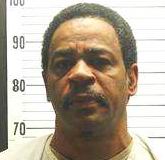
Farris Morris
Murderer Brian Kevin Rosenfeld
Murderer · USA · 1985
Brian Kevin Rosenfeld Brian Kevin Rosenfeld was sentenced to three concurrent l…
23 victims
Brian Kevin Rosenfeld
Murderer · USA · 1985
Brian Kevin Rosenfeld Brian Kevin Rosenfeld was sentenced to three concurrent l…
23 victims
 Russell Ellwood
Murderer · USA · 1991
Russell Ellwood was a former taxi driver. Authorities suspected him of killing…
20 victims
Russell Ellwood
Murderer · USA · 1991
Russell Ellwood was a former taxi driver. Authorities suspected him of killing…
20 victims
 Robert Martines Perez
Murderer · USA · 1994
Name: Robert Martines Perez · Other name used in proceedings: Robert Martinez P…
15 victims
Robert Martines Perez
Murderer · USA · 1994
Name: Robert Martines Perez · Other name used in proceedings: Robert Martinez P…
15 victims
 Billy Frank Vickers
Murderer · USA · 1993
Billy Frank Vickers Vickers was executed by lethal injection in Texas on Januar…
14 victims
Billy Frank Vickers
Murderer · USA · 1993
Billy Frank Vickers Vickers was executed by lethal injection in Texas on Januar…
14 victims
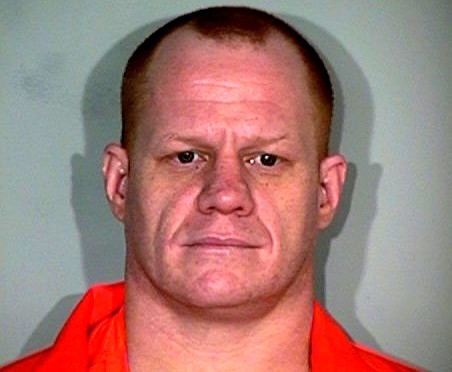 Lawrence Libberton
Murderer · USA · 1981
Lawrence Libberton Juan Maya (Hispanic) On November 16, 1981, Juan Maya picked…
1 victim
Lawrence Libberton
Murderer · USA · 1981
Lawrence Libberton Juan Maya (Hispanic) On November 16, 1981, Juan Maya picked…
1 victim
 Verry Henyansyah
Serial killer · Indonesia · 2006
Verry Idham Henyansyah, also known as “Ryan,” was an Indonesian convicted seria…
11 victims
Verry Henyansyah
Serial killer · Indonesia · 2006
Verry Idham Henyansyah, also known as “Ryan,” was an Indonesian convicted seria…
11 victims
 Edward Charles Allaway
Homicide · USA · 1976
Edward Charles Allaway Edward Charles Allaway was found not guilty by reason of…
7 victims
Edward Charles Allaway
Homicide · USA · 1976
Edward Charles Allaway Edward Charles Allaway was found not guilty by reason of…
7 victims
 Craig Gregerson
Murderer · USA · 2006
Craig Roger Gregerson (born c. 1986) was a Salt Lake City, Utah man convicted o…
1 victim
Craig Gregerson
Murderer · USA · 2006
Craig Roger Gregerson (born c. 1986) was a Salt Lake City, Utah man convicted o…
1 victim
- Gender
- male
- Country
- USA
- Location
- Madison County, Tennessee, USA
- Date of birth
- November 9, 1955
- Age at first offence
- 39
- Characteristics
- rape, kidnapping, drug addict, domestic violence
- Victim profile
- Charles Ragland and his niece Erica Hurd, 15
- Method of murder
- Shooting - Stabbing with knife
- Date(s) of murder
- September 17, 1994
- Years active
- 1994
- Date of arrest
- Same day
- Status
-
Sentenced to death
Sentenced to death on January 18, 1997
Case identifiers and parties
Farris Genner Morris Jr. was the defendant in State of Tennessee v. Farris Genner Morris, Jr. The Supreme Court of Tennessee reviewed the decision of the Court of Criminal Appeals of Tennessee at Jackson.
Timeline
- September 17, 1994 — Early morning murders occurred at a duplex residence in Jackson, Tennessee.
- January 18, 1997 — Morris was sentenced to death.
- July 10, 2000 — The Supreme Court of Tennessee entered its opinion in State v. Morris.
- October 10, 2000 — The death sentence was stated to be carried out on the 10th day of October, 2000, unless otherwise ordered by this Court or proper authority.
- May 1998 — Tennessee legislative amendments allowed some defendants sentenced to death before January 1, 1999 to sign a written waiver and elect to be executed by lethal injection.
- March 30, 2000 — A legislative amendment enacted that made lethal injection the default manner of execution in cases where a defendant has been sentenced to death, and provided for waiver of lethal injection and election of electrocution.
Background
Charles and Angela Ragland lived in a duplex residence in Jackson, Tennessee. Morris lived with his wife in the adjoining residence.
In the early morning hours of September 17, 1994, Angela Ragland arrived at her home along with her 15-year-old cousin, Erica Hurd. Charles Ragland was awake in the bedroom with the light on. Shortly after arriving, Erica went outside to retrieve something from the car. When Erica came back into the house, Angela heard a scream and saw that Morris was holding a shotgun to Erica’s head.
The offence
Morris pushed Erica onto the bed in the Raglands’ bedroom and asked Charles “where the dope was.” Charles Ragland replied that he “didn't have any” and asked Morris if he wanted money.
After Morris responded that he would “find it himself,” Morris fired a shot into the floor and ordered Charles Ragland to get on the floor. Morris placed a pillow on Ragland’s head and shot him one time in the head.
Morris ordered Erica to get into a closet by threatening to “blow her head off.” Morris forced Angela into another bedroom, tied her wrists and ankles, and covered the window with a mattress so that “nobody could see if they walked by.”
Morris then retrieved Erica from the closet. Angela Ragland testified that she heard Erica pleading for Morris not to kill her and that she heard Morris say “shut up.” She testified that she heard Erica screaming and gasping for breath, and then silence.
Morris returned to the bedroom and, still holding the shotgun, forced Angela Ragland to bathe him. Afterward he ordered Angela to put on a negligee and make him something to eat, which she did.
Morris then forced Angela to have sexual intercourse with him “three or four times” and to perform oral sex upon him.
Morris told her that he had once been “accused of raping someone and "if he was going to jail, he was going to go to jail for doing something.” He told Angela that “society made him the way he was” and “was the reason that he was doing what he did.”
Around 6:30 a.m., Morris heard his wife in the adjoining residence and told Angela that he would let her go. He instructed her to tell police that she found the bodies of her husband and cousin when she arrived home that morning.
Morris used a cloth to wipe off objects he had touched and he warned Angela not to go to the police. Angela fled to the house of a nearby friend, who drove her to the police station.
Police later found Morris at his home shortly thereafter and arrested him. The bodies of Charles Ragland and Erica Hurd were later discovered in the Ragland residence.
Investigation
The police found Morris at his home shortly thereafter and arrested him.
After the arrest, the following were discovered:
- A blood-stained steak knife was found behind a couch.
- A large butcher knife with traces of blood was found in a chair in the living room.
- Angela Ragland testified that neither knife belonged to her or her husband.
- A 12-gauge pistol grip, pump action shotgun was later found underneath Morris’s dresser drawer.
Arrest and statement to police
After being advised of and waiving his constitutional rights, Morris gave a statement to Officers Patrick Willis and James Golden of the Jackson Police Department.
Morris said that on the day of the offense he had purchased and smoked $250 worth of cocaine.
He admitted that he had an exchange with Charles Ragland at 1:00 a.m., a few hours prior to the murders, in which he asked Ragland to sell him drugs and, when Ragland declined, told Ragland that “he was going to regret disrespecting me.”
Morris admitted that he went to his house, got his shotgun, loaded two shells into the shotgun, and waited for Ragland’s wife, Angela, to get home.
He admitted that he entered the Ragland’s residence with the shotgun and demanded that Charles Ragland sell him drugs. After Ragland said he didn't have any drugs, Morris fired a shot into the floor, put a pillow over the barrel of the gun, and shot him in the head.
Morris admitted that he put Erica Hurd in a closet and tied up Angela Ragland.
Morris told officers that he intended only to tie up Erica Hurd but that he stabbed her because she acted crazy and they struggled over a knife.
Morris admitted he had sexual intercourse and oral sex with Angela Ragland.
Medical evidence
Dr. O.C. Smith, the Deputy Chief Medical Examiner for West Tennessee, testified regarding autopsies.
- Charles Ragland died from a shotgun wound to the head. Dr. Smith testified that he found evidence of an “intermediate target” between the weapon and Ragland’s head, but that Ragland’s death was “instantaneous because the brain [was] destroyed.”
- Erica Hurd died as a result of multiple injuries including, stab wounds, blunt trauma to the head, skull fractures, and damage to the brain.
- Dr. Smith found that there were 37 stab wounds, 23 of which were sustained prior to death and 14 of which were post-mortem.
- Dr. Smith testified that 25 of the stab wounds were to the victim’s neck and face and that the force of the stabbings was great enough to cause the knife blades to bend upon striking bone.
Dr. Smith also testified during penalty that Erica Hurd’s wounds would have been painful and that the stab wounds that struck bone would have caused severe pain. He explained that the wounds were “in areas that may be targeted, the face, the head, the chest, the back,” and that they showed “sites of selection, as opposed to a random pattern of distribution.” He also testified that it “may imply an element of control ․ or it may imply an element of torment by being very superficial in nature.”
Drug use and defense theory
The defense theory focused on Morris’s use of crack cocaine. Morris’s own statement and additional testimony were presented.
Russell Morris, Morris’s brother, testified that he saw the defendant smoking crack around 5:15 p.m. on the evening before the murders.
Dr. Robert Parker, a doctor of pharmacology at the University of Tennessee, testified about effects of crack cocaine use. Parker testified that smoking crack cocaine produces an intense euphoria and symptoms such as excitability, paranoia, mania, and impaired judgment. Parker testified that most users go on a “cocaine run” or “binge.” He testified that when users became unable to duplicate the feeling of euphoria, judgment was further impaired and there was “an increased risk of violent or homicidal behavior.”
Parker explained an acute withdrawal or “crash phase” and testified that it can be marked by depression, exhaustion, paranoia, anxiety, and suicidal thoughts. Parker testified that the evidence of Morris’s behavior was “consistent with the ingestion of cocaine.”
Dr. William Bernet, medical director of the Psychiatric Hospital at Vanderbilt University, testified that he evaluated Morris based on an interview and a review of various records and documents. Dr. Bernet concluded that due to false accusations of rape prior to these offenses, Morris became suicidal and a crack cocaine user. Bernet stated that the mental stress and use of crack cocaine “affected [Morris's] judgment” and “may have prevented him from forming the intent” to commit the murders.
Trial
Guilt phase
A jury convicted Morris of:
- two counts of premeditated first degree murder, and
- one count of aggravated rape.
Penalty phase
In the penalty phase, Dr. Smith again testified regarding findings from the autopsy of Erica Hurd, including blunt trauma, skull fractures, and 37 stab wounds.
The jury imposed:
- the death penalty for the first degree murder of Erica Hurd, after finding that evidence of two aggravating circumstances outweighed mitigating evidence beyond a reasonable doubt:
- the murder was “especially heinous, atrocious or cruel” because it involved torture or serious physical abuse beyond that necessary to produce death; and
- the murder was committed in the course of a first degree murder, rape, burglary or kidnapping.
- life without parole for the first degree murder of Charles Ragland, after finding that evidence of two aggravating circumstances did not outweigh mitigating evidence beyond a reasonable doubt:
- the defendant knowingly created a risk of death to two or more persons other the victim murdered during the act of murder; and
The trial court imposed a 25-year sentence for aggravated rape to run consecutively to the sentence of life without parole.
Evidence and proceedings at pretrial and during trial
Motion to suppress statement
Nine hours after his arrest on September 17, 1994, Morris executed a written waiver of his Miranda rights and provided law enforcement officers a complete statement of his involvement in the deaths of Charles Ragland and Erica Hurd and the aggravated rape of Angela Ragland.
Morris filed a motion to suppress alleging the statement was not knowingly and voluntarily given due to his being under the influence of crack cocaine.
A hearing on the motion was heard on September 10, 1996. Evidence at the suppression motion revealed that Morris had been smoking crack cocaine on the evening of Friday, September 16, 1994. Russell Morris verified that on that evening, when he saw Morris at 5:30 p.m., Morris informed him that he had spent $200 on crack cocaine and was going to obtain more. Russell Morris testified Morris appeared intoxicated.
The defense attempted to call Angela Ragland to testify about Morris’s appearance and actions during the commission of the offenses. The State objected on the basis that Angela Ragland was not “in any position to know anything about the condition that [the appellant] was in at the time that the statement was given.” The trial court sustained the objection, expressly finding that Ms. Ragland had no knowledge of the appellant’s state of mind or whether he was under the influence of cocaine when he gave his statement some fourteen hours after the offenses occurred.
Dr. Robert Parker testified about effects of crack cocaine. He testified that mania was present during the “crash phase” when the appellant’s statement was given and explained that during the “crash phase” judgment was impaired and usually accompanied by confusion and suicidal thoughts, and that “crash phase” symptoms could cause one not to care about or understand the consequences of their actions.
After Parker’s testimony, the defense again attempted to introduce Angela Ragland’s testimony, but the trial court refused, finding: “there's been no proof here presented, notwithstanding the use of cocaine, that he, because of the ingestion of cocaine, didn't understand what he was doing when he gave his statement. There's been no proof of that.”
The defense offered to call Morris regarding “how [the drugs] affected his body, ․ the way he was ․ acting, how he was feeling about those things at the time he gave his statement and before that.” Defense counsel asked the court to limit examination to those matters and prohibit questioning about the killings. The trial court refused, finding there was no reason to prohibit the State from eliciting the contents of the statement on cross-examination and how it “reflects the truth of what occurred.” The trial court concluded Morris “can't exercise [his] Fifth Amendment privilege on examination of things which are relative to the things that he said․” After this ruling, the defense elected not to call Morris.
Officer James Golden testified that he first encountered Morris between 8:30 and 9:00 a.m. on September 17, 1994, and that at that time Morris “appeared normal to [him].” Later that afternoon, around 5:20 p.m., Golden, accompanied by Officer Willis, advised Morris of his Miranda rights, witnessed waiver, and proceeded to obtain the confession. Golden testified that at the time the statement was obtained, Morris did not appear to be under the influence of crack cocaine.
The trial court denied the motion to suppress and stated:
- “The basic premise here is that when he gave the statement, that statement was not the product of a free mind and rational intellect. ”
- “The only proof that we have is from Officer Golden who said he was normal. ”
- “Now to adopt your idea, I would have to say that the rule of law is that you could prove that a person has had drugs. There's an inference that he didn't know-- that he couldn't give a rational statement. There is no such inference that's drawn from the proof that a person has used drugs that they can't give a good statement. You've got to first give me some proof that he didn't give a good statement. ”
- “Well, what you've done is given me the corroborative proof, but you don't have any proof-- You have zero proof that the statement ․ was the product of an irrational mind. You have zero proof of that. ”
On appeal, Morris argued (1) the trial court erred by refusing to permit Angela Ragland to testify at the suppression hearing and (2) Dr. Parker’s testimony was sufficient to show Morris was in the “crash phase” at the time he gave his statement. The appellate review upheld the denial of the motion to suppress.
Witherspoon violations
Morris contended the jury selection process violated Witherspoon v. Illinois because the State excused two prospective jurors, Barbara Brooks and Dennis Spellings.
Prospective juror Barbara Brooks
During individual voir dire, Barbara Brooks responded she could not impose the death penalty for religious reasons. She maintained she did not believe in the death penalty and “could not and would not impose such a sentence.” She stated she “could not impose the death penalty no matter what the crime was because she does not “believe that a person's life should be taken because of it.” She admitted “the death penalty is out of the question for [her]” and she would never consider imposing the death penalty on the appellant or anyone else.
After further questioning, Brooks said “I don't think I could be fair at that because of the death penalty ․ the only thing that hinders me is when you said death penalty. That's where it stops with me.” After additional equivocation, the court asked whether the death penalty was out; Brooks responded, “Forget it.” The State challenged her for cause and the trial court sustained the challenge, finding:
- “I finally put it to her as blank, I said, ‘The death penalty is out?’ She said, ‘The death penalty is out, the death penalty is out. I will not impose it’ and she said it multiple, multiple times.”
Prospective juror Dennis Spellings
During individual voir dire, General Woodall asked whether Spellings could fairly consider the death penalty along with other forms of punishment. Spellings said, “That's a tough question.” When asked if he could make the decision required by Tennessee law, he said, “Honestly I don't.” Asked whether he could follow the law, he replied:
- “When we're talking about when push comes to shove, I don't know.”
- “I don't know.”
The trial court asked: “After you hear all the proof, then you could make a decision as to whether or not death should apply?” Spellings responded, “I'll be honest with you. I'd rather not make that decision.” The State challenged Spellings for cause, and the trial court sustained the challenge, stating:
- “This is the first time we've run into this where a person just ․ won't answer the question or he feels like he can't answer the question. As I interpret the law that means that we have to get commitment from a juror that they would follow the law and that they would consider the death penalty under certain circumstances. I don't think that a juror is disqualified if they just continue to persistently say, ‘I don't know what I would do.’ That's like a juror who's really saying-- will you affirm to uphold the law and he would say, ‘Well, I just can't answer that.’ If you had a juror and you put him in the box and you say ‘Do you swear to tell the truth?’ and he says, ‘I can't say whether I will or not,’ you wouldn't let him testify. It takes an affirmative statement by a juror that he would consider all the penalties ․ and would not exclude the death penalty as a possibility. I think the statements by this juror render him unqualified to served on the jury.”
The appellate review found no merit to the Witherspoon claim.
Statement of future wrongdoing and prior bad act
Prior to Angela Ragland’s testimony, a jury-out hearing addressed admissibility of testimony regarding Morris’s prior rape charge and statements to Angela Ragland about intent to kill Marvin Eckford, rob a bank, and leave town.
The trial court permitted introduction and ruled statements would generally be considered res gestae and closely connected to the crime, reflecting mental state, intent, and proof of violent binge, stating:
- “All of these statements reflect upon that, that he is on a killing spree, going to kill ․ that clearly is some proof of the defendant's mental state, that he was on a violent binge. You know, he commits one murder, he commits two murders, he might as well commit three, what-difference-does-it-make sort of attitude. It's also proof of, of course, the mental state. Words like, ‘I've been accused of one rape’ ․ [w]ould serve as a motive. That's another thing, motive, intent, state of mind․ Certainly shows intent ․ that he knew what he had done․ Arguably evidence that the defendant was coherent, that he knew what he had done, he knew what he was going to do and that he had presence of mind about all of these things․ In summary, all of these remarks are clearly admissible.”
- “But all of these things, particularly when you're thinking about the requirements of culpability being proven, when you're thinking about the position that's going to be taken․ Statements made during the course of the crime or even afterwards which would reflect upon the defendant's thinking, mental state, what he had on his mind, and all of these things do that. So they're going to be admissible for these numerous reasons, not to mention res gestae.”
Statements of future intent
During guilt phase, the trial court permitted the State to question Angela Ragland about statements Morris made between instances of rape. Angela testified that between instances of rape, Morris told her he was going home to tell his children goodbye, that he was going to kill Marvin Eckford because Eckford had provided his name to a woman accusing him of raping her, that he was going to rob a bank, and leave town.
The trial court instructed the jury that it did not determine that Morris killed Marvin Eckford, robbed a bank, or left town.
Evidence of prior bad act: alleged rape
Angela also testified that Morris told her: “[h]e had been accused of raping someone and that he didn't, and if he was going to go to jail, he was going to go to jail for doing something.”
The trial court held a Tennessee Rule of Evidence 404(b) analysis and found the testimony admissible but limited it to mental intent. The trial court instructed the jury:
- “they're not to presume that he's guilty of any previous rape.”
Photographs and victim impact
Photographs of victim at sentencing
During sentencing, the State introduced multiple photographs of the body of Erica Hurd over objection. The trial court permitted them regarding establishing the aggravating circumstance “heinous, atrocious, or cruel.” The appellate review upheld admission.
The trial court permitted the photographs, finding:
- “[g]ruesome pictures are admissible in these situations if it would tend to show some of these factors that are involved in the heinous, atrocious or cruel category, torture, physical abuse.”
Victim impact evidence and argument
During closing argument at the penalty phase, General Woodall made the following statements:
- “It's up. We know for sure that Erica is now gone, at peace and out of pain. There's a lot of other pain here and that's the families of these victims. That's what Angela Ragland went through and will have to go through and there are just not any mitigating circumstances that outweigh these aggravating circumstances, absolutely none. That's why we have this law and where the aggravating circumstances do not (sic) outweigh the mitigating circumstances, the punishment shall be death.”
Morris objected to this argument, contending it constituted inadmissible victim impact evidence and argument of matters not in evidence. Appellate review found no merit.
Sentencing and appellate review
Aggravating circumstances for Erica Hurd
The jury found the murder of Erica Hurd was “especially heinous, atrocious or cruel in that it involved torture or serious physical injury beyond that necessary to produce death” under Tenn. Code Ann. § 39-13-204(i)(5).
Morris argued the State did not establish with certainty whether the victim was alive and conscious when she was stabbed. The review applied definitions of “torture” and “serious physical abuse beyond that necessary to produce death,” and concluded the evidence supported both.
The jury also found that the murder was committed while Morris was engaged in committing, or was an accomplice in committing, or attempting to commit, or fleeing after having committed or attempted to commit any first degree murder, rape, burglary or kidnapping under Tenn. Code Ann. § 39-13-204(i)(7)(Supp.1994). The appellate review concluded the evidence supported that finding, describing Erica Hurd as a witness to burglary and murder, and as the victim of kidnapping, with the murder occurring moments after those offenses and just before aggravated rape of Angela Ragland.
Mitigating factors
Morris argued mitigating circumstances including impaired judgment due to crack cocaine, extreme mental and emotional disturbance, release of Angela Ragland, that he had been a good, dependable employee, that he was a good prisoner and student, and that he accepted responsibility.
The appellate review found evidence supported several mitigating circumstances and concluded that, given the strength of the aggravating circumstances, the jury properly found the aggravating circumstances outweighed mitigating evidence beyond a reasonable doubt.
Proportionality review
The appellate review conducted comparative proportionality analysis. It considered the offense circumstances, including the confrontation with Charles Ragland shortly before the offenses; the procurement of a shotgun and wait for an opportunity to enter; use of a second victim at gunpoint to enter; demand for drugs; refusal of money; shooting Charles Ragland in the head at close range; forcing Erica Hurd into a closet; tying Angela Ragland; beating and stabbing Erica Hurd 37 times; and taking a bath, eating a meal, and forcing Angela Ragland to have sexual intercourse after the killings.
It also described the defendant’s characteristics as including age 37 and contentions regarding rehabilitation and acceptance of responsibility, and noted that Morris did not testify in mitigation and did not express remorse when confessing to police.
Outcome
The Court of Criminal Appeals affirmed the convictions and sentences.
The Supreme Court of Tennessee concluded:
- the evidence was sufficient to support premeditated first degree murder convictions,
- Morris was not entitled to relief on the electrocution issue,
- the evidence was sufficient to support the aggravating circumstances and the jury’s finding that they outweighed mitigating evidence beyond a reasonable doubt regarding the first degree murder of Erica Hurd, and
- the death sentence was not arbitrary, excessive, or disproportionate as applied in the case.
The sentence of death was affirmed, and it was stated to be carried out on the 10th day of October, 2000, unless otherwise ordered by the court or proper authority.
The costs of appeal were taxed to the State.
Other details
Defense counsel and prosecution counsel
The Supreme Court listed:
- For the appellant, Morris: George Morton Googe, District Public Defender, Jackson, Tennessee; Daniel J. Taylor, Assistant Public Defender, and Jesse H. Ford, III, Jackson, Tennessee (at trial).
- For the appellee, State: Paul G. Summers, Attorney General & Reporter and Michael E. Moore, Solicitor General and Elizabeth T. Ryan, Assistant Attorney General, Nashville, Tennessee (on appeal); and James G. (Jerry) Woodall, District Attorney General, and Al Earls, Assistant District Attorney General, Jackson, Tennessee (at trial).
Sentence overview as affirmed
After the Court of Criminal Appeals affirmed the convictions and sentences, the final sentencing included:
- Death for the first degree murder of Erica Hurd.
- Life without parole for the first degree murder of Charles Ragland.
- A 25-year sentence for aggravated rape to run consecutively to life without parole.


Spotted an error, or have more information about this case?