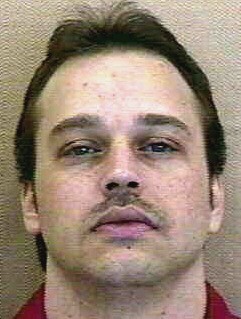
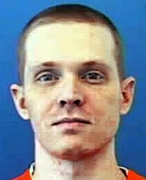
Steven Keith Hatch
Murderer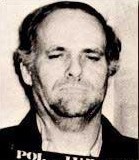 Ervil LeBaron
Murderer · USA · 1972
Ervil Morrell LeBaron (1925 to August 16, 1981) was the leader of a polygamous…
35 victims
Ervil LeBaron
Murderer · USA · 1972
Ervil Morrell LeBaron (1925 to August 16, 1981) was the leader of a polygamous…
35 victims
 Brian Kevin Rosenfeld
Murderer · USA · 1985
Brian Kevin Rosenfeld Brian Kevin Rosenfeld was sentenced to three concurrent l…
23 victims
Brian Kevin Rosenfeld
Murderer · USA · 1985
Brian Kevin Rosenfeld Brian Kevin Rosenfeld was sentenced to three concurrent l…
23 victims
 Marvin Gray
Murderer · USA · 1975
Marvin Gray was convicted killer who claimed responsibility for 23 slayings and…
23 victims
Marvin Gray
Murderer · USA · 1975
Marvin Gray was convicted killer who claimed responsibility for 23 slayings and…
23 victims
 Yahweh ben Yahweh
Murderer · USA · 1980
Yahweh ben Yahweh was born and legally named Hulon Mitchell Jr. (October 27, 19…
23 victims
Yahweh ben Yahweh
Murderer · USA · 1980
Yahweh ben Yahweh was born and legally named Hulon Mitchell Jr. (October 27, 19…
23 victims
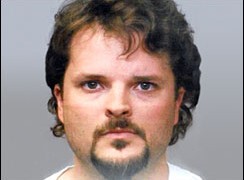 Christopher Vaughn
Mass murderer · USA · 2007
Christopher Vaughn was sentenced to four consecutive life terms on November 26,…
4 victims
Christopher Vaughn
Mass murderer · USA · 2007
Christopher Vaughn was sentenced to four consecutive life terms on November 26,…
4 victims
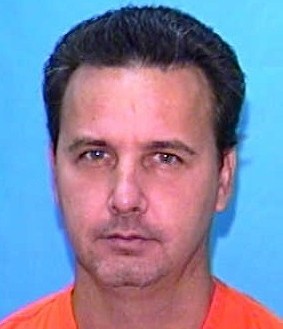 Gary Ray Bowles
Serial killer · USA · 1994
Gary Ray Bowles (b. January 25, 1962) was a Florida death row prisoner. At the…
6 victims
Gary Ray Bowles
Serial killer · USA · 1994
Gary Ray Bowles (b. January 25, 1962) was a Florida death row prisoner. At the…
6 victims
 Anton Probst
Mass murderer · USA · 1866
Anton Probst was born in Germany in 1843 and came to the United States in 1863,…
8 victims
Anton Probst
Mass murderer · USA · 1866
Anton Probst was born in Germany in 1843 and came to the United States in 1863,…
8 victims
 Angelina Rodriguez
Murderer · USA · 2000
Angelina Rodriguez was a Latina. She was 32 years old at the time of the crime.…
1 victim
Angelina Rodriguez
Murderer · USA · 2000
Angelina Rodriguez was a Latina. She was 32 years old at the time of the crime.…
1 victim
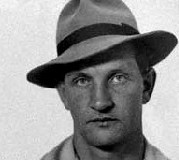 Donald Staley
Murderer · Canada · 1946
Donald Staley was a Canadian army veteran. He was 29 years old and was of Brace…
2 victims
Donald Staley
Murderer · Canada · 1946
Donald Staley was a Canadian army veteran. He was 29 years old and was of Brace…
2 victims
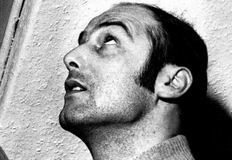 Trevor Joseph Hardy
Serial killer · United Kingdom · 1974
Trevor Joseph Hardy (born 1947 in Manchester, Lancashire) was also known as the…
3 victims
Trevor Joseph Hardy
Serial killer · United Kingdom · 1974
Trevor Joseph Hardy (born 1947 in Manchester, Lancashire) was also known as the…
3 victims
- Gender
- male
- Country
- USA
- Location
- Okarche, Oklahoma, USA
- Date of birth
- 1954
- Age at first offence
- 25
- Characteristics
- robbery, rape
- Victim profile
- Reverend Richard Douglass and his wife, Marilyn Douglass
- Method of murder
- Shooting ( .357 magnum pistol)
- Date(s) of murder
- October 15, 1979
- Years active
- 1979
- Date of arrest
- —
- Status
-
Executed
Executed by lethal injection in Oklahoma on August 9, 1996
Case details
Steven Keith Hatch, also known as Steve Lisenbee, was executed in Oklahoma on August 9, 1996.
The offence
In the 1979 Douglass murders, Reverend Richard Douglass and Marilyn Douglass were killed. Their children were Brooks Douglass and Leslie Douglass. The incident involved men who entered the Douglass family farmhouse in Okarche, Oklahoma while the family was sitting down to dinner.
Glen Burton Ake and Steven Keith Hatch hogtied Brooks and his parents in the living room. The family was forced to listen as Ake and Hatch raped Leslie Douglass in a bedroom. The men then sat down to eat the family's hamburger patties and mushroom gravy. Ake shot all four Douglasses in the back before leaving with $43 in cash and the wedding rings from Brooks's parents. Reverend Richard Douglass and Marilyn Douglass died, while Brooks Douglass and Leslie Douglass survived.
Timeline
- October 15, 1979 — Ake and Hatch drove to the rural home of Reverend and Mrs. Richard Douglass in search of a suitable house to burgle; Ake gained entrance under the pretense of being lost and needing help finding his way; after an initial conversation with sixteen-year-old Brooks Douglass, Ake returned with a firearm and was joined by Hatch; the men ransacked the Douglass home as they held the family at gunpoint, bound and gagged the family, and took turns attempting to rape twelve-year-old Leslie Douglass; Ake told Hatch to go outside, turn the car around, and "listen for the sound"; Hatch left the house as instructed; Ake then shot Reverend Douglass and Leslie each twice with a .357 magnum pistol, Mrs. Douglass once, and Brooks once; Ake fled; Mrs. Douglass died almost immediately; Reverend Douglass died from gunshot wounds and strangulation from the manner in which he was bound; Leslie and Brooks untied themselves and drove to the nearby home of a doctor; Ake and Hatch were apprehended in Colorado following a month-long crime spree taking them through Arkansas, Louisiana, Texas, and much of the Western half of the United States.
- April 9, 1980 — Hatch appeared in person with counsel before Judge Floyd Martin for the express purpose of waiving his right to a jury trial; Judge Martin examined Hatch and was satisfied the waiver was knowing and intelligent.
- 1983 — The Oklahoma Court of Criminal Appeals vacated Hatch's death sentences and remanded for resentencing; it affirmed convictions and affirmed sentences for Shooting with Intent to Kill.
- February 12, 1996 — The United States Court of Appeals for the Tenth Circuit issued an order and judgment affirming the district court's denial of Hatch's habeas corpus petition.
- August 9, 1996 — Steven Keith Hatch was executed by lethal injection in Oklahoma.
Investigation and arrest
Hatch and Ake were apprehended in Colorado following a month-long crime spree which took them through Arkansas, Louisiana, Texas, and much of the Western half of the United States.
Trial
Hatch was convicted in Canadian County District Court of two counts of Murder in the First Degree and two counts of Shooting with Intent to Kill. The trial court sentenced him to forty-five (45) years' imprisonment for each count of shooting with intent to kill and sentenced him to death for each of the murder counts.
Hatch was tried in Canadian County District Court before the Honorable Floyd Martin, without a jury. The opinion stated that the change of venue question was not applicable because the case was tried before a judge and that Hatch had waived his right to a jury trial.
Hatch raised numerous alleged errors prior to trial, including arguments about change of venue, judge disqualification due to bias, and issues related to the waiver of a jury trial and ineffective assistance of counsel. The court concluded Hatch failed to preserve or waive certain issues and that other claims lacked foundation. The court rejected a claim that the waiver of a jury trial was not knowingly and intelligently made, stating that Judge Floyd Martin examined Hatch and determined the waiver was knowing and intelligent, and that both the prosecutor and the judge had no objection to the waiver.
Convictions and legal rulings on appeal (Oklahoma Court of Criminal Appeals)
The Oklahoma Court of Criminal Appeals decided Hatch v. State, case citation provided as HATCH v. STATE 1983 OK CR 47 662 P.2d 1377, with case number F-80-302 and decision date 04/12/1983. The court affirmed the judgments on all four charges and affirmed the sentences imposed for Shooting with Intent to Kill. The court vacated the sentences of death and remanded the cases to the Canadian County District Court for resentencing.
The appellate court concluded convictions were supported by evidence described as follows: Hatch voluntarily entered the Douglass home armed with a shotgun, knowing Ake was also armed; the family was bound and gagged; one victim was bound so strangulation contributed to his death; Hatch held the family at gunpoint while Ake ransacked the home; surviving witnesses testified that Hatch and Ake discussed killing the family; Hatch left the house when Ake told him to go outside, turn the car around, and "listen for the sound"; and it was hard to imagine other meaning for "listen for the sound" than denoting the sound of gunfire.
The appellate court addressed the felony-murder rule as codified in 21 O.S. 1981 § 701.7 and discussed Enmund v. Florida. The court vacated the death sentences and remanded for resentencing not inconsistent with Enmund v. Florida.
Federal habeas proceeding (United States Court of Appeals, Tenth Circuit)
Hatch appealed the district court's order adopting the magistrate judge's recommendation to deny his petition for writ of habeas corpus filed pursuant to 28 U.S.C. 2254.
The United States Court of Appeals for the Tenth Circuit issued an order and judgment affirming the denial of habeas relief on Feb. 12, 1996. The order stated that Hatch appeared pro se and that the two convictions under consideration were his convictions on two counts of Shooting with Intent to Kill, for which he was sentenced to forty-five years' imprisonment on each count.
The order stated that Hatch challenged his convictions on grounds including insufficient evidence to prove criminal intent, exclusion of testimony of a defense witness, the trial court's mistaken belief that he had previously been convicted of arson, ineffective assistance of counsel, and the trial court's failure to hold a competency hearing required by state statute.
The order described that Hatch did not pursue certain issues in Oklahoma state courts and that those issues were procedurally barred unless cause and prejudice or fundamental miscarriage of justice applied. It stated Hatch had not alleged new evidence of innocence and cited Schlup standards. The order concluded the court would not consider procedurally barred issues and then evaluated whether evidence was sufficient to establish guilt for shooting with intent to kill.
The Tenth Circuit order stated that Hatch's culpability for the shootings was based on the acts of his accomplice who pulled the trigger. It quoted 21 O.S. 172 and described the crime of shooting with intent to kill as intentional and wrongful shooting of another with intent to kill.
The order stated that petitioner entered the house with a firearm, bound and gagged the victims, held them at gunpoint while his accomplice ransacked the house, and went to get the car after the accomplice told him to do so and to "listen for the sound." It included competing claims about intent and then stated: "It is hard to imagine what other meaning [petitioner] could have attributed to 'listen for the sound' were it not to denote the sound of gunfire." It stated that the trial judge weighed and resolved conflicts and that the appellate review did not reweigh evidence or consider credibility.
The order also addressed Hatch's claim regarding sentencing for the murder convictions and a prior arson conviction, stating that any errors in that proceeding were not before the Tenth Circuit and that there was nothing in the record suggesting the erroneous arson conviction entered into the trial judge's consideration.
The order concluded that Hatch failed to establish ineffective assistance of counsel under Strickland v. Washington, and it affirmed the district court's judgment. It stated: "The judgment of the United States District Court for the Western District of Oklahoma is AFFIRMED. The mandate shall issue forthwith."
Sentencing and clemency
Hatch was sentenced to death for each of the murder counts at his separate trial.
Hatch spent 16 years and 4 months on death row before execution. At Hatch's clemency hearing, his appeal lawyer asked if his execution would serve justice "or vengeance because we can't reach the one who pulled the trigger?"
The attorney general countered that the injustice was not that Hatch would be executed, but that Ake would not.
Outcome
Steven Keith Hatch was executed on August 9, 1996.
Brooks Douglass viewed Hatch's execution.
Other details
- Glen Burton Ake was described as severely mentally ill and as having been diagnosed with chronic paranoid schizophrenia.
- It was stated that Ake had initially been found incompetent to stand trial, but after treatment in a mental hospital he was ruled competent on the condition that he be treated with anti-psychotic medication during the proceedings.
- Ake's conviction and sentence were overturned by the US Supreme Court because the defense was denied access to expert psychiatric assistance; at Ake's retrial, Ake was sentenced to life imprisonment.
- Ake was described as remaining in Oklahoma State Penitentiary.
- Ake was identified in the Oklahoma Court of Criminal Appeals discussion as Glen Burton Ake, also known as Johnny Vandenover.
- Hatch was identified as Steven Keith Hatch, a/k/a Steve Lisenbee.
Spotted an error, or have more information about this case?