Joseph Bernard Morse
Murderer Charles Manson
Murderer · USA · 1969
Charles Milles Manson (born November 12, 1934) was an American criminal and mus…
9 victims
Charles Manson
Murderer · USA · 1969
Charles Milles Manson (born November 12, 1934) was an American criminal and mus…
9 victims
 Gary Gene Tison
Murderer · USA · 1967
Gary Gene Tison was serving life sentences at the Arizona state prison. He had…
7 victims
Gary Gene Tison
Murderer · USA · 1967
Gary Gene Tison was serving life sentences at the Arizona state prison. He had…
7 victims
 Richard Lee Tingle
Murderer · USA · 1968
Richard Lee Tingle was born out of wedlock in December 1940. He was raised by a…
6 victims
Richard Lee Tingle
Murderer · USA · 1968
Richard Lee Tingle was born out of wedlock in December 1940. He was raised by a…
6 victims
 Bertram Greenberg
Murderer · USA · 1971
Bertram Greenberg · Officer James L. Keeton · Officer Don A. Beckstead · A 13-y…
4 victims
Bertram Greenberg
Murderer · USA · 1971
Bertram Greenberg · Officer James L. Keeton · Officer Don A. Beckstead · A 13-y…
4 victims
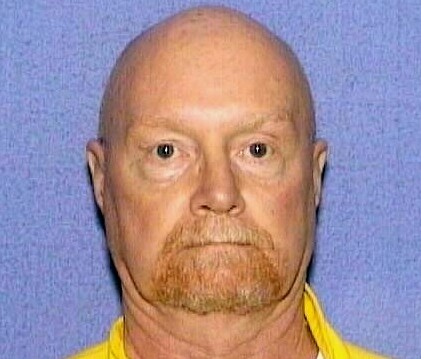 Gary Duane Rardon
Murderer · USA · 1962
Gary Duane Rardon killed a man in 1962 and later served 4 years for manslaughte…
4 victims
Gary Duane Rardon
Murderer · USA · 1962
Gary Duane Rardon killed a man in 1962 and later served 4 years for manslaughte…
4 victims
 Clifford Phillips
Murderer · USA · 1972
Clifford Phillips was executed by lethal injection in Texas on December 15, 199…
2 victims
Clifford Phillips
Murderer · USA · 1972
Clifford Phillips was executed by lethal injection in Texas on December 15, 199…
2 victims
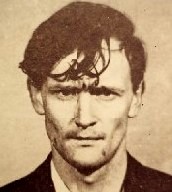 Gwynne Evans
Murderer · United Kingdom · 1964
Gwynne Evans was convicted for the capital murder of John Alan West, committed…
1 victim
Gwynne Evans
Murderer · United Kingdom · 1964
Gwynne Evans was convicted for the capital murder of John Alan West, committed…
1 victim
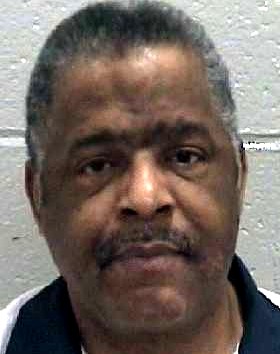 Willie Williams Palmer
Murderer · USA · 1995
Willie Williams Palmer and Brenda Palmer married in 1993. They had a baby, Will…
2 victims
Willie Williams Palmer
Murderer · USA · 1995
Willie Williams Palmer and Brenda Palmer married in 1993. They had a baby, Will…
2 victims
 Sergei Babarin
Homicide · USA · 1999
1995 — Sergei Babarin was arrested in Salt Lake City after an incident in a dep…
2 victims
Sergei Babarin
Homicide · USA · 1999
1995 — Sergei Babarin was arrested in Salt Lake City after an incident in a dep…
2 victims
 Petr Zelenka
Serial killer · Czech Republic · 2006
Petr Zelenka was a male nurse who worked in a hospital in eastern Bohemia in Ha…
7 victims
Petr Zelenka
Serial killer · Czech Republic · 2006
Petr Zelenka was a male nurse who worked in a hospital in eastern Bohemia in Ha…
7 victims
- Gender
- male
- Country
- USA
- Location
- San Diego County, California, USA
- Date of birth
- 1943
- Age at first offence
- 18
- Characteristics
- parricide, convicted rapist
- Victim profile
- His mother and invalid sister / Thomas Larry Taddei (fellow inmate)
- Method of murder
- Beating with a baseball bat and rock / Ligature strangulation
- Date(s) of murder
- 1961 / 1964
- Years active
- 1961–1964
- Date of arrest
- —
- Status
-
Life imprisonment
Sentenced to death in 1962; overturned in 1972; resentenced to life imprisonment after reversal of the death penalty
Case record: Joseph Bernard Morse
Background
Joseph Bernard Morse was convicted in 1962 of murdering his mother and sister. He was also later found responsible for killing a fellow inmate.
The offence
1962 killings of his mother and sister
Morse was found guilty of murdering his mother and sister in 1962.
Killing of Thomas Larry Taddei (fellow inmate)
On August 14, 1964, while confined in the San Diego County jail awaiting formal sentencing for the 1962 crimes, Morse garrotted Thomas Larry Taddei, another prisoner.
Morse and Taddei occupied separate cells in a cellblock on the fifth floor of the jail.
Deputy Sheriff Murkerson, assigned to jail duty on the floor below, was delivering medicine to another inmate in the same cellblock as Morse when he found the victim lying outside Morse’s cell with his head and neck suspended by a sort of woven rope attached to the bars. Morse was in his cell.
Murkerson called to Morse: “Cut him loose, Joe.” Morse, standing in the center of the cell and looking at the jailer, shrugged his shoulders, lay down on the bunk behind him, and folded his hands behind his head. Murkerson went for help and returned shortly with two other officers and a trusty. One of the officers cut the cord which had been knotted at the back of the victim’s neck and looped around and knotted behind a bar of Morse’s cell.
Murkerson noticed that Taddei was pale and cold and that there was paper sticking out of his mouth. An attempt was made to revive Taddei, and finally it was determined that he was dead.
Murkerson testified on voir dire outside the jury’s presence that approximately two or three minutes after he had returned with help, while he and another officer were attempting to use artificial respiration on Taddei, he had a conversation with Morse. At this time the two officers were outside Morse’s cell and Murkerson was kneeling beside the victim and facing Morse’s cell. The jailer looked up toward Morse, who was lying on his bunk, and asked: “Joe, did you do this?” Morse nodded his head in the affirmative and said: “Yeah.” The jailer then immediately asked: “Why?” Morse replied: “The sonofabitch wouldn’t pay his debts.” The jailer then asked: “What did he owe you?” Morse immediately answered: “Cigarettes.”
At no time did Murkerson inform Morse of his right to counsel or of his absolute right to remain silent. Nor did Morse at any time request counsel or show any unwillingness to respond to the jailer’s questions.
On voir dire, Murkerson stated: “From my information, I was surprised to find something like this and was still kind of amazed over it all, and I was trying to find out what had happened just for my own benefit.” Murkerson further stated that he was not attempting by his questions to elicit an incriminating statement from Morse and that the thought of advising Morse of his rights did not occur to him at the time.
At trial, Morse withdrew, with the court’s approval, his plea of not guilty by reason of insanity after the return of the guilty verdict.
Investigation
Murkerson’s conversation with Morse occurred as he attempted to revive Taddei after the garroting.
Arrest
Morse was in custody in the San Diego County jail on August 14, 1964 when the killing occurred.
Trial
Morse II: trial for killing Thomas Larry Taddei
A jury found Morse guilty of first degree murder and fixed the penalty at death.
The trial judge denied Morse’s motions for a new trial and for reduction of penalty. This appeal was automatic.
Evidence and expert testimony
Dr. David Wilson, a psychiatrist appointed by the court upon motion and nomination of Morse, testified on direct examination that Morse suffered from a sociopathic personality disorder; that this disorder combined with Morse’s background and environment rendered his response to the victim’s actions instinctual and automatic; that Morse was incapable of deliberations prior to his act; that the act was psychologically predictable; and that Morse was incapable of thinking or acting within the normal framework of morality.
On cross-examination, when confronted with a 15-page transcript of an interview between Morse and police officers on the night of the killing, Dr. Wilson admitted he had considered Morse’s statement therein in the formation of his expressed opinion and: “found nothing there that would change my opinion.”
Earlier, when the prosecution attempted to introduce this statement as part of its case-in-chief, it was declared inadmissible on Escobedo grounds. Objection to using the statement in cross-examination was made on this basis.
The court ruled the contemplated line of cross-examination should proceed, but that the jury should be admonished to disregard the statement for all purposes but testing Dr. Wilson’s credibility and opinion. After the jury was admonished, the prosecutor read to Dr. Wilson several statements made by Morse during the interview and asked whether he had considered them in the formation of his opinion. The statements tended to impeach Dr. Wilson’s testimony and reflected a hardened amoral attitude toward the taking of a human life.
Morse also argued that error occurred during the trial when the prosecutor commented on Morse’s failure to testify and the court instructed the jury about adverse inferences. The opinion concluded that both the comment and the instructions violated constitutional principles announced in Griffin, but that the guilt judgment would be affirmed under Chapman harmless error analysis.
Manslaughter instruction request
Morse contended the court erred by refusing to instruct on manslaughter. The majority held the trial court properly refused manslaughter instructions because the defense relied entirely on Dr. Wilson’s testimony regarding capacity to entertain mental states necessary for first degree murder.
Morse requested instructions including CALJIC No. 305-AA (doubt whether murder or manslaughter), No. 310 (murder and manslaughter distinguished), and No. 311-A (no specific passion alone constitutes heat of passion).
The standard diminished capacity instruction given (former CALJIC No. 73-B) was: “You are reminded that a person might be legally sane, as we define that term in dealing with the question of criminal responsibility, and yet be in an abnormal mental or nervous condition; and because of such condition he might be less likely or unable to have or to hold a specific intent or a certain state of mind, which is an essential ingredient of a certain crime. We have received evidence bearing on the mental and nervous condition of the defendant at the time of the alleged commission of the crime charged. Such evidence may be considered by you in determining whether or not defendant did any act charged against him and, if so, whether or not, at that time, there existed in him the specific mental factor and intent which must accompany that act to constitute a certain crime or degree of crime. You do not [at this time] have before you any issue as to defendant’s legal sanity.”
Dr. Elmer Haynes testimony and Spencer limiting instruction
Morse argued error because a court-appointed psychiatrist, Dr. Elmer Haynes, testified for the prosecution as to what Morse told him during psychiatric examination.
Dr. Haynes’s examination and testimony were tied to a confession Morse had made during psychiatric examination. The opinion recounted that Dr. Haynes and another doctor were appointed by the court on September 11, 1964 under section 1027 to determine mental condition at the time of the offense. On September 26, 1964, Dr. Haynes learned Morse had been transferred due to a change of venue from the San Diego County jail to the Orange County jail. The examination was performed on September 29, 1964.
On September 29, 1964, Morse’s attorney filed a motion in Orange County Superior Court for appointment of a psychiatrist of Morse’s own choice and to restrain examination by the previously appointed psychiatrists. The notice of motion was not received by the San Diego District Attorney until October 1 or October 2. On October 3, 1964, Dr. Haynes performed the psychiatric examination at the Orange County jail without knowledge of the motion. On October 9, 1964, the motion to restrain examination was denied, and the motion to appoint a psychiatrist was granted.
At trial, Dr. Haynes testified as part of the prosecution’s case-in-chief. The opinion described the content of Dr. Haynes’s testimony as follows (set out verbatim):
“After spending some time with Mr. Morse I asked him why he was in jail or why he was in the Orange County Jail and he said he was charged with killing an inmate in the San Diego County Jail on 8-14-64. When I asked him about some of the details he stated that he had been playing dominoes; that he was in a locked cell; that during the process of playing dominoes the inmate lost a carton of cigarettes to Mr. Morse. Then it turned out that the inmate did not have the money with which to buy the cigarettes and this was quite upsetting to Mr. Morse. In fact, he said it made him mad. Then there was some- he stated that the other, the inmate was suppose [sic] to give him a dessert at night, at dinner time, and he said that the meal came, it was served, and that he did not get the dessert. ...
“Mr. Morse made some remark about the inmate which indicated that Mr. Morse was quite upset at the time. Also I asked him about how they played dominoes and he said they played it on the floor underneath the lower railing, I guess, not having been in the jail to observe. This is the way I understood it. And that Mr. Morse said that he had prepared from the mattress a rope or cord that he used to use in exercises, pull-up exercises to get some exercise; that during the night--prior to 8-14-64, added a length of this rope or cord, and if he got a chance he would use it on the other inmate. Then he said that around 8:00 o'clock or thereabouts that the inmate asked him for a cigarette. He walked over to Mr. Morse's jail, Mr. Morse jumped up, he had this rope in his hand at the time the other man came, he turned around, he used his arms to get the rope through the bars, looped it around the man's neck, pulled him back and choked him. Then after several minutes he felt he went limp, he let him down. He was on the floor. That he had the rope around the neck or pulled the man's neck or head up against the bar and tied the rope tight. And that he was found dead some 15, 20 minutes later. And I asked him if anyone said anything to him or if he said anything and he said, well, I think he made the remark or remembers making the remark: 'That S.O.B. should have paid his debt.'”
The opinion described that the jury did not receive a limiting instruction requested or given regarding the jury’s consideration of declarations testified to by Dr. Haynes.
The majority concluded this was error but harmless beyond a reasonable doubt in relation to guilt.
Prosecutor remarks and jury instruction on failure to testify
The opinion described the prosecutor’s comment during opening argument. In the dissenting opinion, the comment was quoted as follows:
“The defendant hasn't told you what he was thinking. He hasn't told you why he did this or how he did this. You don't have the defendant's word--a word from the defendant, but we have Dr. Wilson coming in, based on an examination that he made two months, two months after the killing, to tell you what the defendant meant and what the defendant's thoughts were. Now, I told you in the voir dire, you are aware that the prosecution can't call the defendant or force him to take the stand. Nobody can force him to take the stand. And he didn't take the stand in this case. If he did take the stand, he would have been subject to cross- examination. He would have been subject to impeachment, just like any other witness is.”
The later prosecutor remark described in footnote 10 was:
“So, ladies and gentlemen, in this case, that being the right of the defendant to not testify if he doesn't see fit, we have Dr. Wilson brought in to tell us what he was thinking or must have been thinking. The specific purpose for Dr. Wilson's testimony was to tell you that Mr. Morse, Joe Morse, did not premeditate or deliberate this killing. The doctor doesn't care what the facts were that might indicate otherwise.”
The jury was instructed using former CALJIC Nos. 51, 51-A, and 51-B. The opinion set out the pertinent part of former CALJIC No. 51-A verbatim:
“As to any evidence or facts against him which the defendant can reasonably be expected to deny or explain because of facts within his knowledge, if he does not testify or if, though he does testify, he fails to deny or explain such evidence, the jury may take that failure into consideration as tending to indicate the truth of such evidence and as indicating that among the inferences that may be reasonably drawn therefrom those unfavorable to the defendant are the more probable. In this connection, however, it should be noted that if a defendant does not have the knowledge that he would need to deny or to explain any certain evidence against him, it would be unreasonable to draw an inference unfavorable to him because of his failure to deny or explain such evidence.”
Sentencing
Initial penalty and death sentence
A jury fixed the penalty at death.
Jury selection for death penalty (Witherspoon issue)
For the death penalty, prospective jurors were excused for cause because of conscientious opinions relative to the death penalty.
The opinion recounted that, on the first day of jury selection proceedings, the court addressed routine preliminary remarks and inquiries and then stated:
“The next question I am going to ask is relative to the matter of the death penalty. And by way of preface, I will say I am asking this question myself at this time only to save time in the case, so that if there is anybody who wants to express themselves they may do so now. It has been brought to the attention of the Court in this matter that the District Attorney, if there is a conviction of first degree murder in this case, intends to ask for the death penalty. In the event we get to that phase of the case, the duty may come to the jury of determining whether the defendant would have to suffer the death penalty or imprisonment for life. And in the event that question does come it would be this jury which would have that question. In order to save time I am going to ask the question now: Is there anybody on the jury panel as it now stands who has such a conscientious opinion relative to the death penalty as would preclude him from concurring in a verdict carrying the death penalty in a proper case?”
Jurors who answered affirmatively were excused without further questioning, and additional veniremen were also excused upon affirmative answers to almost identical questions.
The opinion concluded that Witherspoon required reversal of the penalty portion because the court’s introductory remarks relative to the death penalty were insufficient to dispel hazards of misapprehension inherent in the “proper case” question.
The judgment was therefore reversed insofar as it related to penalty, while it was affirmed as to guilt.
Appeals
People v. Morse (1969)
The appeal concerned both guilt and penalty.
The opinion determined:
- The statements to Deputy Sheriff Murkerson were a confession requiring evaluation under Escobedo and Dorado.
- The prosecutor’s comment and the court’s instruction regarding Morse’s failure to testify violated Griffin principles but were harmless under Chapman as to guilt.
- The refusal to give manslaughter instructions was addressed and upheld as to guilt.
- Dr. Haynes’s testimony received without the limiting instruction required by Spencer was error but harmless beyond a reasonable doubt as to guilt.
- Prospective jurors were excused for cause in violation of Witherspoon standards, requiring reversal of penalty.
The opinion also provided guidance for retrial of penalty:
- The officer bailiff testimony about Morse carrying a homemade knife into court during an earlier penalty trial was allowed as evidence of background and history under section 190.1.
- The opinion described the prosecution’s use of a reporter’s conversation with Morse after the earlier penalty trial and Morse’s response:
- The reporter testified that Morse replied affirmatively to the question “Who were you going to use it on, ... A witness?”
- Morse then added: “If I had a chance” or “If I could.”
- For the baseball bat allegedly used in 1962, the court excluded initial foundation testimony for lack of evidence that the bat was used as a weapon, but later admitted the bat in the penalty phase after foundation testimony drawn from Morse I cross-examination was read into evidence.
- The opinion held that prior testimony in Morse I was a product of an illegally obtained confession, requiring that admission in the penalty phase was erroneous unless the prosecution showed admissibility under Miranda standards for retrial.
The opinion concluded that references to the earlier vacated judgment as to murder counts were not improper per se, but that the prosecution should not refer to vacated verdicts underlying those counts when a new jury determined penalty for the killing of Thomas Taddei.
Concurring and dissenting opinions
Several justices wrote separately:
- Peters, J., agreed that the penalty judgment must be reversed but dissented from affirmance of guilt, arguing the Griffin error and the Spencer limiting instruction error were prejudicial and required reversal of guilt as well.
- Traynor, J., concurred in reversal of penalty and would reverse guilt under Griffin and Chapman.
- McComb, J., concurred in part and dissented from reversal of the death penalty, stating he believed the error complained of did not result in a miscarriage of justice.
Other details
Prior and subsequent prison events described
Morse lived for ten years on death row before his sentence was reduced to life imprisonment. He later had a series of parole hearings.
The record described a parole board action in 1978 when the parole board set a parole date for Morse without a hearing; it rescinded the decision after outrage from prosecutors and a letter-writing campaign.
In prison, Morse became a celebrity: he edited the San Quentin News, married a wealthy widow for several years, and was interviewed by Truman Capote.
At the time described in the case summary, Morse was transferred to the medical facility at Vacaville, and he refused to appear for his own parole hearing.
Morse was described as the youngest man in California ever sentenced to death at the time of his first conviction in 1962 at age 19, and he was described as having refused to submit to psychiatric evaluations at one point.
Names and roles mentioned
- Joseph Bernard Morse: defendant
- Thomas Larry Taddei: fellow inmate victim
- Deputy Sheriff Murkerson: jailer who found Taddei and spoke with Morse
- Dr. David Wilson: defense psychiatrist witness
- Dr. Elmer Haynes: court-appointed psychiatrist for prosecution
- Officer Roland: officer involved in police car where Morse’s statement occurred (in the opinion’s discussion)
- Murray Wallace: trusty at the San Diego County jail who testified he heard Morse threaten to kill Taddei shortly before the killing
- Deputy Dist. Atty. John Hewicker II: appeared in the narrative describing opposition to parole
- Michael Newton: described as author in the narrative
- Tony Perry: described as writing an account in the narrative
Victims count
Morse was convicted of murdering his mother and sister, and he later killed one fellow inmate, Thomas Larry Taddei.
Timeline
- 1962 — Morse was convicted of murdering his mother and sister and fixed the penalty at death.
- August 6, 1964 — A jury determined Morse should suffer life imprisonment.
- August 14, 1964 — While confined in the San Diego County jail awaiting formal sentencing for the 1962 crimes, Morse garrotted Thomas Larry Taddei.
- August 09, 1991 — A narrative account associated with “Only the Bars Separate 2 Men's Determination” described developments in Morse’s efforts to secure release and Hewicker’s opposition (as included in the compiled text).
Spotted an error, or have more information about this case?