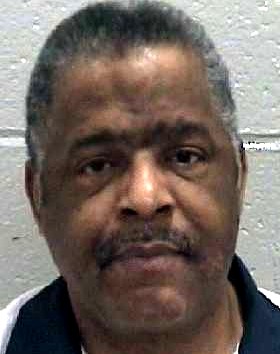
Willie Williams Palmer
Murderer Brian Kevin Rosenfeld
Murderer · USA · 1985
Brian Kevin Rosenfeld Brian Kevin Rosenfeld was sentenced to three concurrent l…
23 victims
Brian Kevin Rosenfeld
Murderer · USA · 1985
Brian Kevin Rosenfeld Brian Kevin Rosenfeld was sentenced to three concurrent l…
23 victims
 Russell Ellwood
Murderer · USA · 1991
Russell Ellwood was a former taxi driver. Authorities suspected him of killing…
20 victims
Russell Ellwood
Murderer · USA · 1991
Russell Ellwood was a former taxi driver. Authorities suspected him of killing…
20 victims
 Robert Martines Perez
Murderer · USA · 1994
Name: Robert Martines Perez · Other name used in proceedings: Robert Martinez P…
15 victims
Robert Martines Perez
Murderer · USA · 1994
Name: Robert Martines Perez · Other name used in proceedings: Robert Martinez P…
15 victims
 Billy Frank Vickers
Murderer · USA · 1993
Billy Frank Vickers Vickers was executed by lethal injection in Texas on Januar…
14 victims
Billy Frank Vickers
Murderer · USA · 1993
Billy Frank Vickers Vickers was executed by lethal injection in Texas on Januar…
14 victims
 Alexander Tchayka
Spree killer · Russia · 1994
Alexander Tchayka (born in 1974 in Sumy, USSR (now, Ukraine)) was a Russian ser…
4 victims
Alexander Tchayka
Spree killer · Russia · 1994
Alexander Tchayka (born in 1974 in Sumy, USSR (now, Ukraine)) was a Russian ser…
4 victims
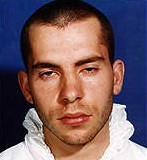 David John Copeland
Murderer · United Kingdom · 1999
David John Copeland was born in Isleworth, in the London Borough of Hounslow, a…
3 victims
David John Copeland
Murderer · United Kingdom · 1999
David John Copeland was born in Isleworth, in the London Borough of Hounslow, a…
3 victims
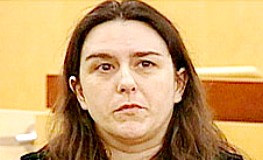 Jody Lynn Bowman
Homicide · USA · 2003
Jody Lynn Bowman was acquitted of a murder charge by a Florida jury in May 2004…
1 victim
Jody Lynn Bowman
Homicide · USA · 2003
Jody Lynn Bowman was acquitted of a murder charge by a Florida jury in May 2004…
1 victim
 Walter Sorto
Murderer · USA · 2002
Name: Walter Alexander Sorto TDCJ Number: 999465 Date of Birth: 08/10/1977 Gend…
2 victims
Walter Sorto
Murderer · USA · 2002
Name: Walter Alexander Sorto TDCJ Number: 999465 Date of Birth: 08/10/1977 Gend…
2 victims
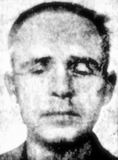 James Rodgers
Murderer · USA · 1957
James W. Rodgers (August 3, 1910 – March 30, 1960) was an American who was sent…
1 victim
James Rodgers
Murderer · USA · 1957
James W. Rodgers (August 3, 1910 – March 30, 1960) was an American who was sent…
1 victim
- Gender
- male
- Country
- USA
- Location
- Burke County, Georgia, USA
- Date of birth
- 1952
- Age at first offence
- 43
- Characteristics
- revenge, kidnapping, burglary, child abuse, rape
- Victim profile
- His wife, Brenda Jenkins Palmer, and his stepdaughter, Christine Jenkins
- Method of murder
- Shooting (.22 caliber rifle)
- Date(s) of murder
- September 10, 1995
- Years active
- 1995
- Date of arrest
- 2 days after
- Status
-
Sentenced to death
Sentenced to death on November 8, 1997; conviction affirmed on appeal (DECIDED June 1, 1999; RECONSIDERATION DENIED July 6, 1999) PALMER v. THE STATE. S99P0037. (271 Ga. 234) (517 SE2d 502) (1999)
Background
Willie Williams Palmer and Brenda Palmer married in 1993. They had a baby, Willshala Palmer, in 1994. Several witnesses testified that Palmer physically abused Brenda and often threatened to kill her. Brenda separated from Palmer in May 1995 and began divorce proceedings. Palmer owned a piece of land, and he told numerous witnesses he would kill Brenda if she tried to take it.
In July 1995, Palmer was jailed for violating a restraining order to stay away from Brenda. Brenda, Christine Jenkins (Brenda’s 15-year-old daughter), and Willshala moved to a two-room house without running water in Vidette. Brenda had an outstanding loan with a loan company, and in August 1995 she told the loan company manager that she feared for her life if Palmer got out of jail. Brenda asked the manager not to tell anyone where she was living.
Palmer also was angry with his ex-girlfriend, Brenda Smith, with whom he lived for 13 years before his marriage to Brenda Palmer and who was living with him again after her house burned down.
The offence
On September 1, 1995, Palmer was released from jail and went to the loan company, where he was a regular customer, to borrow money to pay his lawyer. He asked the manager if she had seen Brenda, but the manager did not reply. Palmer said the manager did not have to answer his question because “I will find her.” He added, “when I find her, I will kill that bitch.” The manager testified that she was scared by Palmer’s cold demeanor when he made this threat.
During the next ten days, Palmer threatened to kill Brenda several times in front of several witnesses. He told one witness that he was “going to do it execution-style” and that it would be on TV. Palmer was also angry with his ex-girlfriend, Brenda Smith. He told a witness that he was “going to kill Brenda [Smith] and the other Brenda,” and he told another witness that “there won’t be no Brendas.”
On September 10, 1995, Palmer chased Brenda Smith while she was a passenger in her sister’s car and bumped his car into the rear of their car. Brenda Smith fled on foot, and Palmer told Brenda Smith’s sister, “Y’all don’t know who in the hell y’all are playing with.” Palmer spent part of the day looking for his guns and asked his son and his nephew where they had been kept while he was in jail.
The State presented evidence that Palmer owned a .22 caliber rifle and that he had used this rifle to shoot at his brother on two previous occasions when Palmer was angry with him.
That night, Palmer asked his nephew, Frederico Palmer, to ride with him to Augusta. Frederico got into Palmer’s blue Caprice Classic, but Palmer drove to Vidette instead. Palmer asked Frederico, “Do you think I should do this?” Frederico replied, “What are you talking about?” Palmer said, “I’m fixing to go kill Brenda and her daughter.” Frederico did not say anything.
Palmer parked the car near a laundromat close to Brenda Palmer’s house, put on gloves, and pulled out a .22 caliber rifle. He instructed Frederico to drop him off near Brenda’s house, park the car by some dumpsters, and catch up to him on foot. Frederico complied.
Palmer was fumbling with the telephone box on the side of Brenda’s house when Frederico arrived. Palmer asked for help disconnecting the phone line, and Frederico unplugged it. Palmer kicked in the front door and turned on the light. Christine Jenkins, Palmer’s stepdaughter, was lying on a bed. Palmer said, “Hey Bootie [Christine’s nickname], I told you I was coming back.” Palmer then shot her once in the face, killing her.
Palmer went into the back room where Brenda was holding Willshala in front of her as a shield. Palmer told Frederico to take the baby, and Frederico complied, knocking Brenda to the floor. Palmer then killed Brenda by shooting her twice in the head. When the men departed, they left the baby in the house.
Palmer concocted an alibi, telling Frederico to say that they had gone to Augusta together to see a friend. Palmer tossed the murder weapon, gloves, and shoes off a bridge.
The jury found Palmer guilty of two counts of malice murder and two counts of felony murder in the shooting deaths of his wife, Brenda Jenkins Palmer, and his stepdaughter, Christine Jenkins. He was also convicted of kidnapping, burglary, cruelty to children, possession of a firearm by a convicted felon, and possession of a firearm during the commission of a crime.
Investigation
Two days later, Frederico confessed and led the police to the rifle, gloves, and shoes.
Ballistics testing revealed that the .22 rifle was the murder weapon. Several witnesses, including a sheriff’s deputy who temporarily confiscated the rifle during a 1992 traffic stop, identified this weapon as belonging to Palmer.
The recovered shoes were size 11, the same size Palmer wears. A witness who knew Palmer testified that he saw Palmer’s blue Caprice Classic parked near the Vidette laundromat on the night of the murders. The witness said Palmer’s car is easily recognizable because it is missing part of its front grille.
Arrest
Palmer was indicted for malice murder (2 counts), felony murder (2 counts), burglary, kidnapping, cruelty to children, possession of a firearm by a convicted felon, and possession of a firearm during the commission of a crime on October 23, 1995.
Trial
The trial took place from October 28 to November 8, 1997. Palmer was convicted of all counts on November 7, 1997, and the jury recommended two death sentences for the malice murders the following day.
Palmer attempted to prove that he is mentally retarded through an expert witness and IQ scores that ranged from 61–72. The State’s expert testified that Palmer malingered on the attempted IQ testing by the State.
Evidence and sufficiency findings
The appellate court stated the evidence was sufficient to authorize a rational trier of fact to find Palmer guilty of the crimes charged beyond a reasonable doubt. The appellate court also stated the evidence was sufficient to enable the jury to find the existence of three statutory aggravating circumstances beyond a reasonable doubt.
Statutory aggravating circumstances and jury recommendation
The jury recommended a death sentence for each malice murder conviction after finding three statutory aggravating circumstances:
- the murder of Brenda Palmer was committed while Palmer was engaged in the commission of a burglary;
- the murder of Christine Jenkins was committed while Palmer was engaged in the commission of a burglary; and
- the murder of Brenda Palmer was committed while Palmer was engaged in the commission of the murder of Christine Jenkins. OCGA 17-10-30 (b) (2).
Issues raised on appeal and rulings
Palmer claimed the State violated Batson v. Kentucky by exercising peremptory strikes in a racially discriminatory manner. The jury venire was composed of thirty-two African-Americans and thirty-six whites. The State used all ten of its peremptory strikes to remove African-Americans from the jury. The jury that convicted Palmer and recommended a death sentence included eight African-Americans, and the record showed the State accepted many African-American jurors. The trial court required the State to give race-neutral reasons for its strikes, rendering the preliminary showing of prima facie discrimination moot. The appellate court concluded the trial court did not abuse its discretion by finding the reasons race-neutral and sufficient and found no error in the Batson ruling.
Palmer claimed the trial court improperly limited the testimony of a defense psychologist. The psychologist had been reciting test procedures he might use in some cases when the trial court interjected and told defense counsel to “get down to what we did in this case.” The appellate court held this comment reminded the defense to present relevant testimony, and the psychologist was able to fully explain the test procedures used with Palmer, why they were used, and the results; it found no error because relevant testimony was not limited.
Palmer argued the trial judge was not impartial because he made frequent and unnecessary comments and asked non-neutral questions. Because Palmer did not object at trial to any alleged judicial partiality, the appellate court held the argument was waived. It also held the record did not support the claim because the judge’s comments and questions were not adversarial.
The sentencing phase jury charge was challenged. The appellate court held the trial court did not err by failing to instruct the jury that a unanimous finding on mitigating circumstances was not required because the trial court had charged that it was not necessary to find any mitigating circumstances to impose a life sentence. It also held that, viewing the charge as a whole, the jury was not misled into believing the beyond a reasonable doubt standard applicable to a finding of mental retardation in the guilt-innocence phase applied to consideration of alleged mental retardation in the sentencing phase.
Palmer argued the trial court erred by allowing the State to introduce four prior incidents as similar transactions in the guilt-innocence phase. The appellate court addressed:
- the prior shooting at Palmer’s brother Fready Palmer on two occasions and held there was no error in admitting the evidence; it described the October 1992 argument and shooting and the July 1995 argument and shooting into a pickup truck through the windshield and door, and noted that the trial court found appropriate purpose, sufficient evidence Palmer committed the acts, and sufficient similarity and connection;
- the assault on Brenda Smith and held the trial court did not err by ruling it admissible as a similar transaction;
- the deputy’s identification of the murder weapon as belonging to Palmer and held the deputy’s testimony about Palmer’s possession of the murder weapon was admissible as relevant evidence.
The appellate court also held victim-impact evidence was not improper. It held that although the trial court did not give a charge on the purpose of victim-impact evidence, Palmer never requested such a charge and did not object, and therefore there was no reversible error.
Palmer complained that a sheriff’s investigator testified in the sentencing phase that Palmer told him if he was convicted he would ask the court to kill him. Palmer did not object, and the appellate court held the issue waived.
Palmer cried at the end of his testimony in the guilt-innocence phase, the jury took a break immediately thereafter, and the prosecutor referred to Palmer’s crying in closing argument by stating, “And how long did that sobbing last on that witness stand? About ten seconds, until you walked out that door.” Palmer objected that the prosecutor referred to matters not in evidence. The trial court stated, “All right. Members of the jury, you will remember the evidence. Argue the evidence and the reasonable deductions.” The appellate court held there was no reversible error because Palmer requested no further action after the objection was sustained and did not move for a mistrial.
Palmer argued his name was incorrect in the indictment, asserting his real name was Willie Palmer and that the indictment listed a Willie Williams Palmer. He claimed error in the denial of his plea of misnomer asserted during jury selection. The appellate court held the proper time for filing a plea of misnomer was before arraignment and the plea was untimely. It also held Palmer was clearly the person named in the indictment.
Palmer argued the death sentences were imposed as the result of passion, prejudice, or other arbitrary factor, and that they were excessive or disproportionate. The appellate court held the death sentences were not imposed as the result of passion, prejudice, or other arbitrary factor and were not excessive or disproportionate. It stated that similar cases in the appendix involved a murder committed during a burglary or the deliberate, unprovoked killing of two or more people.
Parties and advocates (as named)
Daniel J. Craig, District Attorney, Charles R. Sheppard, Assistant District Attorney, Thurbert E. Baker, Attorney General, Susan V. Boleyn, Senior Assistant Attorney General, Patricia A. Burton, Assistant Attorney General, appeared for appellee. Richard O. Ward and Charlotta Norby appeared for appellant.
Sentencing
In addition to the death sentences, the trial court sentenced Palmer to twenty years for burglary, ten years for kidnapping, ten years for cruelty to children, five years for possession of a firearm by a convicted felon, and five years for possession of a firearm during the commission of a crime. The appellate record stated all sentences were to be served consecutively.
The felony murder convictions were vacated by operation of law. Malcolm v. State, 263 Ga. 369, 371–372 (4) (434 SE2d 479) (1993). The jury recommended a death sentence for each malice murder conviction after finding the statutory aggravating circumstances specified above. The trial court sentenced Palmer to death.
Appeals
Palmer appealed, and the appellate court affirmed.
The appellate court decision was issued on June 1, 1999, and reconsideration was denied July 6, 1999.
Outcome
The appellate court found no error in the trial court’s rulings described in the appellate discussion. It affirmed Palmer’s convictions and death sentences.
Aftermath
A note of the procedural posture indicated the crimes were committed on September 10 or 11, 1995. On October 23, 1995, Palmer was indicted as described. Palmer was convicted on November 7, 1997, and the jury recommended death sentences for the malice murders the following day. The trial court sentenced Palmer to death and imposed additional consecutive sentences as described above. Palmer filed a motion for new trial on November 14, 1997, and an amended motion for new trial on July 22, 1998, which was denied the same day. The case was docketed on September 28, 1998, and orally argued on January 25, 1999.
The notes also stated: during the trial, the parties and trial court erroneously characterized an assault as a “prior difficulty”; the trial court prevented the State from presenting evidence about the reason for a traffic stop; and that the appellate decision included citations.
The appellate court’s procedural citations included that the crimes were committed on September 10 or 11, 1995 and that the trial occurred from October 28 to November 8, 1997.
Spotted an error, or have more information about this case?