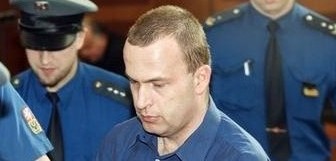
Petr Zelenka
Serial killer Martin Lecian
Serial killer · Czech Republic · 1927
Martin Lecián was a Czech serial killer. He was executed on October 6, 1927. ·…
11 victims
Martin Lecian
Serial killer · Czech Republic · 1927
Martin Lecián was a Czech serial killer. He was executed on October 6, 1927. ·…
11 victims
 Hubert Pilcik
Serial killer · Czech Republic · 1948
Hubert Pilčík (October 14, 1891 - September 9, 1951) was a Czechoslovak serial…
5 victims
Hubert Pilcik
Serial killer · Czech Republic · 1948
Hubert Pilčík (October 14, 1891 - September 9, 1951) was a Czechoslovak serial…
5 victims
 Edson Isidoro Guimaraes
Serial killer · Brazil · 1999
Edson Isidoro Guimarães was a Brazilian nursing assistant and nurse’s aide at S…
131 victims
Edson Isidoro Guimaraes
Serial killer · Brazil · 1999
Edson Isidoro Guimarães was a Brazilian nursing assistant and nurse’s aide at S…
131 victims
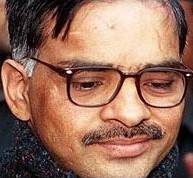 Javed Iqbal
Serial killer · Pakistan · 1998
Javed Iqbal (born 1956 in Lahore, Punjab, Pakistan; died October 8, 2001, in La…
100 victims
Javed Iqbal
Serial killer · Pakistan · 1998
Javed Iqbal (born 1956 in Lahore, Punjab, Pakistan; died October 8, 2001, in La…
100 victims
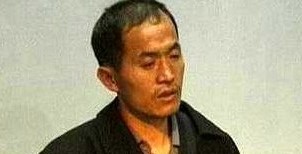 Yang Xinhai
Serial killer · China · 2000
Yang Xinhai (simplified Chinese: 杨新海; pinyin: Yáng Xīnhǎi; 17 July 1968–14 Febr…
67 victims
Yang Xinhai
Serial killer · China · 2000
Yang Xinhai (simplified Chinese: 杨新海; pinyin: Yáng Xīnhǎi; 17 July 1968–14 Febr…
67 victims
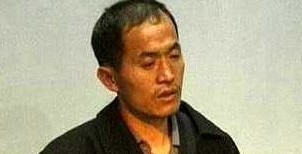 Yang Xinhai
Serial killer · China · 2000
Yang Xinhai (simplified Chinese: 杨新海; pinyin: Yáng Xīnhǎi; 17 July 1968–14 Febr…
67 victims
Yang Xinhai
Serial killer · China · 2000
Yang Xinhai (simplified Chinese: 杨新海; pinyin: Yáng Xīnhǎi; 17 July 1968–14 Febr…
67 victims
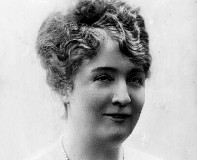 Henriette Caillaux
Murderer · France · 1914
Henriette Caillaux was the wife of France's minister of finance, Joseph Caillau…
1 victim
Henriette Caillaux
Murderer · France · 1914
Henriette Caillaux was the wife of France's minister of finance, Joseph Caillau…
1 victim
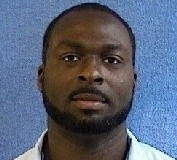 Clarence Gardner
Homicide · USA · 1993
October 28, 1993 — Joseph Waites was shot dead after a street scuffle involving…
1 victim
Clarence Gardner
Homicide · USA · 1993
October 28, 1993 — Joseph Waites was shot dead after a street scuffle involving…
1 victim
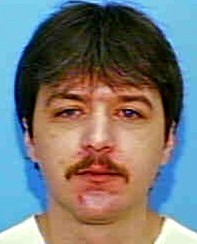 Herman Dale Ashworth
Murderer · USA · 1996
Herman Dale Ashworth was convicted of aggravated murder and aggravated robbery…
1 victim
Herman Dale Ashworth
Murderer · USA · 1996
Herman Dale Ashworth was convicted of aggravated murder and aggravated robbery…
1 victim
 Travis Dwight Green
Murderer · USA · 1998
Travis Dwight Green had the TDCJ number 999373. His date of birth was 1/0/1968.…
2 victims
Travis Dwight Green
Murderer · USA · 1998
Travis Dwight Green had the TDCJ number 999373. His date of birth was 1/0/1968.…
2 victims
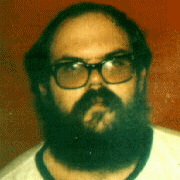 David Lawson
Murderer · USA · 1980
David Lawson was scheduled to be executed by the State of North Carolina using…
1 victim
David Lawson
Murderer · USA · 1980
David Lawson was scheduled to be executed by the State of North Carolina using…
1 victim
 William Hamilton Little
Murderer · USA · 1983
December 3, 1983 — Michael John Rammel found the body of Marilyn Peter in her h…
1 victim
William Hamilton Little
Murderer · USA · 1983
December 3, 1983 — Michael John Rammel found the body of Marilyn Peter in her h…
1 victim
- Gender
- male
- Country
- Czech Republic
- Location
- Havlickud Brod, Czech Republic
- Date of birth
- 1976
- Age at first offence
- 30
- Characteristics
- nurse, poisoner
- Victim profile
- Men and women (patients)
- Method of murder
- Poisoning (heparin)
- Date(s) of murder
- May -September 2006
- Years active
- 2006
- Date of arrest
- December 1, 2006
- Status
-
Life imprisonment
Sentenced to life in prison on February 22, 2008
Case record: Petr Zelenka
Background
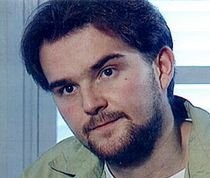
Petr Zelenka was a male nurse who worked in a hospital in eastern Bohemia in Havlíčkův Brod, at an intensive care unit. He later was employed at Jičín Hospital in east Bohemia, and administrators there were not warned about him and did not suspect a thing.
Zelenka was nicknamed “The Heparin Killer” after he was found guilty of administering heparin, a blood-thinning drug, to patients. He was described as a “Heparin killer” and an “unprecedented case” in Czech criminal history.
The offence
Zelenka was accused of murdering seven patients and attempting to murder at least ten more by injecting them with heparin, an anticoagulant substance which could be fatal if administered in excess and could cause internal bleeding.
The hospital murders took place between May and September 2006. During that period, Zelenka was promoted to head nurse and put in charge of the entire intensive care unit.
Heparin was administered to seventeen mostly elderly patients, and it caused massive bleeding.
During the trial, the number of deaths and charges described in the proceedings included “seven murders” and “10 attempted murders,” and in other parts of the material “eight murders” and “nine more attempts” were mentioned, along with “thirteen people” who died in the hospital of heparin overdose.
Zelenka claimed he did not intend to kill the patients and said he wanted “some action.” He told the court that his impulse to kill “came out of the blue.”
Investigation
The relatively high number of deaths in intensive care delayed recognition. It took seven months before anyone in the hospital noticed the suspiciously high number of patients dying from internal bleeding. Another four months passed before Zelenka was arrested.
Petr Zelenka was dismissed at the end of September 2006 following a series of suspicious deaths that began in May, but he was not arrested until December.
In May, an abnormally high number of patients in the intensive care ward were bleeding to death. Pavel Longin, the head doctor at Havlíčkův Brod hospital, noticed that unusually high doses of heparin were causing the bleeding and he discovered that Zelenka’s name surfaced as the last nurse to care for the deceased.
Longin stated that he felt his conscience was clear and that he could not have acted sooner because he lacked direct evidence implicating Zelenka.
The police received the criminal complaint against Zelenka on Oct. 23, more than a month before they arrested him. The Havlíčkův Brod district police department was also under investigation. Doctors at Havlíčkův Brod were under investigation, and the hospital’s director, Josef Pejchl, was sacked for taking too long to fire Zelenka.
The material stated that a special committee was set up by the Health Minister Tomáš Julínek on Dec. 6 to look into the case.
David Marx, head of the Czech Association for Quality in Health Care, said:
"A flawed system is at the root of least 95 percent of all medical mistakes," says David Marx, head of the Czech Association for Quality in Health Care.
Marx said:
"In a well-functioning hospital anything unusual should immediately set off alarms. This didn't happen here."
Ondřej Dostál, a lawyer specializing in bioethics, said:
"According to law, anyone who suspects that a crime is about to take place is obliged to try and prevent it,"
Health experts and patients’ rights groups questioned the safety system that allowed the nurse to carry out the crimes.
Arrest
Zelenka was arrested in December after being dismissed at the end of September 2006.
He stood before the court for the first time on Monday, pleading guilty to five out of seven murders he was accused of.
Heparin killer blames madness, retracts confession on 21.1.2008 at Hradec Králové described the case reaching court that day.
Trial
The material described a trial involving four judges and over 60 witnesses, including other nurses and doctors from the hospital. The trial was expected to continue until the end of February.
Zelenka addressed the court for the first time and stated:
"The first impulse to kill came out of nowhere. As if a voice inside kept telling me: Give it to them. Give it to them! I had a feeling someone is trying to get me into doing it,"
He also explained why he was administering heparin:
"I don't know exactly why heparin. Probably because we used it at the department. I injected the drug directly into a vein." "The common dose is about 10 to 20 thousand units. I used about 25 thousand, if not more. I knew the patients would suffer from internal bleeding but I thought we would try to save their lives. I did not intend to kill them. I just wanted some action. I enjoyed the work,"
Zelenka revoked his earlier admission of guilt made to the police. He stated that the police put pressure on him, and he claimed he was severely beaten and forced to sign testimony:
"I signed whatever they wanted me to sign. I was afraid they would beat me again,"
Zelenka also claimed he had been mentally ill at the time of the murders and said he was allegedly taking 10 self-prescribed pills a day. The defendant’s lawyer Jan Herout repeated he would ask for reassessment of Zelenka’s state of mental health, saying:
“We want a team of experts to examine his mental state. It is such a complicated case that one expert opinion made by one psychiatrist is simply not sufficient.”
Jaroslav Ortman, who represented victims’ families, said:
“I think Mr Zelenka’s testimony is very muddled – on the one hand an admission of guilt, on the other an attempt to exonerate himself by talking about inner voices that led him on.”
Zelenka was quoted as having said he did it “to see some action,” then changing his story, saying he had no idea why he’d administered the drug.
The court psychiatrist concluded Zelenka was perfectly sane and fully responsible for his actions when he committed the murders.
The lawyers had pleaded a lesser sentence on grounds of diminished responsibility, claiming mental illness, but that request was rejected by the court.
Zelenka only admitted to administering heparin to five patients. He claimed the other confessions were beaten out of him by the police.
Zelenka also made a last minute appeal for clemency in court and said:
“I never wanted to hurt any of your family members. I never wanted to kill your loved ones.”
Sentencing
On February 22, 2008, a court in Hradec Králové sentenced Petr Zelenka to life in prison.
Judge Jiří Vacek delivered the sentence of life in prison for seven murders and 10 attempted murders. The material stated that Judge Vacek indicated he would have given Zelenka the death penalty had it not been abolished in 1990, and that a life sentence in a maximum security prison was the only sentence left open.
After sentencing, Zelenka bowed his head and showed no emotion. Afterwards, he stood in conversation with his lawyer, wiping tears from his eyes.
Appeals
Zelenka made a last minute appeal for clemency in court on February 22, 2008. The material stated that unless he succeeded in appealing against the verdict, he would become the 34th prisoner serving a life sentence in the Czech Republic.
Outcome
Petr Zelenka was found guilty of administering heparin to patients, causing massive bleeding, and the court sentenced him to life in prison on February 22, 2008.
Aftermath
Preventive measures were adopted by the hospital in Havlíčkův Brod, including installing cameras on the premises and closely monitoring the process of drug administration.
Health Minister Tomáš Julínek set up a special committee on Dec. 6 to look into the case.
The Health Ministry promised a stricter system of controls at hospitals, including a demand that hospitals obtain either national or international accreditation, which was stated as currently not mandatory.
The Czech Health Care Institute rated Havlíčkův Brod the top hospital in the Vysočina region and the eighth-best hospital in the country this November for its outstanding level of care.
Longin said the hospital did not have any formal system of controls in place that could have prevented the crimes.
The material quoted different views from patients’ rights groups:
- Pavel Vepřek, head of the Czech Health Forum promoting healthcare reforms, said:
- Luboš Olejár, Czech Patients Association President, said:
"It's absolutely outrageous," he said. "Something as simple as careful documentation of the amount of drugs each patient is given could have prevented this tragedy. There are clearly holes in the system, but the doctors involved are also responsible."
"These were the criminal acts of one individual. You can't blame it on the system," he said. "I don't think there exist any safety measures anywhere in the world that can protect patients against a determined murderer."
The Havlíčkův Brod managers’ delayed actions were described as involving errors by not acting sooner, and the system was described as having weak safety controls.
Spotted an error, or have more information about this case?