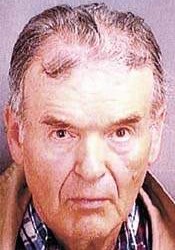
Sergei Babarin
Homicide Jack Kevorkian
Homicide · USA · 1990
Jack Kevorkian (born May 26, 1928) was a controversial American pathologist. He…
130 victims
Jack Kevorkian
Homicide · USA · 1990
Jack Kevorkian (born May 26, 1928) was a controversial American pathologist. He…
130 victims
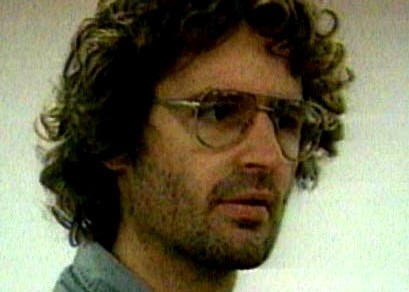 David Koresh
Homicide · USA · 1993
David Koresh (born Vernon Wayne Howell; August 17, 1959 – April 19, 1993) led t…
79 victims
David Koresh
Homicide · USA · 1993
David Koresh (born Vernon Wayne Howell; August 17, 1959 – April 19, 1993) led t…
79 victims
 Todd Hall
Homicide · USA · 1996
Todd Hall was described by neighbors as "mentally slow" and was said to have su…
9 victims
Todd Hall
Homicide · USA · 1996
Todd Hall was described by neighbors as "mentally slow" and was said to have su…
9 victims
 Joshua Jenkins
Homicide · USA · 1996
Joshua Jenkins was a 15-year-old American killer who killed five members of his…
5 victims
Joshua Jenkins
Homicide · USA · 1996
Joshua Jenkins was a 15-year-old American killer who killed five members of his…
5 victims
 Bennie Eddie Demps
Murderer · USA · 1971
Bennie Eddie Demps was convicted of the September 7, 1976 stabbing death of Alf…
3 victims
Bennie Eddie Demps
Murderer · USA · 1971
Bennie Eddie Demps was convicted of the September 7, 1976 stabbing death of Alf…
3 victims
 Faunce Pearce
Murderer · USA · 1999
Faunce Pearce was sentenced to death on February 14, 2002. He was indicted and…
1 victim
Faunce Pearce
Murderer · USA · 1999
Faunce Pearce was sentenced to death on February 14, 2002. He was indicted and…
1 victim
 Margaret Rudin
Murderer · USA · 1994
Margaret Rudin (born May 31, 1943) was an American woman convicted in the Decem…
1 victim
Margaret Rudin
Murderer · USA · 1994
Margaret Rudin (born May 31, 1943) was an American woman convicted in the Decem…
1 victim
 Charles Sinclair
Serial killer? · USA / Canada · 1980
Charles Sinclair was described as having been sought for killings that were lin…
13 victims
Charles Sinclair
Serial killer? · USA / Canada · 1980
Charles Sinclair was described as having been sought for killings that were lin…
13 victims
 Hai Hai Vuong
Murderer · USA · 1986
Hai Hai Vuong challenged the dismissal of his petition for a writ of habeas cor…
2 victims
Hai Hai Vuong
Murderer · USA · 1986
Hai Hai Vuong challenged the dismissal of his petition for a writ of habeas cor…
2 victims
 James Edward Swann
Serial killer · USA · 1993
James Edward Swann, Jr., also known as “The Shotgun Stalker,” was an American s…
4 victims
James Edward Swann
Serial killer · USA · 1993
James Edward Swann, Jr., also known as “The Shotgun Stalker,” was an American s…
4 victims
- Gender
- male
- Country
- USA
- Location
- Salt Lake City, Utah, USA
- Date of birth
- 1928
- Age at first offence
- 71
- Characteristics
- history of mental illness, fugitive
- Victim profile
- Donald Thomas, 62 (security guard) and Patricia Frengs, 55
- Method of murder
- Shooting ( .22-caliber pistol)
- Date(s) of murder
- April 15, 1999
- Years active
- 1999
- Date of arrest
- —
- Status
-
Died after a gun battle with police officers on the same day as the shootings at the Family History Library in Salt Lake City
Timeline
- 1995 — Sergei Babarin was arrested in Salt Lake City after an incident in a department store restroom in which he punched a 73-year-old man and tried to bite him on the face while carrying a loaded .22-caliber semiautomatic pistol.
- 1981 — Sergei Babarin emigrated from Leningrad, Russia, to New York.
- December (year not stated) — Babarin stopped taking his medication for schizophrenia.
- Jan. 13 (year not stated) — De-Kieu Duy entered an office complex three blocks away from the genealogical library and shot to death an AT&T employee.
- May 1998 (year not stated) — Police received a report that Babarin stuck an umbrella in a bicyclist’s wheel spokes while accusing him of being a spy.
Background
Sergei S. Babarin was 70 at the time of the shootings. He was described as a Russian emigre. He lived in an apartment complex for the elderly and was married with children. His wife was identified as Zoya Mikhailovna Babarin. His son was identified as Alex.
Babarin had schizophrenia and had not been taking his medicine. His widow and son said he had refused to take his medication for schizophrenia since December. Neighbours described odd behavior, including accusations that people were spies and saying “Heil Hitler.” A statement attributed to a neighbour also said: “He would say 'Heil Hitler and I hate America,' ”.
Sergei Babarin was described as emigrating from Leningrad, Russia, to New York in 1981. After moving to Utah about a decade earlier, police said he had displayed odd behavior. Mark Zelig of the Salt Lake Police said Babarin thought his son was a spy for the Central Intelligence Agency and last year attacked a bicyclist by sticking an umbrella in the wheel spokes. Mr. Barbarin was not charged in that incident.
A statement attributed to Babarin’s family and another attributed to Utah officials conflicted about his mental health history: his family claimed he was diagnosed in New York during the late 80’s, while Utah officials claimed he only suffered a mild case of depression. Another quoted claim attributed to his wife said: “He was shooting Nazis at that library.” His son said he had asked doctors for help with his father, but was told state laws limited involuntary commitment to people who posed an imminent danger.
A police spokesman, Lieut. Phil Kirk, described advocacy responses and cited that Babarin and other people had previously been arrested for misdemeanor offenses involving weapons.
The offence
Babarin walked into a genealogical library at Temple Square in Salt Lake City and opened fire. The library was described as the world’s largest genealogical library, a five-story building. Witnesses said he walked up to a woman sitting at the front desk and shot her in the head. He fired and reloaded from a handgun and shot two more women—one in the head and one in the shoulder. An additional man was wounded.
Chief Ruben Ortega said after the attack that Babarin used a .22-caliber handgun. Police said Babarin fired from the building while a police SWAT unit shot at him from outside.
Two people were killed in the attack. Chief Ortega said the deaths included a 62-year-old security guard identified as Donald Thomas and an unidentified female library patron. Police identified wounded people including a woman wounded in the shoulder as 45-year-old Chris Webb and two other wounded people as 80-year-old Nellie Leighton and 71-year-old Theda Weston. The fourth victim, a man, was unidentified.
A witness attributed to local press said: “He was coming from the lunch room, popping his little gun,” and added: “It wasn't real loud.” Another visitor quoted said: “It was after about four or five of those that somebody yelled out, 'Get under the table.' A man's voice then told us to pull the chairs down over us.” Another professional genealogical researcher, Jaqueline Nelson, said: “There were at least 10 pop, pop, pops, then a man shouted to get down.”
During the chaos, 17 panicked library patrons barricaded themselves for two hours on the library’s second floor. The gun battle also trapped a group of 95 fourth-grade students on a field trip. Their teachers called the police and their principal on a cellular telephone, and the group escaped without harm. The shooting continued for as long as an hour after the first police officers arrived.
Investigation
After the shooting, police evacuated much of downtown. Police also described that Babarin died in an ambulance after the gun battle. One SWAT unit officer suffered a minor gunfire wound; the officer was not identified.
The exchange of shots was described as: police said they shot Mr. Babarin and that he died in an ambulance. Police said the officer was not identified.
Witness descriptions included: “I saw one man fall and his legs were flopping up and down like you see on television.” Another quoted witness said: “I did not hear him say anything. He didn't call out, no names or anything. He just kept his hand held out pointing at people.” Another quoted witness said: “He didn't say anything. He just came in and started shooting people. He was an older gentleman.” Another quoted witness said: “He just looked intent on what he was doing. He came to do what he was doing,”.
Babarin’s weapon was described as a .22-caliber handgun. The .22-caliber handgun was concealed in an umbrella prior to the shootings.
Lieut. Phil Kirk addressed gun purchasing prevention and background-check policy, and was quoted: “People who are having severe mental illness problems should be prevented from buying a weapon,” and added: “The Brady bill should be extended to misdemeanors involving weapons offenses.”
Michael R. Otterson, identified as a church spokesman, was quoted: “We are saddened by the terrible tragedy which occurred at our Family History Library this morning, in which three people were killed, including an employee of the Church. It is incomprehensible that innocent people, pursuing a peaceful pastime of tracing their family history, could be the victims of such a senseless attack as we have seen today.”
The library’s collections were described as having more than two million rolls of microfilm copies of census and other records from more than 100 countries. The church was described as collecting the records for what it calls the baptism of the dead.
Arrest and prior incidents
Police said Babarin was arrested four years earlier after a fight in a church-owned business in the same city. At the time he was carrying a .22-caliber pistol, but he was never charged with a weapons offense.
In 1995, police described a separate incident in which Babarin punched a 73-year-old man in a department store restroom and tried to bite him on the face. At the time, he was carrying a loaded .22-caliber semiautomatic pistol. He pleaded guilty to a misdemeanor charge of carrying a concealed weapon, and police said a court order required that his gun be destroyed.
Lieut. Kirk said police were trying to learn how Babarin got a new weapon.
Neighbour statements included a description attributed to neighbours about Babarin greeting people by clicking his heels together and saying “Heil Hitler.” Another statement also included: “He would say 'Heil Hitler and I hate America,' ”.
In May 1998, a bicyclist told police that Babarin stuck an umbrella in the bicycle spokes as he rode by and accused him of being a spy; no charges were brought.
Trial
No trial information appeared.
Sentencing
No sentencing information appeared.
Appeals
No appeal information appeared.
Outcome
Babarin died after a gun battle with police officers the same day as the shootings.
The 62-year-old security guard Donald Thomas and the unidentified female library patron were killed during the attack. Chief Ortega said Babarin died in an ambulance after police shots during the gun battle.
A fourth-grade field trip group of 95 students escaped without harm.
Police identified the wounded individuals as Chris Webb (45) wounded in the shoulder, Nellie Leighton (80) wounded, and Theda Weston (71) wounded with a head wound; the fourth victim was an unidentified man. Another report stated a pregnant woman also fell into false labor.
Aftermath
Police and advocates called for barring gun sales to people with histories of severe mental illness and for laws mandating that schizophrenics take their medicine. The killings were described as the latest involving schizophrenics who refused to take their medicine, and additional cases were mentioned.
The Treatment Advocacy Center was described as seeking mandatory medication laws and was quoted as saying Americans with untreated severe mental illnesses commit nearly 1,000 homicides a year.
Vickie Cottrell, executive director of the Utah chapter of the National Alliance for the Mentally Ill, was quoted saying: “All I am hearing today is how we need to keep guns away from the mentally ill,” and added: “Well, how about getting the medication to the mentally ill?” Cottrell also said: “I know of too many families who have tried to get their loved one in a hospital. Too many times, terrible things happen.”
It was stated that medication was only mandatory if mentally ill people posed an immediate danger to themselves or to others. It was also stated that the Utah Legislature rejected pleas by mental health advocates to finance a system that would provide medical monitoring of severely mentally ill people released from hospitals and prisons.
Alex, Babarin’s son, was quoted: “It's an unreasonable liberty with people who need help,” and added: “You must be more preventive, because one mentally ill person can damage so many lives -- not because he intends to, but because he can't help it.”
The event was described as occurring with an annual genealogical conference; 2,700 people were described as filling the five-story building when Babarin walked in at 10:30 in the morning. The shootings were described as continuing for about an hour after the first police officers arrived.
Two other cases were referenced: De-Kieu Duy entered an office complex three blocks away and shot to death an AT&T employee on Jan. 13; another case involved a man in New York who pushed a young woman in front of a subway train in January; another case involved a man who stabbed to death his pregnant fiancee last June at their home in Hastings-on-Hudson, N.Y.; and another case involved a Montana man who killed two police officers at the United States Capitol last summer.
Mr. Barbarin’s widow and son said he refused to take his medication since December, and police and advocates called for changes after the killings.
Spotted an error, or have more information about this case?