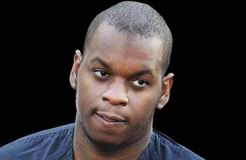
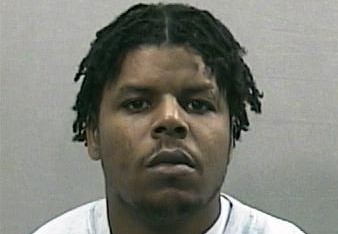
Abdulhakim Muhammad
Murderer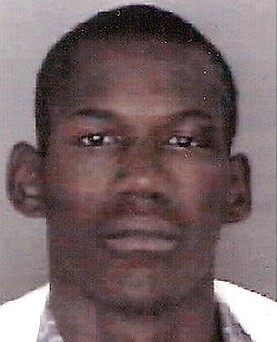 Joshua Wayne Andrews
Murderer · USA · 2000
Joshua Wayne Andrews was a serial killer accused of killing several people in V…
5 victims
Joshua Wayne Andrews
Murderer · USA · 2000
Joshua Wayne Andrews was a serial killer accused of killing several people in V…
5 victims
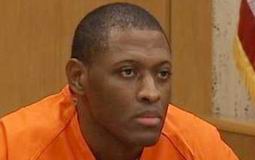 Leon Davis Jr.
Murderer · USA · 2007
Leon Davis Jr. was sentenced to death on April 29, 2011, for the execution-styl…
5 victims
Leon Davis Jr.
Murderer · USA · 2007
Leon Davis Jr. was sentenced to death on April 29, 2011, for the execution-styl…
5 victims
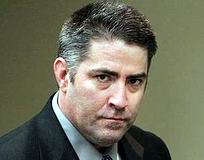 Raymond Lee Oyler
Murderer · USA · 2006
Raymond Lee Oyler was convicted for starting the 2006 Esperanza fire in Riversi…
5 victims
Raymond Lee Oyler
Murderer · USA · 2006
Raymond Lee Oyler was convicted for starting the 2006 Esperanza fire in Riversi…
5 victims
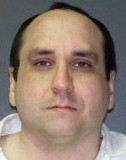 Terry Lee Hankins
Murderer · USA · 2000
Terry Lee Hankins was convicted by a jury of capital murder and was sentenced t…
5 victims
Terry Lee Hankins
Murderer · USA · 2000
Terry Lee Hankins was convicted by a jury of capital murder and was sentenced t…
5 victims
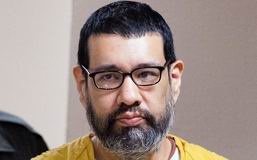 Anthony Garcia
Murderer · USA · 2008
Anthony Garcia was a former doctor who was found guilty on all counts including…
4 victims
Anthony Garcia
Murderer · USA · 2008
Anthony Garcia was a former doctor who was found guilty on all counts including…
4 victims
 Warren Leblanc
Homicide · Gran Bretaña · 2004
Warren Leblanc, born in 1987 and aged 17, was described as a former friend of 1…
1 victim
Warren Leblanc
Homicide · Gran Bretaña · 2004
Warren Leblanc, born in 1987 and aged 17, was described as a former friend of 1…
1 victim
 Took Leng How
Murderer · Singapore · 2004
Defendant: Took Leng How (vegetable packer) · Victim: Huang Na (female, 8 years…
1 victim
Took Leng How
Murderer · Singapore · 2004
Defendant: Took Leng How (vegetable packer) · Victim: Huang Na (female, 8 years…
1 victim
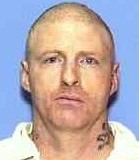 John Wade Adams
Murderer · USA · 1997
John Wade Adams was born on January 26, 1963. He was previously convicted of bu…
1 victim
John Wade Adams
Murderer · USA · 1997
John Wade Adams was born on January 26, 1963. He was previously convicted of bu…
1 victim
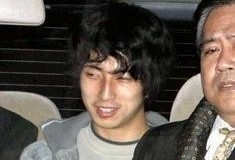 Yukio Yamaji
Homicide - Murderer · Japan · 2000
Yukio Yamaji (山地 悠紀夫; Yamaji Yukio; August 21, 1983 – July 28, 2009) was a Japa…
3 victims
Yukio Yamaji
Homicide - Murderer · Japan · 2000
Yukio Yamaji (山地 悠紀夫; Yamaji Yukio; August 21, 1983 – July 28, 2009) was a Japa…
3 victims
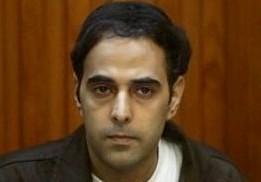 Yigal Amir
Murderer · Israel · 1995
Yigal Amir (born May 23, 1970) was the Israeli assassin of the Prime Minister o…
1 victim
Yigal Amir
Murderer · Israel · 1995
Yigal Amir (born May 23, 1970) was the Israeli assassin of the Prime Minister o…
1 victim
- Gender
- male
- Country
- USA
- Location
- Little Rock, Arkansas , USA
- Date of birth
- July 9, 1985
- Age at first offence
- 24
- Characteristics
- abuse, dr ugs, history of mental illness, torture
- Victim profile
- Private William Andrew "Andy" Long, 23
- Method of murder
- Shooting (SKS rifle)
- Date(s) of murder
- June 1, 2009
- Years active
- 2009
- Date of arrest
- Same day
- Status
-
Life imprisonment
Sentenced to life in prison without parole on July 25, 2011
Case identification
Abdulhakim Muhammad (formerly known as Carlos Leon Bledsoe) was convicted in connection with the June 1, 2009 shooting at a United States military recruiting office in Little Rock, Arkansas.
Timeline
- June 1, 2009 — Muhammad opened fire with a rifle in a drive-by shooting on soldiers in front of a United States military recruiting office in Little Rock, Arkansas.
- September 2007 — Muhammad traveled to Yemen to teach English and study Islam.
- November 14, 2008 — Muhammad was arrested at a roadside checkpoint in Yemen while holding a fraudulent Somali passport.
- January 29, 2008 — Yemen deported Muhammad to the United States under pressure from the United States.
- April — Muhammad moved to Little Rock, Arkansas after initially staying with his parents in Memphis.
- January 2010 — Muhammad wrote to the judge in his case and changed his plea to guilty.
- June 2010 — Muhammad was charged with assaulting an inmate with a weapon fashioned out of eyeglasses after a similar attack on a jail officer in April.
- 2011 — Muhammad’s trial began.
- March 2011 — Muhammad’s father Melvin Bledsoe spoke in a Congressional hearing about domestic radicalization of Muslims.
- July 25, 2011 — The judge sentenced Muhammad to life in prison without parole.
Background
Muhammad had been born as Carlos Leon Bledsoe on July 9, 1985 in Memphis, Tennessee to Melvin Bledsoe and his wife Linda. He had a sister Monica. He was raised as a Baptist and graduated from Craigmont High School in Memphis in 2003. He attended Tennessee State University in Nashville, Tennessee for three semesters.
At the age of 19, Bledsoe converted to Islam in 2004 at Masjid As-Salam, a Memphis mosque. He had legally changed his name to Muhammad. He had said: "I've loved jihad ever since I became Muslim." He became more devout and prayed regularly at the Islamic Center of Nashville, wearing Arab-style clothing.
Muhammad traveled to Yemen in 2007, staying about 16 months. He traveled ostensibly to teach English (at an institute called The British Academy, and other places in Aden and Sana'a), learn Arabic, and further his understanding of Islam.
Marriage and family
In September 2008, while in Yemen, Muhammad married Reena Abdullah Ahmed Farag, a woman from South Yemen who worked as an elementary school teacher. She was left behind when he was deported, but he later sent for her.
The offence
Shooting attack at the recruiting office
On June 1, 2009, Muhammad drove by the Little Rock U.S. Army recruiting center at 9112 North Rodney Parham Road near Reservoir Road in a black 2003 Ford Explorer Sport Trac at 10:19 a.m.
Private William Andrew "Andy" Long, 23, of Conway, Arkansas, and Private Quinton I. Ezeagwula, 18, of Jacksonville, Arkansas, were standing outside the recruiting center in uniform, smoking cigarettes. Muhammad saw them, approached, stopped his vehicle, and shot them with an SKS rifle.
The two victims had just completed basic training two weeks prior and volunteered to work as recruiters, which was not their regular assignment.
A witness, Lance P. Luplow, heard approximately seven loud bangs and then saw a black truck with tinted windows speeding away, with its tailgate down spilling bottles of water onto the street. Luplow ran to Long, who had been shot several times, and was lying still in a pool of blood on the sidewalk. Ezeagwula was crawling to the door, holding a bloodied ear. Ezeagwula exclaimed: "Tell me this isn’t real, tell me this isn’t real".
Other soldiers treated the wounded and performed CPR on Long. Long was dead upon arrival at a hospital.
Ezeagwula was shot in his back, head, and buttocks. He was rushed into surgery at Baptist Hospital in critical condition.
Long’s father later remarked: "They weren't on the battlefield; but apparently, the battlefield's here."
Attempted escape and capture
After the shooting, Muhammad sped away, planning to drive 150 miles to Memphis, Tennessee, where he intended to switch cars. After a short pursuit, he took a wrong turn in a construction zone, and local police officers captured him eight miles from the recruiting center, near the intersection of Interstate 30 and Interstate 630 near downtown Little Rock.
Muhammad surrendered to Little Rock police officers without incident. He stepped out of his SUV, wearing a green ammo belt.
Muhammad said: "It's a war going on against Muslims, and that is why I did it". He used language indicating an association with jihad. He claimed that he had explosives, but none were found.
Weapons and materials
Muhammad was found in possession of:
- an SKS rifle,
- a Mossberg International 702 rifle with scope and laser sight,
- a .22 caliber handgun,
- a Lorcin L-380 semi-automatic handgun,
- 562 rounds of ammunition loaded in magazines,
- homemade sound suppressors,
- binoculars,
- a "suspicious" package, and
- two military books.
A police search of his apartment turned up Molotov cocktails, homemade sound suppressors, and compact discs labeled with Arabic writing.
Statements and motive
Muhammad later said: "I was trying to kill them." He also said he would have killed more soldiers had more been there.
Muhammad said that he did not regard his action as murder because American military actions in the Middle East justified the slaying of Americans. He said: "I do feel I'm not guilty," "I don't think it was murder because murder is when a person kills another person without justified reason."
Little Rock Police Chief Stuart Thomas said: "At this point it appears that he specifically targeted military personnel."
According to law enforcement officials, Muhammad "had conducted research on other targets, including military sites, government facilities, and Jewish institutions" throughout the country.
Press accounts noted that New York City military facilities, such as the Times Square Recruiting Station, which was bombed March 6, 2008, had been previously targeted for violence.
Investigation and law enforcement
After his arrest, Muhammad acknowledged shooting the men. He told police that he had intended to kill as many Army personnel as possible.
Muhammad was investigated by the FBI’s Joint Terrorism Task Force after his return to the United States. The Task Force also investigated his visit to Columbus, Ohio, and authorities had monitored some Somali Americans traveling from there to Somalia to "wage jihad."
Arrest and detention (pre-trial)
Muhammad was held in the Pulaski County Detention Center awaiting a scheduled February 2011 jury trial.
In June 2010, Muhammad was charged with assaulting an inmate with a weapon fashioned out of eyeglasses, after a similar attack on a jail officer in April.
Terrorism-related claims and uncertainties
Muhammad claimed affiliation with the Al-Qaeda in the Arabian Peninsula (AQAP). In his handwritten letter to the judge in his case in January 2010, he claimed for the first time that he was sent on the attacks by Al-Qaeda in the Arabian Peninsula (AQAP) and described the recruiting office shooting as a "Jihadi attack." He said he was part of Abu Basir's Army, a reference to Naser Abdel-Karim al-Wahishi, the AQAP leader in Yemen.
Muhammad also wrote in his letters of May to October 2010 that investigators had not independently confirmed his claims. His father Melvin Bledsoe said he doubted whether his son had any such ties and described him as "unable to process reality" and being "brainwashed" so he wanted to tie his act to the terrorist group to face execution and become a martyr.
Investigators have not independently confirmed his claims.
Muhammad wrote at the time: "I wasn’t insane or post-traumatic, nor was I forced to do this Act. The attack was justified according to Islamic Laws and the Islamic Religion. Jihad—to fight those who wage war on Islam and Muslims.”
Muhammad also wrote: "Far as Al-Qaeda in the Arabian Peninsula ... yes, I'm affiliated with them.... Our goal is to rid the Islamic world of idols and idolaters, paganism and pagans, infidelity and infidels, hypocrisy and hypocrites, apostasy and apostates, democracy and democrats, and relaunch the Islamic caliphate … and to establish Islamic law (Shari'ah)."
The lead prosecutor believed Muhammad acted alone, as did other law enforcement officials, and said: "If you strip away what he says, self-serving or not, it’s just an awful killing, it’s like a lot of other killings we have."
The prosecutor and Muhammad’s father said there was no evidence Muhammad was ever in contact with Anwar al-Awlaki.
Trial
Charges
Muhammad was charged with capital murder, attempted capital murder, and 10 counts of unlawful discharge of a weapon. He was also reportedly faced 15 counts of engaging in a terrorist act.
During the trial, the suspect was charged by the state with capital murder and related charges, not terrorism.
Defence
Muhammad’s lawyers defended him on the grounds that he suffered "a delusional disorder."
Plea and acceptance
In January 2010, Arkansas Judge Herbert Wright ordered the State's Public Defenders Commission to pay part of the bill for Muhammad’s private attorney.
That same month, Muhammad changed his plea to guilty in a two-page, handwritten letter to the judge in his case. He did not discuss his change in plea with his lawyers ahead of time.
At the time, the County Prosecutor Jegley said that he was still intending to go to trial; he would have had to recommend that Muhammad’s plea be accepted for the court to do so. Jegley said he was not going to have the defendant determine the course of the trial.
During the trial, Muhammad changed his plea to guilty and the prosecutor accepted it.
Sentencing
On July 25, 2011, the judge sentenced Muhammad to life in prison.
Appeals and outcome
The case concluded with Muhammad being sentenced to life in prison without parole on July 25, 2011.
Other related proceedings and context
Muhammad’s attack was described as the first of two in 2009 at U.S. military facilities. In November 2009, a Fort Hood shooting occurred in which a U.S. Army psychiatrist shot and killed 13 and wounded 29 other soldiers. Nidal Malik Hasan was charged with murder and was sentenced to death. A Senate special report chaired by Independent Joseph Lieberman declared the Fort Hood attack "the deadliest terrorist attack within the United States since September 11, 2001".
Muhammad’s case was taken to trial by the Arkansas prosecutor in 2011. At trial, Muhammad’s lawyers said he suffered "a delusional disorder." Some terrorism experts thought there was a connection to other homegrown terror plots, while other experts believed the stated ideological or religious reasons might be a cover for personal problem.
Aftermath and additional statements
The lead prosecutor for Pulaski County, Arkansas said about Muhammad’s attack: "If you strip away what he says, self-serving or not, it’s just an awful killing, it’s like a lot of other killings we have."
In a March 2011 Congressional hearing on domestic radicalization of Muslims, Muhammad’s father Melvin Bledsoe spoke about his son’s descent into extremism. Bledsoe described his son’s religious conversion and travels to Yemen, where he had been “trained and programmed” to kill. Bledsoe said, “Our children are in danger,” and that, “It seems to me that Americans are sitting around doing nothing about radical extremists. This is a big elephant in the room.” Bledsoe had previously said: "If it can happen to my son, it can happen to anyone’s son."
A related discussion noted that some terrorism experts said the June 1, 2009 Little Rock shooting could gain significance if Muhammad’s claims were true, but Muhammad was not charged with terrorism and no additional evidence at trial confirmed his claims.
People
- Abdulhakim Muhammad (formerly Carlos Leon Bledsoe) — defendant.
- Carlos Leon Bledsoe — Abdulhakim Muhammad’s former name.
- William Andrew "Andy" Long — victim; Private; 23; of Conway, Arkansas; killed.
- Quinton I. Ezeagwula — victim; Private; 18; of Jacksonville, Arkansas; wounded; shot in his back, head, and buttocks; survived surgery in critical condition.
- Lance P. Luplow — witness.
- Stuart Thomas — Little Rock Police Chief.
- Herbert Wright — Arkansas Judge.
- Jegley — County Prosecutor.
- Melvin Bledsoe — Muhammad’s father.
- Linda — Muhammad’s mother.
- Monica — Muhammad’s sister.
- Reena Abdullah Ahmed Farag — Muhammad’s wife in Yemen; elementary school teacher.
- Joseph Lieberman — chaired a Senate special report.
- Nidal Malik Hasan — defendant in Fort Hood shooting; sentenced to death.
- Independent Joseph Lieberman — chaired the Senate special report.
- James E. Hensley Jr. — Muhammad’s American lawyer after his arrest in the United States.
- Anwar al-Awlaki — referenced in Muhammad’s claims and discussed as a person there was no evidence he contacted.
Spotted an error, or have more information about this case?