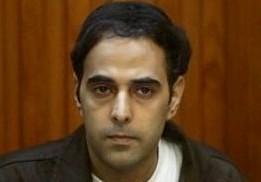
Yigal Amir
Murderer David Afuta
Murderer · Israel · 1997
David Afuta killed his ex-girlfriend, Israeli fashion model and actress Anat El…
1 victim
David Afuta
Murderer · Israel · 1997
David Afuta killed his ex-girlfriend, Israeli fashion model and actress Anat El…
1 victim
 Dr. Wouter Basson
Murderer · 1992
Wouter Basson (born July 6, 1950) was a South African cardiologist and the form…
230 victims
Dr. Wouter Basson
Murderer · 1992
Wouter Basson (born July 6, 1950) was a South African cardiologist and the form…
230 victims
 Ershad Sikder
Murderer · Bangladesh · 1990
Ershad Sikder was an influential political figure in the south-western city of…
30 victims
Ershad Sikder
Murderer · Bangladesh · 1990
Ershad Sikder was an influential political figure in the south-western city of…
30 victims
 Brian Kevin Rosenfeld
Murderer · USA · 1985
Brian Kevin Rosenfeld Brian Kevin Rosenfeld was sentenced to three concurrent l…
23 victims
Brian Kevin Rosenfeld
Murderer · USA · 1985
Brian Kevin Rosenfeld Brian Kevin Rosenfeld was sentenced to three concurrent l…
23 victims
 Russell Ellwood
Murderer · USA · 1991
Russell Ellwood was a former taxi driver. Authorities suspected him of killing…
20 victims
Russell Ellwood
Murderer · USA · 1991
Russell Ellwood was a former taxi driver. Authorities suspected him of killing…
20 victims
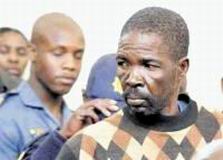 David Randitsheni
Serial killer · S outh Africa · 2004
David Randitsheni (born 1964/5) was a South African rapist and serial killer. ·…
10 victims
David Randitsheni
Serial killer · S outh Africa · 2004
David Randitsheni (born 1964/5) was a South African rapist and serial killer. ·…
10 victims
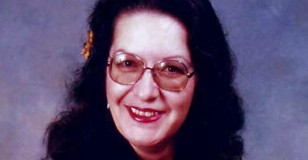 Stella Nickell
Murderer · USA · 1986
Stella Nickell was prosecuted in federal court over deaths linked to product ta…
2 victims
Stella Nickell
Murderer · USA · 1986
Stella Nickell was prosecuted in federal court over deaths linked to product ta…
2 victims
 Chelsea Richardson
Murderer · USA · 2003
Chelsea Richardson was convicted by a Tarrant County jury in connection with th…
2 victims
Chelsea Richardson
Murderer · USA · 2003
Chelsea Richardson was convicted by a Tarrant County jury in connection with th…
2 victims
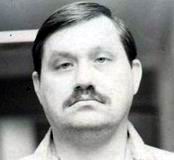 Donald Edward Beaty
Murderer · USA · 1984
Donald Edward Beaty was a maintenance man and resident maintenance manager at t…
1 victim
Donald Edward Beaty
Murderer · USA · 1984
Donald Edward Beaty was a maintenance man and resident maintenance manager at t…
1 victim
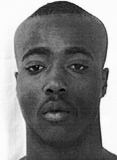 Milton Mathis
Murderer · USA · 1998
December 15, 1998 — Esmerelda Lester and her 15-year-old daughter Melanie Almag…
2 victims
Milton Mathis
Murderer · USA · 1998
December 15, 1998 — Esmerelda Lester and her 15-year-old daughter Melanie Almag…
2 victims
- Gender
- male
- Country
- Israel
- Location
- Tel Aviv, Israel
- Date of birth
- May 23, 1970
- Age at first offence
- 25
- Characteristics
- murder for hire, shooting spree
- Victim profile
- Yitzhak Rabin, 73 (the Prime Minister of Israel)
- Method of murder
- Shooting (Beretta 84F semi-automatic pistol in .380 ACP caliber)
- Date(s) of murder
- November 4, 1995
- Years active
- 1995
- Date of arrest
- Same day
- Status
-
Life imprisonment
Sentenced to life imprisonment on March 26, 1996
Case overview
Yigal Amir (born May 23, 1970) was the Israeli assassin of the Prime Minister of Israel Yitzhak Rabin. The assassination took place on November 4, 1995 at the conclusion of a rally in Tel Aviv.
Timeline
- 4 November 1995 — Amir awaited Rabin in the parking lot adjacent the square, shot Rabin twice with a Beretta 84F semi-automatic pistol in .380 ACP caliber (serial number D98231Y), and also injured Yoram Rubin, a security guard, during the act.
- 4 November 1995 — Rabin was rushed to the Ichilov Hospital and died from his wounds after 40 minutes.
- 26 March 1996 — Amir was sentenced to life imprisonment.
- January 2004 — The Israel Prison Service announced that it would prohibit Amir from marrying in jail.
- April 2004 — The Tel Aviv District Court reviewed the decision.
- August 2004 — Amir and Trembovler married outside Israeli official channels according to Jewish law.
- July 2005 — Amir’s marriage to Larisa Trembovler was validated by a Rabbinical court.
- Late August 2005 — Amir applied to prison authorities to allow him and his wife to conceive a child through in vitro fertilisation.
- February 2006 — Attorney General Menachem Mazuz ordered the Interior Ministry to register Amir and Larissa Trimbobler as a married couple.
- March 2006 — The Israeli Prison Service allowed Amir by petition to have a child with Trembovler through artificial insemination.
- A week later (after March 2006) — Amir was caught when he tried to give his wife a previously prepared plastic bag with semen.
- Late August 2005 (after the incident, disciplinary actions) — A disciplinary tribunal denied visits for 30 days and phone calls for 14 days; Amir was fined for 100 NIS (then US $21).
The offence
On November 4, 1995, after a demonstration held in support of the Oslo Accords, held in Tel Aviv's “Kings of Israel Square,” Amir awaited Rabin in the parking lot adjacent the square, close to Rabin's official limousine.
During the act, Amir shot Rabin twice with a Beretta 84F semi-automatic pistol in .380 ACP caliber (serial number D98231Y). During the act, Amir also injured Yoram Rubin, a security guard, with another shot.
After the rally, Rabin walked to the open door of his car, and three shots were fired towards the prime minister, who did not wear a bulletproof vest.
Investigation and arrest
The assassin was a right-wing radical who had strenuously opposed Rabin's signing of the Oslo Accords. The assassin was caught and arrested immediately with his weapon, a Beretta 84F semi-automatic pistol in .380 ACP caliber.
Trial
Upon hearing that Yitzhak Rabin died due to his assassination, Amir told the police he was “satisfied”.
In sentencing, judges wrote:
Every murder is an abominable act, but the act before us is more abominable seven-fold, because not only has the accused not expressed regret or sorrow, but he also seeks to show that he is at peace with himself over the act that he perpetrated. He who so calmly cuts short another's life, only proves the depth of wretchedness to which [his] values have fallen, and thus he does not merit any regard whatsoever, except pity, because he has lost his humanity.
Amir was sentenced to life imprisonment plus 6 additional years in prison for injuring Rubin.
Later, Amir was sentenced to an additional 5 years for conspiring to commit the assassination with his brother Hagai Amir and Dror Adani. After an appeal on behalf of the State, this increased to 8 years.
All of the sentences were cumulative. Amir’s appeals on both sentences were rejected.
Sentencing and status
Amir was sentenced to life imprisonment plus 14 years for conspiracy to murder Yitzhak Rabin on different occasions and for injuring Rabin's bodyguard. Amir was sentenced to life imprisonment on March 26, 1996.
He was held in isolation in the Be'er Sheva Prison and was moved to the Ayalon Prison in 2003.
Subsequently, a law was passed by the Knesset barring the pardon by the President of Israel for any assassin of a prime minister.
Amir had never expressed regret for his actions.
Assassination of Yitzhak Rabin and immediate aftermath
The assassination of Yitzhak Rabin took place on November 4, 1995 at 21:30 at the end of a rally in support of the Oslo agreements at the Kings of Israel Square in Tel Aviv.
Yitzhak Rabin was rushed to the Ichilov Hospital, where he died from his wounds after 40 minutes.
Rabin's bureau chief, Eitan Haber, announced outside the gates of the hospital:
The government of Israel announces in dismay, in great sadness, and in deep sorrow, the death of prime minister and minister of defence Yitzhak Rabin, who was murdered by an assassin, tonight in Tel Aviv. May his memory be blessed.
In Rabin's pocket was a blood-stained sheet of paper with the words to Shir Lashalom (“Song to Peace”), which dwells on the impossibility of bringing a dead person back to life and therefore the need for peace.
Rabin was buried at the Mount Herzl cemetery for Israeli leaders, in Jerusalem. The funeral was attended by approximately 80 heads of state, among them the presidents of the United States and Egypt and the king of Jordan.
Accomplices and related attempts
Yigal Amir's brother, Hagai Amir, and his friend Dror Adani, were his accomplices in the assassination plan.
Amir had attempted to assassinate Rabin twice throughout 1995, but those plans fell through moments before implementation.
Reactions and political aftermath
The assassination of Yitzhak Rabin was a shock for most of the Israeli public, which held rallies and memorials near the place of the assassination, his home, the Knesset and the home of the assassin.
The funeral of Rabin was attended by world leaders, among them U.S. president Bill Clinton, Egyptian president Hosni Mubarak and King Hussein of Jordan.
A national memorial day for Rabin was set on the date of his death according to the Hebrew calendar.
The square adjacent to the location of the assassination was renamed after him from the original “Kings of Israel,” as well as many streets and public institutions around the country.
Rabin was remembered by some amongst the Left in Israel as a man of peace, despite his military career.
After his death, Rabin was turned into a national symbol, especially for the Israeli left.
There was some disagreement on the relation between his untimely death and the ensuing temporary halt to the Oslo peace process and temporary rise of the Israeli Right which won the ensuing elections.
Small groups of people disregarded the conclusions regarding Rabin's death of the Israeli courts system, inquiry committee, the Israeli government, and the major Israeli newspapers, supporting various conspiracy theories instead.
The assassination led to the resignation of Shabak (also known as Shin Bet) chief Carmi Gillon, who was abroad when the murder took place.
Background
Yigal Amir was born to an Orthodox Jewish family in the Israeli town of Herzliya; his parents were Yemenite Jews who immigrated to Israel from Yemen.
He attended a Haredi elementary school and yeshiva for his formal education.
Amir served in the Israel Defense Forces in the Golani Brigade as a soldier-student of Hesder, a combined program that alternates between army training and yeshiva study.
He was a law and computer science student at Bar-Ilan University and a right-wing radical who had strenuously opposed Rabin's signing of the Oslo Accords.
During his studying in Bar-Ilan University, he was active in the organization of demonstrations against them.
During his years as an activist, Amir became a close friend of Avishai Raviv. Raviv presented himself as a radical anti-Rabin activist but was in fact a secret agent working for the Shin Bet (Israel's internal security service).
Raviv's role as Amir's close friend and any part he may have had in Amir's activities leading up to the assassination had not been made public and hence clarified.
Marriage and prison-related events
While in prison, Amir was engaged to Larisa Trembovler.
Amir had met her years earlier, when he was a teacher of Judaism sent by Israel to educate Russian Jews.
Trembovler first started to visit Amir in jail with her husband. Amir and Trembovler began exchanging letters and speaking on the phone after she expressed ideological support for him.
She abandoned her husband and academic career because of her public personal ties with Amir.
After her divorce, Amir requested to marry Larisa Trembovler and to receive the privilege to conjugally unite with his intended wife.
In August 2004, Amir and Trembovler married outside Israeli official channels according to Jewish law, by giving his father a “power of attorney” to transfer a wedding ring (or something of similar value) to his bride.
In July 2005 their marriage was validated by a Rabbinical court, but not by the Israeli Ministry of the Interior.
The prison administration issued a statement saying that its policy concerning the “conjugal visits” would not be changed.
Attorney General Menachem Mazuz ordered the Interior Ministry to register Amir and Larissa Trimbobler as a married couple in response to a petition filed by Trembovler.
In late August 2005, Amir applied to the prison authorities to allow him and his new wife to conceive a child through in vitro fertilisation.
In March 2006 the Israeli Prison Service allowed Amir by petition to have a child with Trembovler through artificial insemination. The Service was to study how this process would be conducted without Amir leaving the prison.
A week later it reported that Amir was caught when he tried to give his wife a previously prepared plastic bag with semen to his wife, and the visit was ended.
After the incident, a disciplinary tribunal denied him visits for 30 days and phone calls for 14 days. He was fined for 100 NIS (then US $21).
When the treatments were withheld due to a petition rendered by several members of Knesset, Yigal Amir refused to receive food.
After being warned that his “hunger strike” was a violation of prison regulations, he was stripped of his privileges, including phone and visitation rights.
Other details
Trivia: Reggae singer Alpha Blondy recorded a single named “Yitzhak Rabin” in memory of the Israeli prime minister.
Further reading included: Karpin, Michael and Friedman, Ina, Murder in the Name of God - The Plot to Kill Yitzhak Rabin , ISBN 0-8050-5749-8.

Spotted an error, or have more information about this case?