James Allen Red Dog
Serial killer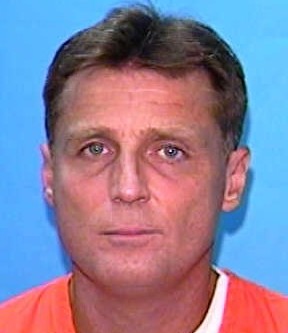 Glen Edward Rogers
Serial killer · USA · 1993
Glen Edward Rogers was a spree killer whose cross-country rampage in 1994-95 le…
70 victims
Glen Edward Rogers
Serial killer · USA · 1993
Glen Edward Rogers was a spree killer whose cross-country rampage in 1994-95 le…
70 victims
 Michael Swango
Serial killer · USA · 1981
Michael Swango (Joseph Michael Swango) was a physician and American serial kill…
60 victims
Michael Swango
Serial killer · USA · 1981
Michael Swango (Joseph Michael Swango) was a physician and American serial kill…
60 victims
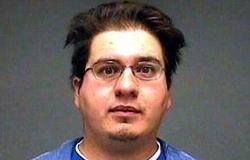 Efren Saldivar
Serial killer · USA · 1989
Efren Saldivar (born 30 September 1969) was an American serial killer who murde…
50 victims
Efren Saldivar
Serial killer · USA · 1989
Efren Saldivar (born 30 September 1969) was an American serial killer who murde…
50 victims
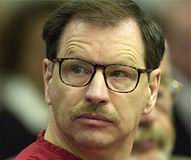 Gary Ridgway
Serial killer · USA · 1982
Gary Leon Ridgway Ridgway was born 18-February-1949 in Salt Lake City, UT. He w…
49 victims
Gary Ridgway
Serial killer · USA · 1982
Gary Leon Ridgway Ridgway was born 18-February-1949 in Salt Lake City, UT. He w…
49 victims
 Charles Cullen
Serial killer · USA · 1984
Charles Cullen (born February 22, 1960) was a former nurse and the most prolifi…
45 victims
Charles Cullen
Serial killer · USA · 1984
Charles Cullen (born February 22, 1960) was a former nurse and the most prolifi…
45 victims
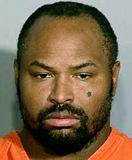 Maurice Clemmons
Mass murderer · USA · 2009
Name: Maurice Clemmons · Life dates: February 6, 1972 – December 1, 2009 · Alle…
4 victims
Maurice Clemmons
Mass murderer · USA · 2009
Name: Maurice Clemmons · Life dates: February 6, 1972 – December 1, 2009 · Alle…
4 victims
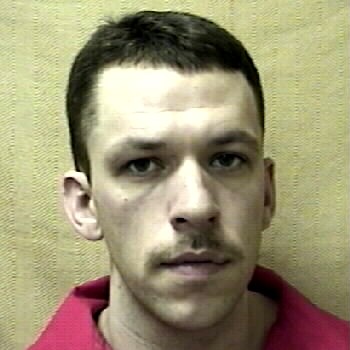 Charles Wesley Roache
Mass murderer · USA · 1999
Charles Wesley Roache was a white male. His date of birth was 11/17/73 and his…
6 victims
Charles Wesley Roache
Mass murderer · USA · 1999
Charles Wesley Roache was a white male. His date of birth was 11/17/73 and his…
6 victims
 Jayanandan
Serial killer · India · 2003
Jayanandan, also known as “Ripper” Jayanandan, was a serial killer from Trichur…
7 victims
Jayanandan
Serial killer · India · 2003
Jayanandan, also known as “Ripper” Jayanandan, was a serial killer from Trichur…
7 victims
 Reetika Vazirani
Murderer · USA · 2003
Reetika Vazirani (1962–2003) was an American poet and educator. On July 16, 200…
1 victim
Reetika Vazirani
Murderer · USA · 2003
Reetika Vazirani (1962–2003) was an American poet and educator. On July 16, 200…
1 victim
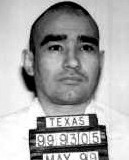 Joel Escobedo
Murderer · USA · 1998
Joel Escobedo (TDCJ Number 999305) · Date of Birth: 02/06/1962 · Race: Hispanic…
1 victim
Joel Escobedo
Murderer · USA · 1998
Joel Escobedo (TDCJ Number 999305) · Date of Birth: 02/06/1962 · Race: Hispanic…
1 victim
- Gender
- male
- Country
- USA
- Location
- Montana/Delaware, USA
- Date of birth
- 1954
- Age at first offence
- 36
- Characteristics
- rape, kidnapping
- Victim profile
- Men ( acquaintances in personal disputes )
- Method of murder
- St abbing with knife
- Date(s) of murder
- 1990 - 1991
- Years active
- 1990–1991
- Date of arrest
- February 10, 1991
- Status
-
Executed
Executed by lethal injection on March 3, 1993
Timeline
- February 9, 1991 — Red Dog drank and womanized at a bowling alley with a buddy.
- February 10, 1991 6:48 a.m. — Sandra Bray was awakened by an unexpected phone call from an employee of her husband Robert’s named Joanna Stuart.
- February 10, 1991 (same day) — Red Dog was captured while crossing the Winchester Bridge in Wilmington on foot.
- 1992 (trial) — Red Dog’s trial took place and he was found guilty.
- April (1992) — Red Dog’s death sentence was handed down.
- November (1992) — Red Dog’s death sentence was upheld by the State Supreme Court.
- February 28, 1993 — A Delaware Superior Court judge rejected a motion to block the execution.
- March 3, 1993 — Red Dog was executed by lethal injection.
- March 4, 1993 — The New York Times published reporting on the execution.
Background
James Allen Red Dog was a full-blooded Sioux Indian and member of the Lakota tribe. He had been in and out of jail his entire 37 years. He had received separate convictions for both manslaughter and murder. The court held that he should never have been released from prison after his first murder conviction.
Red Dog grew up on the Fort Peck Indian Reservation in northeast Montana. He was living in Delaware on parole under the Federal witness protection program in 1991. He had been relocated to Delaware as a federally protected witness in investigations of the militant American Indian Movement and of prison gangs.
A tribal medicine man, John H. Morsette, was expected to perform final rites for Red Dog before the execution. Prison officials initially balked at having Morsette there, saying that only a prison chaplain would be allowed inside the chamber, but they approved it on Thursday.
The offence
On the morning of February 10, 1991, Sandra Bray discovered that Joanna Stuart was not home and that her car was missing. Stuart’s roommate, Hugh Pennington, a 30 year old relative named Hugh Pennington, appeared to be gone from the house; his car was still parked in the driveway. In the cold, damp cellar, Hugh Pennington was found dead, lying on his back and bound by duck tape at the hands and feet, wearing nothing but a pair of underwear. His throat had been slashed ear to ear, and the incision was described as so savage that his head had been nearly decapitated from his body. The concrete floor was drenched in Pennington’s blood and all around his corpse were bloody footprints.
Red Dog was accused of crimes against Joanna Stuart, including rape and kidnapping. Red Dog forced himself on Stuart and had sexual intercourse with her several times before passing out in her bed. Stuart remained lying in the bed next to him, too frightened to move. In the morning, before the arrival of the Brays, Red Dog raped and sodomized Stuart before forcing her to drive him in her car to a deserted farm house in Oak Orchard. Red Dog raped her once more while in the abandoned farm house. After that, he ordered her to drive to a friend’s house to “pick up something.” Red Dog left Stuart in the car alone while he went in to chat with his friend, and Stuart escaped and called police. She named Red Dog as the perpetrator.
Investigation
Sgt. Mark Daniels of the Delaware State Police arrived on the scene after the Brays dialed 911 and took charge of the crime scene. Daniels questioned Stuart’s neighbor, described as an attractive thirty-something female. The woman told Daniels that her husband, Jim Red Dog, accompanied Stuart to her house after the latter had spent an evening watching movies with her. The neighbor also said she had a confession that her husband was a convicted murderer. Daniels found that the woman was helpful and that her information provided the most important element in solving the murder.
Daniels found Red Dog’s connection to the crimes through the neighbor’s statements and further described that Red Dog had bloody fingerprints all over the basement. Daniels launched a massive search for Jim Red Dog.
Red Dog was captured the same day while crossing the Winchester Bridge in Wilmington on foot. A squad matched the description and photos of the wanted rapist-murderer to the man they saw walking on the bridge. When the squad pulled him over and asked his name, Red Dog replied: “Jim Red Dog”.
Arrest
Red Dog was captured while crossing the Winchester Bridge in Wilmington on foot.
When asked, Red Dog replied: “Jim Red Dog”.
Trial
Red Dog’s 1992 trial was short but eventful. He was found guilty.
For the brutal sex crimes committed against Joanna Stuart, Red Dog received eighty years. For the first degree murder of Hugh Pennington, Red Dog received death by lethal injection.
Sentencing
Red Dog’s death sentence was handed down last April, and it was automatically appealed to the State Supreme Court. The State Supreme Court upheld the death sentence in November. Judge Norman A. Barron of Delaware Superior Court later set March 3 as the date for the death by lethal injection.
Red Dog asked for the death sentence and refused to participate in any appeals. His lawyers, who were public defenders, filed a motion seeking psychiatric and psychological tests to determine whether he was mentally competent or deranged and suicidal in his death wish. Judge Barron said he found “no substantial showing that Red Dog is currently incompetent” and that “the court will respect the rationally based wishes of the condemned prisoner.”
A Rule to Show Cause was issued by the Supreme Court of Delaware to have Red Dog’s lawyers explain why they should not be professionally sanctioned for opposing the wish of their client. Dan defended one of the Red Dog defense team arguing that it was simply wrong for the Supreme Court to sanction lawyers for trying to save a man’s life. The Supreme Court sanctioned the lawyers but imposed no punishment.
Appeals
Red Dog’s death sentence was automatically appealed to the State Supreme Court. The State Supreme Court upheld it in November.
Outcome
Red Dog was condemned and executed by lethal injection on March 3, 1993.
Aftermath
On March 3, 1993, Red Dog was strapped onto the lethal injection bed at age 39. His last words were quoted in local newspapers the following day. He apologized to his family and told them he loved them. He said: “The rest of you,” he concluded, “ can kiss my ass.”
Before the lethal mixture of drugs was administered, Red Dog turned to his weeping wife, who was among the witnesses, and said: “I'm going home, babe.”
A Delaware Superior Court judge rejected a motion by lawyers for the condemned man, James Allen Red Dog, to block the execution.
The New York Times reported that Red Dog was executed at the State Correctional Center in Smyrna, 15 miles north of Dover. The report also said he had been visited in his final hours by a tribal medicine man from Montana, who was expected to pray with him to prepare him for the Sioux afterlife.
Other details
The authorities said Red Dog tied up Hugh Pennington, slit his throat and left the Wilmington man to bleed to death, then kidnapped and raped a female witness who eventually escaped and called police.
Red Dog pleaded no contest to charges of murder, kidnapping and rape and said he was drunk and did not remember the killing.
In a drunken rage, Red Dog killed a 30-year-old acquaintance, Hugh Pennington, by slitting Pennington’s throat so severely that the victim was virtually decapitated. Immediately afterward, Red Dog kidnapped and raped a woman.
Mr. Red Dog’s family supported his decision not to fight his sentence. His relatives said he was going to his death with dignity and that he was “proud that he's giving in return for what he took: a life.”
A Delaware Interdisciplinary Ethics Program debate on capital punishment took place on Monday evening at Mitchell Hall. The debate included Delaware prosecutor Steven Wood and Jeffrey Reiman, a philosophy professor at American University. Program Chairman Fred Adams said the debate was held to encourage students to think about the issue and that “We want the students to gain knowledge about social issues,” and to know about “what the reasons are people think capital punishment is or is not the appropriate punishment and how to weigh these reasons.”
Steven Wood presented the story of James Allen Red Dog, described as a murderer sentenced to death after committing his fifth murder, and explained that Red Dog committed his third murder while in jail and his fourth and fifth were after he had been on parole. Wood used the case to prove his point that murderers placed in jail cannot be absolutely prevented from killing again and that keeping murderers alive threatens the safety of the community. Wood assured the audience that “Certain crimes are so heinous that the death penalty is the only appropriate sentence,” and said Delaware only sentences murderers to death in the worst of cases.
Reiman presented an anti-capital-punishment perspective, stating there was no evidence suggesting the death penalty makes America safer than life sentences without parole. He said: “It's not about the murderers,” and added, “It's about us. And what kind of people we want to be. It's wrong for us to torture people even if they deserve it.”
Junior Adam Brady said he attended for extra credit points and found the topic interesting. Brady said he was impressed with both speakers and that they each presented interesting points. Brady said: “Professor Reiman's point about how not executing really bad people would set an example [about the reluctance to kill in our country] was good,” and that “And Wood was really focused on the future safety argument, whereas before it was always about how we're giving them what they deserve.”
Junior Laura Cheek said she learned new perspectives from the debate and said: “I was unaware of how frequently juries pick life in prison without parole over the death penalty if offered to them, she said. "It does make me think a little more about our innate feelings in regards to taking human life. But this is one topic where I feel both sides have legitimate arguments, and it is often difficult to be fully against one side.”
Senator Joseph R. Biden Jr. introduced legislation that would require Federal officials to notify states when dangerous criminals are placed in their jurisdictions.
Spotted an error, or have more information about this case?