Stanislaw Myszka
Murderer Albert Goozee
Murderer · United Kingdom · 1956
Albert William Goozee was a British murderer and paedophile. His crimes inspire…
2 victims
Albert Goozee
Murderer · United Kingdom · 1956
Albert William Goozee was a British murderer and paedophile. His crimes inspire…
2 victims
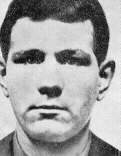 Alfred Charles Whiteway
Murderer · United Kingdom · 1953
Alfred Charles Whiteway was a serial rapist. Both girls had very deep stab woun…
2 victims
Alfred Charles Whiteway
Murderer · United Kingdom · 1953
Alfred Charles Whiteway was a serial rapist. Both girls had very deep stab woun…
2 victims
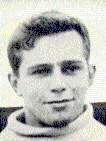 Miles Giffard
Murderer · United Kingdom · 1952
Miles William Giffard (1927 - 24 February 1953) twice played cricket for the Co…
2 victims
Miles Giffard
Murderer · United Kingdom · 1952
Miles William Giffard (1927 - 24 February 1953) twice played cricket for the Co…
2 victims
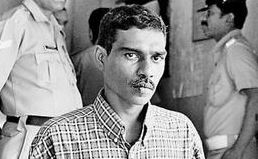 Motta Navas
Serial killer · India · 1996
Motta Navas was currently in custody awaiting trial. Motta Navas was born in 19…
7 victims
Motta Navas
Serial killer · India · 1996
Motta Navas was currently in custody awaiting trial. Motta Navas was born in 19…
7 victims
 Levi Jaimes Jackson
Homicide · USA · 1992
Levi Jaimes Jackson was a defendant in a carjacking case involving the 40-year-…
1 victim
Levi Jaimes Jackson
Homicide · USA · 1992
Levi Jaimes Jackson was a defendant in a carjacking case involving the 40-year-…
1 victim
 Mark Andrew Fowler
Murderer · USA · 1985
Mark Andrew Fowler was executed by lethal injection in Oklahoma on January 23,…
3 victims
Mark Andrew Fowler
Murderer · USA · 1985
Mark Andrew Fowler was executed by lethal injection in Oklahoma on January 23,…
3 victims
 William Darrell Lindsey
Serial killer · USA · 1983
William Darrell Lindsey Lindsey died in prison on April 17, 2001. In July 1999,…
8 victims
William Darrell Lindsey
Serial killer · USA · 1983
William Darrell Lindsey Lindsey died in prison on April 17, 2001. In July 1999,…
8 victims
- Gender
- male
- Country
- United Kingdom
- Location
- Kenmore, Perthshire, Scotland, United Kingdom
- Date of birth
- 1924
- Age at first offence
- 23
- Characteristics
- robbery, murder for hire, rape
- Victim profile
- Catherine McIntyre, 47
- Method of murder
- Battered to death
- Date(s) of murder
- September 26, 1947
- Years active
- 1947
- Date of arrest
- October 2, 1947
- Status
-
Executed
Executed by hanging at Perth Prison on February 6, 1948
Case details
Stanislaw Myszka was a 23-year-old Polish deserter who murdered Catherine McIntyre at her isolated home, Tower Cottage at Kenmore on the slopes overlooking Loch Tay.
The offence
Catherine McIntyre was a 47-year-old mother-of-three. Her family lived in Tower Cottage at Kenmore on the slopes overlooking Loch Tay. Mrs McIntyre and her husband worked on the Tombuie Estate above Kenmore. On the day of the killing, Peter McIntyre was in Perth, and it was assumed that Mrs McIntyre would be at Tombuie House to prepare the house for the laird’s return at the week-end. It was discovered that Mrs McIntyre had never been to Tombuie House that morning. Their son Archie broke into the locked cottage and found his mother’s body.
Archie returned home from work and found her broken body locked in his bedroom. Archie had to use an axe to break down the locked door to his own bedroom. The body of Catherine McIntyre was on the bed covered by a mattress. Her mouth had been gagged with a scarf, and her hands and feet had been tied together with black bootlaces. She had been battered to death.
Myszka’s haul consisted of £90 and Catherine McIntyre’s wedding ring ripped from her finger.
Investigation
Police scoured the moors around Tower Cottage. They soon came across a shelter buried deep in the bracken. Inside they found the return half of a serviceman’s railway ticket from Perth to Aberfeldy, a sawn-off shotgun with fresh blood on it, and a used razor blade.
A service connection was deduced from the ticket, pointing to a camp for Polish exiles at Taymouth Castle. Inquiries did not produce an immediate breakthrough from interviews with inmates.
Within about 400 yards of the cottage, police found a small area where the high bracken had been flattened. Within the flattened area was the sawn-off shotgun, with the butt smeared with blood. Other items were found including a bloodstained handkerchief and a used safety razor. Traces of a man’s hair were hanging to the razor blade; these were carefully scraped off for analysis. A return railway ticket was found dated September 25th, the day before the murder. The return ticket of that type had been issued to soldiers in uniform.
Detective Inspector Sim spoke to the press and said: “She has been brutally murdered, probably in the course of the forenoon. Theft appears to have been the motive and £80 mostly in £5 notes is missing.”
Witnesses in Aberfeldy spoke of a Pole with a bad cough who took a taxi to Perth on the morning of the murder. A police description was circulated: “He is about 35 years of age, 5ft 6ins, slim build, thin face, pointed chin and clean shaven……he suffers from a spasmodic cough which is at times quite severe.”
It was also shortly after the murder that a description of the murder weapon was circulated.
Arrest and discovery of evidence
The sawn-off shotgun was recognised by a gardener in Old Meldrum in Aberdeenshire. The gardener suspected Myszka of stealing the gun when they had worked together on a farm at Old Meldrum, Aberdeenshire; the gun had been stolen about the time a Polish labourer, Stanislaw Myszka, left the farm to seek work further south.
The gardener’s wife identified the bloodstained handkerchief as one she had given to Myszka. Another Polish exile, Wladystow Szwec, contacted the police saying that Myszka had visited them the day after the murder. Wladystow Szwec’s Scots wife had read reports of the murder while Myszka was there. She said: “His face reddened up like a fire when he heard the details,” she said. “He could not sit still after it.”
Myszka was eventually caught at a former R.A.F. station in Aberdeenshire where he had been hiding. When he was searched, Catherine McIntyre’s gold wedding ring was discovered hidden in his shoe.
Myszka was arrested near Peterhead on 2nd October.
Trial
The trial took place in Perth in January 1948.
Myszka initially pleaded insanity, saying that he was worried about the fate of his children whom he had heard were to be moved from Portugal back to Poland. Three psychiatrists, one a Pole, examined him and all pronounced him sane. He then changed his plea to Not Guilty of murder but Guilty of theft.
At trial, the prosecution compared hairs from the razor blade with hair from Myszka’s beard. Professor Glaister said: “They were,” said Professor Glaister, “so similar as to be consistent with a common source.”
Defence counsel seized on the phrasing and asked: “Were the two samples,” he asked, “too similar to exclude the possibility of it being someone else’s hair altogether?”
Professor Glaister repeated that the likelihood was that the two samples came from a common source.
The jury returned a verdict of Guilty after taking but 20 minutes.
Sentencing and outcome
Stanislaw Myszka was hanged at Perth Prison on February 6th 1948, the last hanging ever to take place there.
Other details
Murder weapon and forensic items recovered included:
- A sawn-off shotgun with fresh blood on it
- A used razor blade with traces of a man’s hair hanging to it
- A bloodstained handkerchief
- The return half of a serviceman’s railway ticket from Perth to Aberfeldy dated September 25th
Catherine McIntyre’s son was named Archie. Catherine McIntyre’s husband was named Peter McIntyre. The camp for Polish exiles at Taymouth Castle was noted as being used as a resettlement area for 800 Polish soldiers who had decided to remain in Britain.


Spotted an error, or have more information about this case?