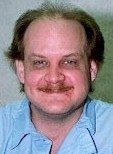
Mark Andrew Fowler
Murderer Brian Kevin Rosenfeld
Murderer · USA · 1985
Brian Kevin Rosenfeld Brian Kevin Rosenfeld was sentenced to three concurrent l…
23 victims
Brian Kevin Rosenfeld
Murderer · USA · 1985
Brian Kevin Rosenfeld Brian Kevin Rosenfeld was sentenced to three concurrent l…
23 victims
 Marvin Gray
Murderer · USA · 1975
Marvin Gray was convicted killer who claimed responsibility for 23 slayings and…
23 victims
Marvin Gray
Murderer · USA · 1975
Marvin Gray was convicted killer who claimed responsibility for 23 slayings and…
23 victims
 Yahweh ben Yahweh
Murderer · USA · 1980
Yahweh ben Yahweh was born and legally named Hulon Mitchell Jr. (October 27, 19…
23 victims
Yahweh ben Yahweh
Murderer · USA · 1980
Yahweh ben Yahweh was born and legally named Hulon Mitchell Jr. (October 27, 19…
23 victims
 Russell Ellwood
Murderer · USA · 1991
Russell Ellwood was a former taxi driver. Authorities suspected him of killing…
20 victims
Russell Ellwood
Murderer · USA · 1991
Russell Ellwood was a former taxi driver. Authorities suspected him of killing…
20 victims
 Earle Dennison
Murderer · USA · 1952
Earle Dennison was a widow and worked as a surgical nurse. She worked at the We…
2 victims
Earle Dennison
Murderer · USA · 1952
Earle Dennison was a widow and worked as a surgical nurse. She worked at the We…
2 victims
 James Ritchie
Serial killer · USA · 2016
James Dale Ritchie (November 4, 1976 – November 12, 2016) was known in the medi…
5 victims
James Ritchie
Serial killer · USA · 2016
James Dale Ritchie (November 4, 1976 – November 12, 2016) was known in the medi…
5 victims
 Bartholomew Granger
Murderer · USA · 2012
Name: Bartholomew Granger · Gender: Male · Race: Black · Age: 42 (age at time o…
1 victim
Bartholomew Granger
Murderer · USA · 2012
Name: Bartholomew Granger · Gender: Male · Race: Black · Age: 42 (age at time o…
1 victim
 Brenda Stokes Wilson
Murderer · USA · 2012
Brenda Stokes Wilson, 50, was a former blackjack dealer. She was accused of kil…
1 victim
Brenda Stokes Wilson
Murderer · USA · 2012
Brenda Stokes Wilson, 50, was a former blackjack dealer. She was accused of kil…
1 victim
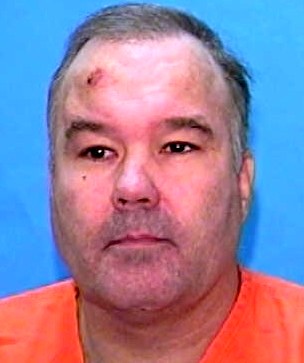 Ray Lamar Johnston
Murderer · USA · 1997
Ray Lamar Johnston was convicted in the Thirteenth Judicial Circuit, Hillsborou…
2 victims
Ray Lamar Johnston
Murderer · USA · 1997
Ray Lamar Johnston was convicted in the Thirteenth Judicial Circuit, Hillsborou…
2 victims
- Gender
- male
- Country
- USA
- Location
- Oklahoma County, Oklahoma, USA
- Date of birth
- May 6, 1965
- Age at first offence
- 20
- Characteristics
- —
- Victim profile
- John Barrier, 27, Chumpon Chaowasin, 44, Rick Cast, 33 (employees)
- Method of murder
- Shooting / St abbing with knife
- Date(s) of murder
- July 3, 1985
- Years active
- 1985
- Date of arrest
- Next day
- Status
-
Executed
Executed by lethal injection in Oklahoma on January 23, 2001
Case details
Mark Andrew Fowler was executed by lethal injection in Oklahoma on January 23, 2001.
Timeline
- July 3, 1985 — Three employees of the Wynn's IGA in Edmond, Oklahoma, were murdered during a robbery planned and executed by Mark Andrew Fowler and co-defendant Billy Ray Fox.
- July 4, 1985 — Mark Andrew Fowler and Billy Ray Fox were arrested in Edmond.
- May 15, 1986 — A jury convicted Fowler and Fox of three counts of first degree felony murder.
- June 20, 1986 — Fowler and Fox were sentenced to death.
- 1994 — Fowler’s applications for post-conviction relief were denied by the Oklahoma Criminal Court of Appeals in Fowler v. State, 873 P.2d 1053 (Okl. Cr. 1994).
- 1995 — Fowler’s applications for post-conviction relief were denied by the Oklahoma Criminal Court of Appeals in Fowler v. State, 896 P.2d 566 (Okl. Cr. 1995).
- June 16, 1995 — Fowler filed a petition for habeas corpus in the United States District Court for the Western District of Oklahoma pursuant to 28 U.S.C. 2254.
- September 9, 1998 — The district court denied Fowler’s petition for habeas corpus relief.
- October 19, 1998 — The district court granted a certificate of probable cause for all issues in the appeal.
- January 6, 2000 — The United States Court of Appeals for the Tenth Circuit issued its decision in Mark Andrew Fowler v. Ron Ward, Warden, Oklahoma State Penitentiary.
- January 23, 2001 — Fowler was executed by lethal injection in Oklahoma; he was pronounced dead at 9:07 p.m.
Background
In the early morning hours of July 3, 1985, three employees of the Wynn's IGA in Edmond, Oklahoma, were murdered in the process of a robbery planned and executed by Mark Andrew Fowler and co-defendant Billy Ray Fox.
Fowler and Fox both admitted to being involved in the robbery, but each accused the other of committing the murders. A jointly held jury trial in Oklahoma County District Court resulted in convictions for three counts of first degree felony murder, after which both were sentenced to death.
The offence
The robbery and murders involved three victims working at Wynn's IGA in Edmond, Oklahoma:
- John Barrier, 27
- Chumpon Chaowasin, 44
- Rick Cast, 33
Chaowasin and Cast were murdered execution style, each dying from single gunshot wounds to the head. Barrier was stabbed nine times in the neck, chest, back and side and was bludgeoned on the back of the head with a shotgun.
Fowler, along with Fox, took $1,200 in cash and $1,500 in checks from the store.
Fowler was described as being a lookout during the murders in statements attributed to him, and he also apologized to the victims’ families at his clemency hearing.
Investigation and arrest
Fowler and Fox were arrested on July 4, 1985, in Edmond the day after the July 3, 1985 murders.
A teen-age girl found the three men lying face-down in a massive pool of blood in the back room of Wynn's IGA. Cast and Chaowasin died of shotgun wounds to their heads and Barrier had been beaten and stabbed.
Attorney General Drew Edmondson stated that testimony showed the killer couldn’t have acted alone, and that both of them pointed the finger at the other as the more involved of the two, while the evidence was clear that more than one person was involved to successfully keep three healthy human beings herded in the back room.
Trial
Fowler and Fox were tried together in Oklahoma County District Court.
The jury convicted both of three counts of first degree felony murder. The convictions were affirmed by the Oklahoma Court of Criminal Appeals.
Quotes from the trial record appeared in the appellate decision, including:
- The trial court should have instructed the jury that:
"[A confession] [an admission] may not be considered by you against any defendant other than the person who made the [confession] [admission]."
Sentencing
After the jointly held jury trial, both Fowler and Fox were sentenced to death.
The sentencing outcome was upheld in post-conviction proceedings, including Fowler v. State, 779 P.2d 580 (Okl. Cr. 1989); Fowler v. State, 873 P.2d 1053 (Okl. Cr. 1994); and Fowler v. State, 896 P.2d 566 (Okl. Cr. 1995).
Appeals
United States Court of Appeals for the Tenth Circuit (January 6, 2000)
Mark Andrew Fowler, Petitioner - Appellant, v. Ron Ward, Warden, Oklahoma State Penitentiary, Respondent - Appellee. January 6, 2000 APPEAL FROM THE UNITED STATES DISTRICT COURT FOR THE WESTERN DISTRICT OF OKLAHOMA. D.C. No. 95-CV-750-T Before BRORBY, EBEL, and KELLY, Circuit Judges.
The appellate court described procedural history:
- The Oklahoma Court of Criminal Appeals affirmed Fowler’s murder convictions and death sentence, citing Fowler v. State, 779 P.2d 580 (Okla. Crim. App. 1989).
- Fowler’s applications for post-conviction relief were denied by the Oklahoma Criminal Court of Appeals in 1994 and 1995, citing Fowler v. State, 873 P.2d 1053 (Okl. Crim. App. 1994) and Fowler v. State, 896 P.2d 566 (Okl. Crim. App. 1995).
- Fowler filed a petition for habeas corpus on June 16, 1995; the district court denied it on September 9, 1998.
- The district court granted a certificate of probable cause on October 19, 1998.
Fowler asserted the following grounds for relief:
- The trial court failed to give a proper limiting instruction after admitting his co-defendant's redacted confession in violation of his Sixth Amendment right of confrontation and Fourteenth Amendment right to due process.
- The trial court improperly denied a request for an instruction on second degree felony murder in violation of the Sixth, Eighth, and Fourteenth Amendments.
- Fowler’s trial counsel was constitutionally ineffective in violation of his Sixth Amendment rights.
- The trial prosecutor made unconstitutionally improper comments and argument violating the Sixth, Eighth and Fourteenth Amendments.
- Fowler was improperly denied an evidentiary hearing.
- Fowler’s death sentence was rendered unreliable by the use of unconstitutional aggravating factors.
The appellate court ruled AFFIRMED.
I. Failure to Give Appropriate Limiting Instruction
The appellate court concluded that the trial court’s omission of a limiting instruction after admitting the redacted confession of co-defendant Mr. Fox was error. It stated that although a general instruction at the end of trial was given, it was not sufficient under Richardson, which required a limiting instruction immediately following admission of the confession.
It also addressed harmless error and concluded Fowler was not entitled to habeas relief because the failure to give the appropriate limiting instruction did not substantially and injuriously contribute to the jury’s conclusions in either the guilt or punishment stages.
The appellate court referenced testimony about what the confession established, stating that the confession established only that Fox killed the victims and that:
- The confession did not specify how Fox committed the murders.
- On cross-examination, Fox’s roommate admitted openly that Fox did not say anything about shooting or stabbing any of the victims.
The appellate court also stated that the confession was redacted so that “His name and existence had been properly redacted,” and that there was strong independent evidence supporting Fowler’s involvement in the murders.
II. Failure to Instruct on Second Degree Felony Murder
The appellate court stated that once the state had established that a defendant used a dangerous weapon in the course of a robbery that resulted in death, second degree murder was no longer an option under Oklahoma law, citing Hatch v. Oklahoma, 58 F.3d 1447, 1454 (10th Cir. 1995). It therefore found no constitutional violation in the trial court’s refusal to instruct on second degree felony murder as an alternative.
III. Ineffective Assistance of Counsel
The appellate court evaluated Fowler’s claims and addressed allegations including:
- an actual conflict of interest claim regarding experts,
- a claim that counsel erroneously failed to provide the jury with Fowler’s entire statement to police,
- and a claim that counsel was rendered ineffective by the trial court’s failure to grant a continuance to amend closing argument.
The appellate court declined to address the actual conflict of interest claim as it was being raised for the first time. It then rejected the remaining allegations, concluding Fowler had not shown a reasonable probability that the result would have been different.
IV. Prosecutorial Misconduct
The appellate court addressed remarks made during closing argument relating to co-defendant Fox’s redacted confession. It reproduced a quoted passage of trial argument:
[Mr. Fox] rather crudely says, "Well, I messed up. I killed some people...I killed two of them and I killed the third one."
What didn't he say? He didn't say I stabbed anybody. He said "I killed two people and I clubbed the third one." There were only two people out there that morning pulling that robbery. If all he did was shoot and club, who did the stabbing, ladies and gentlemen? You don't need Tom Bevel to answer that question for you although he answered it very well. Tr. 1835.
The appellate court concluded that the comments did not inject Fowler into the confession or suggest Fox referred to Fowler implicitly, and it treated the comments as permissible argument based on facts presented. It therefore rejected prosecutorial misconduct claims based on those remarks.
It also addressed other alleged prosecutorial comments relating to mitigating evidence and the sentencing jury’s sense of responsibility, including the following quoted remarks:
- "I tell you today what these two were prior to 1985 is irrelevant. Tr. at 2345."
- "Why these defendants are what they are may be a good field of research, but it's no mitigation of [sic] justification for what they did. . . It doesn't change them back and it doesn't mitigate what they did. Tr. at 2348."
- "Is it adequate punishment just to lock them up on a clean bed with clean clothes and three meals a day? Is that adequate punishment for taking three lives? Tr. at 2358."
- "I had to make the decision to seek the death penalty. Before I could do that, the Edmond police department and the Oklahoma City police department had to bring the evidence to me upon which I could justify such a decision. And all of you, you, the jury and my staff and the police departments and their experts did what we did because it's our responsibility and duty. Tr. at 2350."
The appellate court rejected these claims.
V. Evidentiary Hearing
The appellate court concluded that Fowler’s claims were properly resolved on the basis of the record and the law, and that an evidentiary hearing was not required.
VI. Unconstitutional Aggravating Factors
The appellate court considered Fowler’s arguments regarding:
- the “heinous, atrocious, or cruel” aggravating factor, and
- the “continuing threat” aggravating factor,
and it stated that prior decisions had upheld Oklahoma’s application of these aggravators, citing:
- Duvall v. Reynolds, 139 F.3d 768, 792-794 (10th Cir. 1998) for “heinous, atrocious, or cruel,”
- Nguyen v. Reynolds, 131 F.3d 1340, 1352-1354 (10th Cir. 1997) for “continuing threat,” and it held these resolutions were binding.
Separate concurring opinion (EBEL, Circuit Judge)
A concurring opinion agreed Fowler was not entitled to habeas relief but disagreed on the basis for rejecting the prosecutorial misconduct claim. The concurrence stated that it disagreed with the majority’s conclusion that the prosecutor’s association of Fowler with Fox’s confession fell within permissible boundaries under Richardson.
It discussed the prosecutor’s closing argument as quoted and concluded it improperly associated Fowler with Fox’s confession and that the prosecutor’s remarks sought to undo the effect of the limiting instruction.
The concurrence concluded that, even if improper, the associated error did not render the trial fundamentally unfair due to strong independent evidence of Fowler’s participation in the crimes, and it concurred in the judgment.
Aftermath
Clemency and pardon proceedings
The Oklahoma Pardon and Parole Board voted 4-0 to deny clemency for Mark Fowler.
A request for clemency was delivered by Archbishop Eusebius J. Beltran to the Oklahoma Pardon and Parole Board at its scheduled hearing on Jan. 3. The statement included the following verbatim text excerpts:
Most honorable members of the Oklahoma Pardon and Parole Board:
My name is Eusebius J. Beltran. I am the Catholic archbishop of Oklahoma City.
...
Aware of this meaning, I humbly ask you to hear and grant my request for clemency for Mark Andrew Fowler, who is scheduled for execution on Jan. 23.
...
I do not excuse him for his complicity in this horrendous act. I do not ask that he ever be set free. I ask for clemency -- that you, the members of the Pardon and Parole Board -- would use less rigor than your authority or power permits. You have in your hands today the power of life or death. I beg you to choose life!
...
Clemency means to act with less rigor.
...
Please, find it in your hearts to grant clemency to Mark Fowler. In this instance you have the power of life or death -- choose life -- not violence and death.
Thank you and God bless you.
Most Reverend Eusebius J. Beltran
The clemency statement included a description of Beltran’s relationship with Mark Fowler and Mark Fowler’s family that dated back to 1978, including meetings with Fr. Gregory Gier, visits to Mark Fowler’s home during the time his mother, Caroline, was suffering from cancer, participation in her funeral service, and ongoing updates about the facts of the case over 15 years.
Execution day accounts and prison attendance
Fowler was executed via lethal injection at Oklahoma State Penitentiary in McAlester. He was pronounced dead at 9:07 p.m.
Fowler recited “Hail Mary” before his death, including the verbatim lines:
"Hail Mary, full of grace, the Lord is with thee. Blessed are thou amongst women and blessed is the fruit of thy womb, Jesus," Fowler said.
"Holy Mary, mother of God, pray for us sinners now and at the hour of our death. Amen."
Six family members and friends of two of the slain men came to the prison to see Fowler die.
Prayer vigils were held at numerous locations across the state. Between 200 and 300 people attended the vigil outside the gates of the prison.
A string of eight executions was scheduled through Feb. 1 in Oklahoma’s death chamber.
Appeals process references
The United States Supreme Court refused to hear the appeals of Fox and Fowler, and the Oklahoma Attorney General requested an execution date.
Attorney General Drew Edmondson asked the Oklahoma Court of Criminal Appeals to set an execution date and asked the court to schedule both executions on the same day. Edmondson stated that DNA testing would be of no value in the case and would have no relevance as to the actual innocence of Fox or Fowler.
Statements from family and related individuals
Linda Barrier, sister of victim John Barrier, wrote:
"I have always believed in 'an eye for and eye'," Linda Barrier, the sister of victim John Barrier, wrote to a clemency board earlier this month. "I have waited 15 years for the final chapter."
Fowler apologized to the victims’ families at his clemency hearing, stating:
"I'm not here to deny my involvement or participation because I was there and I was equally responsible for what happened,"
"I cannot change the past or make the bad things disappear. I apologize for what I have done and thank God for taking care of my family."
Jim Fowler was described as having lived on both sides of the death penalty, and he was quoted:
"If we had killed Mr. Miller you would never had known about him being innocent," said Jim Fowler, who believes the death penalty lowers citizens to a killer's level.
Frank Cast, Rick Cast’s brother, wrote in a letter to the clemency board:
"I believe to this date that Ricky's murder and the trial is what killed her," he wrote. "Our mother lingered on her death bed for 14 years, withering into a skeleton, waiting for justice to be carried out."
Kevin Acers, president of the Oklahoma City chapter of Amnesty International, was quoted about a support group protest:
a homicide survivor's support group had received the permit to stand at the group's normal protest site outside the governor's mansion.
Other details
Fowler and Fox were described as being tried together and receiving death sentences.
The appellate decision referred to Oklahoma law that required a robbery with a dangerous weapon for first degree murder under Oklahoma Stat. Ann. tit. 21 701.7(B) (West 1982).
The appellate decision discussed harmless error, including the harmless-error standard for habeas review drawn from Brecht v. Abrahamson, 507 U.S. 619, 637 (1993), and noted the “grave doubt” standard from O'Neal v. McAninch, 513 U.S. 432, 436 (1995).
The appellate decision referenced aggravator issues and cited earlier decisions including Duvall v. Reynolds and Nguyen v. Reynolds.
Fox’s execution was scheduled for Thursday, January 25 at 9:00 p.m., and it was described as the sixth Thursday following Fowler’s execution.
Oklahoma Bishop’s Clemency Letter was delivered on Jan. 3, and the statement requested clemency for Mark Fowler.

Spotted an error, or have more information about this case?