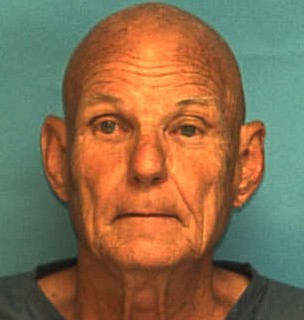
William Darrell Lindsey
Serial killer Carl Eugene Watts
Serial killer · USA · 1974
Carl Eugene Watts (born November 7, 1953; died September 21, 2007), also known…
100 victims
Carl Eugene Watts
Serial killer · USA · 1974
Carl Eugene Watts (born November 7, 1953; died September 21, 2007), also known…
100 victims
 Rodney Alcala
Serial killer · USA · 1977
Rodney James Alcala (born August 23, 1943) was also known as Rodrigo Jacques Al…
100 victims
Rodney Alcala
Serial killer · USA · 1977
Rodney James Alcala (born August 23, 1943) was also known as Rodrigo Jacques Al…
100 victims
 Glen Edward Rogers
Serial killer · USA · 1993
Glen Edward Rogers was a spree killer whose cross-country rampage in 1994-95 le…
70 victims
Glen Edward Rogers
Serial killer · USA · 1993
Glen Edward Rogers was a spree killer whose cross-country rampage in 1994-95 le…
70 victims
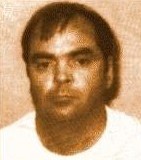 Donald Leroy Evans
Serial killer · USA · 1975
Donald Leroy Evans (born July 5, 1957) was an American serial killer who murder…
60 victims
Donald Leroy Evans
Serial killer · USA · 1975
Donald Leroy Evans (born July 5, 1957) was an American serial killer who murder…
60 victims
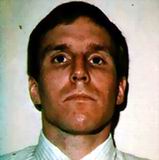 Michael Swango
Serial killer · USA · 1981
Michael Swango (Joseph Michael Swango) was a physician and American serial kill…
60 victims
Michael Swango
Serial killer · USA · 1981
Michael Swango (Joseph Michael Swango) was a physician and American serial kill…
60 victims
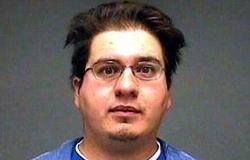 Efren Saldivar
Serial killer · USA · 1989
Efren Saldivar (born 30 September 1969) was an American serial killer who murde…
50 victims
Efren Saldivar
Serial killer · USA · 1989
Efren Saldivar (born 30 September 1969) was an American serial killer who murde…
50 victims
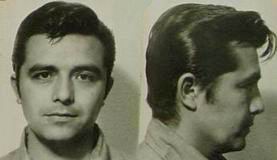 Perry Edward Smith
Mass murderer · USA · 1959
Perry Edward Smith (October 27, 1928 – April 14, 1965) was one of two ex-convic…
4 victims
Perry Edward Smith
Mass murderer · USA · 1959
Perry Edward Smith (October 27, 1928 – April 14, 1965) was one of two ex-convic…
4 victims
 Dean Corll
Serial killer · USA · 1970
Dean Corll was shot dead by his accomplice Elmer Henley on August 8, 1973. Dean…
27 victims
Dean Corll
Serial killer · USA · 1970
Dean Corll was shot dead by his accomplice Elmer Henley on August 8, 1973. Dean…
27 victims
 Alpha Stephens
Murderer · USA · 1974
Alpha Otis O'Daniel Stephens was convicted of murder in the Superior Court of B…
1 victim
Alpha Stephens
Murderer · USA · 1974
Alpha Otis O'Daniel Stephens was convicted of murder in the Superior Court of B…
1 victim
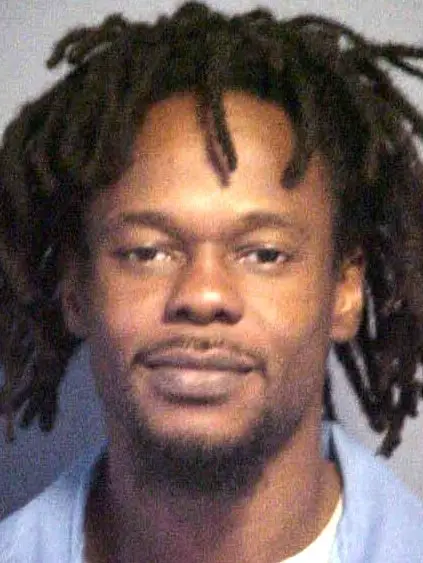 Michael Pennington
Murderer · USA · 1991
Michael L. Pennington was an in-prison convert to Islam at the Oklahoma State P…
1 victim
Michael Pennington
Murderer · USA · 1991
Michael L. Pennington was an in-prison convert to Islam at the Oklahoma State P…
1 victim
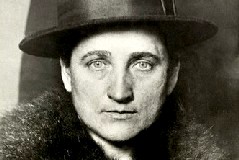 Tillie Klimek
Serial killer · USA · 1914
Ottilie “Tillie” Klimek (also known as Tillie Gburek) was a Polish American ser…
6 victims
Tillie Klimek
Serial killer · USA · 1914
Ottilie “Tillie” Klimek (also known as Tillie Gburek) was a Polish American ser…
6 victims
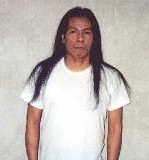 Jerald Harjo
Murderer · USA · 1988
Jerald Wayne Harjo was convicted of first degree murder in Seminole County, Okl…
1 victim
Jerald Harjo
Murderer · USA · 1988
Jerald Wayne Harjo was convicted of first degree murder in Seminole County, Okl…
1 victim
- Gender
- male
- Country
- USA
- Location
- North Carolina/Florida, USA
- Date of birth
- March 18, 1935
- Age at first offence
- 48
- Characteristics
- rape, sadist, drugs
- Victim profile
- Lisa Foley / Anita Stevens McQuaig / Connie Terrell / Lashawna Streeter / Cheryl Lucas / Donetha Snead-Haile / Diana Richardson / Lucy Arnett Raymer
- Method of murder
- Several
- Date(s) of murder
- 1983 - 1996
- Years active
- 1983–1996
- Date of arrest
- December 29, 1996
- Status
-
Imprisoned
Died in prison on April 17, 2001; sentenced to 30 years in prison in Florida in 1999
Case identification
William Darrell Lindsey
Legal status
Lindsey died in prison on April 17, 2001. In July 1999, he pleaded guilty in Florida to six murders and was given 30 years in Florida's Cross City Correctional Institute. He was due to be released on December 11, 2025 at the age of 90.
Background
Lindsey was a native of St. Augustine, Florida. He was orphaned in infancy and constantly received verbal abuse from his adoptive mother, which created a “warped and violent psycho-sexual behavioural pattern.” He had more than one failed marriage and used an alter ego called “Bad Bill.” This sadistic personality most often emerged when confronted by women about his sexual inadequacies.
The narrative described Lindsey as exhibiting signs of a potential serial killer, including “animal torture, emotional detachment, substance abuse and unpredictable violent outbursts followed by apparently genuine remorse.” His “psychosis led him to commit six brutal murders in St. Augustine.”
Investigation
A Christmas card from retired deputy Fred Thompson to his former boss, Sheriff Neil Perry, brought Lindsey to justice. A newspaper clipping enclosed in that Christmas card reached the St. Johns County Cold Case Homicide Task Force in January 1997. Months of research and interviews followed and resulted in Lindsey being extradited from Asheville, NC to St. Augustine, FL ten months later.
The cooperation between the Buncombe County Sheriff’s office and Sheriff Perry’s task force ensured that Lindsey would be tried for six murders.
Arrest and extradition
Lindsey was arrested on December 29, 1996 in Asheville, NC on suspicion of murder. He was extradited from Asheville, NC to St. Augustine, FL ten months later.
Trial and plea
In July 1999, William Darrell Lindsey pleaded guilty and pleaded guilty to murders of six victims in Florida. He pleaded guilty to the murders of Donetha Haile and Diana Richardson even though their bodies were never found, and he was tried for six murders. He was given 30 years in Florida's Cross City Correctional Institute instead of a death sentence.
Outcome for each victim (as described)
Lisa Foley
Lisa Foley vanished on October 9, 1983 after a night of drinking at the Tradewinds Lounge in downtown St. Augustine.
Lindsey later picked out her photo as a woman he had strangled during an argument after sex. In Lindsey’s account:
"When we left the Tradewinds, we drove to the A Street Ramp and down onto St. Augustine Beach... We had intercourse and she wanted three hundred dollars. I said fifty dollars is all you're going to get. This started us fighting... I strangled her and took her body down to Pacetti Road and dumped her in a borrow pit down there."
Five days after she disappeared, Lisa’s body was discovered in a marshy area off the west end of Pope Road in St. Augustine Beach.
St. Johns County detectives learned Lindsey was the killer in January 1997.
Anita McQuaig
Anita McQuaig got into Lindsey's car at the corner of Riberia and King Street in downtown St. Augustine at around 7pm on November 29, 1988.
A county worker discovered her mutilated body floating in a borrow pit near St. Augustine Beach the following morning. Her injuries were described as follows: her eye socket was crushed and her jaw was fractured in two places; her nude body had cigarette burns and bite marks in several spots.
Lindsey confessed to the murder of Anita McQuaig in 1988, and before the trial was over, St. Johns County knew that he had been stalking victims in their midst for over a decade.
In a hand-written statement dated April 1, 1997, Lindsey confessed to the murder but could not remember why he had gotten so angry. In Lindsey’s statement:
"We were fighting outside the car and I picked up a three-foot-long piece of board, maybe about 1-by-6. I hit her several times on the upper portion of her body... After that, I carried her about fifteen feet to the pond and threw her in.... I went home to my Mom's at Sylvan Drive."
Connie Terrell
Connie Terrell was picked up by Lindsey as she walked along West King Street about 8:30 pm on Saturday, June 10, 1989.
Her nude body was discovered by a fisherman barely twelve hours later as it lay half-submerged in a borrow pond off Holmes Boulevard. She was described as having been strangled with a rope and then shot in the head once with a .22 caliber.
In the same April 1997 statement Lindsey gave police admitting Anita McQuaig’s murder, Lindsey gave an account of Connie’s killing. In Lindsey’s statement:
"Then I drove back towards my mothers house. I threw the spent cartridge out...towards the median of the road. I can't remember exactly what I did with ...her clothes, but I probably threw them in the San Sebastian Creek on my way home."
Lashawna Streeter
Lashawna Streeter was at “Crackhead Corner” looking for a “date” on the afternoon of March 1, 1992 when Lindsey pulled into the parking lot about 415 pm.
When she left with him, it would be the last time she would be seen alive. Within an hour, she would be beaten and kicked to death for allegedly trying to rob Lindsey. Lindsey’s statement included:
"She managed to get the door open, but I hit her. I stopped the car and started hitting her more. I knocked her unconcious. She didn't mention her name and I did not know her."
Her body was found 10 days later by a local man as he was taking a short cut from State Road 207 to Old Moultrie Road across what area residents call “Quinny's Land.”
Lying just off a dirt track called Old Dairy Farm Road, she was described as partially undressed and hidden under some broken branches and other debris.
Cheryl Lucas
Cheryl Lucas flagged Lindsey down around 2 am at the corner of Palmer and King Streets on a rainy summer night in June 1995.
They had gone less than a block before she grabbed some money from the dash and bailed out of the vehicle. She ran down the railroad tracks towards “Crackhead Corner,” but Lindsey was able to catch up with her and crushed her skull with a pry bar.
Her body was found several days later by boaters at the Moultrie Creek boat ramp.
Donetha Haile
Donetha Haile went missing in April 1993 after spending the day with Lindsey at his trailer on Masters Farm.
On the drive back to King Street, she revealed that she was HIV-positive. In Lindsey’s statement:
"I started planning to kill her. When we got to the end of the paved road I just stopped the truck and started beating her. I hit her with my fist about six or seven times and she went out....completely unconscious. I went to the woods about 30 feet along the bank and threw her in the creek."
Lindsey pleaded guilty to the murder of Donetha Haile, and her body was never found.
Diana Richardson
Diana Richardson disappeared in October 1999 when she agreed to Lindsey’s offer of money for sex.
Lindsey later stated that he had taken her to the same borrow pit where he had killed Connie Terrell. During sex, Diana somehow angered Lindsey and he hit the back of her head hard enough to knock her unconscious with a single blow.
Dragging her from the car, he dumped her body in the borrow pond where it floated out a short distance and then sank some thirty feet.
Lindsey pleaded guilty to the murder of Diana Richardson, and her body was never found.
Locations and context described
Lindsey developed a fondness for “both recreational drugs and deviant sex.” The narrative described him as being well acquainted with the dope dealers and prostitutes of Lincolnville and West Augustine and living in a drug culture of cocaine use.
The case described “Crackhead Corner” at the intersection of Volusia and West King Streets as a place where some victims were located. It also described “the Cut” in a wooded area where dealers and prostitutes often loitered, and the east end of the SR312 bridge over the Matanzas River where the concrete columns were “tagged” occasionally by the hookers or their “dates.”
The narrative stated that the bodies of two women he killed in the city have never been found.
Other people mentioned
Fred Thompson was a retired deputy. Sheriff Neil Perry was Lindsey’s former boss at the time referenced. The Buncombe County Sheriff’s office cooperated with the St. Johns County Cold Case Homicide Task Force.
Evidence and statements attributed to Lindsey
Lindsey made a statement to detectives handling his case at age 71:
"You've got to understand that there's a good Bill and a bad Bill. Good Bill is a decent person...Bad Bill is a person society needs to be afraid of."
Aftermath and incarceration
After extradition, Lindsey was tried for six murders. He pleaded guilty in July 1999 and received 30 years in Florida's Cross City Correctional Institute. He died in prison on April 17, 2001.
Spotted an error, or have more information about this case?