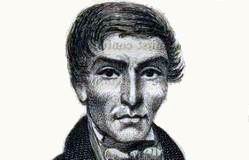
William Hare
Serial killer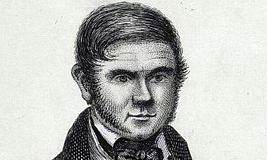 William Burke
Serial killer · United Kingdom · 1827
William Burke (1792 – 28 January 1829) was born in Urney, near Strabane, in the…
17 victims
William Burke
Serial killer · United Kingdom · 1827
William Burke (1792 – 28 January 1829) was born in Urney, near Strabane, in the…
17 victims
 Bruce Lee
Serial killer · United Kingdom · 1973
Bruce Lee was born Peter George Dinsdale in 1960. He later changed his name to…
26 victims
Bruce Lee
Serial killer · United Kingdom · 1973
Bruce Lee was born Peter George Dinsdale in 1960. He later changed his name to…
26 victims
 Dennis Nilsen
Serial killer · United Kingdom · 1978
Dennis Andrew Nilsen was born on November 23, 1945. He lived in London. He was…
16 victims
Dennis Nilsen
Serial killer · United Kingdom · 1978
Dennis Andrew Nilsen was born on November 23, 1945. He lived in London. He was…
16 victims
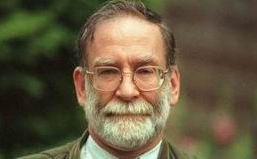 Dr. Harold Shipman
Serial killer · United Kingdom · 1974
Harold Fredrick Shipman was an English doctor who was convicted as a serial kil…
15 victims
Dr. Harold Shipman
Serial killer · United Kingdom · 1974
Harold Fredrick Shipman was an English doctor who was convicted as a serial kil…
15 victims
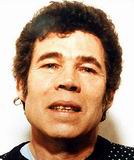 Frederick West
Serial killer · United Kingdom · 1967
Frederick West (29 September 1941 – 1 January 1995) was an English serial kille…
13 victims
Frederick West
Serial killer · United Kingdom · 1967
Frederick West (29 September 1941 – 1 January 1995) was an English serial kille…
13 victims
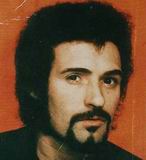 Peter Sutcliffe
Serial killer · United Kingdom · 1975
Peter William Sutcliffe (born 2 June 1946) was an English serial killer dubbed…
13 victims
Peter Sutcliffe
Serial killer · United Kingdom · 1975
Peter William Sutcliffe (born 2 June 1946) was an English serial killer dubbed…
13 victims
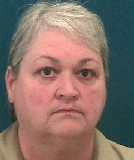 Martha Ann Johnson
Murderer · USA · 1977
Martha Ann Johnson (also known as Martha Ann Bowen) was an American serial kill…
4 victims
Martha Ann Johnson
Murderer · USA · 1977
Martha Ann Johnson (also known as Martha Ann Bowen) was an American serial kill…
4 victims
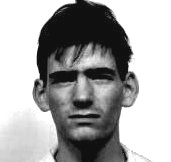 Robert Madden
Murderer · USA · 1985
Robert Anthony Madden (born Sept. 9, 1963); executed as Robert Madden #822 at a…
2 victims
Robert Madden
Murderer · USA · 1985
Robert Anthony Madden (born Sept. 9, 1963); executed as Robert Madden #822 at a…
2 victims
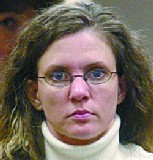 Michelle Reynolds
Murderer · USA · 2004
Michelle Reynolds — defendant; pleaded guilty to voluntary manslaughter and bur…
1 victim
Michelle Reynolds
Murderer · USA · 2004
Michelle Reynolds — defendant; pleaded guilty to voluntary manslaughter and bur…
1 victim
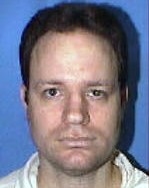 Robert Lookingbill
Murderer · USA · 1984
12:30 to 1:30 a.m. on December 5, 1989 — Robert Andrew Lookingbill knocked on t…
3 victims
Robert Lookingbill
Murderer · USA · 1984
12:30 to 1:30 a.m. on December 5, 1989 — Robert Andrew Lookingbill knocked on t…
3 victims
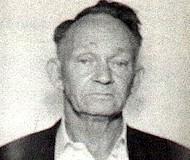 Robert Chambliss
Mass murderer · USA · 1963
Robert Edward Chambliss (also known as “Dynamite Bob”) (January 14, 1904–Octobe…
4 victims
Robert Chambliss
Mass murderer · USA · 1963
Robert Edward Chambliss (also known as “Dynamite Bob”) (January 14, 1904–Octobe…
4 victims
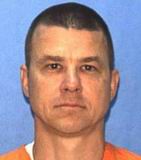 Richard Michael Cooper
Murderer · USA · 1982
Richard Michael Cooper was born on 09/28/63. He was sentenced to death on 03/14…
3 victims
Richard Michael Cooper
Murderer · USA · 1982
Richard Michael Cooper was born on 09/28/63. He was sentenced to death on 03/14…
3 victims
- Gender
- male
- Country
- United Kingdom
- Location
- Edinburgh, Scotland, United Kingdom
- Date of birth
- 1792 or 1804
- Age at first offence
- 35
- Characteristics
- cannibalism, dismemberment, serial rapist, torture, drugs, alcohol, angel of death
- Victim profile
- Men and women
- Method of murder
- Suffocation
- Date(s) of murder
- November 1827 - October 1828
- Years active
- 1827–1828
- Date of arrest
- November 1, 1828
- Status
-
Executed
Hare was released in February 1829; his date of death is uncertain. Burke was hanged on 28 January 1829 after receiving a death sentence in December 1828 following Hare’s testimony, and Burke was publicly dissected at the Edinburgh Medical College.
Case overview
William Hare and Brendan “Dynes” Burke committed serial murders in Edinburgh, Scotland, from November 1827 to 31 October 1828. The killings were attributed to Irish immigrants Brendan “Dynes” Burke and William Hare, who sold the corpses of their 17 victims to provide material for dissection. Their purchaser was Doctor Robert Knox, a private anatomy lecturer whose students were drawn from Edinburgh Medical College. Their accomplices included Burke’s mistress, Helen M’Dougal, and Hare’s wife, Margaret Laird.
Their method of killing produced the word “burking,” meaning to purposefully smother and compress the chest of a victim.
Timeline
- November 1827 — The serial murders began in Edinburgh, Scotland.
- 1826 — Logue died; Hare married Margaret Laird, Logue’s widow.
- 1827 — Burke and M’Dougal moved into Tanner’s Close, in the West Port area of Edinburgh, where Margaret Hare kept a lodging-house.
- 6 November 1828 — An Edinburgh paper wrote about the disappearances; Janet Brown went to the police and identified Mary Patterson’s clothing.
- Christmas Eve 1828 — The trial began.
- December 1828 — Hare’s testimony led to Burke’s death sentence; during the period between sentencing and execution, Burke made two thorough confessions detailing 16 murders.
- 28 January 1829 — Burke was hanged; after the hanging, Burke was publicly dissected at the Edinburgh Medical College.
- February 1829 — Hare was released.
- 31 October 1828 — The murders ended.
Background
Before 1832, there were insufficient cadavers legitimately available for the study and teaching of anatomy in British medical schools. The University of Edinburgh was renowned for medical sciences. As medical science flourished in the early 19th century, demand rose sharply, but the only legal supply of cadavers—the bodies of executed criminals—fell due to a sharp reduction in the execution rate in the early 19th century brought about by the repeal of the Bloody Code. Only about 2 or 3 corpses per year were available for a large number of students. This situation attracted criminal elements willing to obtain specimens by any means.
Activities of body-snatchers (also called resurrectionists) gave rise to particular public fear and revulsion, and grave-robbing led into anatomy murder.
The people involved
Brendan “Dynes” Burke
Brendan “Dynes” Burke was born in Urney, near Strabane, in the west of County Tyrone, part of the Province of Ulster in the north of Ireland. After trying his hand at a variety of trades and serving as an officer’s servant in the Donegal Militia, he left his wife and two children in Ireland and emigrated to Scotland about 1817. He worked as a navvy for the Union Canal, where he met Helen M’Dougal.
Burke worked as a labourer, weaver, baker and a cobbler.
Burke was arrested and later convicted. He was sentenced to death by hanging and was hanged on 28 January 1829. After his hanging he was publicly dissected at the Edinburgh Medical College.
William Hare
William Hare’s birthplace was variously given as Poyntzpass near Newry or Derry, both in the Province of Ulster in Ireland. He emigrated to Scotland and worked as a Union Canal labourer. He moved to Edinburgh and met a man named Logue, who ran a lodging-house in the West Port.
When Logue died in 1826, Hare married Margaret Laird, Logue’s widow. Margaret Hare continued to run the lodging house, and Hare worked on the canal. A note on the origins of Hare from the Newry Telegraph 31 March 1829 is included in the account.
Hare was arrested with Margaret Hare and later received immunity from prosecution if he confessed and agreed to testify against Burke. He was released in February 1829. His date of death was uncertain, and many popular tales described him as a blind beggar on the streets of London after being mobbed and thrown in a lime pit, but those reports were not confirmed. The last known sighting of him was in the English town of Carlisle.
Hare’s complicity included purchasing and selling corpses for medical dissection, and his later testimony became central to Burke’s conviction.
Helen M’Dougal
Helen M’Dougal was Burke’s mistress and an accomplice. She was released because her complicity to the murders was not provable. Afterward, she returned to her house but was attacked by an angry mob, and she may have returned to her family in Stirling. She was rumoured to have left for Australia where she died around 1868.
Margaret Laird (Margaret Hare)
Margaret Hare continued to run the lodging house with Hare after Logue’s widowhood. Margaret Hare was arrested. She escaped lynching and reputedly returned to Ireland. Nothing more was known about her.
The offence
The offence involved killing victims and selling their corpses to Doctor Robert Knox for dissection. The method relied on intoxication using alcohol and then smothering, compressing the chest of a victim, and killing.
The murders were described as serial murders attributed to Burke and Hare, spanning from November 1827 to 31 October 1828. Their victims included 17 people in total, and an entry also described the number of victims as 12 minimum.
The word “burking” came from their method of killing, defined as purposefully smothering and compressing the chest of a victim.
Investigation
Ann Gray became suspicious when Burke would not let her approach a bed where she had left her stockings. When the Grays were left alone in the house in the early evening, they checked the bed and found Docherty’s body under it. On their way to alert the police, they ran into M’Dougal, who tried to bribe them with an offer of £10 a week, which they refused.
Burke and Hare had removed the body from the house before the police arrived. Under questioning, Burke claimed that Docherty had left at 7:00 a.m., while M’Dougal claimed she had left in the evening.
An anonymous tip-off led investigators to Knox’s classroom where they found Docherty’s body. James Gray identified the body.
The murder spree had lasted twelve months. Evidence against the pair was described as not overwhelming, leading Lord Advocate Sir William Rae to offer Hare immunity from prosecution if he confessed and agreed to testify against Burke.
Arrest and immunised testimony
William and Margaret Hare were arrested soon after police arrested Burke and M’Dougal. Hare agreed to testify against Burke in exchange for immunity from prosecution.
Hare’s testimony led to Burke’s death sentence in December 1828.
Trial
The trial began on Christmas Eve 1828.
Both the Hares testified against the Burkes. Several witnesses told of victims they had seen with Helen or Burke before their disappearance.
On Christmas Morning, after 50 minutes of consideration by the jury, Burke was found guilty and was sentenced to death by hanging. Helen was freed.
Sentencing and execution
After his death sentence in December 1828, Burke made two thorough confessions detailing 16 murders he and Hare had committed, though the order was inconsistent.
Burke was hanged on 28 January 1829. After the hanging, he was publicly dissected at the Edinburgh Medical College.
The dissecting professor Alexander Monro dipped his quill pen into Burke’s blood and wrote:
"This is written with the blood of Wm Burke, who was hanged at Edinburgh. This blood was taken from his head."
Burke’s skeleton, death mask, and items made from his tanned skin were displayed at the college’s museum.
Outcome
- Hare received immunity from prosecution if he confessed and agreed to testify against Burke.
- Hare was released in February 1829.
- Burke was sentenced to death and was hanged on 28 January 1829, after which he was publicly dissected at the Edinburgh Medical College.
- Helen M’Dougal was released because her complicity to the murders was not provable.
- Doctor Robert Knox was not prosecuted, despite public outrage at his role in providing an incentive for the murders.
- It was stated that Burke swore in his confession that Knox had known nothing of the origin of the cadavers.
The victims and killings (as described)
Burke and Hare sold corpses for dissection, sometimes starting with a corpse that had died of natural causes and later luring victims.
According to Hare’s later testimony, their first body sold was that of a tenant who had died of natural causes, an old army pensioner who owed Hare £4 rent. Instead of burying the body, they filled the coffin with bark and brought the cadaver to Edinburgh University to look for a purchaser. A student directed them to Surgeons’ Square, where they sold the body for £7.10s to Dr. Robert Knox.
Burke and Hare’s first murder victim was described as a sick tenant, Joseph the Miller, whom they plied with whisky and then suffocated.
When there were no other sickly tenants, they decided to lure a victim from the street. In February 1828, they invited pensioner Abigail Simpson to spend the night before her return home. Using the same modus operandi, they served Simpson alcohol with the intention of intoxicating her, and then smothered her. They were paid £10.
Hare’s wife, Margaret, invited a woman to the inn, plied her with drink, and then sent for her husband. Next, Burke encountered two women in the Canongate area: Mary Patterson and Janet Brown. He invited them to breakfast, but Brown left when an argument broke out between M’Dougal and Burke. When she returned, she was told that Patterson had left with Burke; Patterson had been taken to Dr. Knox’s dissecting rooms. Patterson and Brown were described as prostitutes in contemporary accounts. A later story arose that Knox’s students recognized the dead Patterson.
The next victim was an acquaintance of Burke, a beggar woman called Effie, for which they were paid £10 for her body. Burke then “saved” a woman from police by claiming he knew her. He delivered her body to the medical school just hours later.
The next two victims were an old woman and her blind grandson. The grandmother died from an overdose on painkillers. Hare took the young boy and stretched him over his knee, then proceeded to break his back. Both bodies were ultimately sold for £8 each.
The next two victims were Burke’s acquaintance “Mrs. Ostler” and one of M’Dougal’s relatives, Ann Dougal.
Another victim was Elizabeth Haldane, a former lodger who, down on her luck, asked to sleep in Hare’s stable. Burke and Hare also murdered her daughter Peggy Haldane a few months later.
Burke and Hare’s next victim was described as James Wilson, called “Daft Jamie,” a mentally retarded young man with a limp who was 18 at the time of his murder. The boy resisted, and the pair had to kill him together. When Dr. Knox uncovered the body the next morning, several students recognized Jamie. His head and feet were cut off after Knox had shown his students the body. Knox denied it was Jamie, but he began to dissect the cadaver’s face first.
The last victim was Marjory Campbell Docherty. Burke lured her into the lodging house by claiming that his mother was also a Docherty, but he had to wait to complete his murderous task because of the presence of lodgers James and Ann Gray. The Grays left for the night and neighbours heard sounds of a struggle. Docherty’s body was later found under a spare bed.
An additional account described Mary Paterson and Janet Brown, and a later narrative element described an argument breaking out causing Janet to leave, and a servant being sent back to Mrs Lawrie. It also included a description of a voice calling “murder” heard by neighbours on Halloween 1828, the Grays returning and finding Mary gone, and Docherty’s body being laid under a spare bed and covered in straw. It also included that Ann was warned to stay away and that James and Ann waited until they were alone, then found Mary’s body and confronted Helen, who offered them £10 a week to keep quiet. The Grays refused and left to get a policeman.
Aftermath
M’Dougal returned to her house but was attacked by an angry mob. She may have returned to her family in Stirling, and she was rumoured to have left for Australia where she died around 1868.
Margaret Hare escaped lynching and reputedly returned to Ireland.
Many popular tales told of him as a blind beggar on the streets of London after being mobbed and thrown in a lime pit, and those reports were not confirmed. The last known sighting placed him in Carlisle.
Knox kept silent about his dealings with Burke and Hare. He continued to employ Edinburgh body-snatchers while lecturing on anatomy. After the Anatomy Act was passed in 1832, his popularity among students decreased, his applications for formal positions in the Edinburgh Medical School were rejected, and he moved to the Cancer Hospital in London, where he died in 1862.
Political consequences and legal reforms
The murders highlighted the crisis in medical education and led to the subsequent passing of the Anatomy Act 1832, which expanded the legal supply of medical cadavers to eliminate the incentive for such behaviour.
About the law, the Lancet editorial stated:
"Burke and Hare ... it is said, are the real authors of the measure, and that which would never have been sanctioned by the deliberate wisdom of parliament, is about to be extorted from its fears ... It would have been well if this fear had been manifested and acted upon before sixteen human beings had fallen victims to the supineness of the Government and the Legislature. It required no extraordinary sagacity, to foresee that the worst consequences must inevitably result from the system of traffic between resurrectionists and anatomists, which the executive government has so long suffered to exist. Government is already in a great degree, responsible for the crime which it has fostered by its negligence, and even encouraged by a system of forbearance."
Characteristics, method, and related descriptions found in the record
The record stated that Hare “sorted the corpses of his victims to provide material for dissection” (as a stated characteristic). Hare and Burke used alcohol to intoxicate victims in some instances, and they smothered victims after intoxication. One episode also described an overdose on painkillers for an old woman before the boy was broken.
The account described victims being taken to Dr. Robert Knox’s dissecting rooms and the medical school.
Further culture and portrayals (included facts)
The murders were referenced in Robert Louis Stevenson’s short story “The Body Snatcher,” which portrayed two doctors in Robert Knox’s employ responsible for buying the corpses from the killers.
The 1945 film “The Body Snatcher,” directed by Robert Wise, starred Bela Lugosi and Boris Karloff.
The murders were adapted into a 1948 film with the working title Crimes of Burke and Hare; the British Board of Film Censors deemed its topic too disturbing and insisted that references to Burke and Hare be excised. The film was redubbed with alternative dialogue and characters and released as The Greed of William Hart.
Dylan Thomas’s 1953 screenplay “The Doctor and the Devils” was a retelling of the Burke and Hare murder story, with names of the characters altered. It was realised as a film in 1985 starring Timothy Dalton as Dr Rock (Thomas’s characterisation of Dr Knox) and directed by Freddie Francis.
The 1960 film “The Flesh and the Fiends” starred Peter Cushing as Knox, Donald Pleasence as Hare and George Rose as Burke. The following year, “The Anatomist” featured Alastair Sim as Knox.
A 1963 episode of The Twilight Zone called “The New Exhibit” featured Burke and Hare along with several other historical murderers who were exhibits in a wax museum.
The 23 November 1964 episode of The Alfred Hitchcock Hour, “The McGregor Affair,” featured Burke and Hare as characters. Andrew Duggan starred as McGregor; Burke was played by Arthur Malet; and Hare by Michael Pate.
The 1971 film “Dr. Jekyll and Sister Hyde” transported Burke and Hare into the late Victorian era and portrayed them as being employed by Dr. Jekyll; Burke was played by Ivor Dean and Hare by Tony Calvin. The 1972 film “Burke & Hare” starred Derren Nesbitt as Burke and Glynn Edwards as Hare.
A 2004 Doctor Who audio drama, “Medicinal Purposes,” placed the Sixth Doctor (Colin Baker) amidst events of the murders; it featured Leslie Phillips as Dr. Knox and David Tennant as Daft Jamie.
A film loosely based upon the historical case, “Burke and Hare,” starring Simon Pegg as Burke and Andy Serkis as Hare and directed by John Landis, began filming in early 2010 and was released in the UK on 29 October 2010. It said a North American release date was forthcoming.
The American death metal band Macabre released an album in 2011 entitled “Grim Scary Tales,” which featured a song entitled “Burke And Hare.”
References listed in the record (as facts included)
Howard, Amanda; Martin Smith (2004). “William Burke and William Hare”. River of Blood: Serial Killers and Their Victims. Universal. ISBN 1581125186.
Adams, Norman (2002). Scottish Bodysnatchers. Goblinshead. ISBN 1899874402.
Bailey, Brian (2002). Burke and Hare: The Year of the Ghouls. Mainstream. ISBN 1840185759.
Conaghan, Martin; Pickering, Will (2009). Burke and Hare. Insomnia Publications. ISBN 1905808127.
Douglas, Hugh (1973). Burke and Hare. Hale. ISBN 070913777X.
Edwards, Owen Dudley (1993). Burke and Hare. Mercat Press. ISBN 1873644256.
MacDonald, Helen (2005). Human Remains: Episodes in Human Dissection. Melbourne University Press. ISBN 0522851576.
Menefee, Samuel Pyeatt; Simpson, Allen D.C. (1994). “The West Port Murders and the Miniature Coffins from Arthur’s Seat”. Book of the Old Edinburgh Club. 3. The Old Edinburgh Club. pp. ns 63–81.
Richardson, Ruth (1987). Death, Dissection and the Destitute. London: Routledge & Kegan Paul. ISBN 0-7102-0919-3. Retrieved 16 July 2010.
Rosner, Lisa (2009). The Anatomy Murders: Being the True and Spectacular History of Edinburgh’s Notorious Burke and Hare and of the Man of Science Who Abetted Them in the Commission of Their Most Heinous Crimes. University of Pennsylvania Press. ISBN 9780812241914.
Roughead, William; Sante, Luc (2000). “The West Port Murders”. Classic Crimes: A Selection from the Works of William Roughead. New York Review of Books. ISBN 0940322463.
Wikipedia.org Burke and Hare; BBC – Crime Case Closed.
Other details
The record included a 19th-century Edinburgh jumping-rope rhyme: “Up the close and down the stair, But and ben with Burke and Hare. Burke’s the butcher, Hare’s the thief, Knox, the boy who buys the beef.”
Folk tales about “Burkers” attacking travelers, especially children, to sell their cadavers were described as still common in Scotland in the record.
The record included a “Political consequences” section and included that the Anatomic Act 1832 expanded the legal supply of medical cadavers.
The record listed a set of attributes: SEX: 2M; RACE: W; T; MOTIVE: CE FE; FECHAS: 1827-28; VENUE: Edinburgh, Scotland; VICTIMS: 12 minimum; MO: Sold corpses of victims for medical dissection; DISPOSITION: Burke hanged, 1829; Hare immunized for testimony. It also included: Michael Newton - An Encyclopedia of Modern Serial Killers.
Spotted an error, or have more information about this case?