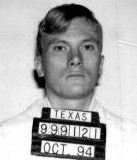
Jason Massey
Murderer Brian Kevin Rosenfeld
Murderer · USA · 1985
Brian Kevin Rosenfeld Brian Kevin Rosenfeld was sentenced to three concurrent l…
23 victims
Brian Kevin Rosenfeld
Murderer · USA · 1985
Brian Kevin Rosenfeld Brian Kevin Rosenfeld was sentenced to three concurrent l…
23 victims
 Russell Ellwood
Murderer · USA · 1991
Russell Ellwood was a former taxi driver. Authorities suspected him of killing…
20 victims
Russell Ellwood
Murderer · USA · 1991
Russell Ellwood was a former taxi driver. Authorities suspected him of killing…
20 victims
 Robert Martines Perez
Murderer · USA · 1994
Name: Robert Martines Perez · Other name used in proceedings: Robert Martinez P…
15 victims
Robert Martines Perez
Murderer · USA · 1994
Name: Robert Martines Perez · Other name used in proceedings: Robert Martinez P…
15 victims
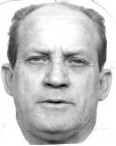 Billy Frank Vickers
Murderer · USA · 1993
Billy Frank Vickers Vickers was executed by lethal injection in Texas on Januar…
14 victims
Billy Frank Vickers
Murderer · USA · 1993
Billy Frank Vickers Vickers was executed by lethal injection in Texas on Januar…
14 victims
 John Lawrence Miller
Homicide - Murderer · USA · 1957
John Lawrence Miller was born about 1942 and was a native of Los Angeles. He wa…
3 victims
John Lawrence Miller
Homicide - Murderer · USA · 1957
John Lawrence Miller was born about 1942 and was a native of Los Angeles. He wa…
3 victims
 Laisha Landrum
Homicide · USA · 2004
Laisha Landrum, 18, was convicted in January 2006 and sentenced on February 20,…
1 victim
Laisha Landrum
Homicide · USA · 2004
Laisha Landrum, 18, was convicted in January 2006 and sentenced on February 20,…
1 victim
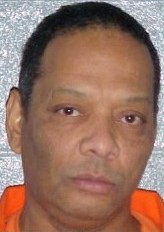 Bernard Smith
Murderer · USA · 1983
Bernard Smith was convicted in Superior Court (Yuma) of first-degree murder and…
1 victim
Bernard Smith
Murderer · USA · 1983
Bernard Smith was convicted in Superior Court (Yuma) of first-degree murder and…
1 victim
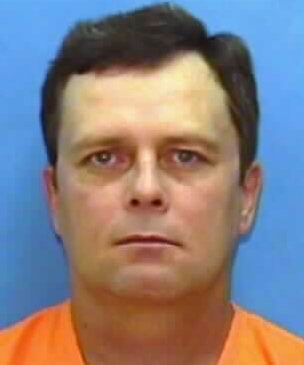 Dana Williamson
Homicide - Murderer · USA · 1975
Dana Williamson (born 09/18/59) was convicted and sentenced to death for the 11…
2 victims
Dana Williamson
Homicide - Murderer · USA · 1975
Dana Williamson (born 09/18/59) was convicted and sentenced to death for the 11…
2 victims
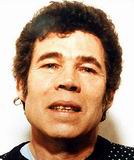 Frederick West
Serial killer · United Kingdom · 1967
Frederick West (29 September 1941 – 1 January 1995) was an English serial kille…
13 victims
Frederick West
Serial killer · United Kingdom · 1967
Frederick West (29 September 1941 – 1 January 1995) was an English serial kille…
13 victims
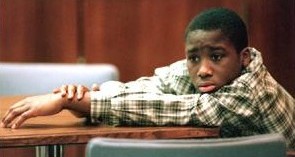 Nathaniel Abraham
Homicide · USA · 1997
Nathaniel Abraham is the individual named in the record (also referred to as Na…
1 victim
Nathaniel Abraham
Homicide · USA · 1997
Nathaniel Abraham is the individual named in the record (also referred to as Na…
1 victim
- Gender
- male
- Country
- USA
- Location
- Ellis County, Texas, USA
- Date of birth
- January 7, 1973
- Age at first offence
- 20
- Characteristics
- rape, mutilation, convicted rapist
- Victim profile
- James Brian King (male, 14) and Christina Benjamin (female, 13)
- Method of murder
- Shooting / St abbing with knife
- Date(s) of murder
- July 27, 1993
- Years active
- 1993
- Date of arrest
- —
- Status
-
Executed
Executed by lethal injection in Texas on April 3, 2001
Case record: Jason Massey
Background
Jason Eric Massey (January 7, 1973 – April 3, 2001) was American and was executed in Texas in 2001 for the murders of two people.
The offence
In the early morning hours of July 27, 1993, James King was awakened by the sound of a car pulling up to his house, beeping its horn twice and driving away. When the car passed by again, he looked out his window and observed a tan car turn off its headlights and park in front of his house. King got out of bed and went to the front door. Looking outside, he saw his 14-year old son, Brian, approach the car on foot and talk to the people in the car. At this point, King went to the restroom. When he returned, both Brian and the car were gone. King waited for about an hour for his son to return before going back to bed.
When King got up the next morning, he found that Brian and his 13-year old stepdaughter, Christina, were not in the house. King woke his common-law wife, Donna Benjamin, and although worried, they decided to wait to see if they would return home. When the children did not appear, James and Donna searched for them and subsequently filed a missing persons report.
Approximately 10 days earlier, Christopher Nowlin had been riding in a car with Jason Massey, who was 20 years old and lived in Canton, Texas. Nowlin convinced Massey to drive over to see Christina, a friend of Nowlin’s. Massey flirted with Christina, and she told him that she would like to "sneak out" sometime. Massey agreed and told Christina that he would drive by her house around midnight some night and honk his horn and that she was to go to the old Fina station on I-45 and wait.
When Massey and Nowlin left Christina’s house, Massey told Nowlin in sexually explicit language what he wanted to do to Christina, including killing her and cutting her up. Nowlin testified that he didn’t pay much attention to what Massey said, because it was weird and Massey talked about killing girls all the time.
On July 29, 1993, law enforcement authorities found two bodies in a field near Telico, in Ellis County. The first body discovered was that of a nude female whose head and hands were missing. She had been shot in the back and parts of her body mutilated. When authorities began searching for the victim’s missing body parts, they discovered the body of a young boy identified as Brian King. Two small caliber bullets were later removed from his brain and the cause of death was determined to be multiple gunshot wounds to the head. No other wounds were discovered on his body.
It was more difficult to identify Christina. A deep wound transected her torso like an autopsy incision, exposing her internal organs. Due to the extensive nature of her injuries and several days of decomposition in the intense summer heat, initial identification was impossible. Eventually, the body was confirmed to be Christina’s based on recent hospital records.
Based on samples of fly larvae from both bodies, it was estimated that Brian and Christina had been killed between the late evening of July 26, 1993, and the morning of July 27, 1993. Bullet fragments recovered from both bodies appeared to be .22 caliber in size.
During the investigation and testimony, Christina was described as having been shot in the back and as having her head and hands severed, with her torso deeply cut and internal organs exposed. There was also evidence of sexual mutilation. Her head and hands were missing and not recovered. Some body parts never recovered. She was described as being disemboweled and dismembered.
Investigation
A subsequent investigation revealed that Massey’s cousin owned a .22 caliber pistol that he stored at his grandmother’s house before leaving on a trip. Massey took the gun unbeknownst to his cousin. Several witnesses testified to seeing the gun on Massey’s person.
The Walmart sales clerk, who sold bullets for a .22 caliber gun, two knives, and handcuffs to Massey, picked him out of a line-up after his arrest.
Late in July, the owner of a local car wash observed Massey pull in about 11:30 p.m. in a tan-colored Subaru. Massey dumped items in the trash bin and started to back out, but stopped when he saw the owner watching him. He pulled his car back into a bay and started vacuuming. Shortly after this incident, the owner recognized Massey’s picture in the paper as someone who might be involved with the murders. A search of the car wash trash bin and vacuum containers resulted in discovery of a red bandana with blond hair on it, broken car glass, and a payroll receipt from Kentucky Fried Chicken with Massey’s name on it.
Police searched Massey’s house and found two newspaper articles about the murders, handcuffs and a knife box.
After a search of Massey’s car, the console, steering wheel, step to the car, and spots in the passenger seat tested positive for blood, as did a knife in the glove box and items in the trunk, including duct tape, tissue paper, electrical tape, a wrench, a screwdriver, a denim shirt, the head of a hammer, and a jacket. DNA testing revealed a genetic match between Christina’s blood and the blood found on the car seat, duct tape and hammer. A subsequent comparison of blond hairs found in the car, hairs on the red bandana recovered from the car wash and hairs found near Christina at the crime scene revealed a microscopic match. Carpet fibers from Massey’s car matched a fiber found on one of Brian’s shoes. In addition, hair found on Brian’s pant leg was microscopically matched with Massey.
An arrest warrant was issued. When placed under arrest, Massey smiled.
Arrest
Massey was arrested after being identified through the investigation, including the discovery of evidence linking him to the murders.
Trial
Massey was indicted for the capital offense of murder of two persons. He pled not guilty, but was convicted by a jury on Oct. 6, 1994.
The jury answered special issues on October 12, 1994. In accordance with Texas law, the trial court assessed Massey’s punishment as death.
Sentencing
After a punishment hearing, the jury answered the special issues submitted pursuant to article 37.071 of the Texas Code of Criminal Procedure; an affirmative answer was given to the first special issue and a negative answer was given to the second special issue. The trial court assessed Massey’s punishment as death.
Punishment evidence and prior history included testimony about journals and violence. A state witness testified that while on a walk in the woods, he had come across a cooler containing animal skulls and jaw bones and journals encased in plastic labeled "Slayer’s Book of Death," volumes 1-4. The journals were labeled, "the thoughts of Jason Massey."
A former friend testified that Massey had spoken many times about killing dogs, cats, and cows and remarked that Massey had a fascination with setting fires. This witness relayed that Massey told him that he killed because of the "adrenaline rush, a high, a turn on, a love to mutilate." He also described Massey’s subsequent armed robbery of a fast food restaurant and the detailed journals that Massey kept.
A State psychiatrist, Dr. Kenneth Dekleva, described his June 1991 examination of Massey. Massey’s mother brought him in for evaluation after discovering two of his journals and becoming very disturbed by their content. Dekleva’s review of the journals revealed Massey’s desire to begin a "sacred journey" as a serial killer. In the journals, Massey listed the names of several girls he wanted to kill and stated that he wanted to engrave his name on society. He also wrote about his desire to lash out at society and to reap immense sorrow and suffering. Massey described very violent and sadistic fantasies and expressed a desire to read about criminal and police procedures to eliminate the possibility of getting caught for his intended crimes. Dekleva testified that the most alarming thing from Massey’s journal entries was the apparent shift from fantasy to more deliberate planning, including the purchasing of weapons.
After his evaluation, Dekleva concluded that Massey was suffering from anti-social personality disorder and that he represented an imminent threat to others. Dekleva therefore had Massey committed to the Dallas Psychiatric Intensive Care Unit. Dekleva testified that there were no successful treatments for someone like Massey, that such individuals pose a lasting threat to society, and that they are at an extraordinarily high risk of killing again and again.
Massey’s ninth-grade teacher and a former seventh-grade classmate testified about extremely disturbing behavior, including comments centered around killing. The teacher testified that Massey idolized Charles Manson. The classmate described threatening phone calls and letters she received from him describing dreams of killing her. The classmate’s dog had been killed and mutilated, and the blood smeared on her car. The classmate testified that Massey had written about this incident in his journal.
In testimony, Massey was shown to have written about the incident in his journal and, in the late spring of 1993, he was stopped by Ennis police. Marijuana, a Persian cat with a rope around its neck, a three-prong knife and a diary that listed names with check marks next to them were found in his car.
An investigator for the Ellis County sheriff’s department read to the jury portions of letters Massey wrote while he was in prison. Massey wrote that he liked to read about guns, war, and police investigations. In one journal, also read to the jury, Massey stated that he was about to start his career as a serial killer and mass murderer. Massey wrote that he wanted "to grab society by the throat and shake 'em with terror until they're awake and realize what's up so they will remember who I am, when and why I came their way." Massey also wrote that he anticipated that he would become a "murder machine." His journals became increasingly violent and set goals for vast numbers of killings.
Dr. Clay Griffith, a forensic psychiatrist, testified after reading portions of Massey’s journals, letters, the recorded observations of Dr. Dekleva and the autopsy reports for the victims. Griffith concluded that Massey would be a future danger to society and that he could not be rehabilitated. Griffith also testified that while anti-social personality disorder can abate with some individuals over time and with age, it would not in a case as severe as Massey’s. FBI agent Allen Brantley testified similarly.
Additional statements and context were included in the materials about Massey’s plans and fantasies about criminal acts, including fantasies about rape and killing, along with journals and threats described during testimony.
Appeals
Procedural and appellate events were as follows:
Timeline
- March 17, 1994 — The State indicted Massey for the capital offense of murder of two persons in the same criminal transaction.
- October 6, 1994 — A jury found Massey "guilty" of the capital offense.
- October 12, 1994 — Following a punishment hearing, the jury answered the special issues under article 37.071; the trial court assessed punishment as death.
- October 23, 1996 — The Texas Court of Criminal Appeals affirmed his conviction and sentence in a published opinion.
- June 23, 1997 — Massey filed an application for state habeas corpus relief pursuant to article 11.071 of the Texas Code of Criminal Procedure.
- March 6, 1998 — Massey filed a petition for habeas corpus relief in federal district court.
- January 10, 2000 — The U.S. Magistrate recommended relief be denied.
- February 24, 2000 — The recommendations were signed and judgment was rendered against Massey.
- March 23, 2000 — Massey filed a motion for certificate of appealability (COA) in federal district court.
- March 27, 2000 — The district court denied the motion.
- March 23, 2000 — Massey filed a notice of appeal and the case was docketed in the Fifth Circuit.
- May 26, 2000 — Massey filed a motion for COA in the Fifth Circuit.
- September 13, 2000 — The Fifth Circuit denied COA.
- October 2, 2000 — Massey filed a motion for rehearing in the Fifth Circuit.
- October 17, 2000 — The motion for rehearing was denied.
- January 16, 2001 — Massey filed a petition for writ of certiorari in the U.S. Supreme Court.
- March 19, 2001 — The petition for writ of certiorari was denied.
- April 3, 2001 — Massey was executed.
A later state habeas court entered findings of fact and conclusions of law recommending that relief be denied, and the Court of Criminal Appeals adopted the trial court’s findings and conclusions and ordered that Massey’s request for state habeas relief be denied.
Outcome
Massey’s conviction and sentence were affirmed on appeal. His other appeals in state and federal courts were rejected.
Aftermath
Jason Massey was executed by lethal injection on April 3, 2001.
At the execution, Massey addressed relatives of the victims and his own family and sought forgiveness. He said:
"I do not know any of y'all and that is unfortunate, because I would like to apologize to each and every one of you individually."
He continued:
"I want you to know I did do it,"
"I'm sorry for what I have done."
He added:
"I know you guys want to know where the rest of her remains are. I put her remains in the Trinity River."
He expressed love to individual members of his family and apologized to them "for all of the pain that I have caused." He then talked about how "God has used this to change my life" and proclaimed Jesus as Lord. In closing, he said:
"Tonight I dance on the streets of gold. Let those without sin cast the first stone."
He was pronounced dead at 6:20 p.m. after the lethal flow was started.
Other details
- James King, Donna Benjamin, and their children were involved in the missing persons report.
- Bodies were found near Telico in Ellis County.
- The first body discovered was identified as Christina; her head and hands were missing and not recovered. Her torso had been deeply cut and internal organs exposed.
- Brian King was identified by cause of death determination after two small caliber bullets were removed from his brain and determined to be multiple gunshot wounds to the head.
- Estimates based on fly larvae suggested Brian and Christina had been killed between the late evening of July 26, 1993, and the morning of July 27, 1993.
- The investigation included evidence of a .22 caliber pistol being taken without the cousin’s knowledge.
- Witnesses included Christopher Nowlin, who testified about arrangements for Christina to "sneak out" and about Massey’s statements in sexually explicit language and about killing girls.
- Witnesses testified about journals, including volumes labeled "Slayer's Book of Death" and labeled "the thoughts of Jason Massey."
- During punishment evidence, an investigator read to the jury portions of letters written while Massey was in prison.
- Witness testimony included that Massey was stopped by Ennis police in the late spring of 1993 and that marijuana, a Persian cat with a rope around its neck, a three-prong knife and a diary listing names with check marks were found in his car.
- A Walmart sales clerk picked Massey out of a line-up after selling bullets for a .22 caliber gun, two knives, and handcuffs to him.
- A car wash owner observed Massey arriving at about 11:30 p.m., discarding items in a trash bin, and vacuuming, leading to discovery of a red bandana with blond hair, broken car glass, and a Kentucky Fried Chicken payroll receipt with Massey’s name on it.
- DNA and microscopic hair comparisons linked Christina’s blood and hairs, and fibers and hair, to Massey’s car and the crime scene.
Spotted an error, or have more information about this case?