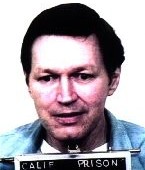
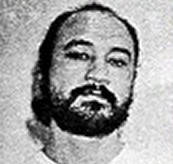
Robert Lee Massie
Murderer Ervil LeBaron
Murderer · USA · 1972
Ervil Morrell LeBaron (1925 to August 16, 1981) was the leader of a polygamous…
35 victims
Ervil LeBaron
Murderer · USA · 1972
Ervil Morrell LeBaron (1925 to August 16, 1981) was the leader of a polygamous…
35 victims
 Marvin Gray
Murderer · USA · 1975
Marvin Gray was convicted killer who claimed responsibility for 23 slayings and…
23 victims
Marvin Gray
Murderer · USA · 1975
Marvin Gray was convicted killer who claimed responsibility for 23 slayings and…
23 victims
 Charles Manson
Murderer · USA · 1969
Charles Milles Manson (born November 12, 1934) was an American criminal and mus…
9 victims
Charles Manson
Murderer · USA · 1969
Charles Milles Manson (born November 12, 1934) was an American criminal and mus…
9 victims
 Robert Reldan
Murderer · USA · 1974
Name: Robert Reldan Robert Reldan was sentenced to life in prison on two counts…
8 victims
Robert Reldan
Murderer · USA · 1974
Name: Robert Reldan Robert Reldan was sentenced to life in prison on two counts…
8 victims
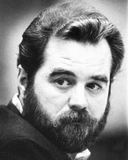 Dennis Duane Webb
Murderer · USA · 1973
Defendant: Dennis Duane Webb · Victims: John Rainwater and Lori Rainwater · Cou…
7 victims
Dennis Duane Webb
Murderer · USA · 1973
Defendant: Dennis Duane Webb · Victims: John Rainwater and Lori Rainwater · Cou…
7 victims
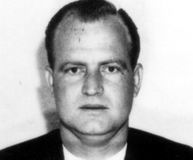 Gary Gene Tison
Murderer · USA · 1967
Gary Gene Tison was serving life sentences at the Arizona state prison. He had…
7 victims
Gary Gene Tison
Murderer · USA · 1967
Gary Gene Tison was serving life sentences at the Arizona state prison. He had…
7 victims
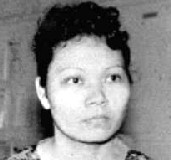 Flor Contemplacion
Murderer · Singapore · 1991
Flor R. Contemplacion (January 1953 - March 17, 1995) was a Filipina domestic w…
2 victims
Flor Contemplacion
Murderer · Singapore · 1991
Flor R. Contemplacion (January 1953 - March 17, 1995) was a Filipina domestic w…
2 victims
 Sarah Johnson
Homicide · USA · 2003
Sarah Johnson was convicted of murdering her parents, Alan Scott Johnson and Di…
2 victims
Sarah Johnson
Homicide · USA · 2003
Sarah Johnson was convicted of murdering her parents, Alan Scott Johnson and Di…
2 victims
 Zhou Youping
Serial killer · China · 2009
Zhou Youping was a Chinese karaoke singer who organized sexually abusive chokin…
6 victims
Zhou Youping
Serial killer · China · 2009
Zhou Youping was a Chinese karaoke singer who organized sexually abusive chokin…
6 victims
- Gender
- male
- Country
- USA
- Location
- San Francisco County, California, USA
- Date of birth
- December 24, 1941
- Age at first offence
- 24
- Characteristics
- robbery
- Victim profile
- Mildred Weiss (female, 48) / Boris G. Naumoff, 61 (liquor store owner)
- Method of murder
- Shooting
- Date(s) of murder
- 1965 / 1979
- Years active
- 1965–1979
- Date of arrest
- January 4, 1979
- Status
-
Executed
Executed by lethal injection in California on March 27, 2001
Case information
- Defendant: Robert Lee Massie
- Status/Outcome: Executed by lethal injection in California on March 27, 2001
- County of offense: San Francisco
- County of residence: Unknown
- Case number: 98806
- Court dates and actions:
- Court date: 11/30/1998
- Court action: Affirmed
- Appellate case references:
- U.S. Court of Appeals, Ninth Circuit: 875 F.2d 1386; No. 88-1574
- U.S. Court of Appeals, Ninth Circuit (next-friend / stay proceedings): 244 F.3d 1192; No. 01-99002
- United States District Court: For the Northern District of California; Charles A. Legge, District Judge, Presiding
Timeline
- January 3, 1979 — Robert Lee Massie killed Boris G. Naumoff in San Francisco County and carried out robbery-related events at the Twin Peaks Grocery and Miraloma Liquor Store.
- January 4, 1979 — Massie was arrested around 10 p.m. and gave a tape-recorded confession after Miranda warnings and discussions at the San Francisco Hall of Justice.
- 1979 — Massie pleaded guilty, against the advice of counsel, to the murder (Pen. Code, § 187) and robbery (§ 211) of Boris Naumoff and admitted special circumstance allegations of prior murder (§ 190.2, subd. (a)(2)) and robbery murder (§ 190.2, former subd. (a)(17)(i), now subd. (a)(17)(A)); he also pleaded guilty to the robbery (§ 211) of Yasphine Khashan and George Statara, assault with a deadly weapon (§ 245) on Charles Harris, and four counts of possession of a concealable firearm by a convicted felon (§ 12021).
- 1985 — The California Supreme Court reversed the death sentence, the convictions for the robbery and murder of Naumoff, and the two special circumstances in People v. Massie (1985) 40 Cal.3d 620 (Massie I).
- June 1999 — Massie initiated federal habeas proceedings.
- August 18, 1999 — Evidentiary hearing at which Massie appeared in person and described which claims he would raise and why.
- May 15, 2000 — Massie filed an amended petition asserting only four claims, after earlier federal habeas proceedings.
- December 21, 2000 — Evidentiary hearing at which Massie appeared in person and testified regarding changing his mind and dismissing the federal petition.
- January 8, 2001 — The district court dismissed Massie’s federal petition.
- February 22, 2001 — Three state medical doctors interviewed Massie for part of a competency-for-execution evaluation period.
- February 22, 2001 — Massie complained of “psychological problems” and requested examination by the Unit Psychiatrist for medication, as reflected in a San Quentin prison record presented in later proceedings.
- March 7, 2001 — Three state medical doctors interviewed Massie for part of the evaluation period; California Department of Corrections Staff Psychiatrist S.C. Gibbs, M.D. submitted a report of an evaluation that took place on March 7, 2001.
- March 20, 2001 — Michael A. Kroll filed in the California Supreme Court essentially the same next-friend petition that underlay the federal appeal.
- March 22, 2001 — Massie’s counsel submitted a response to the next-friend petition including a declaration signed by Massie on March 22, 2001.
- March 23, 2001 — The California Supreme Court denied the next-friend petition because it failed to show that Massie was incompetent to elect not to seek habeas relief; that same day, Kroll filed motions to file an amended petition and for stay of execution in district court.
- March 25, 2001 — The Ninth Circuit heard and decided the next-friend appeal and denied a stay; the per curiam opinion referenced March 25, 2001 and filed March 25, 2001.
- March 27, 2001 — Massie’s execution began at 12:20 a.m. and he was pronounced dead at 12:33 a.m. in San Quentin State Prison’s execution chamber.
The offence
Offence against Boris G. Naumoff (murder and robbery)
- On the morning of January 3, 1979, Robert Lee Massie entered the Twin Peaks Grocery in San Francisco, looked around, and left without buying anything; he returned and again departed without making a purchase; on the third time, store proprietor Grant Ridgeway followed Massie out.
- Massie walked one block to a Chevrolet Vega automobile with the engine running, got in, and drove away.
- Ridgeway observed the car’s license plate and asked a woman in a nearby house to write it down; she wrote down “119 GL,” omitting one of the letters Ridgeway asked her to write down; Ridgeway later gave the paper with the partial license number to police.
- Around 1:45 p.m., Kenneth Ross was at the Miraloma Liquor Store when Massie entered.
- Boris Naumoff, who had owned the store for about 30 years, asked Massie, “Can I help you?” Massie replied, “I’m just looking.”
- Massie left five minutes later; Ross also left ten minutes thereafter.
- Ross saw Massie outside making nervous, jerky movements and looking up and down the street.
- At 3:45 p.m., Sandy Bateman-Collins walked into the Miraloma Liquor Store; Naumoff was handing money to a man but was dropping some of the money on the floor; as the man began to leave, Naumoff followed after him, mumbling, “A guy can’t make a living any more.”
- Bateman-Collins heard three quick shots followed by a fourth shot a few seconds later; she ducked behind a counter.
- Just before the shooting, Charles Harris, scheduled to work at the Miraloma Liquor Store that evening, had entered and saw Naumoff talking to a man Harris assumed was a customer; sensing nothing amiss, Harris walked toward the back room; hearing a scuffle, he turned and saw Naumoff and the man face-to-face, with Naumoff holding the man in a bear hug; as Harris started to walk toward them, he heard three quick shots followed by a fourth; Harris felt pain in his leg, saw that the man was holding a gun, and ran to the back room.
- Outside the Miraloma Liquor Store, 13-year-old Duffy Aceret saw a man run from the liquor store with a gun in his hand; at a lineup several days later, Aceret identified Massie as the man he had seen.
- San Francisco police officers found Naumoff’s body on the floor of the Miraloma Liquor Store; Naumoff had been shot once in the right chest and twice in the heart.
- Dr. Boyd Stephens, Chief Medical Examiner for the City of San Francisco, described the two shots to the heart as “near contact wounds,” meaning they had been fired inches from target.
- That evening, Laura Garnett-Young saw a car stop outside her San Francisco home; a man got out, looked around, doffed his shirt and jacket, put them in her garbage can, and drove away; she wrote down the license number “119 TGL” and gave it to police.
- Police retrieved a bloodstained shirt and jacket from Garnett-Young’s garbage can; the blood type matched Naumoff’s.
- The next evening at around 10 o’clock, San Francisco Police Officer Michael Pearson was on patrol with Officer Jeffrey Morlock; they saw a Chevrolet Vega automobile with a license number (119 TJL) that nearly matched those given to police by Ridgeway and Garnett-Young; the car’s headlights were off.
- Pearson and Morlock followed the car for about five minutes while awaiting backup officers; the car took an erratic route, often changing direction.
- Pearson and Morlock stopped the car and arrested Massie, the sole occupant.
- Officers found a loaded .357-caliber revolver in Massie’s waistband and a cocked and loaded .380-caliber automatic pistol in his coat pocket.
- Ballistics expert Richard Grzybowski testified that the four bullets and four spent casings found at the Miraloma Liquor Store were fired from the pistol found in Massie’s pocket.
- Pearson and Morlock took Massie to the San Francisco Hall of Justice, where he was interviewed shortly before midnight by Inspectors Frank Falzon and Herman Clark.
- Inspector Falzon advised Massie of rights under Miranda v. Arizona (1966) 384 U.S. 436 and asked if he wanted to make a statement; Massie replied he wanted some time to think it over; half an hour later, he agreed to speak.
- Massie said he went to the liquor store, pulled a gun, and told the man behind the counter, “It’s a holdup.” The man gave him $20 or $30 but attacked him as he was trying to leave, so Massie shot him.
- Massie claimed that he had been drunk and under the influence of cocaine at the time.
Defense position about robbery during the killing
- Massie testified and admitted killing Naumoff but denied that it occurred during a robbery.
- Massie testified that after buying liquor and cigarettes from Naumoff, he discovered Naumoff had short-changed him by $30; he went back and confronted Naumoff, who muttered under his breath but gave the correct change.
- As Massie started to leave the store, someone grabbed him in a bear hug and “slammed” him in the face.
- Massie testified he thought his attacker was a member of the Aryan Brotherhood, a prison gang.
- During the struggle to escape, Massie pulled a pistol from his jacket and fired without aiming.
- Massie acknowledged telling Inspectors Falzon and Clark that he had shot Naumoff during a robbery, but said he said this because he thought that if he told them what they wanted to hear, they would protect him from an attack by the Aryan Brotherhood by placing him in a separate cell.
- To explain fear of the Aryan Brotherhood, Massie offered evidence that while in prison he had been stabbed in the back in a gang-related assault possibly attributable to the Aryan Brotherhood, described as a dangerous gang that had killed many people.
- A former member of the Aryan Brotherhood testified that for years the gang had been trying to kill Massie.
- Prison officials testified that to protect Massie from gang attacks California prison authorities transferred him at various times to Kansas, Nevada, and Washington to serve his sentence for a crime committed in California.
- Doctor Wesley Clark, a psychiatrist, testified that persons who have suffered violent trauma, such as a stabbing defendant had experienced in prison, often react with “hypervigilance” to situations that appear threatening; he testified that they “become very agitated and violent.”
- To rebut Massie’s testimony that the killing did not occur during a robbery, the prosecution offered evidence that Massie had robbed two small markets in San Francisco not far from the store where Naumoff was killed: one occurred the day before Naumoff’s murder and the other occurred the morning of his death.
Investigation and arrest
Arrest
- San Francisco police officers arrested Massie in relation to the Miraloma Liquor Store shooting and robbery events, after following a Chevrolet Vega automobile with a license number nearly matching the numbers given to police by Ridgeway and Garnett-Young.
- Officers arrested Massie as the sole occupant and recovered a loaded .357-caliber revolver from his waistband and a cocked and loaded .380-caliber automatic pistol from his coat pocket.
- Massie was taken to the San Francisco Hall of Justice for interview.
Confession and Miranda-related steps
- Inspectors Frank Falzon and Herman Clark interviewed Massie shortly before midnight at the Hall of Justice.
- Falzon advised Massie of Miranda rights, asked if he wanted to make a statement, and Massie requested time to think it over.
- After half an hour, Massie agreed to speak and described going to the liquor store, robbing the man behind the counter, and shooting him.
- Massie later told the officers he had been drunk and under the influence of cocaine at the time.
Trial
Plea and sentencing (1979)
- In 1979, Massie pleaded guilty, against counsel’s advice, to the murder (Pen. Code, § 187) and robbery (§ 211) of Boris Naumoff, admitting special circumstance allegations of:
- prior murder (§ 190.2, subd. (a)(2)), and
- robbery murder (§ 190.2, former subd. (a)(17)(i), now subd. (a)(17)(A)).
- Massie also pleaded guilty to:
- robbery (§ 211) of Yasphine Khashan and George Statara,
- assault with a deadly weapon (§ 245) on Charles Harris, and
- four counts of possession of a concealable firearm by a convicted felon (§ 12021).
- After a penalty trial where Massie waived the right to a jury and represented himself, the trial court set the penalty at death.
Reversal and retrial
- In 1985, the California Supreme Court reversed the death sentence, the convictions for the robbery and murder of Naumoff, and the two special circumstances, holding that the guilty pleas to murder and robbery were invalid because they were made against the advice of counsel in violation of section 1018 (People v. Massie (1985) 40 Cal.3d 620).
- Section 1018 prohibited accepting a guilty plea in a capital-felony case when the plea was “without the consent of the defendant’s counsel.”
- At a retrial where Massie was represented by counsel, a jury convicted him of crimes against Naumoff and found true the two special circumstance allegations; at the penalty phase, the jury returned a verdict of death.
- Massie’s appeal to the California Supreme Court was automatic under section 1239, subdivision (b).
Guilt phase facts and evidence at retrial (Naumoff case)
- The prosecution’s case included the morning and afternoon movements at the Twin Peaks Grocery and Miraloma Liquor Store, eyewitness testimony from Ross, Bateman-Collins, Harris, Aceret, and evidence including the retrieved bloodstained clothing and ballistics linking the bullets and casings to the pistol found in Massie’s pocket.
- The defense included Massie’s testimony that he admitted killing Naumoff but denied the killing occurred during a robbery, and evidence concerning the Aryan Brotherhood, prison transfers to Kansas, Nevada, and Washington, and psychiatric testimony from Doctor Wesley Clark on hypervigilance and agitation after violent trauma.
Prior murder special circumstance
- The parties stipulated that Massie had suffered a prior conviction for murder in 1965.
Jury venire and pretrial publicity issues
Massie made a motion to quash the jury panel, asserting that Blacks, Hispanics, women, youths, prospective jurors with high school or less education, and blue collar workers were underrepresented, and that his jury was therefore not selected from a fair cross-section of the community.
The motion relied on records from three other San Francisco County cases and brief testimony offered by Dr. Linda Meza, a psychologist involved with the National Jury Project.
Massie abandoned most claims and argued the motion should have been granted due to underrepresentation of Blacks and Hispanics violating the Sixth and Fourteenth Amendments and article I, section 16 of the California Constitution.
The court explained the Duren v. Missouri standard and held that, while Blacks and Hispanics qualified as distinctive groups, Massie failed to show systematic exclusion due to improper features in the jury-selection process; the court found no evidence describing how jury pools, venires, and panels were created in San Francisco in November 1988.
Massie also argued pretrial publicity denied him a fair trial.
The court described a San Francisco television program broadcast on September 9, 1988 titled “Life After Death Row,” featuring Inspector Falzon, including statements about Massie’s prior death sentence, release on parole, subsequent charges after release, and that prosecution had done nothing wrong; Falzon said taxpayers should not be “stuck” with cost of a retrial; he said defendant had “learned how to beat the criminal system.”
The court described that Falzon played portions of Massie’s tape-recorded confession on the program.
The court also described a column by Herb Caen and a voter information pamphlet connected to Proposition 89; it described articles during jury selection, including an article in the San Francisco Examiner on November 21, 1988.
The court addressed three occasions when Massie asked to dismiss charges, as well as a motion for change of venue, and held the trial court properly denied dismissal and properly denied the request for change of venue because prospective juror responses showed no prejudicial effect on the right to an impartial jury.
Admission of confession (suppression ruling at trial level)
- Before trial, Massie moved to suppress his tape-recorded confession to the murder of Naumoff; the trial court denied the motion.
- At the suppression hearing, evidence included Massie’s arrest around 10 p.m. on January 4, 1979 and the process at the Hall of Justice, including Miranda advisement, provision of coffee and a sandwich, and later turning on a tape recorder after Massie indicated he would talk.
- The court summarized that Massie asked for conditions including housing in a separate jail cell and that Inspector Falzon responded that he and Inspector Clark did not run the jail but would tell the sheriff and “do everything within [their] power” to get a separate cell.
- Massie asked, “Will you also not publish what I’m saying to you now?” and Falzon replied that defendant’s statement would not be made public before trial but the tape recording would probably be played at trial.
- Massie then agreed to talk and admitted shooting Naumoff after robbing him, later stating he agreed freely and voluntarily.
- At the suppression hearing, Massie claimed he falsely confessed due to intimidation or threats; he testified that Inspector Clark told him it was in his “best interest” to talk and that he needed protective custody and would not get it if he refused to speak.
- The court described that Inspector Clark denied making these statements in rebuttal.
- The court ruled the confession was voluntary under the totality of circumstances and rejected the contention that it was involuntary due to promises of leniency.
Cruel and unusual punishment claim
- Massie argued that executing him after more than 16 years of confinement on death row would violate the Eighth Amendment.
- The court rejected the claim based on People v. Hill, explaining that substantial delay inherent in California’s automatic appeal process was a constitutional safeguard and that execution following such delay was not cruel and unusual punishment.
Sentencing
- After the penalty trial following the 1979 guilty pleas (with jury waiver and self-representation), the trial court set the penalty at death.
- After retrial and penalty phase, a jury returned a verdict of death.
- Massie was sentenced to death for the January 3, 1979 murder of Boris Naumoff, and his conviction and sentence proceeded through automatic appeal and federal habeas litigation.
Appeals and post-conviction proceedings
California Supreme Court automatic appeal framework
- The court referenced California Penal Code section 1239(b), which required automatic appeal when a judgment of death was rendered.
- It described that Massie sought to dismiss the automatic appeal and argued for a right to waive it; the motion was denied.
U.S. Court of Appeals, Ninth Circuit (double jeopardy and related federal constitutional claims)
- The Ninth Circuit case 875 F.2d 1386 involved Massie’s federal habeas petition claims related to retrial after reversal.
- The Ninth Circuit described:
- Massie pleaded guilty to robbery and first degree murder, with the trial judge accepting the plea and sentencing him to death.
- The conviction and sentence were automatically appealed pursuant to California Penal Code section 1239(b).
- Massie moved to dismiss the state appeal based on a constitutional right to waive the automatic appeal; the motion was denied.
- While the state appeal was pending, Massie sought a writ of habeas corpus in federal district court; the writ was denied.
- The Ninth Circuit affirmed in holding that Massie did not have a constitutional right to waive the automatic appeal (Massie v. Sumner, 624 F.2d 72; cert. denied 449 U.S. 1103).
- The California Supreme Court reversed Massie’s conviction due to the invalidity of a guilty plea in a capital case against counsel’s advice (People v. Massie, 40 Cal.3d 620).
- The State sought to prosecute Massie again for robbery and murder.
- Massie sought federal habeas again, claiming a new trial would violate due process under double jeopardy and claiming the automatic appeal statute violated equal protection; he also argued retrial was barred by res judicata, due process, and multiple punishment.
- The Ninth Circuit affirmed denial of habeas relief and addressed a narrow question: whether the double jeopardy clause applies to a death penalty case with an automatic appeal.
- The Ninth Circuit held Massie may not successfully claim double jeopardy, citing:
- lack of expectation of finality in the sentence,
- the State’s constitutional concerns about the death sentence overriding objections, and
- that the appeal is considered to be Massie’s even though mandatory.
- The Ninth Circuit rejected Massie’s equal protection claim, explained that the relevant comparison was between capital defendants sentenced to death because section 1239(b) applied mandatorily to them.
- The Ninth Circuit rejected Massie’s res judicata claim and explained a reversed judgment could not serve as a basis for res judicata.
- The Ninth Circuit rejected due process and double punishment arguments and concluded that if Massie is convicted on the robbery count on remand, time he previously served could be credited.
- The Ninth Circuit concluded with “AFFIRMED.”
California Supreme Court opinion dated November 30, 1998 (S010775)
- The California Supreme Court opinion in The People v. Robert Lee Massie was dated November 30, 1998, with:
- Opinion No.: S010775
- San Francisco County
- Judge: Edward Stern
- The opinion affirmed the judgment in its entirety and addressed multiple issues including double jeopardy, cruel and unusual punishment, confession suppression, pretrial publicity and venue, and jury venire challenges.
- The court described procedural history including:
- 1979 guilty pleas and resulting death sentence,
- reversal of the death sentence and convictions in 1985 (Massie I),
- retrial where a jury convicted him of crimes against Naumoff, found the special circumstance allegations true, and returned a death verdict.
- The opinion also included:
- discussion of Massie’s arguments under double jeopardy provisions of the U.S. Constitution and California Constitution and Penal Code,
- discussion of how jeopardy did not attach to an invalid guilty plea,
- discussion of jurisdictional arguments about the automatic appeal proceeding,
- judicial notice of legislative history involving section 1239(b) and section 1237.5,
- and the rule against advisory opinions.
U.S. Court of Appeals, Ninth Circuit next-friend petition and request for stay (244 F.3d 1192)
- Michael A. Kroll filed motions to proceed as “next friend” and to stay Massie’s execution scheduled for March 27, 2001 at 12:01 a.m.
- The Ninth Circuit reviewed whether the district court erred when it concluded Kroll lacked standing as next friend.
- The Ninth Circuit applied the Whitmore v. Arkansas standard requiring:
- the petitioner’s inability to litigate due to mental incapacity, lack of access to court, or other similar disability, and
- that the next friend had some significant relationship with and was truly dedicated to the petitioner’s best interests.
- The Ninth Circuit accepted the district court’s factual determination that Massie was competent unless clearly erroneous.
- It described:
- Massie initiated federal habeas proceedings in June 1999.
- In August 1999 and later hearings (including December 21, 2000), Massie stated his decision to dismiss claims and testified he had not seen a prison psychologist or psychiatrist and had not taken medication in the relevant time period.
- The district court found Massie competent under the Rees v. Peyton standard.
- Massie did not accept offered independent counsel consultation.
- The district court gave Massie until January 8, 2001 to reconsider, and later dismissed his petition.
- Three state medical doctors interviewed Massie for fifty-five minutes on February 22, 2001 and forty-five minutes on March 7, 2001; they concluded Massie understood he was about to be executed and why.
- The Ninth Circuit described S.C. Gibbs, M.D.’s March 7, 2001 evaluation report as stating Massie was calm, rational, oriented, and showed no evidence of mental disorder or defect.
- Kroll’s allegations included an extensive history of mental problems and alleged incompetency during retrial, plus claims of ineffective assistance and competency hearing issues, but the Ninth Circuit held Kroll needed to show current incompetency to waive further federal habeas proceedings.
- The Ninth Circuit found Kroll failed to present meaningful evidence of current incompetency and held that because Kroll failed to satisfy Whitmore’s first prong, it did not reach the second prong.
- The Ninth Circuit:
- affirmed the district court’s judgment,
- denied a stay of execution,
- and held Kroll lacked standing.
- The opinion contained a conclusion: “The judgment of the district court is AFFIRMED. Kroll's emergency motion for a stay of execution is DENIED.”
People involved (victims, witnesses, and other named participants)
Victims
- Boris G. Naumoff (male) — killed in San Francisco at the Miraloma Liquor Store.
- Charles Harris (male, survived) — injured; he was scheduled to work and was present during the events at the liquor store.
- Yasphine Khashan — robbery victim named in 1979 guilty pleas.
- George Statara — robbery victim named in 1979 guilty pleas.
Other named participants in facts and proceedings
- Grant Ridgeway — Twin Peaks Grocery proprietor who followed Massie.
- Kenneth Ross — witness at Miraloma Liquor Store.
- Sandy Bateman-Collins — witness who heard the shootings.
- Duffy Aceret — 13-year-old witness who identified Massie at a lineup.
- Laura Garnett-Young — witness who wrote down the car license number and placed clothing in her garbage can.
- Michael Pearson — police officer who followed and arrested Massie.
- Jeffrey Morlock — police officer on patrol with Pearson.
- Frank Falzon — San Francisco Police Inspector who interviewed Massie and appeared in the pretrial publicity described.
- Herman Clark — San Francisco Police Inspector who interviewed Massie.
- Dr. Boyd Stephens — Chief Medical Examiner for City of San Francisco; described “near contact wounds.”
- Richard Grzybowski — ballistics expert.
- Doctor Wesley Clark — psychiatrist who testified regarding hypervigilance.
- Dr. Linda Meza — psychologist involved with the National Jury Project (mentioned in jury venire challenge context).
- Edward Stern — San Francisco County judge.
- Jesse W. Curtis — United States District Judge for the Central District of California, sitting by designation (noted in Ninth Circuit materials).
- Michael A. Kroll — next friend petitioner in federal proceedings.
- Fred Baker — Massie’s counsel since 1993 as described in the next-friend proceedings.
- Jeanne S. Woodford — Warden, named respondent in next-friend appellate caption.
- S.C. Gibbs, M.D. — California Department of Corrections Staff Psychiatrist who submitted the March 7, 2001 evaluation report.
- Herb Caen — columnist referenced in pretrial publicity.
Other details
Execution details and last statement
- At 12:20 a.m., March 27, 2001, the execution by lethal injection of Robert Lee Massie began in San Quentin State Prison’s execution chamber.
- Massie was pronounced dead at 12:33 a.m.
- Massie’s last meal included two vanilla milkshakes, extra crispy french fries, extra crispy fried oysters, and soft drinks.
- Massie spent his last hours with his spiritual advisors and his attorneys.
- Massie’s last words were: “Forgiveness. Giving up all hope for a better past.”
U.S. Supreme Court and other citations included in appellate materials
- The Ninth Circuit materials referenced Whitmore v. Arkansas, 495 U.S. 149, 164 (1990), Rees v. Peyton, 384 U.S. 312, 313-14 (1966), and Ford v. Wainwright, 477 U.S. 399, 422 (1986) in the competency/next-friend context.
- The California Supreme Court opinion referenced People v. Stanworth, People v. Chadd, and People v. Hill, among other authorities, in discussing double jeopardy, invalid guilty pleas, and cruel and unusual punishment.
Prior conviction and penalty-phase prior murders/robberies (1965)
- Between January 7 and January 15, 1965, Massie committed a series of robberies and assaults in Los Angeles County, which were presented in the penalty phase:
- On January 7, 1965, Franklin Boller was getting out of his car in front of his home in West Covina when Massie approached, hit him in the mouth with a rifle, and demanded money; Boller gave his wallet and coin purse; Massie then fired a shot grazing the side of Boller’s head.
- Later on the evening of January 7, 1965, Morris and Mildred Weiss were returning to their San Gabriel home; as Mildred got out of the car, Massie approached and fatally shot her; he jumped into a waiting car and sped away.
- Just before 12 o’clock that same night, Massie entered a bar in Baldwin Park, brandished a rifle, and said, “This is a stickup.” He took money from the cash register and the wallets of the bartender and patron Archie Bolivar; the bartender threw a beer bottle at Massie, and Massie fled.
- On January 15, 1965, Massie encountered Frank Patti at MacArthur Park in Los Angeles; the two agreed to go to Patti’s hotel room; there Massie pulled a revolver, demanded money, and told Patti to take his clothes off; Patti attacked Massie; Massie fired three shots and fled; two shots hit Patti in the stomach and the third grazed his neck.
- Massie was arrested on January 20, 1965 for the assault on Patti.
- He gave two tape-recorded statements admitting the crimes and stating he was trying to rob Mildred Weiss when he shot and killed her.
- He was convicted of four counts of robbery, one count of attempted murder, and one count of murder.
Child and prison history presented during penalty phase
- The defense presented Massie’s background during the penalty phase:
- Massie was born in Virginia to a 15-year-old woman and a man who had married her only to avoid a charge of statutory rape.
- Between birth and his 11th birthday, he was placed with 5 different foster parents, at times living with his mother or his grandparents.
- At one foster home, he was disciplined by getting whipped with switches and having his head held under water.
- Between the ages of four and six, he lived with his mother who took him bar-hopping; his stepfather physically abused him.
- At age 11, Massie was sent to the Beaumont School for truant and runaway boys in Virginia; boys who misbehaved were whipped up to 40 times with a thick leather belt.
- At age 17, he stole a car and was sentenced to adult prison, where he was gang-raped by 4 older inmates.
- After that experience, he feigned insanity, resulting in commitment to a prison psychiatric facility.
- Various witnesses described him as having become a religious man who felt remorse for killing Naumoff.
- While serving his sentence for the 1965 murder of Mildred Weiss, he had been described as an exemplary prisoner: cooperating with staff, performing valuable clerical services, getting along well with other prisoners, and acting as a peacemaker to ease tensions among inmates.
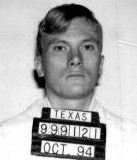
Spotted an error, or have more information about this case?