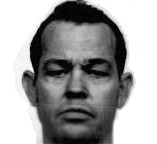
Jerry Walter McFadden
Murderer Brian Kevin Rosenfeld
Murderer · USA · 1985
Brian Kevin Rosenfeld Brian Kevin Rosenfeld was sentenced to three concurrent l…
23 victims
Brian Kevin Rosenfeld
Murderer · USA · 1985
Brian Kevin Rosenfeld Brian Kevin Rosenfeld was sentenced to three concurrent l…
23 victims
 Yahweh ben Yahweh
Murderer · USA · 1980
Yahweh ben Yahweh was born and legally named Hulon Mitchell Jr. (October 27, 19…
23 victims
Yahweh ben Yahweh
Murderer · USA · 1980
Yahweh ben Yahweh was born and legally named Hulon Mitchell Jr. (October 27, 19…
23 victims
 Russell Ellwood
Murderer · USA · 1991
Russell Ellwood was a former taxi driver. Authorities suspected him of killing…
20 victims
Russell Ellwood
Murderer · USA · 1991
Russell Ellwood was a former taxi driver. Authorities suspected him of killing…
20 victims
 James Rodden
Murderer · USA · 1983
James Rodden (James Edward Rodden Jr.) · Terry Trunnel (victim) · Joseph Arnold…
2 victims
James Rodden
Murderer · USA · 1983
James Rodden (James Edward Rodden Jr.) · Terry Trunnel (victim) · Joseph Arnold…
2 victims
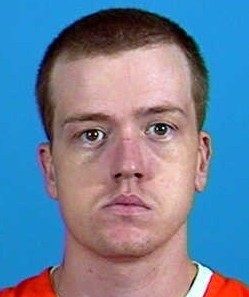 Kevin Don Foster
Murderer · USA · 1996
Kevin Don Foster was born Kevin Donald Bates on June 16, 1977, in Amarillo, Tex…
1 victim
Kevin Don Foster
Murderer · USA · 1996
Kevin Don Foster was born Kevin Donald Bates on June 16, 1977, in Amarillo, Tex…
1 victim
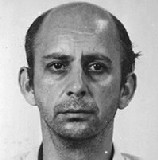 Joachim Kroll
Serial killer · Germany · 1955
Joachim Kroll was sentenced to 9 terms of life-imprisonment on April 8, 1982. H…
13 victims
Joachim Kroll
Serial killer · Germany · 1955
Joachim Kroll was sentenced to 9 terms of life-imprisonment on April 8, 1982. H…
13 victims
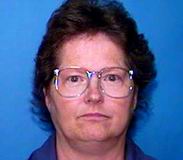 Bobbie Sue Terrell
Murderer · USA · 1984
Bobbie Sue Dudley Terrell was a Pinellas County nurse and worked as the night s…
12 victims
Bobbie Sue Terrell
Murderer · USA · 1984
Bobbie Sue Dudley Terrell was a Pinellas County nurse and worked as the night s…
12 victims
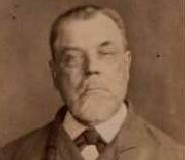 Per Palsson
Murderer · Sweden · 1868
Per Pålsson (also called Kitte-Pelle) (September 16, 1828 – February 4, 1914) w…
1 victim
Per Palsson
Murderer · Sweden · 1868
Per Pålsson (also called Kitte-Pelle) (September 16, 1828 – February 4, 1914) w…
1 victim
- Gender
- male
- Country
- USA
- Location
- Bell County, Texas, USA
- Date of birth
- March 21, 1948
- Age at first offence
- 38
- Characteristics
- rape
- Victim profile
- Suzanne Denise Harrison, 18; Gena Turner, 20, and Bryan Boone, 19
- Method of murder
- Strangulation with panties / Shooting (.38-caliber pistol)
- Date(s) of murder
- May 4, 1986
- Years active
- 1986
- Date of arrest
- —
- Status
-
Executed
Executed by lethal injection in Texas on October 14, 1999
Case record: Jerry Walter McFadden
Background
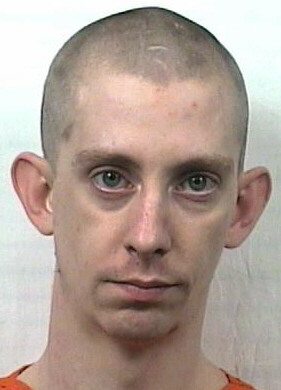
Jerry Walter McFadden nicknamed himself "Animal". He was a former telephone cable installer and later described as a former oil field worker and construction worker from Ore City. He failed to get beyond the 7th grade.
McFadden had a history of rape convictions. In 1972, he pleaded guilty to raping a 14-year-old girl in Denton. A year later, he pleaded guilty to raping a junior high school teacher in Haskell, where he grew up. In 1978, he went on a daylong rampage through West Texas, taking an 18-year-old secretary hostage and raping her. In each case, he was released or paroled before serving his full term, with the last parole in July 1985.
McFadden’s second prison stay lasted less than five years, after which he was again placed on parole. Within a year, he murdered two teenagers, and raped and then murdered an eighteen-year-old girl.
McFadden had been condemned for raping and beating Suzanne Denise Harrison, then strangling her with her own underwear. Two friends who accompanied her on May 4, 1986, for a Sunday drive were shot to death. McFadden never was charged with the other killings, though evidence related to their deaths was introduced at his trial for Harrison’s murder.
The offence
McFadden raped and beat Suzanne Denise Harrison, 18, then strangled her with her own underwear.
Harrison and two friends, 19-year-old Brian Boone and 20-year-old Gena Turner, disappeared from a Lake Hawkins park on May 4, 1986. Harrison’s body was found the next day at Barnwell Mountain park, 30 miles from the lake, on a mountaintop roadside park east of Gilmer in neighboring Upshur County.
The decomposing bodies of Brian and Gena were found six days later near Ore City, in a ditch off a farm road near Ore City about 15 miles to the northeast. The decomposed bodies were each shot to death.
McFadden was arrested in Wood County on May 6 after witnesses told police they saw one of the victims riding in McFadden’s truck in the evening of the murders.
Although McFadden was suspected in the deaths of Boone and Turner, he was not officially charged with those killings.
Investigation
After McFadden’s arrest in Wood County, his parole after three rape convictions was noted in describing him as one of the region’s most notorious criminals. The discovery of the three victims from Hawkins, about 100 miles east of Dallas, and subsequent arrest of McFadden made him one of the region’s most notorious criminals.
McFadden’s earlier criminal reputation included an escape from the Upshur County Jail before his capital murder trial. He broke out of jail and took a female jailer hostage and for three days evaded one of the most intense manhunts in Texas history. A dragnet involved some 1,200 officers before McFadden was caught. The jailer managed to escape unhurt from a railroad boxcar. During the jailbreak, he held a female jailer hostage for 28 hours before she managed to escape unhurt from a railroad boxcar.
During that escape episode, a sheriff’s deputy taken hostage was found unharmed. Rosalie Williams, 24, an Upshur County sheriff’s deputy, was taken hostage by McFadden. She said she believed McFadden "might kill me at any time." Officials said she was not harmed.
McFadden, who called himself Animal, was described as having a .38-caliber pistol taken from the jail. He offered no resistance when he was found in a vacant house about 10:30 P.M. Friday. He was believed to be on foot in the woods in nearby Big Sandy after Rosalie Williams escaped late Thursday.
Arrest
McFadden was arrested in Wood County on May 6 after witnesses told police they saw one of the victims riding in McFadden’s truck the evening of the murders.
During the jail escape described in newspaper accounts, McFadden was returned to the Upshur County Jail late Friday after police found him hiding not far from where his hostage escaped Thursday.
Trial
On July 14, 1987, a jury in Bell County, Texas, convicted McFadden of murdering Suzanne Harrison in the course of an aggravated sexual assault.
At trial, arguments and testimony took 90 hours over 16 days. The trial was moved to Bell County because of pre-trial publicity. In describing jury deliberations, one account stated the jury deliberated only 35 minutes before returning the death sentence, while another stated the jury deliberated for 45 minutes.
The state district judge, F.L. "Tiny" Garrison, read the jury’s verdict.
Defense attorneys called as his only witness Rhonda McFadden, who lived with her mother in Levelland. Rhonda McFadden said:
"I want to ask you not to give him the death penalty," she said to jurors in a breaking voice. "That's murder. No man has a right to commit murder. He's on trial for that. How can you do that?"
The punishment phase evidence included court records from McFadden’s three previous convictions. In one description, presentation of evidence in the punishment phase took only 90 minutes.
Jury selection and federal habeas proceedings
McFadden later appealed the denial of federal habeas corpus related to capital murder conviction and sentence of death, contending that the state trial judge applied an incorrect constitutional standard in excluding two prospective jurors without insisting on a focus upon the juror's ability to answer the sentencing questions.
On Jan. 29, 1999, the United States Court of Appeals for the Fifth Circuit affirmed the denial of the petition. The court stated it was not persuaded the exclusions were error, and affirmed the denial of the petition.
In the appellate decision, the court quoted statements made by prospective jurors.
For Locklear:
To the prosecutor's questions about the death penalty, "I don't believe in it."
The record included:
Q: That's fine, if you don't then I need to ask you a few more questions, but let me just be sure I understand and know where you stand on it. If I'm understanding correctly, you simply are opposed to the death penalty, is that correct?
A: Yes sir.
Q: And that is regardless of how serious or vicious the facts of the case might prove to be, under no set of circumstances could you sit on a jury and make decisions that would result in a death verdict, is that correct?
Q: Can I assume that your opposition to the death penalty is based on feelings you have and scruples you have that would just keep you from ever voting death in a case regardless of how vicious the fact situation was?
A: No sir, it's just that the Lord says he will take vengeance in his own hands.
Q: So it's a religious feeling that you have, and it's your religious belief that keeps you, or has you opposed to the death penalty, is that right?
Q: And I presume that nothing would change your mind in that regard, is that correct?
A: Right.
Q: And that under no circumstances, because of your religious belief against the death penalty, that under no circumstances, under no procedure would you ever be a part of a jury that would make decisions that would result in a death sentence, is that correct? (emphasis supplied)
McFadden’s counsel asked Locklear:
Q: Are you telling us that if that judge ordered you in his instructions to the jury to consider fairly and unbiased (sic) the penalty range for an allegation of criminal misconduct that included the death penalty that you would ignore that instruction?
A: Yes, I would.
For Segura:
A: I think if he committed it, for sure, I think he should suffer in jail and be punished for it instead of just terminating his life.
The appellate decision included:
Q: Are you a person who because of strong feelings that you have, religious feelings perhaps, conscientious scruples, are you a person who is opposed to the death penalty?
A: In a way. It just depends on what they did. Like if he killed one person I think he should suffer for it, but now if he killed three, four, or five people, then he should die; but for one person I don't think he should die.
Q: Let me be sure that I understand you correctly. He is charged with taking the life one (sic) person, Suzanne Denise Harrison. Do I understand you correctly to say that you would be conscientiously opposed to the death penalty in any case where the defendant only killed one person?
A: Yes.
Q: ... [A]re you saying that regardless of how aggravated the facts and circumstances of the case, that if we convinced you that a defendant committed capital murder, but only killed one human being, as is charged in this indictment, regardless of how aggravated the facts and the circumstances, that you would never vote the death penalty?
Q: And these feelings that you have, these conscientious feelings that you have against the death penalty in that kind of situation [where the defendant killed only one person], is it fair to say that you honestly could not set those feelings aside and be a part of a jury in a case in which the result of that process would be the death penalty for a person charged and convicted of killing one person, is that correct? (emphasis supplied)
A: I believe that's correct.
Q: So that in a situation where we convinced you beyond a reasonable doubt that the defendant was guilty of capital murder of one person, you would automatically vote against the death penalty, is that correct?
Q: Regardless of the facts and circumstances of the case?
McFadden’s counsel did not examine Segura, and the prosecution's challenge for cause was sustained.
Sentencing
After conviction, the jury answered the requisite questions in the sentencing phase, and the state district judge sentenced McFadden to death.
McFadden was sentenced to die for the murder of a Hawkins High School cheerleader.
The sentencing verdict was read by District Judge F.L. "Tiny" Garrison after jurors’ deliberations. Family members attended, including Suzanne Denise Harrison’s mother, Craig Harrison (victim’s brother), and other relatives.
Glyndia Lane, the victim’s aunt, said after the court recessed:
"At this point, we're starting to get well,"
"We're going to try to put this behind us."
During the sentencing proceedings, Ginny Person, Gena’s aunt, was weeping and said:
"It's not revenge," she said. "It's removal."
"It's not worth the mental torture to go through this again. Even though a part of us is missing, it's over and we need to go on."
Stephen Tokoly, a former assistant district attorney and special prosecutor in the case, said he expected the verdict, calling the evidence overwhelming:
"It (the verdict) was 10 minutes later than I thought it would be," he said.
Vernard Soloman, McFadden's appointed defense attorney, said he still believed his client was innocent. Soloman also argued that because of sloppy police work, the real killers went free. The possibility was based on testimony that a nervous, jumpy hitchhiker covered with scratches was seen near the vicinity when the murders occurred. Soloman also cited testimony showing differing descriptions of the vehicle McFadden was driving.
Dorothy McFadden, the condemned man's mother, was absent when the sentence was read aloud but was visibly shaken when told the news, according to a courthouse spectator.
McFadden’s 17-year-old daughter Rhonda begged for his life and declined comment.
Appeals
McFadden filed his initial application for habeas relief in the state trial court, which was overruled by operation of law. The Texas Court of Criminal Appeals denied relief on January 22, 1997.
A week later, McFadden filed a second application for habeas relief, which the Texas appellate court dismissed for abuse of the writ on March 12, 1997.
McFadden petitioned the federal district court for habeas relief on April 11, 1997, and it was denied in 1998. The district court granted a certificate of appealability and denied motions to amend its judgment on June 15, 1998.
In his last appeals, McFadden contended prospective jurors improperly were dismissed from consideration for his trial panel because they opposed the death penalty.
On Jan. 29, 1999, the United States Court of Appeals for the Fifth Circuit affirmed the district court’s denial of habeas relief and held that McFadden’s petition lacked merit.
Outcome
McFadden was executed by lethal injection in Texas on October 14, 1999. He declined to make a last statement.
At the execution, he was pronounced dead at 6:16 p.m., 8 minutes after the flow of lethal drugs began.
Immediately before the execution, a needle in McFadden’s right arm was placed just above a large tattoo of satanic face.
Aftermath
At the execution, Suzanne Denise Harrison’s mother burst into tears as she entered the death chamber, crying out:
"He looked at me."
She turned away and said:
"He took our children."
Craig Harrison got as close to the window as he could to see McFadden gasp and sputter twice. Harrison remarked:
"He's gutless,"
and called him an obscenity. Immediately after McFadden stopped breathing, Harrison said:
"It's done. I'm ready to go home."
A statement described McFadden as executed Thursday, including details that he made no final statement and that Texas executes included him as part of multiple planned executions in that year.
McFadden was described as:
- the 27th condemned inmate to be put to death in Texas that year, and
- the 191st overall since the state resumed capital punishment on Dec. 7, 1982.
Spotted an error, or have more information about this case?